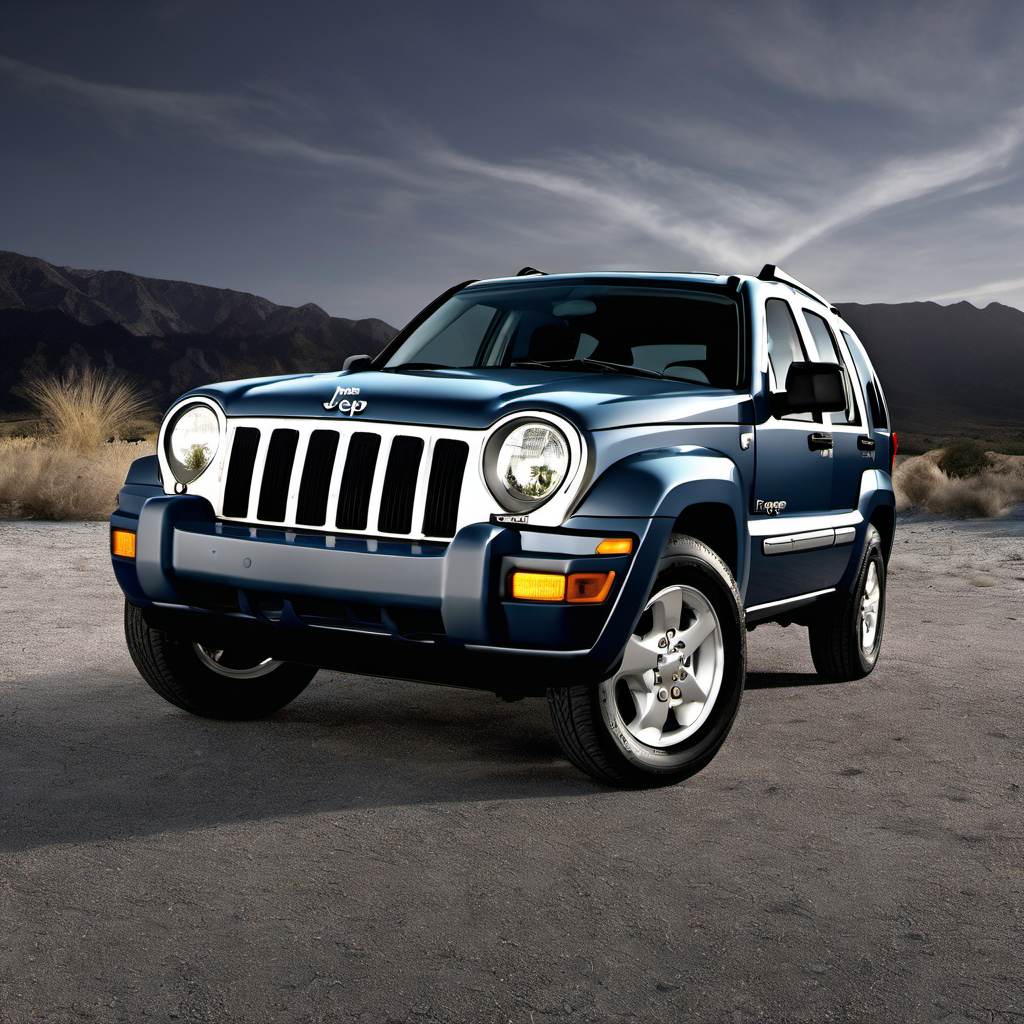
2005 Jeep Liberty SUV
Popular pick

2005 Jeep

LibertySUV

3.7L V6 Power Tech · SUV

The 2005 Jeep Liberty is a compact SUV built on a traditional body-on-frame platform — uncommon in its class by that era — giving it genuine off-road credentials that most car-based crossovers of the time couldn't match. It slots between the Wrangler and Grand Cherokee in Jeep's lineup, offering a rugged character with everyday usability. The standard engine is the 3.7L PowerTech V6, shared with the Dodge Dakota and Durango of the period. For daily driving, the Liberty is competent but not particularly refined. The ride is truck-like, fuel economy is average for the class, and interior materials are utilitarian at best. What it gives back is a high seating position, genuine 4WD capability, and relatively simple mechanicals that are straightforward to maintain and repair. At nearly 20 years old now, surviving examples need careful inspection for rust — a serious concern on anything that has spent Wisconsin winters on salted roads. Well-maintained examples with solid underbodies can still deliver reliable service; neglected ones tend to be money pits.

Reliability
2/5
Verified data
Engine
3.7L V6 Power Tech
Drivetrain
4WD/4-Wheel Drive/4x4
Fuel
Gasoline
MPG
17 city / 22 highway
Seats
5
Doors
4
Body
SUV
MSRP
$22,895

Overview

AI-curated

The 2005 Jeep Liberty is a compact SUV built on a traditional body-on-frame platform — uncommon in its class by that era — giving it genuine off-road credentials that most car-based crossovers of the time couldn't match. It slots between the Wrangler and Grand Cherokee in Jeep's lineup, offering a rugged character with everyday usability. The standard engine is the 3.7L PowerTech V6, shared with the Dodge Dakota and Durango of the period. For daily driving, the Liberty is competent but not particularly refined. The ride is truck-like, fuel economy is average for the class, and interior materials are utilitarian at best. What it gives back is a high seating position, genuine 4WD capability, and relatively simple mechanicals that are straightforward to maintain and repair. At nearly 20 years old now, surviving examples need careful inspection for rust — a serious concern on anything that has spent Wisconsin winters on salted roads. Well-maintained examples with solid underbodies can still deliver reliable service; neglected ones tend to be money pits.

Known for
  • Body-on-frame construction with real 4WD capability
  • 3.7L V6 PowerTech engine shared across Chrysler truck platforms
  • Upright, boxy stance with good ground clearance (7.8 in)
  • Utilitarian interior with straightforward controls
  • Rugged reputation — better trail capability than most compact SUVs of its era
Best for
  • Budget-conscious buyers who need a capable 4WD in a smaller package
  • Light trail and gravel-road use
  • Owners comfortable with basic DIY maintenance
  • Buyers who prefer simple, repairable mechanicals over tech-heavy systems
  • Secondary or seasonal vehicle duties
Watch for
  • Significant undercarriage rust on upper Midwest examples — inspect frame, floor pans, and rocker panels closely
  • 3.7L V6 is known for oil consumption and cylinder head issues on high-mileage engines
  • Fuel economy is poor by modern standards (17 city / 22 hwy)
  • Transmission reliability can be a concern past 100k miles without fluid service history
  • Parts availability is dwindling for some body and interior components

Common issues by mileage

6 known

3.7L V6 Oil Consumption / Cylinder Head Issues

high
Typically appears
80–150k mi
Estimated repair
$800 – $3,500

Oxygen Sensor Heater Circuit Failure

medium
Typically appears
60–120k mi
Estimated repair
$150 – $400

4-Speed Automatic Transmission Slipping or Harsh Shifts

medium
Typically appears
90–150k mi
Estimated repair
$400 – $2,800

Undercarriage / Frame Rust (Rockers, Floor Pans, Brake Lines)

high
Typically appears
All mileages on Midwest/salt-belt vehicles
Estimated repair
$300 – $4,000

Maintenance schedule

  1. 1
    Every 4,000–5,000 miles Engine oil and filter change

    The 3.7L V6 is prone to oil consumption. Shorter intervals help catch low oil levels early and reduce sludge buildup, which accelerates valve and timing component wear.

  2. 2
    Every 30,000 miles or 3 years Automatic transmission fluid service

    Chrysler's 45RFE/42RLE transmissions in this era are sensitive to fluid degradation. Many used Liberty transmission failures trace back to neglected fluid. Use the correct Chrysler ATF+4 spec.

  3. 3
    Every 30,000 miles Transfer case and front/rear differential fluid

    4WD systems depend on clean gear oil. Neglect leads to premature bearing and gear wear. Especially important if the vehicle sees any off-road or 4WD use.

  4. 4
    Every spring and fall Inspect undercarriage, frame, and brake lines for rust

    Wisconsin road salt is the #1 killer of these trucks. Catching rust-through on brake lines before they fail is a safety issue, not just a cosmetic one.

  5. 5
    Every 5 years or 50,000 miles Coolant system flush

    Degraded coolant accelerates corrosion inside the 3.7L engine's aluminum cylinder heads. Use only Chrysler-specified HOAT coolant — do not mix green conventional coolant.

  6. 6
    Every 30,000 miles Spark plugs and ignition wires

    The 3.7L runs best with fresh plugs. Worn plugs stress ignition coils and can contribute to rough idle and misfires common on aging V6s.

  7. 7
    Every fall before winter Battery test and terminal inspection

    Cold cranking demand in a Wisconsin winter will expose any weak battery. At 20 years old, corroded terminals and marginal batteries are common. Replace batteries proactively every 4–5 years.

  8. 8
    Every fall 4WD system operation check

    Engage 4WD before you need it in an emergency. Shift through all modes (2H, 4H, 4L) to verify engagement. Seldom-used 4WD systems develop vacuum line and shift motor issues from disuse.

Always defer to the manufacturer's service manual for warranty-mandated intervals.

Cost of ownership

Annual maintenance
$700 – $1,800
Fuel
At 19 MPG combined and ~12,000 miles/year, expect roughly $1,800–$2,200/year in fuel at current Midwest gas prices. City driving will push that higher.
Insurance
Typically in the $900–$1,400/year range for a 2005 Liberty in Wisconsin — lower than newer vehicles due to low market value, though liability and comp/collision minimums still apply.

The Liberty's low purchase price can be misleading. Annual maintenance on a 20-year-old example in the upper Midwest runs $700–$1,800 in a normal year, but rust repairs, a transmission service, or a head job can push a single year well above $3,000. Budget conservatively. Fuel costs are a persistent drag given the 19 MPG real-world average. Insurance is cheap. Overall cost of ownership is moderate-to-high relative to its current market value — make sure the asking price reflects the mechanical and body condition honestly.
Seasonal care

Lake Geneva, WI
Winter
  • Switch to a full-synthetic 5W-30 or 0W-30 oil before temperatures drop — the 3.7L needs easy cold starts at sub-zero temps and thin oil gets it there faster.
  • Test the battery every October. A battery marginal in summer will fail hard at -10°F. Replace anything below 500 CCA or over 5 years old.
  • Flush the washer fluid reservoir and fill with a rated -40°F washer fluid — standard fluid will freeze in the lines and crack the pump.
  • Inspect brake lines along the frame rails for rust pitting before winter. Salt accelerates pitting into through-holes. A brake line failure in January is dangerous and expensive.
  • Verify 4WD engagement in all modes before first snowfall. Engage 4H and 4L in a parking lot to confirm smooth transfer case operation.
  • Check door and hatch weather seals. Worn seals allow water intrusion that freezes door shut and accelerates interior floor rust on older Libertys.
Summer
  • Check tire pressure monthly — summer heat causes pressure to rise roughly 1 PSI per 10°F. Overinflated tires on a truck-based SUV worsen the already firm ride and wear center tread.
  • Inspect the A/C system for adequate cooling before July. The manual A/C system on this generation uses R-134a; recharge if blowing warm, but check for leaks first rather than just topping off.
  • Inspect the cooling system and hoses for heat soak vulnerability — the 3.7L aluminum heads do not tolerate overheating. Carry a watchful eye on the temp gauge on hot days.
  • Rinse the undercarriage thoroughly after winter to clear accumulated salt before summer heat bakes it into seams and crevices.
  • Check differential and transfer case breather vents — trail or creek crossings can waterlog these and contaminate gear oil.

Comparable vehicles

If you're shopping for one

Red flags
  • Any rust perforation on the frame — walk away, not a repair-it situation on a vehicle this age and value
  • Oil consumption complaints from seller or evidence of frequent top-offs between changes
  • Check engine light on or recently cleared — pull codes before purchase
  • Transmission that hesitates, slips, or shudders — rebuild costs can exceed vehicle value
  • Evidence of off-road use (mud packed in skid plates, undercarriage damage) without corresponding maintenance records
  • Soft or spongy brake pedal — could indicate a rusted-through brake line ready to fail
What to inspect
  • Frame rails and crossmembers for rust — probe with a screwdriver, not just a visual pass
  • Floor pans and rocker panels for rust-through, especially under floor mats
  • Brake lines along the entire undercarriage length for pitting or active rust bubbling
  • Engine oil level and condition at time of inspection — check for milky oil (head gasket) or heavy sludge
  • 4WD engagement: test 2H, 4H, and 4L — listen for clunks, grinding, or refusal to engage
  • Transmission behavior: check for slipping, delayed engagement from cold, or harsh 1-2 shifts
  • Coolant color and condition — should be clean orange/pink HOAT, not rusty brown or green
AI profile generated 4 days ago · claude-sonnet-4-6 · v2.