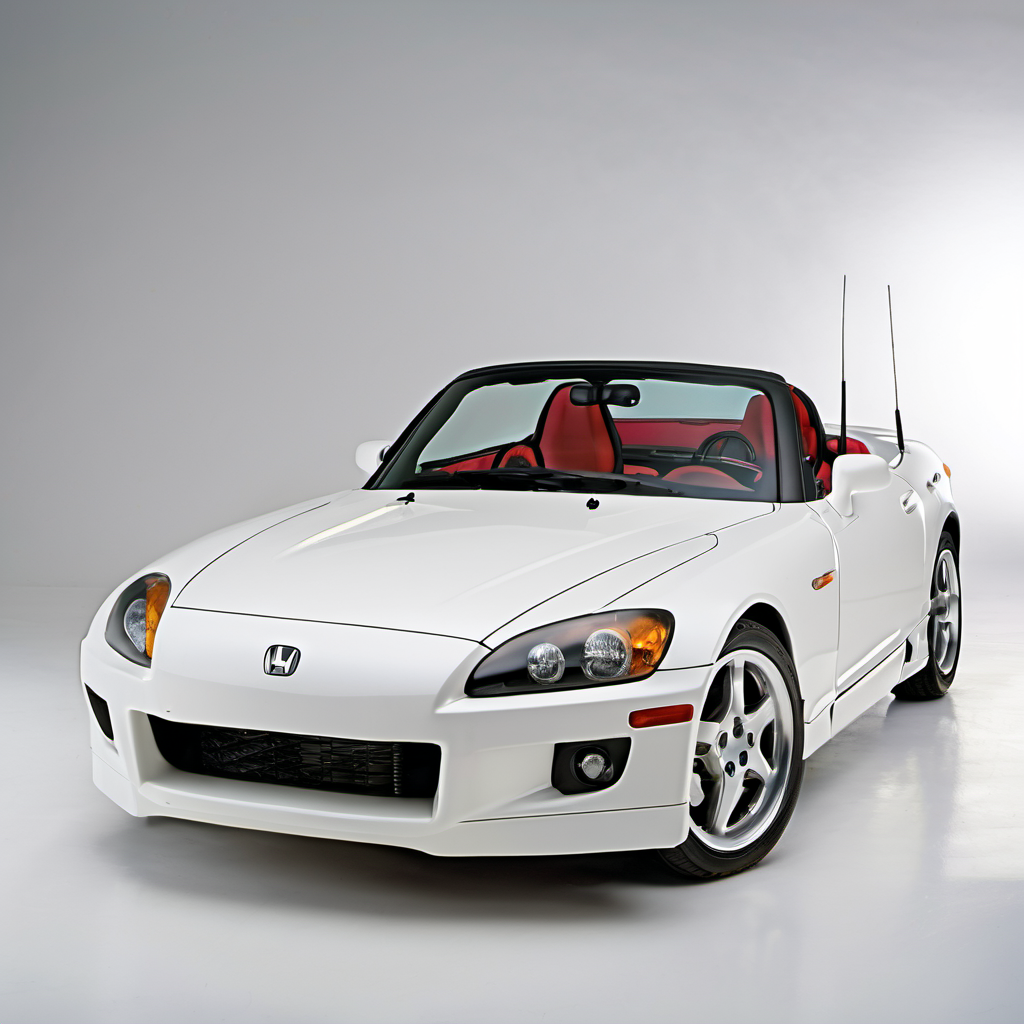
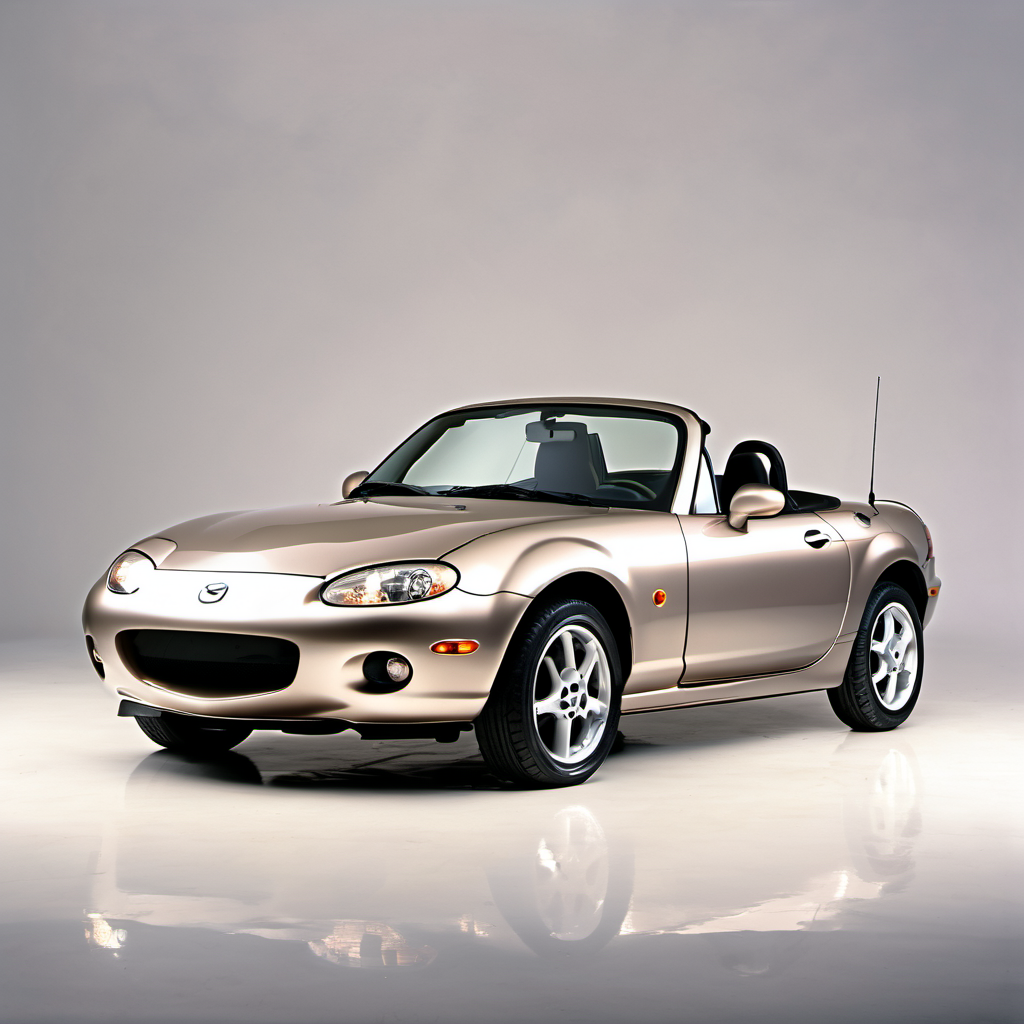
2003 Honda S2000 Convertible

2003 Honda

S2000Convertible

Convertible

The 2003 Honda S2000 is a purpose-built, rear-wheel-drive roadster that Honda developed to celebrate its 50th anniversary. Powered by the legendary F20C 2.0L VTEC inline-four, it produces 240 horsepower — a figure that equates to 120 hp per liter, a remarkable naturally aspirated benchmark for its era. Power is routed through a slick 6-speed manual gearbox, and the chassis is engineered for balance and feel above all else. The S2000 is a driver's car in the truest sense. Its high-revving engine (redline near 9,000 rpm), near-50/50 weight distribution, and taut suspension give it handling characteristics closer to a sports prototype than a typical roadster. The manual-only powertrain and stiff ride mean it demands driver engagement — this is not a relaxed cruiser. As a 20-plus-year-old convertible, condition varies enormously. Well-maintained, low-mileage examples are increasingly collectible. Poorly stored or track-abused cars can carry expensive deferred maintenance. In Lake Geneva's climate, rust and soft-top condition are the first things to assess on any used example.

Reliability
4/5
Verified data
Specs shown for S2000 — the most common configuration. Other trims may vary in engine, drivetrain, or fuel economy. Sign in to see your vehicle's exact specs.
Engine
[object Object]
Drivetrain
RWD
Fuel
Premium gasoline
MPG
18 city / 24 hwy / 20 combined
Seats
Doors
Body
Two Seaters

Overview

AI-curated

The 2003 Honda S2000 is a purpose-built, rear-wheel-drive roadster that Honda developed to celebrate its 50th anniversary. Powered by the legendary F20C 2.0L VTEC inline-four, it produces 240 horsepower — a figure that equates to 120 hp per liter, a remarkable naturally aspirated benchmark for its era. Power is routed through a slick 6-speed manual gearbox, and the chassis is engineered for balance and feel above all else. The S2000 is a driver's car in the truest sense. Its high-revving engine (redline near 9,000 rpm), near-50/50 weight distribution, and taut suspension give it handling characteristics closer to a sports prototype than a typical roadster. The manual-only powertrain and stiff ride mean it demands driver engagement — this is not a relaxed cruiser. As a 20-plus-year-old convertible, condition varies enormously. Well-maintained, low-mileage examples are increasingly collectible. Poorly stored or track-abused cars can carry expensive deferred maintenance. In Lake Geneva's climate, rust and soft-top condition are the first things to assess on any used example.

Known for
  • 9,000-rpm redline and screaming VTEC power delivery
  • Near-perfect 50/50 front-to-rear weight distribution
  • One of the most precise manual gearboxes Honda ever built
  • Collectible and appreciating in value
  • Exceptional build quality for a Japanese sports car of its era
Best for
  • Enthusiast drivers who want a pure, analog sports car experience
  • Weekend canyon or backroad driving
  • Collectors looking for a future classic
  • Drivers who enjoy a high-revving, naturally aspirated engine
Watch for
  • High-revving engine punishes skipped oil changes — engine wear accelerates fast with dirty oil
  • Soft top leaks and frame wear are common on older examples
  • RWD with summer tires is genuinely dangerous on Wisconsin winter roads
  • Track use history is hard to detect but significantly accelerates wear on suspension, brakes, and differential
  • Appreciation in value means asking prices have climbed — overpaying for a neglected car is a real risk

Common issues by mileage

6 known

Oil consumption and VTEC system wear from neglected oil changes

high
Typically appears
60–150k mi
Estimated repair
$2,500 – $8,000

Soft top leaks — worn seals, sagging fabric, or damaged rear window

high
Typically appears
Any mileage on 20+ year old cars
Estimated repair
$400 – $1,800

Differential wear — especially on cars with track or aggressive driving history

medium
Typically appears
60–120k mi
Estimated repair
$800 – $2,500

Rust in frame rails, rocker panels, and convertible top frame — common in salt-belt cars

high
Typically appears
Any mileage
Estimated repair
$500 – $4,000

Oxygen sensor / A/F sensor failure causing rough idle or poor fuel trims

medium
Typically appears
80–150k mi
Estimated repair
$150 – $400

Suspension wear — ball joints, tie rod ends, and rear toe links on high-mileage or track-driven cars

medium
Typically appears
80–150k mi
Estimated repair
$400 – $1,200

Maintenance schedule

  1. 1
    Every 5,000 miles or 6 months, whichever comes first Engine oil and filter change — use full synthetic 5W-30 or 10W-30 per Honda spec

    The F20C runs at extremely high RPM and has tight tolerances. Oil degradation is faster than average. This is the single most important maintenance item on an S2000.

  2. 2
    Every 30,000 miles Valve clearance inspection and adjustment

    The high-revving VTEC engine is sensitive to valve clearance drift. Out-of-spec clearances accelerate wear and can cause misfires at high RPM.

  3. 3
    Every 30,000 miles Differential fluid change

    The limited-slip differential (on equipped models) degrades fluid faster than an open diff. Fresh fluid preserves clutch packs and prevents chatter.

  4. 4
    Every spring and fall Soft top inspection — seals, frame, fabric, and rear window

    Wisconsin winters are hard on convertible tops. Catching a failing seal before it leaks into the cabin prevents water damage to carpets, ECU, and wiring.

  5. 5
    Every 5 years or 60,000 miles Coolant flush

    Honda's long-life coolant does degrade. Old coolant becomes acidic and attacks aluminum components in the cooling system.

  6. 6
    Every 2 years Brake fluid flush

    Brake fluid absorbs moisture over time, lowering its boiling point. On a performance car used near its limits, degraded fluid increases fade risk.

  7. 7
    Every 30,000 miles Spark plug replacement — use OEM-spec iridium plugs

    Worn plugs rob a high-compression VTEC engine of power and crisp throttle response. Plugs are also a good diagnostic opportunity to check combustion health.

  8. 8
    Every fall before winter storage Battery load test and terminal inspection

    The S2000 is typically stored through Wisconsin winters. A battery that tests marginal in October will almost certainly fail by spring. Clean terminals prevent corrosion-related electrical gremlins.

Always defer to the manufacturer's service manual for warranty-mandated intervals.

Cost of ownership

Annual maintenance
$600 – $1,800
Fuel
Premium fuel (91 octane) required. At 20 MPG combined and ~12,000 miles/year, expect roughly $1,800–$2,200/year depending on gas prices.
Insurance
Higher than average for a sports car. Performance car classification and convertible body typically push premiums up. Expect $1,200–$2,000/year for a clean driving record; less if stored and on a collector policy during winter months.

A well-maintained S2000 with no deferred repairs is reasonably affordable to operate — Honda parts are widely available and not exotic in price. The risk is buying a car with hidden problems: a single engine repair or rust remediation job can cost more than a year of normal maintenance. Budget conservatively until you have a full service history in hand.
Seasonal care

Lake Geneva, WI
Winter
  • Store the car during Wisconsin winter if at all possible. The S2000's RWD, low ground clearance (4.5 in), and summer-performance tire fitment make it genuinely hazardous in snow and ice.
  • Before storage, perform a full oil change — used oil contains acids that corrode engine internals during long sits.
  • Use a quality battery maintainer (trickle charger) throughout storage to prevent the battery from sulfating.
  • Wash and dry the car thoroughly before storage, paying attention to the rocker panels and convertible top frame where salt accumulates and causes rust.
  • Store with the soft top up and apply a convertible top conditioner to prevent the fabric and seals from drying and cracking in the cold.
  • Check antifreeze concentration to handle sub-zero temps — target protection to at least -34°F for the Lake Geneva area.
Summer
  • Check tire pressure at every fill-up — summer performance tires lose pressure noticeably as temperatures swing, and the S2000 is sensitive to pressure changes in handling balance.
  • Inspect and clean the A/C condenser — the low front fascia picks up road debris that blocks airflow and reduces cooling efficiency.
  • Check coolant level and condition before summer driving season. The aluminum engine and tight packaging make overheating expensive.
  • UV exposure degrades the soft top fabric and rear plastic window rapidly. Use a UV-protectant treatment on the top and a quality wax or paint sealant on the body.
  • Top off with fresh 91-octane premium fuel — ethanol-blended fuels that sat in the tank over winter storage can cause rough running and should be diluted with fresh fuel.

Comparable vehicles

If you're shopping for one

Red flags
  • Any signs of track use: heavily worn or mismatched tires, aftermarket suspension with no documentation, brake dust buildup behind the wheels inconsistent with street driving.
  • Modified ECU or aftermarket tune — high-revving VTEC engines pushed beyond OEM parameters wear much faster.
  • Rust anywhere on the convertible top frame or body seams. Structural rust on a unibody roadster is very expensive to fix correctly.
  • Owner cannot provide any maintenance records and the car has high mileage.
  • Soft top that leaks — even minor leaks lead to water intrusion into the ECU, fuse box, and carpets, creating electrical problems that are hard to trace.
  • Engine that takes more than a second or two to build oil pressure on cold start — indicates worn bearings or a failing oil pump.
What to inspect
  • Pull oil cap and check for milky residue (head gasket). Inspect the dipstick for sludge — both indicate oil neglect, which is a dealbreaker on this engine.
  • Ask specifically about valve clearance adjustment history. This is a commonly skipped interval and its absence accelerates engine wear.
  • Inspect the convertible top frame (visible from inside the cabin) for rust and the soft top fabric for cracks, tears, and delamination at the seams.
  • Check the rear window — the plastic rear window yellows, cracks, and separates from the fabric on older tops. Replacement is $400–$1,200.
  • Look closely at the rocker panels, frame rails under the door sills, and around the rear wheel arches for rust. Use a flashlight and a magnet.
  • Test drive the car and bring the engine to redline through the VTEC engagement point (around 5,800 rpm on the AP1). VTEC should engage cleanly without hesitation or stumble.
  • Check differential operation — listen for clunking or grinding on tight turns, which indicates a worn LSD.
  • Review any available service records. An S2000 with no paperwork is a higher-risk buy given how much damage improper maintenance can cause silently.
AI profile generated 47 min ago · claude-sonnet-4-6 · v2.