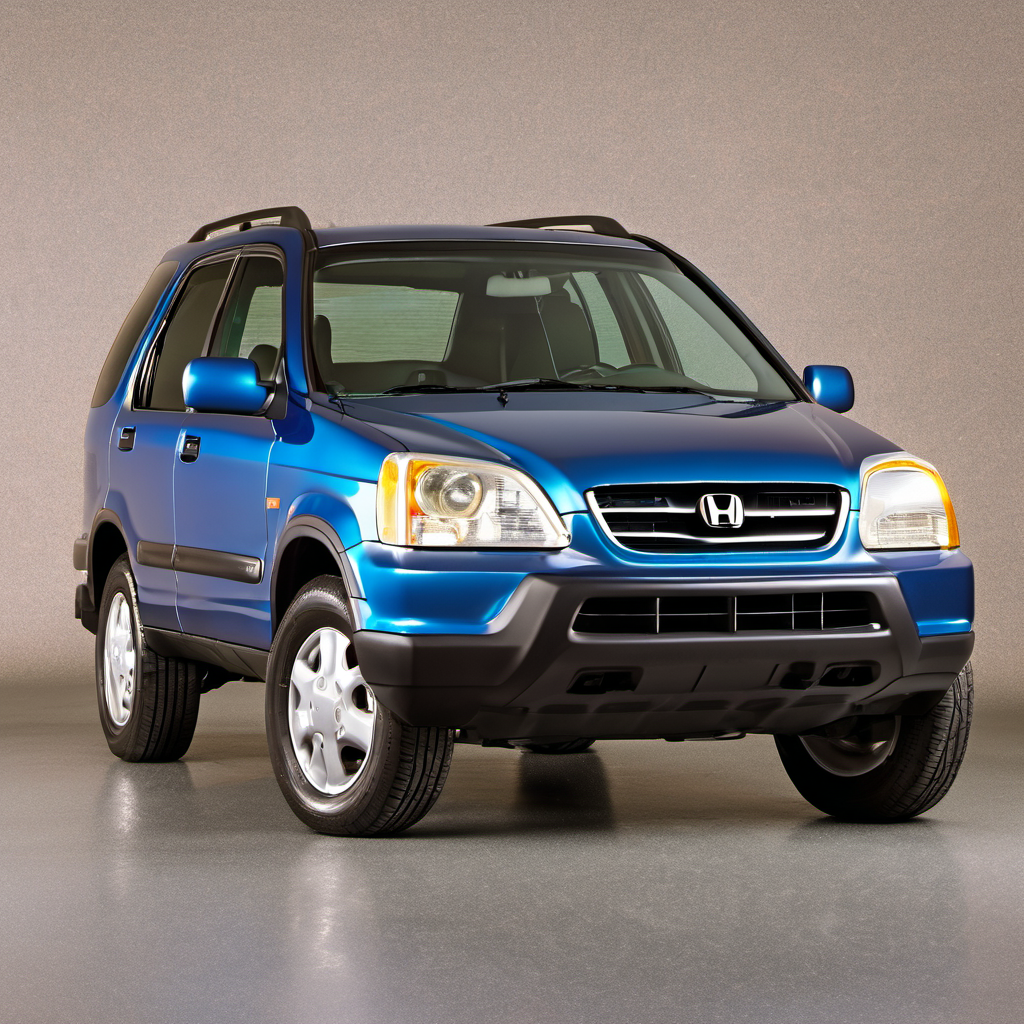
2000 Kia Sportage SUV

2000 Kia

SportageSUV

SUV

The 2000 Kia Sportage is a compact SUV from Kia's first-generation lineup, built on a truck-style body-on-frame platform shared with some Mazda components. It was one of Kia's early attempts at the North American market and offered an affordable entry point into the small SUV segment. By modern standards it's underpowered and thirsty for its size, but it was cheap to buy new and parts are widely available even today. The first-gen Sportage (1995–2002) has a well-documented reputation for mechanical fragility. The 2.0L engine is adequate for light duty but the supporting systems — cooling, timing, and drivetrain — demand attentive maintenance. Rust is a serious concern on any surviving example in the upper Midwest; these vehicles were not built with heavy corrosion protection. At 25+ years old, a 2000 Sportage is now a budget used vehicle. Expect high mileage, deferred maintenance, and significant rust on any Wisconsin example. Approach with realistic expectations: it can still serve as a basic runabout or light trail vehicle if the mechanicals are solid, but it will need investment to stay on the road.

Reliability
2/5
Verified data
Specs shown for Sportage 2WD — the most common configuration. Other trims may vary in engine, drivetrain, or fuel economy. Sign in to see your vehicle's exact specs.
Engine
[object Object]
Drivetrain
RWD
Fuel
Gasoline
MPG
16 city / 20 hwy / 18 combined
Seats
Doors
Body
Sport Utility Vehicle - 2WD

Overview

AI-curated

The 2000 Kia Sportage is a compact SUV from Kia's first-generation lineup, built on a truck-style body-on-frame platform shared with some Mazda components. It was one of Kia's early attempts at the North American market and offered an affordable entry point into the small SUV segment. By modern standards it's underpowered and thirsty for its size, but it was cheap to buy new and parts are widely available even today. The first-gen Sportage (1995–2002) has a well-documented reputation for mechanical fragility. The 2.0L engine is adequate for light duty but the supporting systems — cooling, timing, and drivetrain — demand attentive maintenance. Rust is a serious concern on any surviving example in the upper Midwest; these vehicles were not built with heavy corrosion protection. At 25+ years old, a 2000 Sportage is now a budget used vehicle. Expect high mileage, deferred maintenance, and significant rust on any Wisconsin example. Approach with realistic expectations: it can still serve as a basic runabout or light trail vehicle if the mechanicals are solid, but it will need investment to stay on the road.

Known for
  • Affordable first-gen compact SUV with basic 4WD capability
  • Simple, accessible mechanicals that an experienced DIYer can work on
  • Small footprint — easy to park and maneuver
  • Prone to rust, especially frame and rocker panels in salt-belt states
  • Underpowered 2.0L four-cylinder for the vehicle's weight
Best for
  • Budget-conscious buyers wanting basic SUV utility
  • Light off-road or trail use on solid ground
  • Short-distance commuting and errands
  • DIY mechanics comfortable with older, simpler vehicles
Watch for
  • Frame and underbody rust — a deal-breaker on most Wisconsin survivors
  • Head gasket failures on the 2.0L engine, especially on neglected examples
  • Timing belt neglect — interference engine, belt failure destroys the motor
  • Transfer case and rear differential leaks or failures
  • Very limited crash safety by modern standards — no side airbags on this year

Common issues by mileage

6 known

Timing belt failure (interference engine)

high
Typically appears
60–100k mi
Estimated repair
$300 – $600

Head gasket failure / overheating

high
Typically appears
80–150k mi
Estimated repair
$900 – $1,800

Rust — frame, rocker panels, and floor pans

high
Typically appears
Any mileage on salt-belt vehicles
Estimated repair
$500 – $4,000

Transfer case / 4WD engagement problems

medium
Typically appears
80–140k mi
Estimated repair
$400 – $1,500

Cooling system failure (radiator, hoses, thermostat)

high
Typically appears
60–120k mi
Estimated repair
$200 – $800

Maintenance schedule

  1. 1
    Every 60,000 miles or 5 years — do not skip Timing belt and water pump replacement

    This is an interference engine. A failed belt will bend valves and likely total the motor. Replace the water pump at the same time since it's driven off the same belt and the labor is already done.

  2. 2
    Every 2 years or 30,000 miles Coolant flush and cooling system inspection

    Head gasket failures on this engine are often traced to cooling system neglect. Old coolant loses its corrosion inhibitors and attacks the gasket and aluminum surfaces.

  3. 3
    Every 3,000–5,000 miles with conventional oil Engine oil and filter change

    At this age and mileage, conventional oil at shorter intervals is safer than extended-drain synthetic schedules. Sludge buildup accelerates wear on this engine.

  4. 4
    Every 30,000 miles or when fluid appears dark/gritty Transfer case and differential fluid change

    These units are rarely serviced on used examples. Contaminated fluid is a leading cause of 4WD engagement problems and diff failures.

  5. 5
    Annually — every fall before road salt season Underbody rust inspection and treatment

    Wisconsin road salt is aggressive. Annual inspection of the frame, floor pans, and brake lines can catch developing rust before it becomes structural or safety-critical.

  6. 6
    Every 2 years Brake line and fuel line inspection

    Steel brake and fuel lines corrode from the outside on salt-belt vehicles. A rusted-through brake line is a sudden, dangerous failure.

  7. 7
    Every 30,000 miles Spark plugs and ignition wires

    The 2.0L runs better and more efficiently with fresh plugs. Old plug wires crack in cold Wisconsin winters and cause misfires on cold starts.

  8. 8
    Every fall Battery load test

    The Sportage's charging system and cold-start demands are hard on batteries. A battery that passes a summer test can still fail at -10°F. Load test before winter every year.

Always defer to the manufacturer's service manual for warranty-mandated intervals.

Cost of ownership

Annual maintenance
$600 – $1,800
Fuel
At 18 MPG combined and ~12,000 miles/year, expect roughly $1,400–$1,700/year in fuel at current Wisconsin prices. Higher if mostly city driving.
Insurance
Liability-only coverage on a vehicle this age and value typically runs $400–$700/year in the Lake Geneva area, depending on your record and insurer. Full coverage is rarely cost-justified given the vehicle's low market value.

The 2000 Sportage is cheap to insure and has inexpensive parts, but its age means you should budget for reactive repairs rather than just routine maintenance. A timing belt job, head gasket, or rust repair can easily exceed the vehicle's market value in a single visit. Budget $600–$1,800 for routine upkeep in a good year; a bad year with a major repair could run $2,500 or more. This is a vehicle where a thorough pre-purchase inspection is essential.
Seasonal care

Lake Geneva, WI
Winter
  • Load-test the battery every fall — cold-cranking demand at Wisconsin temps will expose any weak battery before it strands you.
  • Switch to a winter-grade washer fluid rated to at least -20°F; the standard fluid will freeze solid in the reservoir and lines.
  • Inspect the entire brake system including steel lines for rust pitting before winter — a corroded line can fail suddenly when salt accelerates existing damage.
  • Spray exposed underbody components (frame rails, suspension points, axles) with a rust inhibitor in October before heavy salting begins.
  • Check that the 4WD engagement mechanism works before you need it — test it in a safe, empty lot early in the season.
  • Use a fuel treatment or keep the tank at least half full to reduce moisture condensation in the fuel system during extended cold snaps.
Summer
  • Inspect all coolant hoses and the radiator cap after winter — freeze-thaw cycles stress rubber hoses and cap seals, and summer heat will find the weak spots.
  • Check tire pressure monthly — pressure drops roughly 1 PSI per 10°F temperature change, and under-inflated tires on a heavier-than-it-looks SUV wear unevenly.
  • Test the A/C system in May before the first hot stretch — recharging a system that's lost refrigerant over winter is far easier to schedule than an emergency repair in July.
  • Inspect the serpentine and accessory belts for cracking or glazing; heat accelerates belt deterioration on this vintage of vehicle.

Comparable vehicles

If you're shopping for one

Red flags
  • Soft, flaky, or perforated frame rails — walk away, this is a structural safety issue that is rarely worth repairing on a vehicle this value.
  • White or grey smoke from the exhaust on a warm engine — head gasket failure is expensive and often signals deeper overheating damage.
  • No timing belt service records and over 60,000 miles since last known replacement — the risk of immediate belt failure is real.
  • Milky or foamy oil on the dipstick or under the oil cap — coolant in the oil means head gasket or worse.
  • 4WD that won't engage or grinds badly — transfer case rebuilds can cost more than the vehicle is worth.
  • Any signs of flood damage (mud in crevices, musty interior, corrosion on electrical connectors) — electrical gremlins on a 25-year-old Kia are a nightmare to chase.
What to inspect
  • Put the vehicle on a lift and probe the frame rails, crossmembers, and floor pans with a screwdriver — rust perforation is common and can be a safety or structural failure.
  • Check all brake lines end-to-end for surface rust, pitting, or soft spots; these are safety-critical and expensive to replace on a rusted vehicle.
  • Verify the timing belt service history — if the seller can't prove it was done within the last 60k miles, price that job ($300–$600) into your offer.
  • Run the engine to full operating temp and watch for white exhaust smoke or a sweet coolant smell from the tailpipe — signs of a head gasket on its way out.
  • Test 4WD engagement in both 4H and 4L; clunking, grinding, or refusal to engage points to transfer case or front axle problems.
  • Check for oil leaks at the valve cover, front and rear crankshaft seals, and oil pan — these are common on high-mileage examples.
AI profile generated 4 days ago · claude-sonnet-4-6 · v2.