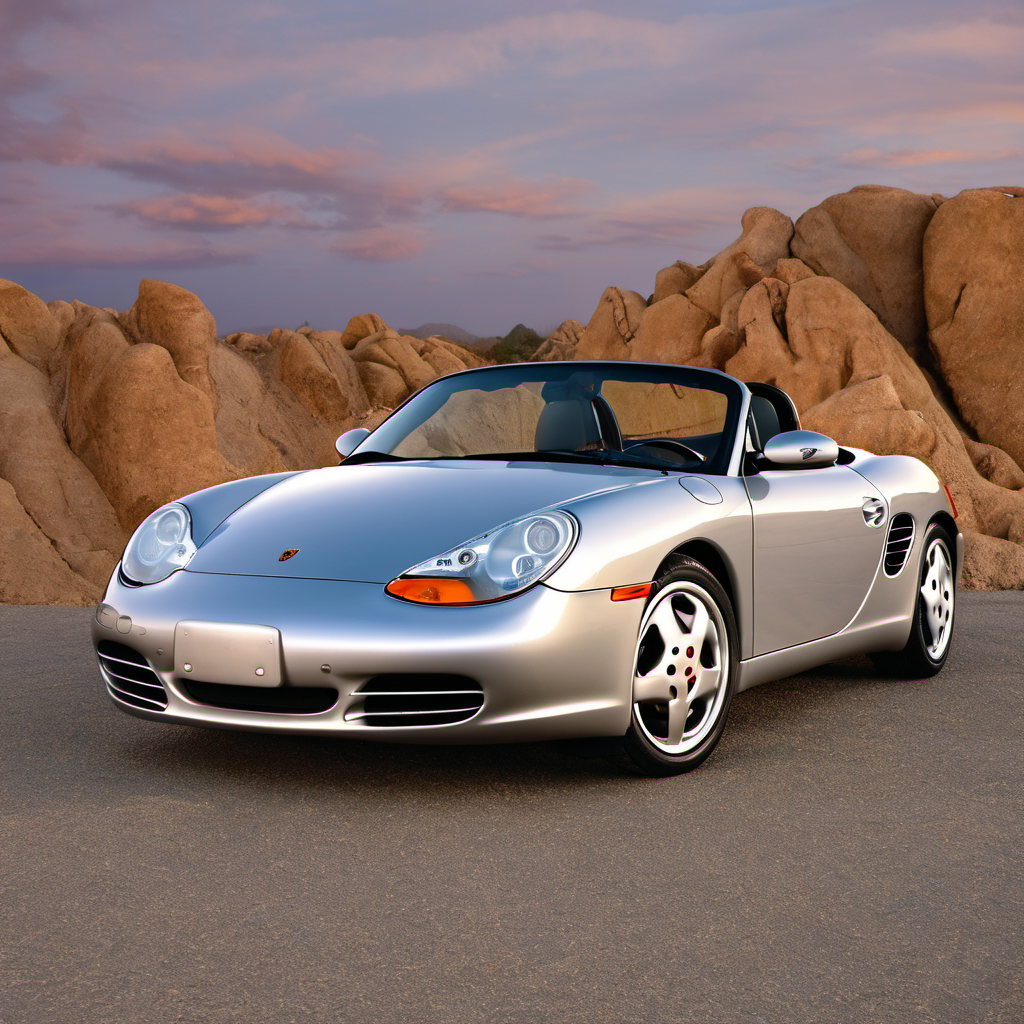
1998 Porsche Boxster Convertible

1998 Porsche

BoxsterConvertible

Convertible

The 1998 Porsche Boxster (986 generation) was Porsche's reintroduction of an affordable mid-engine roadster, and it largely delivered on the promise. Sharing architecture with the 996-generation 911, the first-year Boxster used a 2.5L flat-six mounted behind the driver, giving it near-perfect 50/50 weight distribution and genuinely rewarding handling. It arrived as a breath of fresh air for the brand and attracted buyers who wanted a true sports car experience without 911 pricing. That said, the 986 Boxster carries a serious asterisk: the M96 engine family has a well-documented intermediate shaft (IMS) bearing weakness and a tendency toward rear main seal leaks and coolant loss. These are not theoretical concerns on a 25+ year old car — they are the reason pre-purchase inspection by a Porsche-familiar independent shop is non-negotiable. Deferred maintenance on these engines can turn a $15,000 car into a $20,000 paperweight. For the right owner — someone who appreciates the driving experience, budgets for specialist maintenance, and treats it as a fair-weather second car — the 1998 Boxster is one of the most rewarding sports cars you can own at its price point. For someone expecting Honda Civic running costs, it will disappoint.

Reliability
2/5
Verified data
Specs shown for Boxster — the most common configuration. Other trims may vary in engine, drivetrain, or fuel economy. Sign in to see your vehicle's exact specs.
Engine
[object Object]
Drivetrain
RWD
Fuel
Premium gasoline
MPG
15 city / 22 hwy / 17 combined
Seats
Doors
Body
Two Seaters

Overview

AI-curated

The 1998 Porsche Boxster (986 generation) was Porsche's reintroduction of an affordable mid-engine roadster, and it largely delivered on the promise. Sharing architecture with the 996-generation 911, the first-year Boxster used a 2.5L flat-six mounted behind the driver, giving it near-perfect 50/50 weight distribution and genuinely rewarding handling. It arrived as a breath of fresh air for the brand and attracted buyers who wanted a true sports car experience without 911 pricing. That said, the 986 Boxster carries a serious asterisk: the M96 engine family has a well-documented intermediate shaft (IMS) bearing weakness and a tendency toward rear main seal leaks and coolant loss. These are not theoretical concerns on a 25+ year old car — they are the reason pre-purchase inspection by a Porsche-familiar independent shop is non-negotiable. Deferred maintenance on these engines can turn a $15,000 car into a $20,000 paperweight. For the right owner — someone who appreciates the driving experience, budgets for specialist maintenance, and treats it as a fair-weather second car — the 1998 Boxster is one of the most rewarding sports cars you can own at its price point. For someone expecting Honda Civic running costs, it will disappoint.

Known for
  • Mid-engine layout with exceptional balance and handling
  • Flat-six exhaust note — one of the best sounds in its class
  • Shared 996 911 architecture (good and bad)
  • IMS bearing and rear main seal as recurring ownership concerns
  • Affordable entry point into genuine Porsche sports car ownership
Best for
  • Enthusiast drivers who prioritize handling over practicality
  • Fair-weather or second-car use (not ideal as a daily in Wisconsin winters)
  • Owners willing to learn the platform and budget for specialist service
  • Weekend canyon/backroad drivers
Watch for
  • IMS (intermediate shaft) bearing failure — can be catastrophic and engine-ending
  • Rear main seal leaks leading to oil contamination of the clutch
  • Coolant leaks from the water pump housing and expansion tank
  • Convertible top hydraulic system failures and torn top fabric on aged cars
  • Corrosion in the rocker panels and front trunk area on cars not garaged in winter climates

Common issues by mileage

6 known

IMS (Intermediate Shaft) Bearing Failure

high
Typically appears
60–130k mi
Estimated repair
$8,000 – $18,000

Rear Main Seal (RMS) Oil Leak

high
Typically appears
50–100k mi
Estimated repair
$1,200 – $2,800

Coolant Loss — Water Pump, Expansion Tank, Thermostat Housing

high
Typically appears
60–120k mi
Estimated repair
$600 – $1,800

Convertible Top Hydraulic Failure or Torn Top Fabric

medium
Typically appears
Any mileage on 20+ year old cars
Estimated repair
$400 – $3,500

AOS (Air Oil Separator) Failure Causing Oil Consumption and Misfires

medium
Typically appears
70–120k mi
Estimated repair
$300 – $700

Oxygen Sensor / O2 Heater Circuit Faults

medium
Typically appears
80k+ mi
Estimated repair
$200 – $600

Maintenance schedule

  1. 1
    Every 5,000 miles or annually — do not stretch intervals Engine oil change with OEM-spec 0W-40 full synthetic

    The M96 engine's IMS bearing and valve train are sensitive to oil degradation. Extended intervals are the single biggest contributor to premature engine failure on these cars.

  2. 2
    If not documented, perform before 80k mi or immediately at purchase IMS bearing retrofit inspection or replacement

    The stock IMS bearing can fail catastrophically. An aftermarket single-row or ceramic bearing upgrade eliminates this failure mode. Verify via service records before buying.

  3. 3
    Every 40,000 miles or every 4 years Coolant system inspection — water pump, expansion tank, hoses

    The plastic expansion tank and water pump housing are known to crack and leak. A cooling system failure can lead to overheating and head gasket damage, so proactive replacement is cheaper than the alternative.

  4. 4
    Every 40,000–50,000 miles Serpentine/accessory belt and tensioner replacement

    Belt failure strands the car and can cause ancillary damage. Tensioner wear is common at this age.

  5. 5
    Every 2 years regardless of mileage Brake fluid flush

    Porsche specifies this interval and the ABS/brake system is performance-tuned — old, moisture-saturated fluid raises pedal fade risk in spirited driving.

  6. 6
    Every spring, before active use season Inspect and lubricate convertible top mechanism and hydraulic lines

    Hydraulic cylinders and the top frame hinges age quickly on cars stored through Wisconsin winters. Catching a slow leak early is a $200 fix; ignoring it becomes $1,500+.

  7. 7
    Every spring after winter storage Inspect underbody, rocker panels, and front trunk area for corrosion

    Road salt is the primary enemy of any vehicle stored in Wisconsin. The Boxster's rocker panels and front frunk drain channels trap moisture and are prone to rust on cars that have seen winter roads.

  8. 8
    Every 60,000 miles or when excessive oil consumption or blue smoke is noted Air oil separator (AOS) inspection

    A failed AOS routes oil vapor into the intake, causing fouled plugs, misfires, and accelerated engine wear. It's an inexpensive part that has an outsized effect on engine health.

Always defer to the manufacturer's service manual for warranty-mandated intervals.

Cost of ownership

Annual maintenance
$1,200 – $3,500
Fuel
Premium (91+ octane) required. At ~17 MPG combined and typical driving, expect $1,800–$2,800/year depending on fuel price and usage.
Insurance
Typically $900–$1,600/year for a pleasure/seasonal-use policy in Wisconsin on a vehicle this age and value. Full-coverage rates vary widely by driver history.

The 1998 Boxster is cheap to buy and expensive to own if something goes wrong. Normal annual maintenance (oil, brakes, filters, belts) runs $1,200–$2,000 at an independent shop. In years when a major item hits — coolant system, AOS, or worst-case IMS bearing — costs can spike to $3,500–$18,000. Budget a meaningful repair reserve each year. Owners who stay proactive and keep records usually manage total ownership costs reasonably well; those who defer maintenance do not.
Seasonal care

Lake Geneva, WI
Winter
  • Do not drive this car on salted Wisconsin roads. The undercarriage, rocker panels, and front trunk are corrosion-vulnerable and were not designed for winter road use.
  • Store on a battery tender (maintainer) — the 1998 electrical system and alarm draw enough parasitic current to kill a battery over a 4–5 month storage period.
  • Before storage, perform an oil change so the engine sits on fresh oil free of combustion acids.
  • Fill the fuel tank and add a fuel stabilizer if storing more than 60 days to prevent fuel degradation and varnish in the injection system.
  • Inflate tires to the upper end of the recommended range to counteract cold-weather pressure loss during storage.
  • Place the convertible top up and use a breathable indoor car cover — avoid non-breathable covers that trap condensation against the fabric top.
Summer
  • Check tire pressure at each fill-up — heat expands air and summer temps can push an already-warm tire over safe limits on a car driven enthusiastically.
  • Inspect the A/C system before hot weather; the 986 A/C condenser and refrigerant lines are aged and recharge may be needed every few years.
  • Watch coolant temperature closely — the M96 runs warm and any sustained overheating should be treated as an emergency stop situation, not a 'limp home' scenario.
  • Inspect the convertible top seals and weatherstripping for cracking from UV exposure; a leaking top means water in the footwells and accelerated interior mold.
  • Clean and condition the convertible top fabric with an appropriate vinyl/fabric protectant to prevent UV degradation and maintain water repellency.

Comparable vehicles

1998 BMW Z3
1998 BMW
Z3

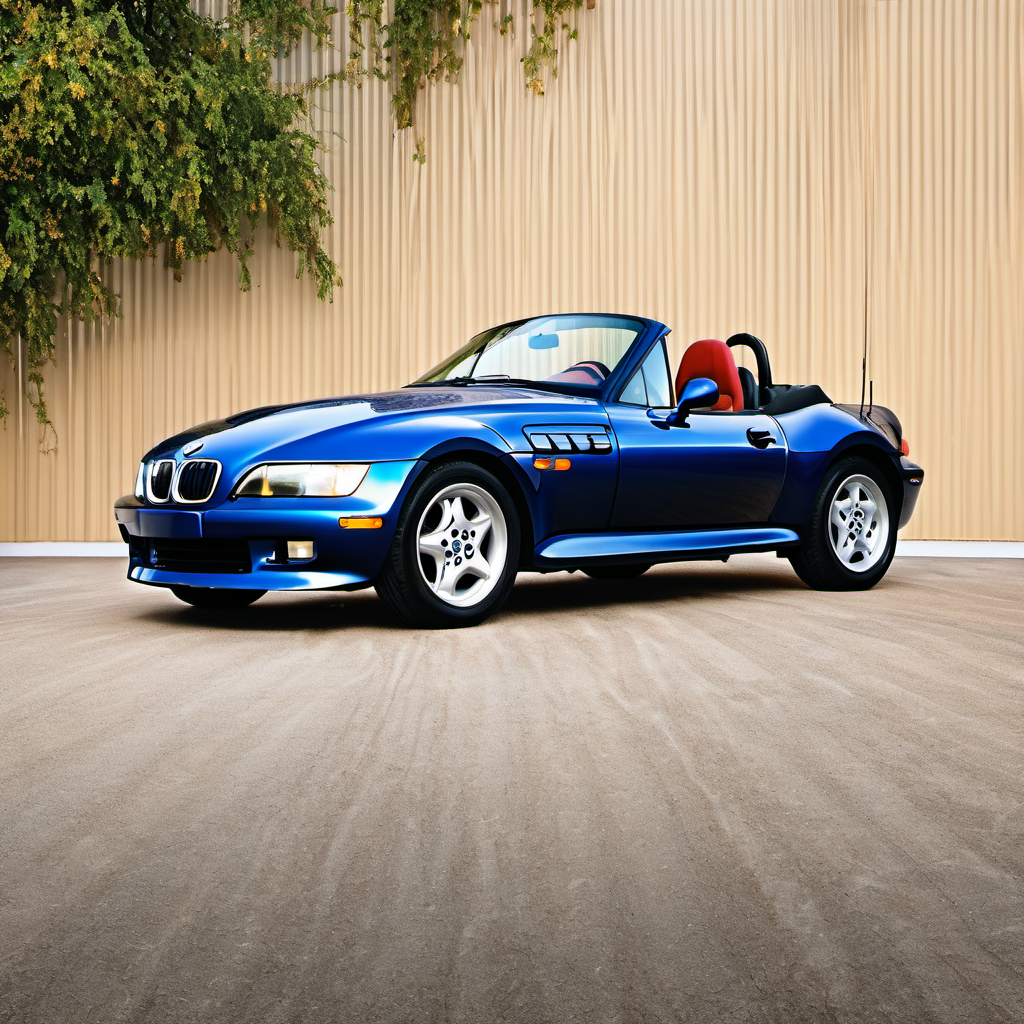
Same era rear-wheel-drive roadster with a similar fun-to-drive brief. Less exotic, cheaper to maintain, but less balanced than the mid-engine Boxster. Good alternative for buyers wary of M96 engine risk.

1999 Mazda
Miata

Far more reliable, significantly cheaper to own, and nearly as engaging to drive on a twisty road. Lacks the Boxster's power and prestige, but won't present a $15,000 engine repair bill.

No catalog match
1998 Mercedes-Benz
SLK230

Comparable price bracket convertible from the same era. More GT-oriented than driver-focused, hardtop folding roof is a practical advantage, but maintenance costs are similarly elevated for a 25-year-old German car.

No catalog match
2000 Honda S2000
2000 Honda
S2000

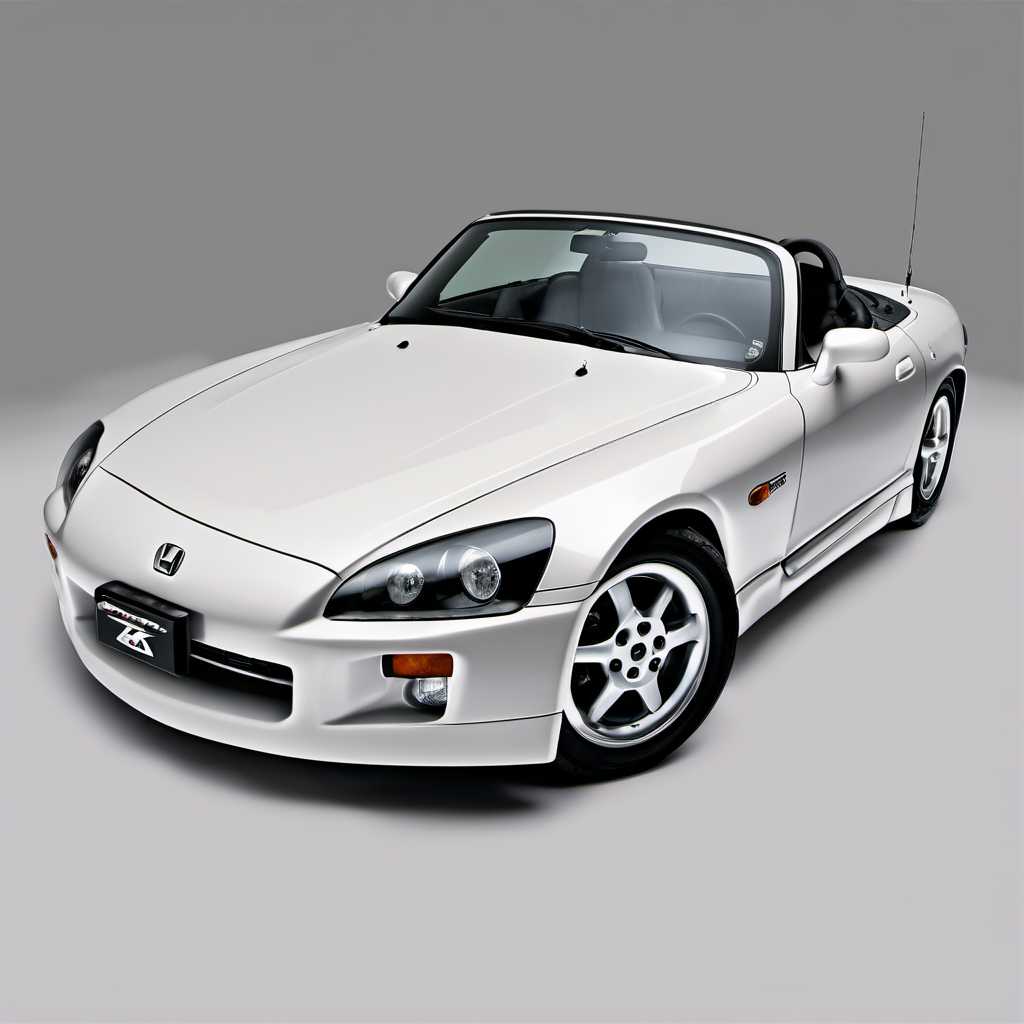
Launched in 1999/2000, the S2000 is the closest competitor in terms of driver engagement and RWD roadster layout — with dramatically better long-term reliability and lower ownership costs. Worth comparing directly if budget allows a slightly newer car.

If you're shopping for one

Red flags
  • No service records or ownership history — walk away. The IMS bearing risk alone requires documentation.
  • Recent engine replacement or rebuild with no paperwork explaining why — could indicate a prior catastrophic failure.
  • Any sign of overheating history: warped header tank, stained coolant reservoir, or prior head gasket repair.
  • Soft or sunken convertible top hydraulic operation, or a top that won't fully seal — hydraulic rebuilds are expensive.
  • Rust in the front trunk floor or visible rocker panel corrosion — structural repairs on a Boxster are disproportionately costly.
  • Compression or leak-down results outside spec — any cylinder-to-cylinder variance over 10% is a red flag.
What to inspect
  • Demand full service records — specifically look for documented IMS bearing replacement (LN Engineering or similar retrofit) and note the mileage it was done.
  • Pull the oil cap and look for creamy residue or excessive vapor — a sign of coolant intrusion or head gasket issues.
  • Check for oil weeping around the rear of the engine (rear main seal) and under the car after a warm idle.
  • Test the convertible top through a full open/close cycle — listen for hydraulic pump hesitation or top frame binding.
  • Inspect the front trunk (frunk) floor and rocker panels for rust bubbling, soft spots, or poorly-repaired crash damage.
  • Have a Porsche-familiar independent shop perform a pre-purchase inspection including a compression and leak-down test — this is not optional on an M96-engined car.
AI profile generated 4 days ago · claude-sonnet-4-6 · v2.