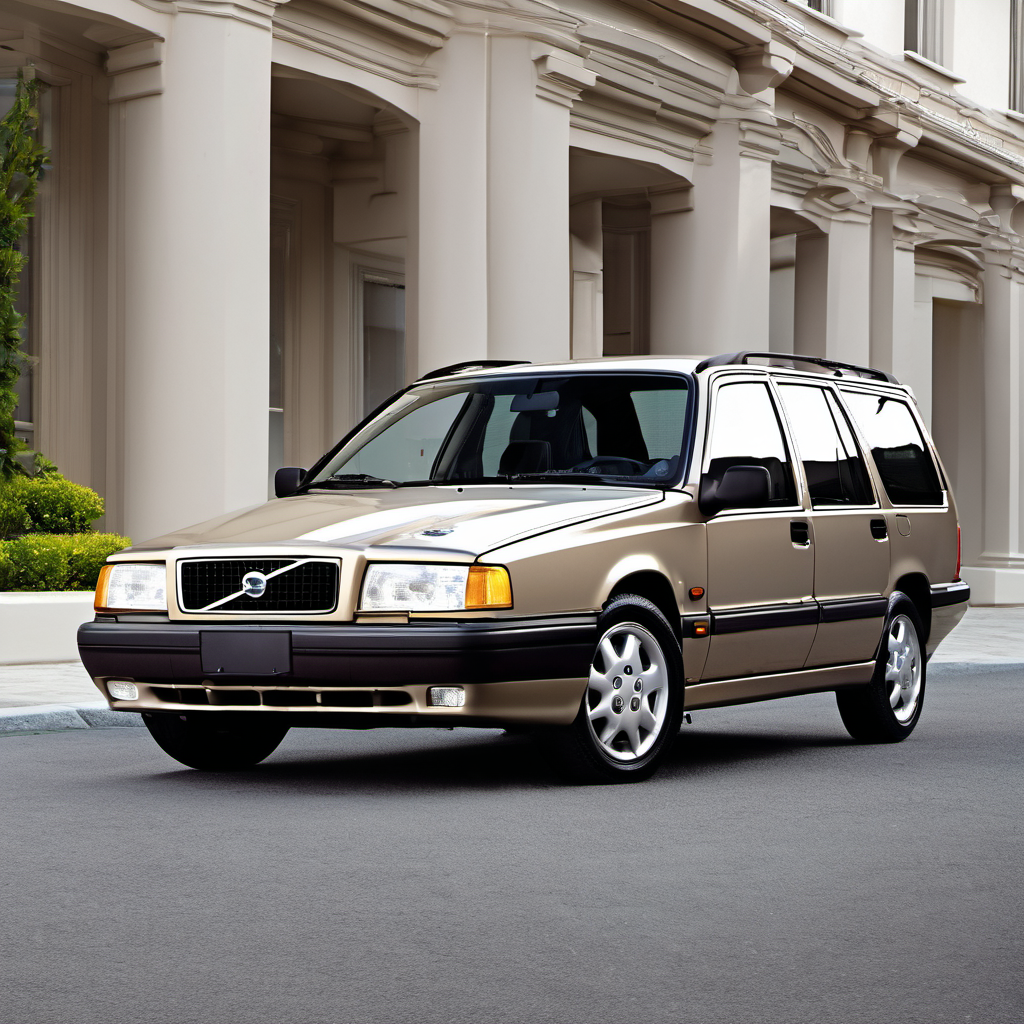
1997 Volvo 850 Sedan

1997 Volvo

850Sedan

Sedan

The 1997 Volvo 850 is the final model year of Volvo's groundbreaking front-wheel-drive mid-size sedan, introduced in 1992. It was a major departure for Volvo — the first FWD Volvo offered in North America — and it brought a transversely-mounted inline-5 engine, a genuinely sporty chassis, and Volvo's signature safety focus into a more modern package than the boxy 700/900 series it ran alongside. The turbocharged 2.3L five-cylinder in this car produces real performance for its era, and the 850 T-5 and T-5R variants became minor legends on the touring car racing circuit. By 1997 the 850 had been thoroughly sorted — early teething issues with the AW55 transmission had been addressed — making late-model examples among the most reliable of the generation. Ownership today means dealing with a 27-year-old European sedan. Parts are available but not cheap, and many independent shops are unfamiliar with Volvo-specific systems. Find a shop experienced with Swedish cars before you buy. A well-maintained example with documented service history can still be a satisfying, safe daily driver.

Reliability
3/5
Verified data
Specs shown for 850 — the most common configuration. Other trims may vary in engine, drivetrain, or fuel economy. Sign in to see your vehicle's exact specs.
Engine
[object Object]
Drivetrain
FWD
Fuel
Premium gasoline
MPG
17 city / 24 hwy / 19 combined
Seats
Doors
Body
Midsize Cars

Overview

AI-curated

The 1997 Volvo 850 is the final model year of Volvo's groundbreaking front-wheel-drive mid-size sedan, introduced in 1992. It was a major departure for Volvo — the first FWD Volvo offered in North America — and it brought a transversely-mounted inline-5 engine, a genuinely sporty chassis, and Volvo's signature safety focus into a more modern package than the boxy 700/900 series it ran alongside. The turbocharged 2.3L five-cylinder in this car produces real performance for its era, and the 850 T-5 and T-5R variants became minor legends on the touring car racing circuit. By 1997 the 850 had been thoroughly sorted — early teething issues with the AW55 transmission had been addressed — making late-model examples among the most reliable of the generation. Ownership today means dealing with a 27-year-old European sedan. Parts are available but not cheap, and many independent shops are unfamiliar with Volvo-specific systems. Find a shop experienced with Swedish cars before you buy. A well-maintained example with documented service history can still be a satisfying, safe daily driver.

Known for
  • Exceptional passive safety — one of the safest cars of its era
  • Distinctive inline-5 turbo sound and strong mid-range torque
  • Surprisingly sporty handling for a family sedan
  • Durable body structure that ages well structurally
  • Factory-installed side airbags (industry-first on many trims)
Best for
  • Enthusiasts who want a classic European sedan with real character
  • Drivers who prioritize crash safety in an older vehicle
  • Owners who enjoy hands-on maintenance or have a trusted Volvo-experienced shop
  • Someone looking for an affordable entry into the classic Volvo world
Watch for
  • Deferred maintenance — this car punishes neglect quickly
  • Automatic transmission wear if fluid has never been serviced
  • Cooling system failures (hoses, thermostat housing, radiator) on high-mileage cars
  • Rust in Wisconsin: rocker panels, rear wheel arches, and subframe mounts
  • Turbo oil feed line deterioration leading to turbo failure

Common issues by mileage

6 known

Cooling system failure (thermostat housing, hoses, radiator)

high
Typically appears
80–150k mi
Estimated repair
$300 – $900

Automatic transmission slipping or harsh shifts (AW50-42 / AW55)

high
Typically appears
100–160k mi
Estimated repair
$800 – $2,800

Turbocharger failure due to oil feed line degradation or oil neglect

medium
Typically appears
100–180k mi
Estimated repair
$1,200 – $3,000

Oxygen sensor / heater circuit failure (upstream and downstream)

medium
Typically appears
80–130k mi
Estimated repair
$150 – $450

ETM (Electronic Throttle Module) failure — rough idle, stalling

high
Typically appears
60–120k mi
Estimated repair
$200 – $600

Front suspension wear — ball joints, sway bar bushings, strut mounts

medium
Typically appears
80–140k mi
Estimated repair
$400 – $1,100

Maintenance schedule

  1. 1
    Every 5,000 miles or 6 months Engine oil and filter change — use full synthetic 5W-30

    The turbo runs very hot and is fed directly from the engine oil supply. Clean oil is the single most important thing you can do to extend turbo life. Don't stretch intervals on this engine.

  2. 2
    Every 2 years or 30,000 miles Cooling system flush and inspection (hoses, thermostat housing, radiator cap)

    The 850's plastic thermostat housing and aging rubber hoses are a known failure point. Overheating can damage the head gasket quickly on this engine. Inspect hoses for softness or swelling every fall before winter.

  3. 3
    Every 30,000 miles Transmission fluid service (drain and fill — not flush)

    These transmissions were often treated as 'lifetime fill' by owners, which shortens their life significantly. A steady drain-and-fill schedule is one of the best ways to keep it shifting cleanly.

  4. 4
    Every 30,000 miles Spark plug replacement — use OEM-spec plugs

    The 5-cylinder turbo is sensitive to plug condition. Worn plugs contribute to misfires and can fool the ECU into running rich, which stresses the catalytic converter.

  5. 5
    Every 70,000 miles or 7 years, whichever comes first Timing belt, tensioner, and water pump replacement

    This is an interference engine. A broken timing belt destroys the engine. If the service history is unknown, replace it immediately regardless of mileage.

  6. 6
    Every 40,000 miles ETM (throttle body) cleaning

    Carbon buildup in the electronic throttle module is a well-documented issue on 850s and causes erratic idle, stalling, and limp mode. Periodic cleaning can delay or prevent module failure.

  7. 7
    Every 2 years Brake fluid flush

    Volvo recommends this, and it matters in Wisconsin — moisture-laden brake fluid lowers boiling point and promotes corrosion in the ABS unit and calipers.

  8. 8
    Every spring (after road salt season) Underbody and rocker panel inspection for rust

    Wisconsin road salt is hard on 27-year-old unibody cars. Catch surface rust on the rockers and subframe mounts early — structural rust is an expensive or fatal problem on these cars.

Always defer to the manufacturer's service manual for warranty-mandated intervals.

Cost of ownership

Annual maintenance
$900 – $2,200
Fuel
Premium fuel is recommended for the turbo engine. At current Wisconsin prices and ~12,000 miles/year, expect roughly $2,000–$2,500 annually.
Insurance
Generally affordable — typically $900–$1,400/year for a driver with a clean record in the Lake Geneva area, given the car's age and low market value.

The 850 is not an expensive car to buy, but it is a moderately expensive car to own. Routine maintenance is straightforward, but when things go wrong — transmission, turbo, cooling system — the bills climb fast. Parts availability from Volvo specialists is good, but labor at a general shop unfamiliar with Volvos can add unnecessary cost. Budget for timing belt service if it hasn't been done, and keep a small emergency fund for cooling system surprises.

Seasonal care

Lake Geneva, WI
Winter
  • Switch to a full synthetic 5W-30 or 0W-30 for easier cold starts — the turbo oil feed is especially vulnerable to sluggish cold-start lubrication below 0°F.
  • Test and replace the battery if it's more than 3–4 years old. Cold Wisconsin winters will kill a marginal battery quickly, and a dead battery in a modern-ish Volvo can cause ECU and memory reset headaches.
  • Flush washer fluid reservoir and fill with a -40°F rated fluid. The 850's washer lines run through the engine bay but can still freeze at the nozzles.
  • Inspect the cooling system hoses before the first freeze — a hose failure in sub-zero temps can result in an overheated engine before the temperature gauge catches up.
  • Switch to dedicated winter tires. The 850 is FWD which helps, but this is not a light car and the ABS system is old — winter tires are a meaningful safety upgrade on Wisconsin roads.
  • Apply a corrosion inhibitor or undercoating to exposed rocker panels and wheel arches each fall, and rinse the undercarriage at a coin car wash after heavy salt exposure.
Summer
  • Check tire pressure monthly — summer heat causes pressure to rise, and the 850's handling is noticeably affected by under- or over-inflated tires.
  • Inspect the A/C system for refrigerant level and condenser cleanliness. The 850 uses R-134a; if cooling is weak, have the system checked before peak heat rather than during it.
  • Monitor coolant temperature closely during hot-weather driving, especially in stop-and-go traffic. If the gauge climbs above normal, pull over — the 850 does not tolerate overheating.
  • Check the turbo intercooler hoses for cracking or looseness. Heat cycling over many years degrades the rubber, and a blown intercooler hose causes immediate boost loss and rough running.

Comparable vehicles

If you're shopping for one

Red flags
  • No timing belt service record on a car over 70k miles — walk away or demand a price reduction
  • Any rust through on rockers or subframe mounts — structural repair on a 27-year-old car rarely pencils out
  • Coolant that looks brown or oily — possible head gasket failure, expensive on this engine
  • Automatic transmission that slips, shudders, or hunts between gears — rebuilds start around $1,500
  • Blue or white exhaust smoke at idle after warmup — turbo seal or piston ring wear
  • A check engine light the seller dismisses as 'just an O2 sensor' — always scan it yourself before buying
What to inspect
  • Pull the timing belt cover or service records — if the belt hasn't been done in the last 70k miles or 7 years, factor $600–$1,000 into your offer immediately.
  • Check the coolant overflow tank for oil contamination (brown sludge = head gasket concern) and inspect all visible hoses for swelling or softness.
  • Warm the engine fully and watch for turbo boost hesitation, smoke from the exhaust at idle (blue = oil burning), or a whining turbo bearing.
  • Test-drive through all transmission ranges, including a highway pull. Slipping between 2nd and 3rd gear or a delayed engagement from Park is a red flag.
  • Get underneath and look at the rocker panels, subframe, and rear trailing arm mounts for rust — these are structural and expensive to repair properly.
  • Have a Volvo-experienced shop perform a pre-purchase inspection. A generic scan tool may miss Volvo-specific codes that a dealer or specialist tool would catch.
AI profile generated 4 days ago · claude-sonnet-4-6 · v2.