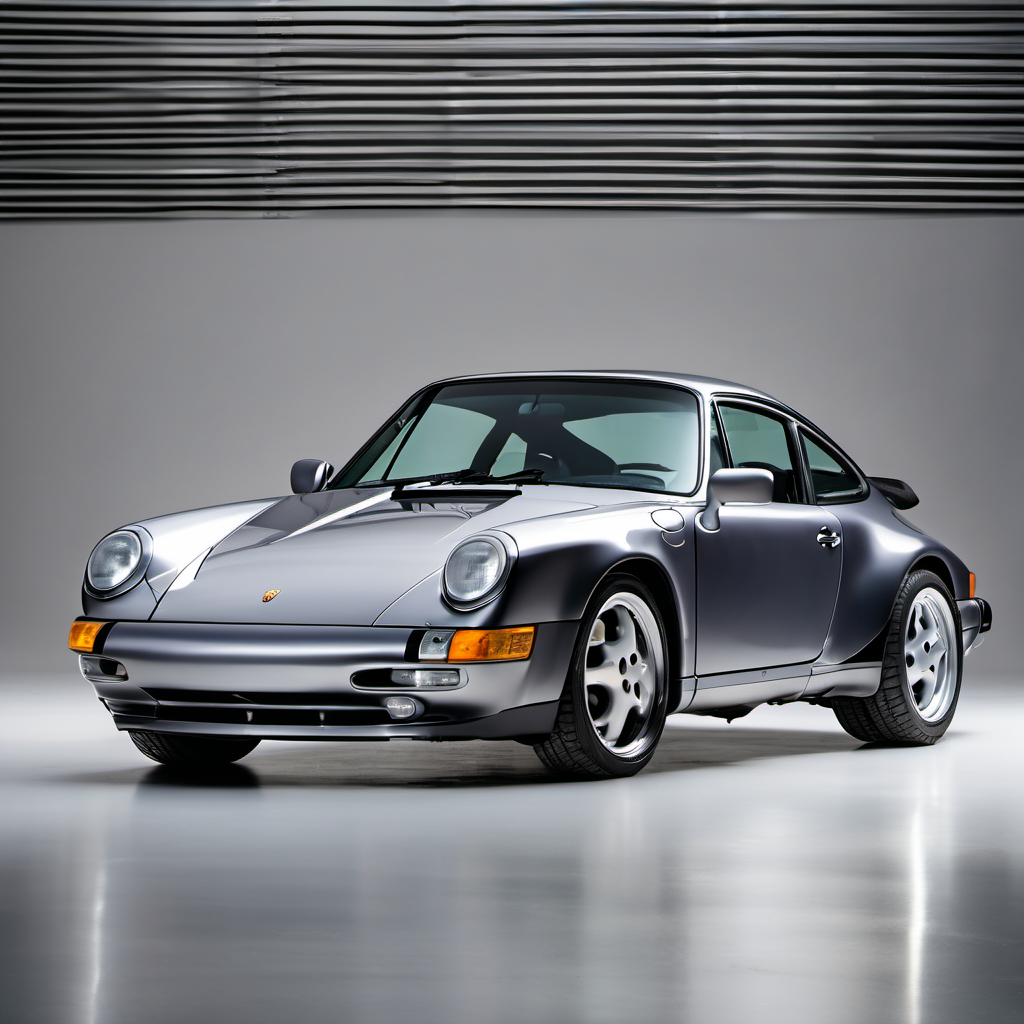
1997 Porsche 911 Coupe

1997 Porsche

911Coupe

Coupe

The 1997 Porsche 911 (993 generation, final air-cooled) is the last of the air-cooled 911s — a milestone that has made it one of the most coveted sports cars of the modern era. Powered by a naturally aspirated 3.6L flat-six mounted behind the rear axle, it delivers 272 hp through either a 6-speed manual or Tiptronic automatic, all wrapped in a body that refined the classic 911 shape to near-perfection before Porsche switched to water-cooling in 1998. The 993 is widely regarded as the most driver-focused and mechanically pure 911 of its era. Its rear-engine, RWD layout demands respect — especially in slippery Wisconsin winters — but rewards skilled drivers with exceptional balance and feedback. Build quality is genuinely excellent for the period, and well-maintained examples routinely exceed 200,000 miles. As a collector car, values have risen sharply and continue to climb. A 1997 coupe in good condition is no longer a bargain sports car; it's an appreciating asset that deserves careful stewardship. Budget generously for maintenance — parts are expensive, and this is not a car for discount shortcuts.

Reliability
4/5
Verified data
Specs shown for 911 Carrera 4/2 — the most common configuration. Other trims may vary in engine, drivetrain, or fuel economy. Sign in to see your vehicle's exact specs.
Engine
[object Object]
Drivetrain
RWD
Fuel
Premium gasoline
MPG
15 city / 22 hwy / 18 combined
Seats
Doors
Body
Minicompact Cars

Overview

AI-curated

The 1997 Porsche 911 (993 generation, final air-cooled) is the last of the air-cooled 911s — a milestone that has made it one of the most coveted sports cars of the modern era. Powered by a naturally aspirated 3.6L flat-six mounted behind the rear axle, it delivers 272 hp through either a 6-speed manual or Tiptronic automatic, all wrapped in a body that refined the classic 911 shape to near-perfection before Porsche switched to water-cooling in 1998. The 993 is widely regarded as the most driver-focused and mechanically pure 911 of its era. Its rear-engine, RWD layout demands respect — especially in slippery Wisconsin winters — but rewards skilled drivers with exceptional balance and feedback. Build quality is genuinely excellent for the period, and well-maintained examples routinely exceed 200,000 miles. As a collector car, values have risen sharply and continue to climb. A 1997 coupe in good condition is no longer a bargain sports car; it's an appreciating asset that deserves careful stewardship. Budget generously for maintenance — parts are expensive, and this is not a car for discount shortcuts.

Known for
  • Last air-cooled 911 — a major milestone in Porsche history
  • Exceptional driving feel and steering feedback
  • Strong long-term durability when properly maintained
  • Rising collector values; appreciating asset
  • Distinctive flat-six exhaust note
Best for
  • Enthusiast drivers who want an analog, high-feedback sports car
  • Collectors looking for a historically significant 911
  • Weekend and fair-weather driving (not a daily commuter in Wisconsin winters)
  • Owners committed to proper, budget-conscious maintenance
Watch for
  • RWD + rear-engine weight bias is genuinely treacherous on snow and ice — not a winter driver
  • Parts and specialist labor costs are significantly higher than mainstream cars
  • Previous owner neglect or deferred maintenance is expensive to correct
  • Aging rubber: coolant hoses (oil cooler lines), fuel lines, and seals all need attention on a 25+ year-old car
  • IMS/bore scoring issues are not present on air-cooled cars, but oil leaks from aging gaskets are common

Common issues by mileage

6 known

Oil leaks from aging gaskets and seals

high
Typically appears
Any mileage on a 25+ year-old car
Estimated repair
$300 – $1,500

Chain tensioner wear (engine timing chain)

medium
Typically appears
80k–150k mi
Estimated repair
$800 – $2,500

Oxygen sensor failure / degraded O2 sensor heater circuit

medium
Typically appears
60k–120k mi
Estimated repair
$250 – $700

Aged fuel system components (fuel lines, pressure regulator)

high
Typically appears
Any — age-related on a 1997 car
Estimated repair
$400 – $1,800

Deteriorating rubber: engine lid struts, door seals, front trunk seal

high
Typically appears
Any — age-related
Estimated repair
$150 – $600

Failing ABS / brake hydraulic unit

medium
Typically appears
Any high-mileage or long-dormant example
Estimated repair
$600 – $2,500

Maintenance schedule

  1. 1
    Every 10,000 mi or annually Full synthetic oil change (Porsche-approved spec) with filter

    The air-cooled flat-six runs hot and depends on clean oil for lubrication and cooling. Annual changes are minimum for low-mileage cars sitting over winter.

  2. 2
    Every 20,000 mi or 2 years Spark plugs and ignition wires

    Six plugs in a tight rear-engine bay are labor-intensive to reach; doing wires at the same time saves a repeat job.

  3. 3
    Every 2 years or as needed Brake fluid flush

    Brake fluid absorbs moisture over time. In a performance car used hard on track or mountain roads, fresh fluid protects against brake fade and caliper corrosion.

  4. 4
    Annually before winter storage Inspect and treat all rubber seals, fuel lines, and coolant/oil hoses

    Wisconsin winters plus 25+ years of age accelerate rubber degradation. Cracked fuel lines are a fire hazard; inspect every season.

  5. 5
    Every 30,000 mi Inspect air/oil separator (AOS) and crankcase breather system

    A failing AOS causes oil consumption, fouled plugs, and smoke. Relatively inexpensive to service but easy to overlook.

  6. 6
    Annually before winter storage Battery maintenance or trickle charger connection

    If the car is stored over the Wisconsin winter — as it should be — a quality battery maintainer prevents sulfation and ensures reliable spring starts.

  7. 7
    Every 2 years Inspect front and rear axle boots and suspension bushings

    Torn CV boots admit grit and accelerate joint wear. Aged bushings affect the precise steering feel this car is known for.

  8. 8
    Every 30,000 mi or as needed Throttle body and idle control valve cleaning

    Age-related carbon buildup can cause rough idle and hesitation; inexpensive to clean and noticeably improves driveability.

Always defer to the manufacturer's service manual for warranty-mandated intervals.

Cost of ownership

Annual maintenance
$1,500 – $4,000
Fuel
Requires 91+ octane premium. At ~18 MPG combined and typical Wisconsin driving, expect $1,800–$2,800/year at current pump prices for a car driven 6,000–10,000 mi/year.
Insurance
Collector or agreed-value insurance is strongly recommended given appreciating values. Expect $800–$1,800/year depending on usage, storage, and driving record.

This is a low-volume, high-value specialist car. Routine annual costs are manageable at $1,500–$4,000 for a healthy, well-maintained example driven seasonally. However, deferred maintenance items — oil leaks, aged rubber, fuel system work, brake hydraulics — can stack quickly on a neglected car and push a single repair season past $5,000–$8,000. Budget accordingly, and always pay for a pre-purchase inspection from a Porsche specialist before buying.

Seasonal care

Lake Geneva, WI
Winter
  • Store the car — this is a rear-engine, RWD sports car with low ground clearance that is genuinely dangerous on snow and ice, regardless of tire choice.
  • Connect a quality battery maintainer for the storage period; sub-zero temps kill weak batteries overnight.
  • Change oil before storage, not in spring — used oil contains acids that corrode engine internals during long sits.
  • Top off the fuel tank and add a fuel stabilizer to prevent ethanol-blend fuel from degrading and gumming injectors.
  • Inspect all rubber seals and door/trunk weather stripping before storage; cold and dry air accelerates cracking.
  • Store off the ground or on tire pads to prevent flat-spotting on performance-compound tires during multi-month storage.
Summer
  • Check tire pressure monthly — performance tires lose pressure faster and heat soak can cause overinflation; keep within Porsche spec.
  • Inspect the engine lid and frunk (front trunk) ventilation; blocked air pathways worsen heat soak on the air-cooled engine in stop-and-go traffic.
  • Verify A/C system charge before hot weather — R134a systems on 25-year-old cars develop slow leaks; recharging annually is not normal and points to a real leak needing repair.
  • Check coolant level in the separate oil cooler circuit (this car uses an oil-cooled system; verify oil level and cooler condition before summer heat).
  • Wash the undercarriage thoroughly after spring to remove road salt residue before summer heat bakes it into exposed metal.

Comparable vehicles

If you're shopping for one

Red flags
  • No service records or gaps of more than 2 years — on a car this valuable, missing history usually means something was hidden
  • Evidence of track use without corresponding brake and suspension service records
  • Any oil or fuel odor in the engine compartment beyond minor seepage — significant leaks on a 25-year-old car can be very expensive
  • Slipping or harsh shifts in the Tiptronic — 993 Tiptronic rebuilds are costly and specialist-only
  • Accident history or mismatched panel gaps — body repairs on a 993 are expensive and devalue the car significantly
  • Rust on the floorpan, battery tray, or chassis rails — structural rust makes this car a parts car, not a driver
What to inspect
  • Full documented service history — no records is a red flag on a car this age and value
  • Oil leaks at the rear main seal, valve covers, and engine lid gaskets; bring a flashlight and look under the engine lid carefully
  • Condition of all fuel lines, oil cooler lines, and breather hoses — cracks or brittleness mean immediate replacement
  • ABS pump and brake hydraulic unit function — test ABS activation and check for brake warning lights
  • All four tires for age (DOT date code) and condition — performance tires degrade with age even with low miles
  • Undercarriage for rust, especially on a Wisconsin or northern car — check the floor pans, front sub-frame, and suspension mounts
AI profile generated 4 days ago · claude-sonnet-4-6 · v2.