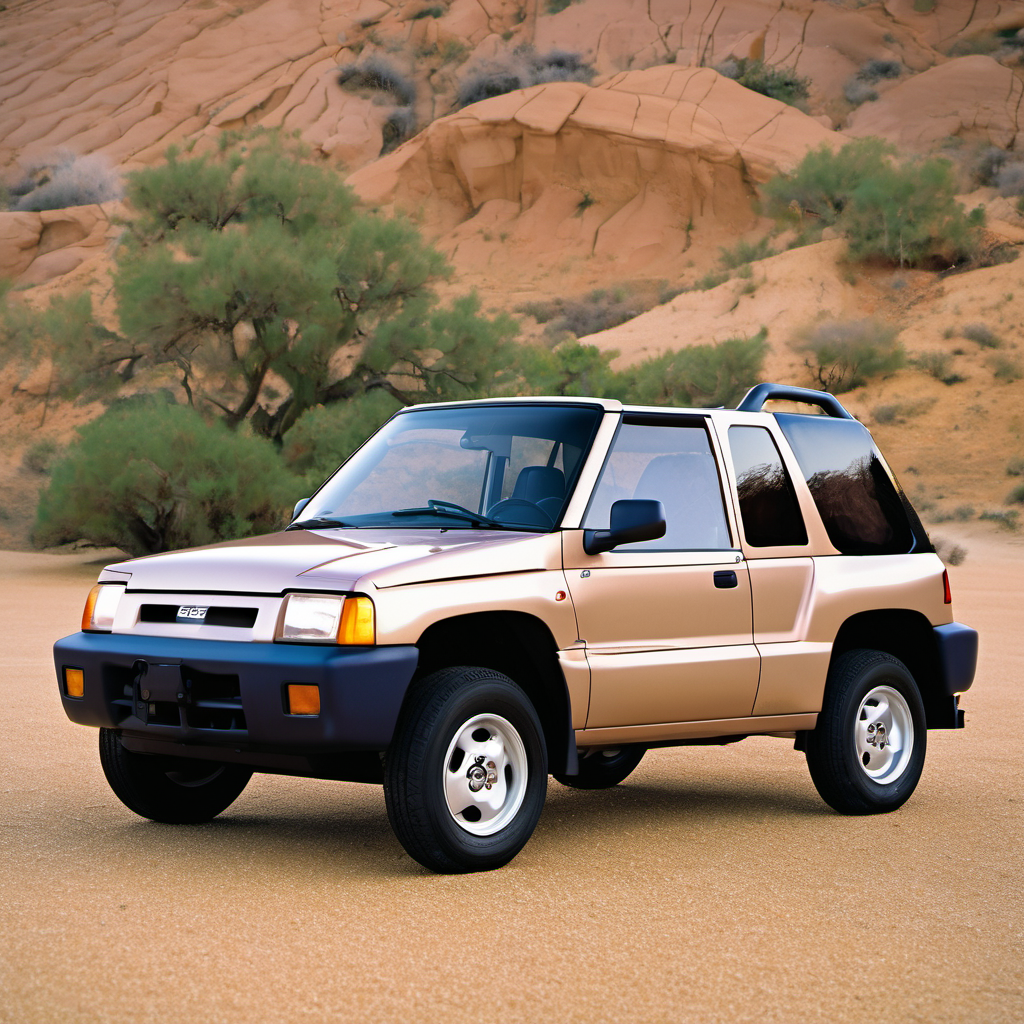
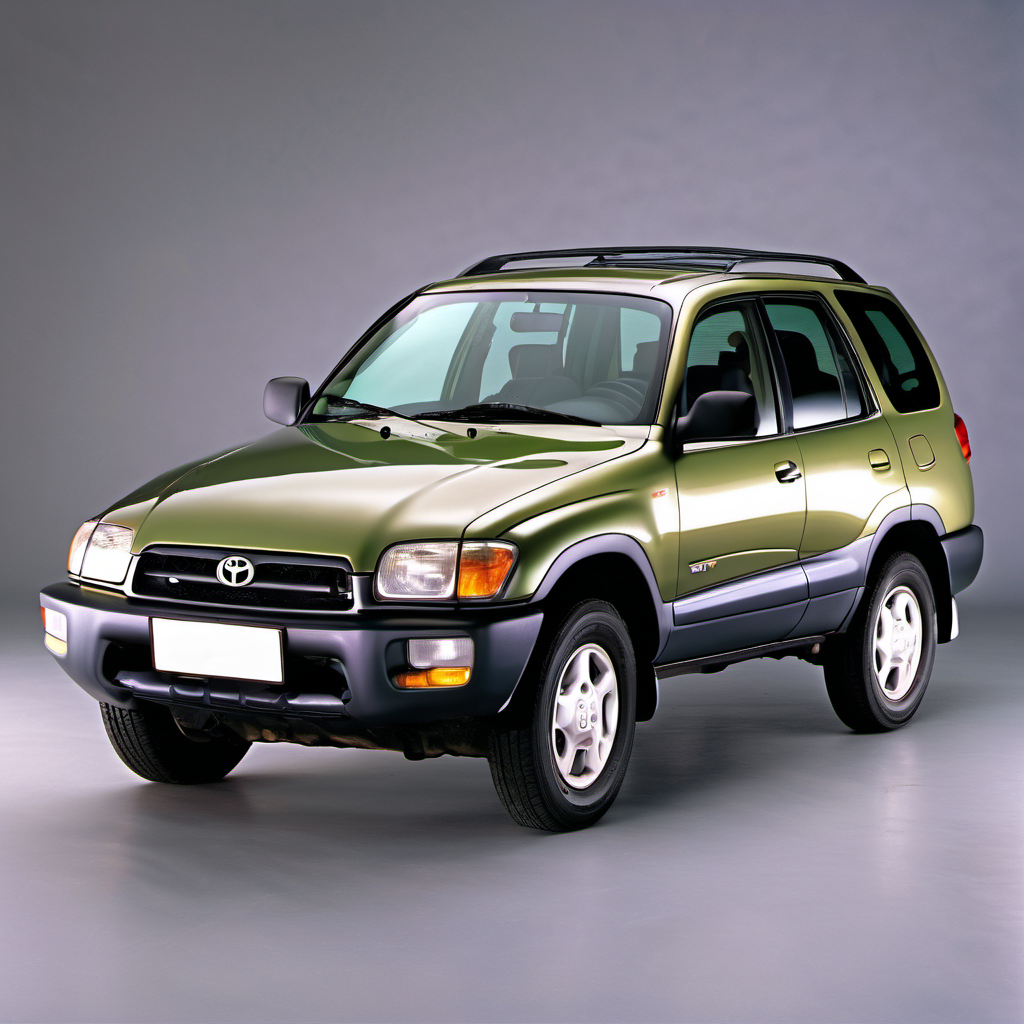
1997 Kia Sportage SUV

1997 Kia

SportageSUV

SUV

The 1997 Kia Sportage was Kia's first crack at the compact SUV market in North America — a body-on-frame two-door (or four-door) rig built on a collaboration with Mazda. It was sold at a price point well below the competition, which attracted budget buyers but also telegraphed its limitations. Power comes from a 2.0L inline-four mated to either a 5-speed manual or 4-speed automatic, and the standard setup is rear-wheel drive with an optional part-time 4WD transfer case. For a 1997 vehicle now pushing nearly three decades old, the Sportage is firmly in 'surviving example' territory. Most have been worn down by rust, deferred maintenance, or both. Parts availability has thinned considerably, and independent mechanics familiar with this platform are uncommon outside of Korean-car specialists. If you find one that has been genuinely cared for, it can still do light trail and gravel duty. But be clear-eyed: this is a collector's curiosity or a budget beater, not a dependable daily driver. For Lake Geneva winters, the rust risk on a 28-year-old truck-frame vehicle is the first and most important conversation.

Reliability
2/5
Verified data
Specs shown for Sportage 2WD — the most common configuration. Other trims may vary in engine, drivetrain, or fuel economy. Sign in to see your vehicle's exact specs.
Engine
[object Object]
Drivetrain
RWD
Fuel
Gasoline
MPG
17 city / 20 hwy / 18 combined
Seats
Doors
Body
Special Purpose Vehicles

Overview

AI-curated

The 1997 Kia Sportage was Kia's first crack at the compact SUV market in North America — a body-on-frame two-door (or four-door) rig built on a collaboration with Mazda. It was sold at a price point well below the competition, which attracted budget buyers but also telegraphed its limitations. Power comes from a 2.0L inline-four mated to either a 5-speed manual or 4-speed automatic, and the standard setup is rear-wheel drive with an optional part-time 4WD transfer case. For a 1997 vehicle now pushing nearly three decades old, the Sportage is firmly in 'surviving example' territory. Most have been worn down by rust, deferred maintenance, or both. Parts availability has thinned considerably, and independent mechanics familiar with this platform are uncommon outside of Korean-car specialists. If you find one that has been genuinely cared for, it can still do light trail and gravel duty. But be clear-eyed: this is a collector's curiosity or a budget beater, not a dependable daily driver. For Lake Geneva winters, the rust risk on a 28-year-old truck-frame vehicle is the first and most important conversation.

Known for
  • Very low original purchase price for the segment
  • Truck-like body-on-frame construction uncommon for its size
  • Prone to severe frame and body rust in salt-belt states
  • Underpowered 2.0L four-cylinder for its weight
  • Extremely dated safety equipment by modern standards
Best for
  • Collectors or enthusiasts restoring a piece of early Kia history
  • Rural or farm use where low cost and simplicity matter more than refinement
  • Light gravel and fire-road use with 4WD models
Watch for
  • Frame and rocker panel rust — common and often fatal to the vehicle in the upper Midwest
  • Leaking rear differential and transfer case seals
  • Cooling system neglect leading to head gasket failure
  • Soft-top or convertible-style roof seal deterioration on two-door models
  • Scarcity of replacement parts for trim and interior components

Common issues by mileage

6 known

Frame and underbody rust

high
Typically appears
Any mileage — age-driven in salt-belt states
Estimated repair
$500 – $4,000

Head gasket failure / overheating

high
Typically appears
80k–150k mi
Estimated repair
$900 – $1,800

Transfer case and rear differential seal leaks

high
Typically appears
60k–120k mi
Estimated repair
$200 – $600

4WD engagement issues (vacuum-operated hubs)

high
Typically appears
Any mileage — age and dry-rot driven
Estimated repair
$150 – $500

Soft-top / rear hatch seal and water intrusion (2-door models)

high
Typically appears
Any mileage — age-driven
Estimated repair
$100 – $700

Maintenance schedule

  1. 1
    Every spring after winter season Inspect and treat frame, rockers, and floor pans for rust

    Road salt in Wisconsin accelerates rust dramatically on a 28-year-old body-on-frame vehicle. Catching surface rust early and treating it is far cheaper than structural repair.

  2. 2
    Every 2 years or 30k mi Coolant flush and cooling system inspection

    The 2.0L is sensitive to cooling system neglect. Old coolant loses its corrosion inhibitors and attacks the aluminum head, leading to head gasket failure — the most expensive common repair on this engine.

  3. 3
    Every 30k mi or every 2–3 years Transfer case and differential fluid change

    Seals on these units are old and prone to seeping. Fresh fluid with a seal inspection helps catch leaks before they cause bearing or gear damage.

  4. 4
    Every year before winter Inspect 4WD vacuum lines and hub operation

    The part-time 4WD on these uses vacuum-actuated front hubs. Cracked vacuum lines are common at this age, and a 4WD failure in Wisconsin winter is a safety problem.

  5. 5
    Every 60k mi — do not skip Timing belt replacement

    The 2.0L is an interference engine. A snapped timing belt means bent valves and a destroyed head. If the history is unknown, replace it immediately.

  6. 6
    Every fall before winter Battery load test and cable inspection

    Sub-zero starts in Lake Geneva put maximum stress on an aging battery. A weak battery that starts fine in October will leave you stranded in January.

  7. 7
    Every year Inspect brake lines and fuel lines for rust and pitting

    Steel brake and fuel lines on a salt-state vehicle this old are a serious safety concern. Visual inspection every fall is essential.

  8. 8
    Every 30k mi Replace engine air filter and spark plugs

    The carburetor/FFS fueling system on this engine responds noticeably to fresh plugs and a clean air filter. It also helps diagnose rough idle or hard cold starts early.

Always defer to the manufacturer's service manual for warranty-mandated intervals.

Cost of ownership

Annual maintenance
$800 – $2,500
Fuel
At 18 MPG combined and typical driving, expect $1,400–$1,900/year at current Wisconsin fuel prices. The old 2.0L prefers regular unleaded.
Insurance
Liability-only coverage on a vehicle this age and value is typically $400–$700/year in the Lake Geneva area. Comprehensive/collision is rarely worth carrying given the vehicle's market value.

The Sportage looks cheap to own until a repair bill arrives. Parts for the first-gen Sportage are increasingly hard to source, and labor time goes up when a mechanic has to hunt for components. Budget generously — a timing belt job, cooling system work, or rust remediation can each easily exceed the vehicle's market value in a single visit. Own this one because you want to, not because you expect it to be economical.
Seasonal care

Lake Geneva, WI
Winter
  • Load-test the battery every October — sub-zero cold starts will kill a marginal battery fast, and this old charging system has no margin for error.
  • Switch to a full-synthetic 5W-30 if still running conventional oil — it flows far better on cold starts below 0°F and reduces wear on the old 2.0L.
  • Inspect brake lines and fuel lines for rust before snow season — these are safety-critical and corrode fast on a 28-year-old salt-belt vehicle.
  • Test 4WD engagement in fall before you need it. Vacuum hubs and old transfer case linkages are unreliable when they've sat since last winter.
  • Use a winter washer fluid rated to -20°F or lower — standard fluid will freeze in the reservoir and lines at Lake Geneva temperatures.
  • Keep the fuel tank above half in extreme cold to reduce condensation in the fuel system and ensure fuel pump cooling.
Summer
  • Monitor coolant temperature closely — the aging cooling system on this engine is prone to overheating, and summer heat makes it worse.
  • Check tire pressure monthly; temperature swings between Wisconsin nights and afternoons can cause 4–6 PSI variance on older tires.
  • Inspect the A/C system for refrigerant leaks if equipped — R-134a retrofit may have been done on this 1997 model, and fittings age poorly.
  • After spring, inspect the undercarriage for any new rust that developed under winter salt accumulation and treat bare metal promptly.

Comparable vehicles

If you're shopping for one

Red flags
  • Any visible frame rust beyond surface scale — structural rust is uneconomical to repair on a vehicle worth under $3,000.
  • Unknown maintenance history with no receipts — on a 28-year-old vehicle, assume the worst and price repairs accordingly.
  • Seller asking more than $3,000 unless the vehicle has documented restoration work.
  • Engine overheating even once during a test drive — walk away.
  • 4WD that won't engage or makes grinding noises when shifting the transfer case.
  • Smoke or heavy oil burning at startup — the 2.0L doesn't have the parts ecosystem to support a major engine rebuild economically.
What to inspect
  • Frame rails, rocker panels, and floor pans — poke with a screwdriver, not just a visual check. Rust perforation is a deal-breaker.
  • Cooling system: check for milky oil on the dipstick or white exhaust at idle, both signs of head gasket failure.
  • Test 4WD engagement both in and out — confirm front hubs lock and the transfer case shifts without grinding.
  • Timing belt service history — if unknown, budget $400–$600 for immediate replacement before driving it.
  • Brake lines under the vehicle for rust bubbling or pitting — these are a safety stop-drive issue on any vehicle this age.
  • Soft-top or rear hatch seals (2-door) — check the carpet and floor for water damage and mold.
AI profile generated 4 days ago · claude-sonnet-4-6 · v2.