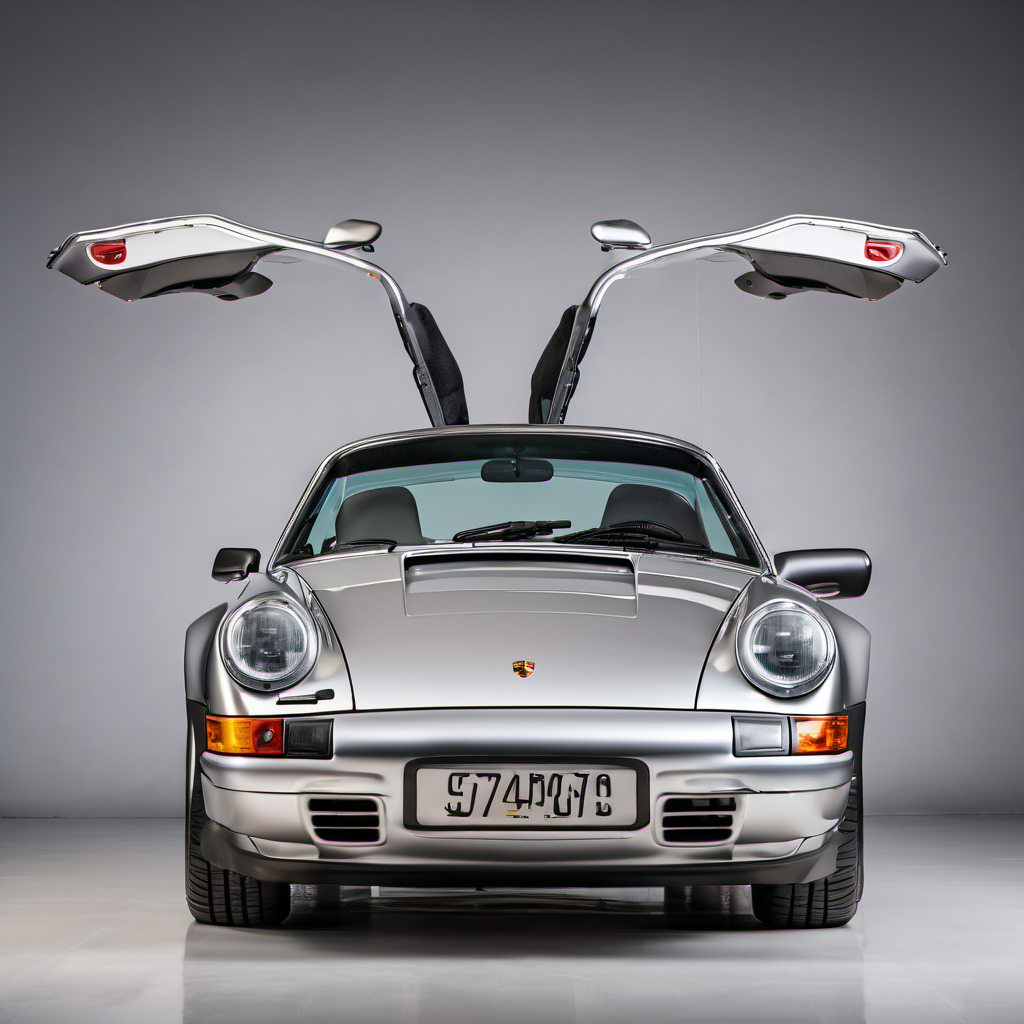
1996 Porsche 911 Coupe

1996 Porsche

911Coupe

Coupe

The 1996 Porsche 911 (993 generation) represents the last air-cooled 911 ever built — a milestone that has made it one of the most sought-after sports cars in history. Powered by a 3.6L flat-six mounted behind the rear axle, the 993 refined everything the 964 started: a fully redesigned multilink rear suspension replaced the old swing-axle setup, dramatically improving the car's legendary handling challenge. Power goes through a 6-speed manual (most common) or optional Tiptronic S automatic, and the base Carrera makes 272 hp with a spine-tingling exhaust note that no water-cooled successor has fully replicated. As a daily driver the 993 is surprisingly livable — reasonably comfortable, reliable by sports car standards, and built with late-era air-cooled refinement. But it is a collector vehicle first. Values have climbed sharply since the mid-2010s and show no sign of reverting. A clean, original example commands a premium; a modified or poorly maintained one is a financial trap. Owning one in Lake Geneva means committing to seasonal storage or serious winter prep. Road salt is the 993's biggest long-term enemy. These cars deserve dry storage from November through April, a proper battery maintainer, and meticulous underbody inspection every spring.

Reliability
4/5
Verified data
Specs shown for 911 Carrera 4/2 — the most common configuration. Other trims may vary in engine, drivetrain, or fuel economy. Sign in to see your vehicle's exact specs.
Engine
[object Object]
Drivetrain
RWD
Fuel
Premium gasoline
MPG
15 city / 22 hwy / 18 combined
Seats
Doors
Body
Minicompact Cars

Overview

AI-curated

The 1996 Porsche 911 (993 generation) represents the last air-cooled 911 ever built — a milestone that has made it one of the most sought-after sports cars in history. Powered by a 3.6L flat-six mounted behind the rear axle, the 993 refined everything the 964 started: a fully redesigned multilink rear suspension replaced the old swing-axle setup, dramatically improving the car's legendary handling challenge. Power goes through a 6-speed manual (most common) or optional Tiptronic S automatic, and the base Carrera makes 272 hp with a spine-tingling exhaust note that no water-cooled successor has fully replicated. As a daily driver the 993 is surprisingly livable — reasonably comfortable, reliable by sports car standards, and built with late-era air-cooled refinement. But it is a collector vehicle first. Values have climbed sharply since the mid-2010s and show no sign of reverting. A clean, original example commands a premium; a modified or poorly maintained one is a financial trap. Owning one in Lake Geneva means committing to seasonal storage or serious winter prep. Road salt is the 993's biggest long-term enemy. These cars deserve dry storage from November through April, a proper battery maintainer, and meticulous underbody inspection every spring.

Known for
  • Last air-cooled production 911 — emotional and collectible milestone
  • Revised multilink rear suspension — far more forgiving than earlier 911s
  • Flat-six soundtrack and throttle response that water-cooled cars don't match
  • Strong long-term reliability when maintained on schedule
  • Timeless coupe silhouette that has aged better than almost any contemporary
Best for
  • Enthusiast drivers who want a true analog sports car experience
  • Collectors seeking appreciating-asset potential
  • Weekend and track-day use with occasional spirited road trips
  • Owners willing to invest in proper preventive maintenance
Watch for
  • Rear-engine weight bias — oversteer is real and punishing on cold or wet pavement
  • IMS/intermediate shaft bearing failure does NOT apply to the air-cooled 993 — but buyers often confuse this with later 996/997 concerns
  • Timing chain tensioner wear on high-mileage engines
  • Rust in rocker panels, floor pans, and heater box areas — Wisconsin salt accelerates this
  • Coolant leaks don't exist, but oil leaks from case half seals and valve cover gaskets are common with age

Common issues by mileage

6 known

Engine oil leaks — valve cover gaskets and case half seals

high
Typically appears
60,000+ mi or 15+ years
Estimated repair
$400 – $1,200

Timing chain tensioner wear

medium
Typically appears
80,000–150,000 mi
Estimated repair
$600 – $1,800

Heater box rot and heat exchanger failure

high
Typically appears
Any age — accelerated by Wisconsin road salt
Estimated repair
$800 – $3,500

Oxygen sensor and exhaust system degradation

medium
Typically appears
60,000–120,000 mi
Estimated repair
$300 – $900

Rear suspension bushing and ball joint wear

medium
Typically appears
60,000–100,000 mi
Estimated repair
$700 – $2,200

Maintenance schedule

  1. 1
    Every 5,000–7,500 miles Engine oil and filter change — use a quality 5W-40 or 10W-40 full synthetic approved for air-cooled flat-six engines

    The M64 engine is oil-cooled as well as air-cooled. Clean oil is the single most important factor in engine longevity. Short intervals are cheap insurance on a high-value engine.

  2. 2
    Every 20,000 miles or 2 years Valve adjustment (tappet clearance check)

    Air-cooled flat-sixes use solid lifters. Out-of-spec valve clearance accelerates wear and hurts performance. This is a routine service unique to air-cooled Porsches that many shops overlook.

  3. 3
    Every 30,000 miles or 3 years Spark plug replacement and ignition wire inspection

    Heat cycling in the engine bay degrades plug wires faster than on water-cooled engines. Worn plugs cause misfires and stress the ignition system.

  4. 4
    Every 2 years Brake fluid flush

    DOT 4 fluid absorbs moisture over time, lowering the boiling point — a real safety concern during track or aggressive driving. Wisconsin humidity accelerates moisture absorption.

  5. 5
    Every fall before storage Full underbody inspection for rust, especially rocker panels, floor pans, heater box, and exhaust hangers

    Lake Geneva road salt accumulates in every crevice. Catching surface rust early is a $50–$200 job; catching structural rust late is a $5,000+ job.

  6. 6
    Each storage season Connect a quality battery maintainer (tender) for the duration of winter storage

    The 993's electrical system draws a small continuous load. A discharged battery left for months will not recover fully and can damage the ECU.

  7. 7
    Every 4 years or if deteriorating Inspect and replace engine and transmission mounts

    Rubber mounts harden and crack with age regardless of mileage. Failed mounts increase drivetrain stress and cause noticeable vibration and handling degradation.

  8. 8
    Every 30,000 miles Inspect timing chain tensioners and replace if showing wear

    Chain tensioner failure on the M64 can cause catastrophic engine damage. Proactive replacement on higher-mileage engines is far cheaper than an engine rebuild.

Always defer to the manufacturer's service manual for warranty-mandated intervals.

Cost of ownership

Annual maintenance
$1,500 – $4,000
Fuel
Requires premium (91+ octane). At 18 MPG combined and ~12,000 miles/year, budget $2,200–$2,800/year at current Midwest premium prices.
Insurance
Collector/agreed-value policy strongly recommended. Expect $900–$2,500/year depending on usage, storage, and driving record. Standard daily-driver policies often undervalue these cars significantly.

Routine annual costs for a well-maintained 993 run $1,500–$4,000 at an independent Porsche-knowledgeable shop. That figure climbs sharply if deferred maintenance catches up — a full engine reseal, timing chain service, and suspension refresh on a neglected car can easily total $6,000–$12,000. Budget separately for any major unscheduled repairs. Storage costs (heated or climate-controlled preferred) are an additional Wisconsin reality. Parts availability is generally good through Porsche and the strong aftermarket, but labor rates for a specialist are higher than a general shop.
Seasonal care

Lake Geneva, WI
Winter
  • Store the car from first salt event (typically November) through late March — road salt will destroy the underbody, exhaust, and brake components faster than almost any other factor
  • If driven at all in winter, rinse the underbody thoroughly after every outing and inspect brake lines and exhaust hangers for salt accumulation
  • Connect a battery maintainer throughout storage — the 993 electrical system will drain a battery over a long winter and a dead battery risks ECU damage
  • Use fresh fuel with a fuel stabilizer if storing more than 60 days — the fuel injection system is sensitive to varnish buildup from stale gasoline
  • Check tire pressures after storage and before first spring drive — cold storage causes significant pressure loss and aged tires may have flat-spotted
  • Inspect wiper blades and refill washer fluid with a -40°F rated formula before any cold-weather use
Summer
  • Check tire pressures monthly — ambient temperature swings in Wisconsin can shift pressures by 4–6 PSI between a cool morning and a hot afternoon
  • Inspect the engine cooling (oil cooler) system for leaks after hard driving — heat soak in the engine bay is significant and stresses aging hoses and seals
  • Check A/C refrigerant charge and cabin filter if equipped — the 993's A/C is modest by modern standards and a low charge makes it nearly useless in July heat
  • Inspect brake pad thickness before any track days or spirited summer driving — summer heat dramatically shortens pad life under performance use

Comparable vehicles

If you're shopping for one

Red flags
  • No service records or documentation — on a collector car this old, an undocumented history means unknown maintenance and potential hidden problems
  • Evidence of track use without corresponding brake and suspension service records
  • Mismatched or repainted body panels suggesting accident history — always run a VIN history report and inspect panel gaps carefully
  • Strong oil smell inside the cabin — can indicate a failing heater box or heat exchanger, which is expensive to repair and can expose occupants to exhaust gases
  • Soft or spongy brake pedal — suggests moisture-contaminated fluid or a system issue; non-negotiable safety concern on a RWD sports car
  • Any sign the car has lived outdoors year-round in a northern climate without winter storage — rust remediation on a 993 can exceed the car's value
What to inspect
  • Full underbody inspection on a lift — look specifically at rocker panels, floor pans, heater boxes, and all brake and fuel lines for rust or salt damage
  • Engine for oil leaks at valve covers, case half seam, and oil cooler connections — some seepage is common, heavy leaking suggests deferred maintenance
  • Timing chain tensioner condition — ask for service records showing when this was last addressed
  • Compression and leak-down test on all six cylinders — a healthy M64 should show even, strong results
  • Clutch engagement feel and transmission shift quality through all six gears — rebuilds are expensive
  • Verify the VIN-stamped body panels and engine number match — 993s are frequently parted out or re-shelled, which dramatically affects value
  • All rubber: engine mounts, suspension bushings, fuel lines, and coolant (oil cooler) hoses — age matters more than mileage on 28-year-old rubber
AI profile generated 4 days ago · claude-sonnet-4-6 · v2.