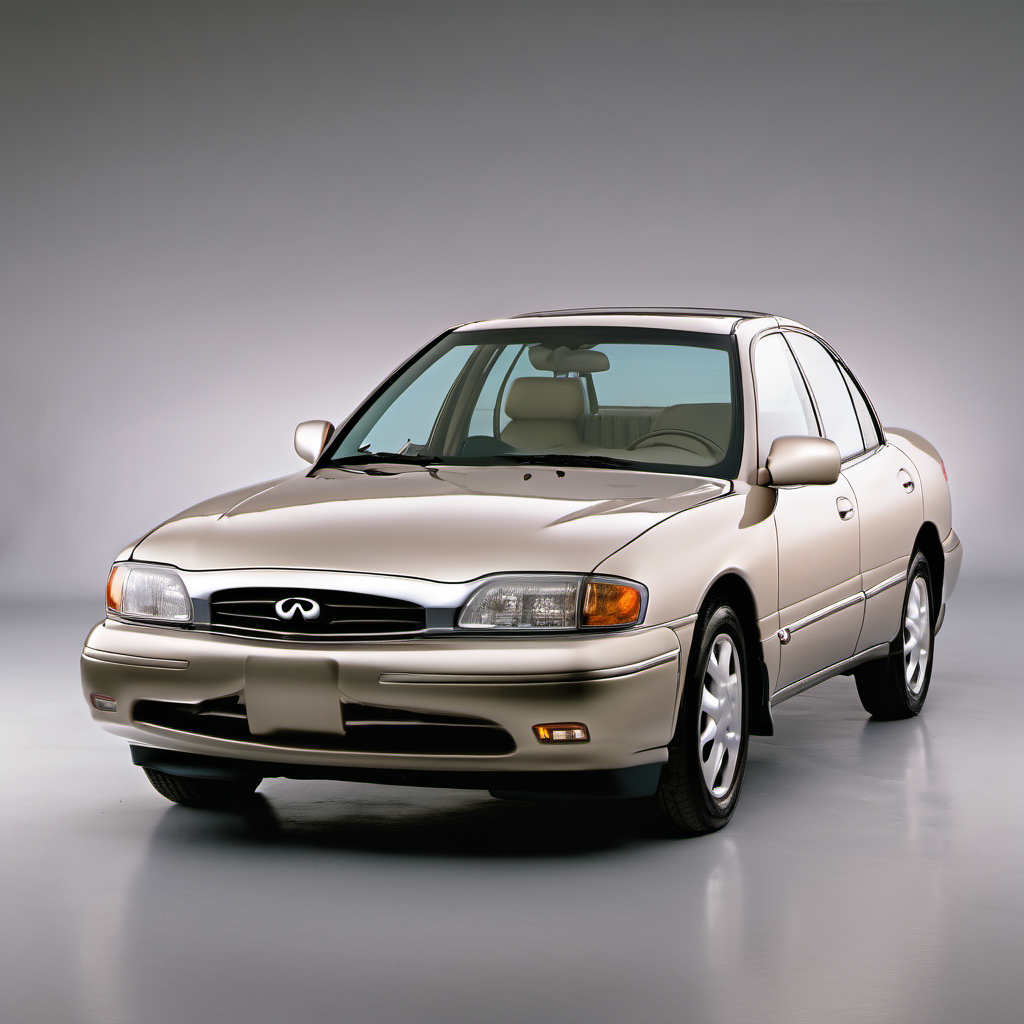
1996 INFINITI Q Sedan

1996 INFINITI

QSedan

4.5L V8 (VH45DE) · Sedan

The 1996 Infiniti Q45 is Infiniti's range-topping full-size luxury sedan, now in its second generation (F50 platform). It's powered by Nissan's legendary VH45DE 4.5-liter V8 — one of the most robust large-displacement V8s of the era — paired with a smooth 4-speed automatic. At launch it competed directly with the BMW 7 Series, Mercedes S-Class, and Lexus LS 400, offering genuine performance credentials alongside traditional luxury. By 1996 Infiniti had refined the Q45 with a more conventional luxury-car interior (the controversial gauge-less instrument cluster of the first generation was long gone), better NVH isolation, and updated suspension tuning. It's a large, rear-wheel-drive sedan that rewards drivers who appreciate a V8 with real character. These cars are now nearly 30 years old. Survivors are rare and tend to fall into two camps: well-maintained examples with complete service histories, and neglected cars that have been sitting or minimally cared for. Parts availability has thinned considerably, so buying one today means committing to some degree of sourcing patience.

Reliability
3/5
Verified data
Engine
4.5L V8 (VH45DE)
Drivetrain
RWD
Fuel
Gasoline
MPG
17 city / 23 hwy / 19 combined
Seats
5
Doors
4
Body
Sedan
MSRP
$52,000

Overview

AI-curated

The 1996 Infiniti Q45 is Infiniti's range-topping full-size luxury sedan, now in its second generation (F50 platform). It's powered by Nissan's legendary VH45DE 4.5-liter V8 — one of the most robust large-displacement V8s of the era — paired with a smooth 4-speed automatic. At launch it competed directly with the BMW 7 Series, Mercedes S-Class, and Lexus LS 400, offering genuine performance credentials alongside traditional luxury. By 1996 Infiniti had refined the Q45 with a more conventional luxury-car interior (the controversial gauge-less instrument cluster of the first generation was long gone), better NVH isolation, and updated suspension tuning. It's a large, rear-wheel-drive sedan that rewards drivers who appreciate a V8 with real character. These cars are now nearly 30 years old. Survivors are rare and tend to fall into two camps: well-maintained examples with complete service histories, and neglected cars that have been sitting or minimally cared for. Parts availability has thinned considerably, so buying one today means committing to some degree of sourcing patience.

Known for
  • VH45DE 4.5L V8 — strong, rev-happy engine with excellent longevity when maintained
  • Rear-wheel-drive platform with a genuine sport-luxury balance
  • Smooth, well-isolated ride with capable handling for its size
  • High content for the era: HICAS four-wheel steering, active suspension options
  • Understated Japanese luxury aesthetic — under the radar compared to European rivals
Best for
  • Enthusiasts who want an affordable V8 RWD luxury sedan with character
  • Owners comfortable sourcing some parts from specialty or salvage channels
  • Drivers who prioritize engine longevity over cutting-edge tech
  • Those who do or can learn to perform some of their own maintenance
Watch for
  • Age-related rubber deterioration: hoses, seals, bushings all near or past service life
  • Thin and declining parts availability — some trim and electronic components are NLA (no longer available)
  • Active suspension (if equipped) is complex and expensive to repair at this age
  • Rust — especially underbody, subframe, and brake lines on cars from salt-belt states
  • Deferred maintenance is common at this price point; always pull a full service history

Common issues by mileage

6 known

Timing belt and tensioner failure

high
Typically appears
60–100k mi (and every ~60k after)
Estimated repair
$600 – $1,100

Age-hardened coolant hoses and thermostat housing leaks

high
Typically appears
Any mileage on a 28-year-old car
Estimated repair
$150 – $500

Active suspension actuator and accumulator failure (if equipped)

medium
Typically appears
80k+ mi
Estimated repair
$400 – $1,800

Crankshaft and camshaft position sensor failure

medium
Typically appears
80–150k mi
Estimated repair
$150 – $400

Oxygen sensor heater circuit failure (age/heat cycling)

medium
Typically appears
80k+ mi
Estimated repair
$100 – $350

Underbody rust — brake lines, subframe, and exhaust

high
Typically appears
Any mileage on salt-belt cars
Estimated repair
$300 – $2,500

Maintenance schedule

  1. 1
    Every 3,000–5,000 mi Engine oil and filter change (use full synthetic 5W-30)

    The VH45DE's longevity is almost entirely oil-maintenance dependent. At this age, shorter intervals give you earlier warning of coolant or fuel contamination.

  2. 2
    Every 60,000 mi or immediately if unknown Timing belt, tensioner, and water pump replacement

    This is an interference engine — a snapped belt means bent valves and a destroyed top end. If the service history is unknown, replace it now regardless of mileage.

  3. 3
    Every 30,000 mi or every 2 years Full coolant flush and inspect all hoses and clamps

    On a 28-year-old car, rubber hoses are at high risk of cracking without warning. Mixing old and new coolant accelerates corrosion inside the aluminum engine.

  4. 4
    Every 2 years Brake fluid flush

    Brake fluid is hygroscopic and absorbs moisture over time, lowering boiling point and corroding calipers and wheel cylinders from the inside — critical on an older car.

  5. 5
    Annually (fall) Inspect and replace battery if 3+ years old

    Wisconsin sub-zero starts are brutal on aged batteries. This car's V8 and aging electrical system demand a strong, reliable battery to crank reliably at -10°F.

  6. 6
    Every 30,000 mi Spark plug replacement (platinum or iridium)

    The V8 has 8 plugs that are moderately involved to access. Fresh plugs maintain fuel economy and reduce load on the ignition coils and wires.

  7. 7
    Annually Inspect and lubricate all underbody brake lines and inspect for rust

    Salt-road exposure in Wisconsin accelerates brake line corrosion. A rusted brake line failure is a serious safety event — catch it during annual suspension inspections.

  8. 8
    Every 30,000 mi or if ride quality changes Inspect active or passive suspension components (struts, bushings, control arm bushings)

    Age-hardened bushings and worn struts change handling dramatically and accelerate tire wear. Active suspension cars need special attention to accumulator condition.

Always defer to the manufacturer's service manual for warranty-mandated intervals.

Cost of ownership

Annual maintenance
$800 – $2,500
Fuel
At 19 mpg combined and Wisconsin average fuel prices, expect $1,800–$2,400/year at 12,000 miles annually. Premium fuel is recommended by Infiniti for this engine.
Insurance
Generally low — older luxury sedans carry modest stated values, putting them in a favorable insurance tier. Expect $600–$1,100/year for full coverage on a clean driver record in the Lake Geneva area.

On a good year with no surprises, this car costs relatively little to maintain — a few fluid services and filters. On a bad year (timing belt, suspension work, brake lines), costs can easily hit $2,500–$4,000. Budget conservatively, and always have a repair reserve. Parts are not cheap and some require sourcing from specialty suppliers or salvage yards.
Seasonal care

Lake Geneva, WI
Winter
  • Switch to full synthetic 5W-30 if not already — conventional oil thickens in sub-zero temps and slows oil pressure buildup on cold starts, which is hard on the VH45DE's top end.
  • Test the battery every fall; a battery over 3 years old that marginal in October will likely fail in January. Cold-cranking amps matter here.
  • Fill the washer fluid reservoir with a -25°F or lower rated fluid — standard summer fluid will freeze solid in the lines and can crack the pump.
  • Inspect all rubber underbody boots (CV, steering rack) before winter; salt intrusion into a torn boot will destroy the joint within one season.
  • Rinse the underbody every 2–3 weeks during active salt use — this car's age makes it especially vulnerable to accelerated rust on brake lines and subframe.
  • Keep the fuel tank at least half full to reduce condensation in the tank and ensure the fuel pump (which uses fuel for cooling) stays submerged.
Summer
  • Check tire pressure every 2–4 weeks — ambient temperature swings between Wisconsin winter and summer can shift pressure 6–8 PSI, affecting both handling and wear.
  • Inspect the A/C system annually; the refrigerant (R-134a on this 1996 model) and cabin blower components are age-prone. A non-functioning A/C in a dark-colored luxury sedan is a heat-soak problem quickly.
  • Check coolant level and condition before hot-weather driving; aging hoses on a hot V8 are at highest risk of failure on sustained highway runs in July and August.
  • Inspect brake dust and rotor condition after winter — salt and moisture accelerate rotor corrosion and can cause uneven wear or seized caliper slides.

Comparable vehicles

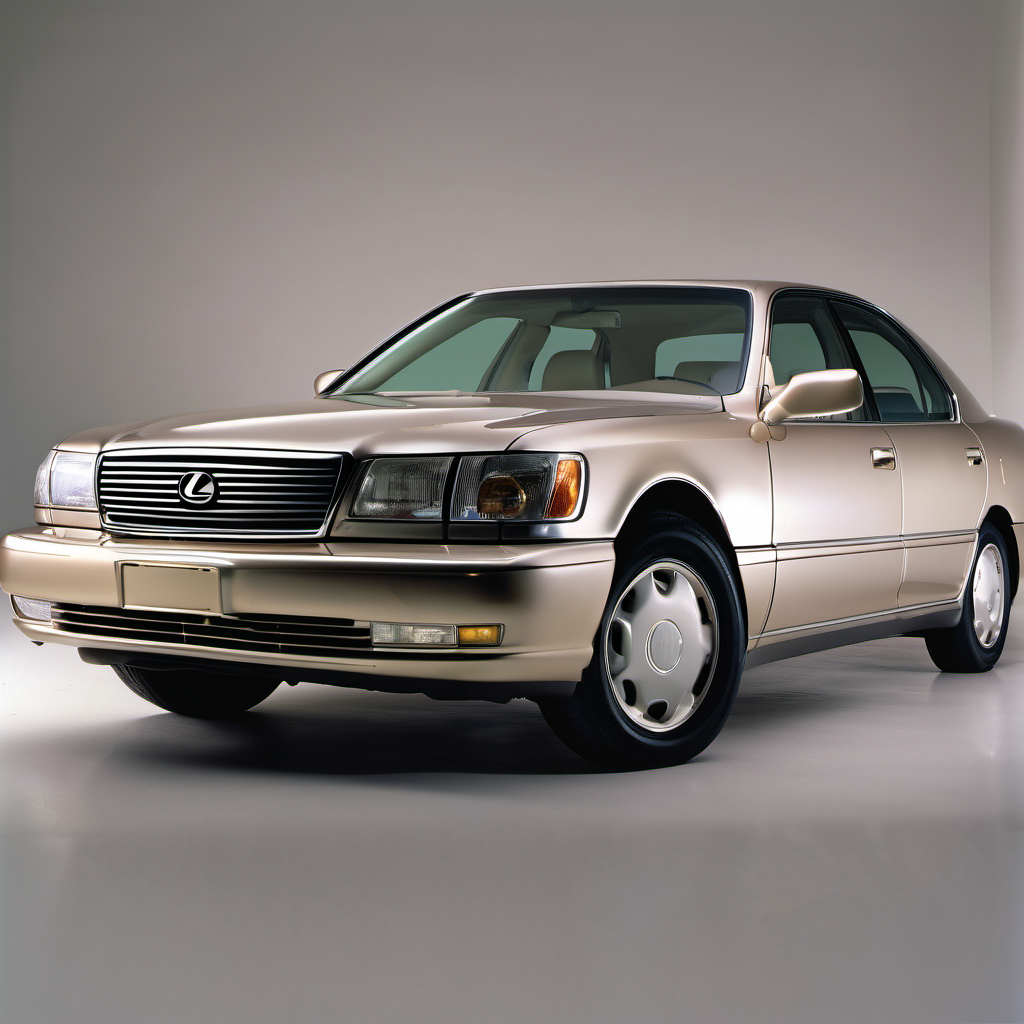
1996 Lexus LS 400
1996 Lexus
LS 400

The direct rival: same segment, same era, V8 RWD full-size luxury sedan. The LS 400 (UCF20) has a slight edge in long-term reliability reputation and better parts availability, but the Q45 offers more driving engagement.

1996 BMW
740i

German counterpart in the same class. The E38 740i offers a refined M60/M62 V8 and stronger enthusiast community, but maintenance costs run significantly higher and parts are pricier.

No catalog match
1996 Mercedes-Benz
S420

W140-generation S-Class competes directly on luxury and V8 power. Exceptionally well-built but parts costs and electrical complexity make it more expensive to own at this age.

No catalog match
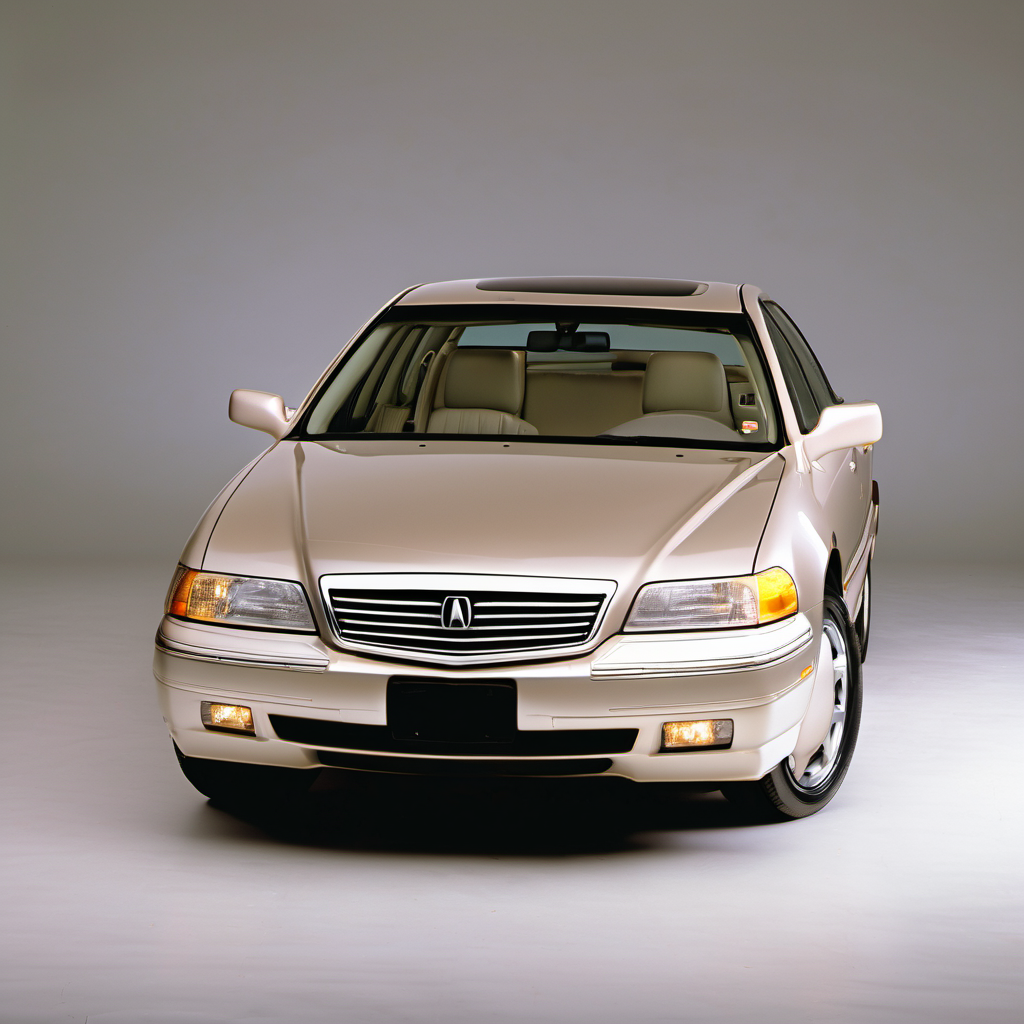
1996 Acura RL
1996 Acura
RL

Japanese V6 luxury competitor at a lower price point. The RL (KA9) is easier and cheaper to maintain with better parts availability, though it lacks the V8 power and RWD of the Q45.

If you're shopping for one

Red flags
  • No timing belt service record and over 60k miles on the current belt — walk away or negotiate a large price reduction to cover the job.
  • Any evidence of overheating history (white deposits on oil cap, milky oil, cracks near the coolant neck) — head gaskets on a V8 of this age are a major job.
  • Soft or spongy brake pedal — could indicate a failed master cylinder or, worse, compromised brake lines from rust.
  • Active suspension warning lights or a noticeably harsh/bouncy ride — active suspension repair on a car this age can cost more than the vehicle is worth.
  • Rust perforation anywhere on the underbody — surface rust is manageable, but through-rust on structural or brake components is a safety disqualifier.
  • Multiple stored DTCs without a clear repair plan — a scan tool full of codes on a car this old often means deferred maintenance across multiple systems.
What to inspect
  • Pull the timing belt cover or ask for documented timing belt service history — this is the single most important pre-purchase check on any VH45DE.
  • Inspect all coolant hoses by squeezing them; they should feel pliable. Hard, brittle, or spongy hoses need immediate replacement.
  • Look under the car carefully for rust on brake lines, the subframe crossmember, and the exhaust system — Lake Geneva-area cars are salt-exposed.
  • Test the active suspension (if equipped) over bumps and on a lift; look for leaking actuators or a car that sits unevenly at rest.
  • Check all four corners of the interior, door seals, and trunk for water intrusion — aged weatherstripping is common and can lead to ECU damage.
  • Scan the OBD system for stored and pending codes before purchase; the VH45DE communicates failures clearly when scanned.
  • Start the car cold and watch for blue smoke (valve seals/rings) or a ticking that fades slowly (oil pressure delay — a sign of sludge or worn bearings).
AI profile generated 4 days ago · claude-sonnet-4-6 · v2.