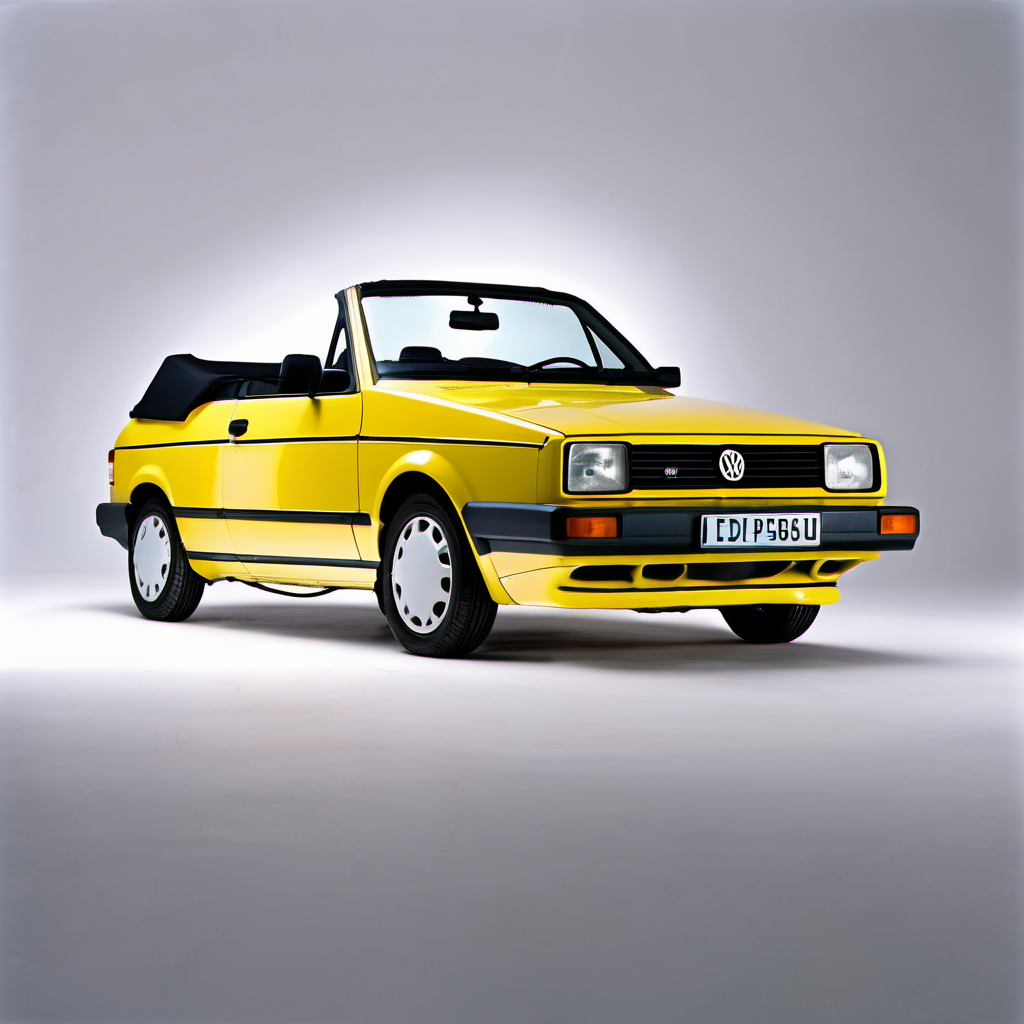
1995 Volkswagen Cabrio Convertible

1995 Volkswagen

CabrioConvertible

Convertible

The 1995 Volkswagen Cabrio (sold in some markets as the Golf Cabriolet) is a front-wheel-drive, two-door soft-top convertible built on the Golf III platform. It carries the proven 2.0L four-cylinder engine paired with either a 5-speed manual or 4-speed automatic, making it a compact, affordable European drop-top. In its day it competed against the Mazda Miata and Chrysler LeBaron convertible, offering a more refined cabin and back seat than most roadsters. The Cabrio developed a reputation for fun, spirited driving with a grown-up feel — wood-trimmed interior, a well-braced body, and a power soft top that stows neatly. It was never a performance car, but it was a competent, enjoyable daily driver for warmer months. The base 2.0L ABA engine is a solid, well-understood unit with a long parts supply. At 30 years old, any surviving Cabrio is a niche classic rather than a practical daily driver. Rust, soft-top degradation, and aging electrical components are the primary concerns. Enthusiast communities keep parts flowing, but some VW-specific trim and body pieces are now difficult to source. Expect to invest in maintenance on purchase if the car has not been properly cared for.

Reliability
3/5
Verified data
Specs shown for Cabrio — the most common configuration. Other trims may vary in engine, drivetrain, or fuel economy. Sign in to see your vehicle's exact specs.
Engine
[object Object]
Drivetrain
FWD
Fuel
Gasoline
MPG
19 city / 26 hwy / 22 combined
Seats
Doors
Body
Subcompact Cars

Overview

AI-curated

The 1995 Volkswagen Cabrio (sold in some markets as the Golf Cabriolet) is a front-wheel-drive, two-door soft-top convertible built on the Golf III platform. It carries the proven 2.0L four-cylinder engine paired with either a 5-speed manual or 4-speed automatic, making it a compact, affordable European drop-top. In its day it competed against the Mazda Miata and Chrysler LeBaron convertible, offering a more refined cabin and back seat than most roadsters. The Cabrio developed a reputation for fun, spirited driving with a grown-up feel — wood-trimmed interior, a well-braced body, and a power soft top that stows neatly. It was never a performance car, but it was a competent, enjoyable daily driver for warmer months. The base 2.0L ABA engine is a solid, well-understood unit with a long parts supply. At 30 years old, any surviving Cabrio is a niche classic rather than a practical daily driver. Rust, soft-top degradation, and aging electrical components are the primary concerns. Enthusiast communities keep parts flowing, but some VW-specific trim and body pieces are now difficult to source. Expect to invest in maintenance on purchase if the car has not been properly cared for.

Known for
  • Charming European soft-top style with a usable rear seat
  • Smooth, rev-happy 2.0L ABA four-cylinder engine
  • Well-reinforced convertible body with minimal scuttle shake for its era
  • Strong enthusiast community and parts support
Best for
  • Weekend and fair-weather cruising
  • Enthusiasts who enjoy simple, wrench-friendly European cars
  • Drivers who want a classic convertible with a budget-friendly entry price
  • Short-haul commuting in mild seasons
Watch for
  • Floor pan and rocker panel rust — a serious concern on any 30-year-old Midwestern car
  • Deteriorated or leaking soft top allowing water intrusion and interior mold
  • Aging wiring harness and brittle plastic clips throughout
  • Deferred maintenance on cooling system components (thermostat, hoses, water pump)

Common issues by mileage

6 known

Soft top leaks and deterioration

high
Typically appears
Any mileage — age-driven
Estimated repair
$400 – $1,800

Floor pan and rocker panel rust

high
Typically appears
Any mileage on Midwestern/salted-road cars
Estimated repair
$500 – $4,000

Coolant leaks — thermostat housing, hoses, water pump

high
Typically appears
80k+ mi
Estimated repair
$150 – $600

Oxygen sensor failure (upstream B1S1)

medium
Typically appears
80k–150k mi
Estimated repair
$100 – $300

Power window regulator failure

medium
Typically appears
60k–120k mi
Estimated repair
$150 – $400

Aging ignition distributor and plug wires causing rough idle or misfire

medium
Typically appears
60k–100k mi
Estimated repair
$120 – $350

Maintenance schedule

  1. 1
    Every 2–3 years or when cracking/leaking is noted Inspect and reseal or replace soft top

    A leaking top destroys the interior — carpet, seat foam, and floor pan rust all follow. Staying ahead of seam separation is far cheaper than remediation.

  2. 2
    Every 2 years / 30k mi Flush and replace coolant

    The ABA engine's aluminum components corrode quickly with old coolant. A thermostat housing failure can cause rapid overheating and head gasket damage.

  3. 3
    Every 60k mi or 5 years, whichever comes first Inspect and replace timing belt, water pump, and tensioner

    The ABA is an interference engine — a broken timing belt destroys the engine. Water pump is driven off the same belt; replace it together.

  4. 4
    Every 2 years Inspect brake fluid and flush

    Brake fluid absorbs moisture over time, lowering boiling point. On a 30-year-old car, degraded fluid and corroded calipers are common.

  5. 5
    Annually — especially after every Wisconsin winter Inspect floor pans, sill channels, and spare tire well for rust

    Road salt attacks unprotected steel from underneath. Early detection means patch repair; ignored rust means structural compromise.

  6. 6
    Every 30k mi Replace spark plugs and inspect distributor cap and rotor

    The ABA distributor system is reliable but components fatigue with age. Worn plugs and a failing cap cause rough cold starts and poor fuel economy.

  7. 7
    Every spring and fall Inspect soft-top drain tubes and clear debris

    Clogged convertible top drain tubes route water directly into the cabin and onto the floor pan. A few minutes of maintenance prevents significant rust damage.

  8. 8
    Every fall Check and top off battery — consider replacement before winter

    Wisconsin sub-zero starts are hard on aging batteries. A 30-year-old vehicle's charging system may also struggle; test both battery and alternator output before November.

Always defer to the manufacturer's service manual for warranty-mandated intervals.

Cost of ownership

Annual maintenance
$600 – $2,000
Fuel
Mid-grade regular gasoline; at ~22 MPG combined and typical Wisconsin driving, expect $1,200–$1,800/year at current pump prices.
Insurance
Generally low — expect $600–$1,200/year for a standard policy on a 30-year-old vehicle with agreed/stated value coverage. Classic or collector car insurance may be cheaper if mileage is limited.

Day-to-day running costs are modest, but a 30-year-old convertible has unpredictable repair bills. Budget separately for one larger unexpected repair per year — soft top, rust remediation, or a cooling system job. A well-maintained, rust-free car can be kept in good shape for under $1,000/year; a neglected example can easily exceed $3,000 in catch-up maintenance.

Seasonal care

Lake Geneva, WI
Winter
  • Strongly consider storing the Cabrio for winter — salt spray penetrates every seam of the soft top and attacks the floor pan aggressively. If storage isn't possible, apply fresh undercoating before first snowfall.
  • If driven in winter, rinse the undercarriage thoroughly after every salt event. Pay special attention to sill channels and the spare tire well.
  • Test the battery and have it load-tested each fall. Cold cranking amps drop significantly in sub-zero temps, and the ABA needs a strong start to avoid flooding.
  • Switch to a full-synthetic 5W-30 or 5W-40 oil for easier cold starts and better protection during warm-up.
  • Do NOT operate the power soft top in temperatures below freezing — the material cracks and the motor can strip. Leave it up and stationary.
  • Keep washer fluid rated to at least -25°F. The reservoir on this car is small; refill frequently.
Summer
  • Inspect the soft top interior liner and seams before hot-weather use — UV degradation accelerates in summer. A quality soft-top conditioner applied in spring extends life significantly.
  • Check tire pressure monthly; summer heat in a parked car causes pressure to spike. The Cabrio's recommended pressure is typically 32–35 PSI cold.
  • Test the A/C system in spring before the heat hits. The R-134a system on mid-90s Cabrios is serviceable but seals age and refrigerant loss is common after 30 years.
  • Watch coolant temperature closely on hot days — a partially clogged thermostat or weak radiator can cause overheating that otherwise hides in cooler weather.

Comparable vehicles

If you're shopping for one

Red flags
  • Any visible floor rust, especially soft or perforated metal under the mats — structural repair on a 30-year-old convertible is expensive and often not worthwhile.
  • Mismatched or non-original soft top with poor fitment — suggests a budget replacement that likely leaks.
  • Musty or mold smell inside the cabin — means water has been getting in for some time and may signal hidden rust and damaged insulation.
  • Overheating history or evidence of head gasket repairs — once overheated, the ABA block can develop warped head issues.
  • Excessive oil consumption or blue smoke at startup — indicates worn piston rings or valve seals.
  • Any title branding (salvage, flood, rebuilt) — on a convertible this old, flood or accident history is extremely difficult to fully remediate.
What to inspect
  • Lift all floor mats and inspect the floor pan for rust, bubbling paint, or soft spots — especially in front footwells and the spare tire well.
  • Check rocker panels and sill channels by hand; probe any bubbled paint with a magnet to detect filler hiding rust.
  • Operate the soft top through a full open/close cycle. Listen for motor strain, watch for binding, and check all four corners seal evenly when closed.
  • Look inside the top well when the top is down — standing water or mold smell means the drain tubes are clogged or the top is leaking.
  • Run the engine to full operating temperature and watch for coolant leaks at the thermostat housing and lower radiator hose connections.
  • Pull the oil cap and inspect for mayonnaise-colored residue, which indicates a head gasket leak or chronic short-trip use.
  • Test all power windows — regulators are a known failure point and replacement parts are increasingly hard to find.
  • Check the soft top fabric from inside the car toward a bright light for thin spots, small tears, or delamination of the inner headliner.
AI profile generated 4 days ago · claude-sonnet-4-6 · v2.