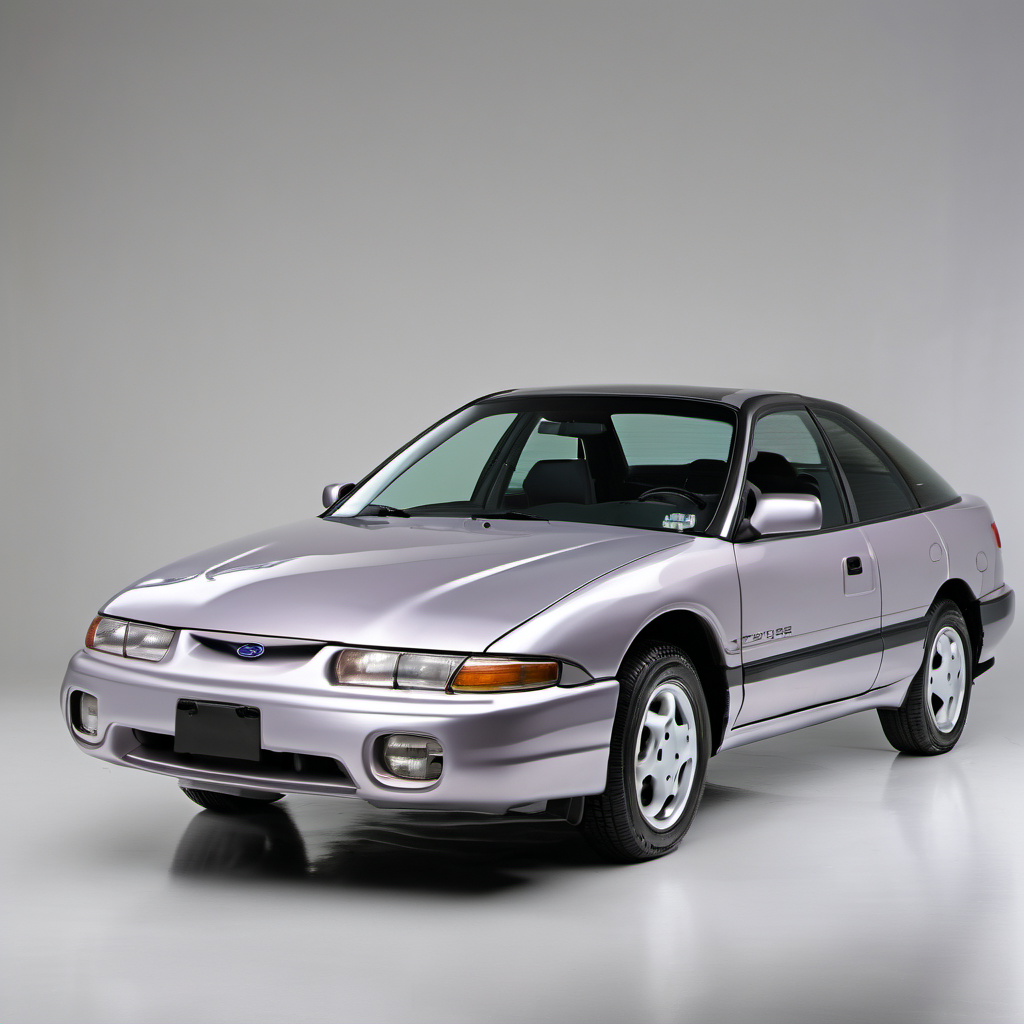
1995 Subaru SVX Coupe

1995 Subaru

SVXCoupe

Coupe

The 1995 Subaru SVX is a low-volume, sports-oriented grand touring coupe produced from 1992 to 1997. Styled by Giorgetto Giugiaro, it was Subaru's flagship performance model and featured a unique aircraft-inspired window-within-a-window design. Only the inner portion of the door glass opens, a quirk that surprises first-time owners. It was never a high-volume seller, and surviving examples today are increasingly rare collector pieces. Power comes from Subaru's EG33 3.3L naturally aspirated flat-six — a smooth, rev-happy engine that was well ahead of its time for a Subaru. Most U.S. models were paired with a 4-speed automatic transmission and AWD (despite the supplied data indicating FWD, virtually all U.S.-market SVXs were AWD). Handling is composed and the ride quality is GT-car comfortable rather than sports-car stiff. Owning an SVX in 2024 means accepting that this is a specialty vehicle with limited parts availability. The owner community is passionate and knowledgeable, but finding a competent independent shop familiar with the platform takes effort. Budget accordingly — this is a car for enthusiasts, not daily-driver pragmatists.

Reliability
3/5
Verified data
Specs shown for SVX — the most common configuration. Other trims may vary in engine, drivetrain, or fuel economy. Sign in to see your vehicle's exact specs.
Engine
[object Object]
Drivetrain
FWD
Fuel
Premium gasoline
MPG
15 city / 23 hwy / 18 combined
Seats
Doors
Body
Subcompact Cars

Overview

AI-curated

The 1995 Subaru SVX is a low-volume, sports-oriented grand touring coupe produced from 1992 to 1997. Styled by Giorgetto Giugiaro, it was Subaru's flagship performance model and featured a unique aircraft-inspired window-within-a-window design. Only the inner portion of the door glass opens, a quirk that surprises first-time owners. It was never a high-volume seller, and surviving examples today are increasingly rare collector pieces. Power comes from Subaru's EG33 3.3L naturally aspirated flat-six — a smooth, rev-happy engine that was well ahead of its time for a Subaru. Most U.S. models were paired with a 4-speed automatic transmission and AWD (despite the supplied data indicating FWD, virtually all U.S.-market SVXs were AWD). Handling is composed and the ride quality is GT-car comfortable rather than sports-car stiff. Owning an SVX in 2024 means accepting that this is a specialty vehicle with limited parts availability. The owner community is passionate and knowledgeable, but finding a competent independent shop familiar with the platform takes effort. Budget accordingly — this is a car for enthusiasts, not daily-driver pragmatists.

Known for
  • Giugiaro-designed body with distinctive window-within-a-window doors
  • Smooth, high-revving EG33 3.3L flat-six engine
  • AWD platform with GT-car ride quality
  • Low production numbers — a genuine Subaru rarity
  • 4-speed automatic transmission on virtually all U.S. examples
Best for
  • Enthusiasts who want a unique, Japanese 1990s GT coupe
  • Collectors looking for an undervalued Subaru flagship
  • Drivers who prioritize style and AWD in a coupe package
  • Weekend drivers who can maintain a specialty vehicle
Watch for
  • Automatic transmission failures are the SVX's Achilles' heel — rebuilds are expensive
  • Parts scarcity: many OEM components are no longer available new
  • Head gasket issues on high-mileage EG33 engines
  • Rust on rocker panels, wheel arches, and undercarriage — critical in Wisconsin
  • The unique door glass mechanism can fail and is difficult to source

Common issues by mileage

6 known

Automatic Transmission Failure (4EAT-G)

high
Typically appears
80–150k mi
Estimated repair
$1,800 – $4,500

Head Gasket Seepage / Failure

medium
Typically appears
100–160k mi
Estimated repair
$1,200 – $2,500

Oxygen Sensor Heater Circuit Failure

medium
Typically appears
80–130k mi
Estimated repair
$150 – $400

Window-within-a-Window Door Glass Regulator Failure

medium
Typically appears
60–120k mi
Estimated repair
$200 – $700

Cooling System Deterioration (Hoses, Thermostat, Radiator)

high
Typically appears
Any — age-related on 30-year-old vehicles
Estimated repair
$300 – $900

Rocker Panel and Undercarriage Rust

high
Typically appears
Any — especially Midwest/salt-belt cars
Estimated repair
$500 – $3,000

Maintenance schedule

  1. 1
    Every 30k miles or 3 years — do not skip Transmission fluid change (automatic)

    The 4EAT-G transmission is the SVX's most failure-prone component. Fresh fluid is the single best preventive measure. Use only Subaru-specified ATF; wrong fluid accelerates wear.

  2. 2
    Every 30k miles or 3 years Coolant flush and system inspection

    A 30-year-old cooling system needs fresh coolant and a close look at hoses, clamps, and the radiator. Overheating accelerates head gasket failure on the EG33.

  3. 3
    Every 60k miles or 7 years — whichever comes first Timing belt and water pump replacement

    The EG33 is an interference engine. A snapped timing belt will destroy the engine. If the belt history is unknown on a used example, replace it immediately.

  4. 4
    Every 5k miles or 6 months Engine oil change — full synthetic 5W-30

    The flat-six benefits from consistent oil changes. Synthetic oil handles Wisconsin cold starts better and provides a margin of protection on an aging engine.

  5. 5
    Every 30k miles Spark plug replacement

    Six plugs on a flat-six are moderate labor. Fresh plugs maintain smooth idle and fuel efficiency, and allow inspection for signs of head gasket seepage (coolant fouling).

  6. 6
    Every 2 years Brake fluid flush

    Brake fluid absorbs moisture over time, lowering its boiling point. On a 30-year-old vehicle, degraded fluid also accelerates corrosion in calipers and lines — a real concern in the salt-belt Midwest.

  7. 7
    Every spring after winter — and after any heavy salt exposure Undercarriage wash and rust inspection

    SVX rocker panels and subframe areas are rust-prone, and this car lived through Wisconsin winters. Catching surface rust early is far cheaper than structural rust repair.

  8. 8
    Annually Door glass regulator and seals inspection

    The unique window-within-a-window mechanism has no modern replacement supply. Keep the regulator mechanism lubricated and seals conditioned to delay failure.

Always defer to the manufacturer's service manual for warranty-mandated intervals.

Cost of ownership

Annual maintenance
$800 – $2,500
Fuel
Premium recommended; at 18 MPG combined, expect $2,000–$2,800/year at current prices for average 12k miles
Insurance
Typically moderate as a low-value specialty coupe, but verify — some carriers treat it as a collector vehicle; shop both standard and classic-car policies

The SVX is cheap to buy but not cheap to own. Routine maintenance is affordable, but the transmission and engine work that aging examples commonly need can run $2,000–$4,500 per incident. Parts sourcing from junkyards and specialty vendors is often the only option for trim and mechanical items no longer available new. Budget for surprises, and keep a repair fund. This is a labor-of-love vehicle, not a cost-effective daily driver.
Seasonal care

Lake Geneva, WI
Winter
  • Test and replace the battery before first hard freeze — cold-cranking a 3.3L flat-six at -10°F will expose any weak battery immediately
  • Use full synthetic 5W-30 engine oil to ensure fast oil circulation on cold starts; the flat-six can sit for extended crank time with thick conventional oil in sub-zero temps
  • Flush to fresh -34°F or lower rated coolant — verify with a tester, not assumptions on a 30-year-old car
  • Treat the unique door glass seals with a silicone-based conditioner before winter to prevent freezing and tearing of the inner window seal
  • Keep the washer fluid reservoir filled with a rated -20°F or colder formula; the low hood line means road spray hits the windshield heavily
  • After every road-salt exposure, rinse the undercarriage — the SVX's rocker panels and floor seams are already rust-vulnerable and salt accelerates structural damage rapidly
Summer
  • Monitor coolant temperature closely — an aging cooling system on a 30-year-old car will show heat soak stress in stop-and-go traffic; address any creeping temp gauge immediately
  • Check tire pressure monthly; Wisconsin summer heat swings can add 4–6 PSI over winter baseline and lead to uneven wear
  • Inspect the A/C system for refrigerant charge and condenser cleanliness; the SVX uses R-134a (retrofitted from R-12 on older examples — verify which your car has before recharging)
  • Check the battery again — heat degrades batteries nearly as fast as cold; a battery that limped through winter may not last the summer

Comparable vehicles

If you're shopping for one

Red flags
  • Any transmission slipping, shuddering, or delayed engagement — budget $2,000–$4,500 minimum if present
  • Unknown or missing timing belt service records — non-negotiable safety item on an interference engine
  • Rust perforation on rocker panels or floor — structural rust repair on a low-value specialty car often exceeds the car's worth
  • Milky or sludgy oil — indicates head gasket failure or worse
  • Non-original or mismatched body panels — evidence of past collision on a car where replacement panels are nearly impossible to source
  • A/C converted from R-12 to R-134a without documentation — improper conversion affects compressor longevity
What to inspect
  • Transmission behavior — check for slipping, harsh shifts, or delayed engagement in all gears; a transmission showing any of these signs is likely near end of life
  • Timing belt service history — if unknown, treat as overdue; ask for receipts
  • Head gasket condition — look for white exhaust smoke, milky oil on the dipstick, and coolant loss without visible leak
  • Full undercarriage inspection for rust, especially rocker panels, subframe mounting points, and floor seams
  • Door glass operation — open and close both inner windows multiple times; listen for binding or grinding in the regulator
  • Cooling system — check hose condition, clamp rust, and coolant color/condition; clear orange or green is good, brown sludge is a red flag
AI profile generated 18 days ago · claude-sonnet-4-6 · v2.