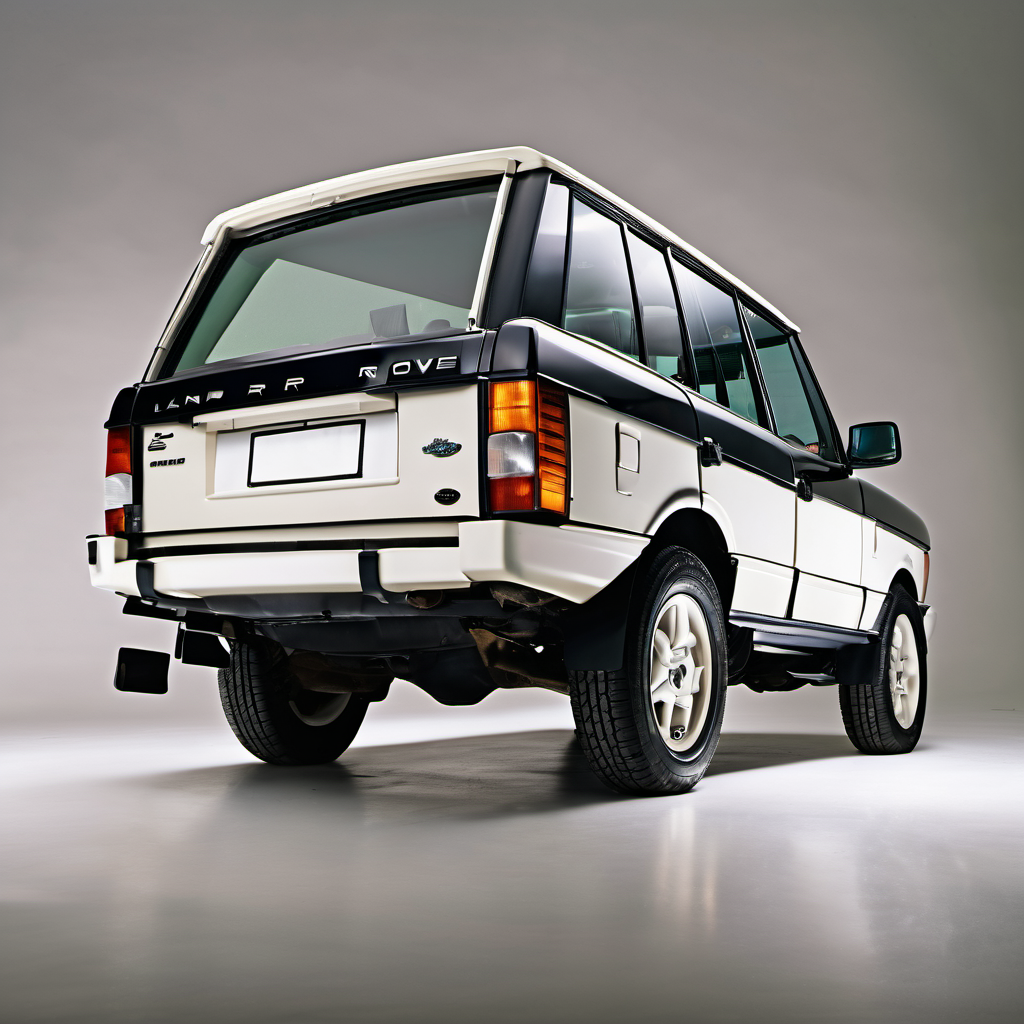
1995 Land Rover Range Rover SUV

1995 Land Rover

Range RoverSUV

SUV

The 1995 Range Rover Classic represents the final model year of Land Rover's original full-size luxury SUV — a platform that had been in continuous production since 1970. This generation combined genuine body-on-frame off-road capability with a premium interior and a 3.9L Rover V8, making it one of the first true luxury SUVs before that segment even had a name. By 1995, these trucks were already pushing 25 years of accumulated platform engineering, which means both the charm and the headaches are well-documented. Electrical gremlins, aging hydraulic systems, and the 3.9L V8's known cooling and head gasket vulnerabilities are the recurring themes in ownership forums and independent shop bays alike. At this age, every example is a used vehicle with a history. Condition, service records, and rust are everything. A well-maintained example with a fresh timing chain and known fluids is a capable, characterful truck. An unknown example is a money pit. Treat it accordingly.

Reliability
2/5
Verified data
Specs shown for Range Rover — the most common configuration. Other trims may vary in engine, drivetrain, or fuel economy. Sign in to see your vehicle's exact specs.
Engine
[object Object]
Drivetrain
AWD
Fuel
Premium gasoline
MPG
11 city / 15 hwy / 13 combined
Seats
Doors
Body
Special Purpose Vehicles

Overview

AI-curated

The 1995 Range Rover Classic represents the final model year of Land Rover's original full-size luxury SUV — a platform that had been in continuous production since 1970. This generation combined genuine body-on-frame off-road capability with a premium interior and a 3.9L Rover V8, making it one of the first true luxury SUVs before that segment even had a name. By 1995, these trucks were already pushing 25 years of accumulated platform engineering, which means both the charm and the headaches are well-documented. Electrical gremlins, aging hydraulic systems, and the 3.9L V8's known cooling and head gasket vulnerabilities are the recurring themes in ownership forums and independent shop bays alike. At this age, every example is a used vehicle with a history. Condition, service records, and rust are everything. A well-maintained example with a fresh timing chain and known fluids is a capable, characterful truck. An unknown example is a money pit. Treat it accordingly.

Known for
  • Iconic boxy styling with genuine off-road pedigree
  • Rover 3.9L V8 — smooth but fragile when neglected
  • Permanent 4WD with center diff lock — capable in Wisconsin winters
  • Premium leather interior rare for the era
  • Notoriously complex British electrical systems
Best for
  • Enthusiasts who want a classic SUV and can wrench or afford regular shop time
  • Light off-road and trail driving
  • Someone with a dedicated mechanic familiar with early Land Rovers
  • Secondary vehicle / weekend driver use
Watch for
  • Head gasket failure on the 3.9L V8 — extremely common and expensive
  • Lucas electrical system failures (switches, relays, wiring harness degradation)
  • Air suspension or height control valve leaks (if equipped)
  • Frame and body rust, especially rocker panels and floor sections
  • Overheating — often masks or causes the head gasket failure

Common issues by mileage

6 known

Head Gasket Failure (3.9L V8)

high
Typically appears
60–120k mi
Estimated repair
$1,800 – $3,500

Cooling System Failure / Overheating (radiator, thermostat, water pump)

high
Typically appears
50–100k mi
Estimated repair
$400 – $1,200

Lucas Electrical Gremlins (relays, switches, wiring harness)

high
Typically appears
Any mileage on a 30-year-old example
Estimated repair
$200 – $1,500

Timing Chain & Tensioner Wear

medium
Typically appears
80–130k mi
Estimated repair
$800 – $1,800

Air Suspension / Height Control Valve Leaks

medium
Typically appears
70k+ mi
Estimated repair
$300 – $1,200

Brake System Deterioration (calipers, lines, master cylinder)

medium
Typically appears
Any mileage — age-related
Estimated repair
$400 – $1,400

Maintenance schedule

  1. 1
    Every 2 years or 24k mi — more frequently on unknown-history examples Coolant flush and full cooling system inspection (hoses, thermostat, radiator cap, water pump)

    The 3.9L V8's head gasket failures are almost always preceded by or caused by cooling system neglect. This is the single most important preventive task on this vehicle.

  2. 2
    Every 3,000–4,000 mi Engine oil and filter change using the correct viscosity

    The Rover V8 has known oil pressure sensitivity. Fresh oil protects the timing chain tensioners and lifters. Do not stretch intervals on this engine.

  3. 3
    Inspect at 80k mi; replace if worn Timing chain and tensioner inspection

    Worn tensioners lead to chain rattle and, if ignored, catastrophic engine damage. Check for startup rattle that clears after a few seconds — a warning sign.

  4. 4
    Annually Inspect and test all electrical relays, fuses, and ground straps

    Lucas electrics corrode with age. Bad grounds cause erratic behavior across multiple systems. Clean and check grounds at every annual service.

  5. 5
    Every 30k mi Transmission fluid and transfer case fluid change

    The ZF 4-speed automatic and transfer case are durable when kept in clean fluid. Degraded fluid accelerates wear on this hard-to-source transmission.

  6. 6
    Every 30k mi Differential fluid change (front and rear)

    Full-time 4WD means all three diffs are always working. Keeping clean fluid in all axles and the center diff prevents costly rebuilds.

  7. 7
    Annually Inspect air suspension lines, height control valve, and compressor (if equipped)

    Air suspension components harden and crack with age and cold Wisconsin winters. A slow leak can cause the vehicle to sit overnight and damage the compressor on startup.

  8. 8
    Every spring after winter salt season Inspect and treat underbody, frame, and rocker panels for rust

    Wisconsin road salt accelerates frame and body corrosion on these unibody-adjacent trucks. Catching surface rust early is far cheaper than addressing structural rust later.

Always defer to the manufacturer's service manual for warranty-mandated intervals.

Cost of ownership

Annual maintenance
$1,500 – $4,500
Fuel
Premium gasoline recommended. At 13 MPG combined and ~15,000 miles/year, expect roughly $2,600–$3,200/year in fuel at current Upper Midwest prices.
Insurance
Typically moderate for a 30-year-old vehicle — classic/agreed-value policies may be cheaper than standard comprehensive. Verify the vehicle is insurable as a daily driver vs. limited-use classic.

This is an expensive vehicle to own properly. Annual maintenance on a healthy example runs $1,500–$2,500 with no surprises. An example needing deferred maintenance addressed — head gaskets, cooling system, suspension — can easily run $3,000–$6,000+ in a single year. Budget for surprises. Parts availability is moderate; some components require specialty suppliers or Land Rover dealer parts at premium prices.

Seasonal care

Lake Geneva, WI
Winter
  • Switch to a 5W-30 or manufacturer-spec low-viscosity oil before sub-zero temperatures — the Rover V8 needs oil pressure quickly on cold starts to protect timing components.
  • Test and if necessary replace the battery. Cold cranking a 3.9L V8 at -10°F will expose any weak battery immediately; this engine needs strong cranking to fire reliably in the cold.
  • Fill washer fluid with a rated -20°F or colder formula — standard washer fluid will freeze in the lines and reservoir.
  • Inspect air suspension components before winter. Cold temperatures cause rubber lines and seals to harden and crack; a leaking system is far worse to diagnose in January.
  • Rinse the underbody weekly during salt season. The frame, floor, and rocker panels on these trucks are rust-vulnerable and 30 years of Wisconsin salt exposure is a real threat.
  • Verify the coolant freeze protection is adequate to at least -34°F. A 50/50 mix of the correct coolant is the minimum standard heading into a Wisconsin winter.
Summer
  • Watch the temperature gauge closely in stop-and-go traffic. The 3.9L V8 is prone to heat soak and overheating; address any creeping temp gauge immediately — do not run it to the red.
  • Check tire pressure monthly. Summer heat increases pressure 4–6 PSI above cold readings; overinflation on heavy SUVs wears tires unevenly and reduces wet-road grip.
  • Inspect the A/C system's rubber hoses and connections. Refrigerant leaks are common on 30-year-old systems; recharging a leaking system is a temporary fix at best.
  • Inspect the coolant overflow reservoir for discoloration or oily film — a sign of early head gasket seepage that becomes critical in summer heat.

Comparable vehicles

If you're shopping for one

Red flags
  • White smoke from the exhaust at operating temperature — blown head gasket, walk away or price it in heavily.
  • Temperature gauge that climbs above the normal range or a reported history of overheating.
  • Any sign of frame rust perforation or floor pan rust-through — structural on a body-on-frame truck.
  • Electrical issues the seller dismisses as 'minor' — on a Lucas-wired British truck, they are rarely minor.
  • No coolant system or timing chain service records on a high-mileage example.
  • Air suspension that won't hold overnight — compressors and valves on 30-year-old systems are expensive to source and replace.
What to inspect
  • Pull the oil filler cap and inspect for white/tan emulsified sludge — a direct sign of coolant intrusion from a failing head gasket.
  • Check the coolant reservoir for an oily film or brown discoloration, another head gasket warning sign.
  • Start the engine cold and listen for timing chain rattle in the first 5–10 seconds. If present, budget for chain and tensioner replacement.
  • Inspect all four corner rocker panels, the floor inside, and the frame rails under the vehicle for rust — structural rust is a deal-breaker on a 30-year-old truck.
  • Operate every electrical switch, window, lock, and accessory. Lucas electrical faults are common and diagnosing intermittent gremlins is time-consuming and expensive.
  • If air suspension is present, let the vehicle sit overnight and check that ride height hasn't dropped — a leaking suspension is a significant repair.
  • Verify the transmission shifts smoothly through all gears and doesn't slip on the 1–2 upshift — ZF rebuilds are expensive.
  • Ask for all service records. A Range Rover Classic with no paper trail should be priced accordingly; assume the worst on the cooling system and head gaskets.
AI profile generated 4 days ago · claude-sonnet-4-6 · v2.