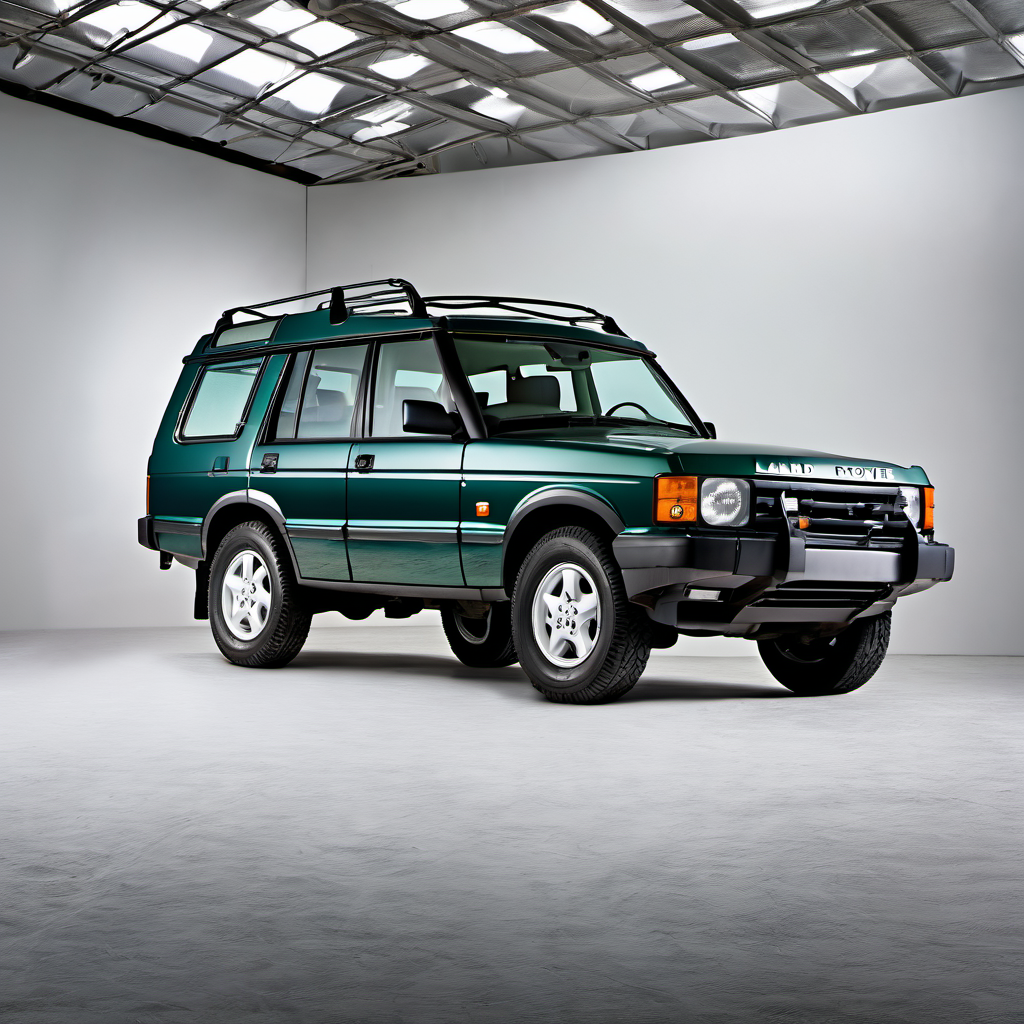
1995 Land Rover Discovery SUV

1995 Land Rover

DiscoverySUV

SUV

The 1995 Land Rover Discovery is a first-generation (Series I) body-on-frame SUV built in Solihull, England, and brought to the U.S. as a more affordable entry point into the Land Rover lineup below the Range Rover. It shares its basic architecture and Rover V8 engine with the Range Rover Classic but rides on a shorter wheelbase with a distinctive stepped roofline that creates genuinely usable third-row space. It was designed from the start as a dual-purpose vehicle — capable off-road without sacrificing daily drivability. Powered by the 3.9L Rover V8 (a long-lived aluminum alloy engine descended from the original Buick 215), the Discovery offers solid low-end torque and a smooth power delivery. A permanent four-wheel-drive system with a two-speed transfer case and locking center differential gives it real off-road credentials. This is not a crossover pretending to be a truck — it will go places most SUVs of its era could not. Owning one in 2024 means accepting the reality of a nearly 30-year-old British SUV: parts availability is decent thanks to a dedicated enthusiast community, but maintenance costs are high, reliability is below average, and rust from Wisconsin road salt is a serious concern. This is a vehicle for enthusiasts who enjoy the ownership experience as much as the driving experience.

Reliability
2/5
Verified data
Specs shown for Discovery — the most common configuration. Other trims may vary in engine, drivetrain, or fuel economy. Sign in to see your vehicle's exact specs.
Engine
[object Object]
Drivetrain
AWD
Fuel
Premium gasoline
MPG
11 city / 15 hwy / 13 combined
Seats
Doors
Body
Special Purpose Vehicles

Overview

AI-curated

The 1995 Land Rover Discovery is a first-generation (Series I) body-on-frame SUV built in Solihull, England, and brought to the U.S. as a more affordable entry point into the Land Rover lineup below the Range Rover. It shares its basic architecture and Rover V8 engine with the Range Rover Classic but rides on a shorter wheelbase with a distinctive stepped roofline that creates genuinely usable third-row space. It was designed from the start as a dual-purpose vehicle — capable off-road without sacrificing daily drivability. Powered by the 3.9L Rover V8 (a long-lived aluminum alloy engine descended from the original Buick 215), the Discovery offers solid low-end torque and a smooth power delivery. A permanent four-wheel-drive system with a two-speed transfer case and locking center differential gives it real off-road credentials. This is not a crossover pretending to be a truck — it will go places most SUVs of its era could not. Owning one in 2024 means accepting the reality of a nearly 30-year-old British SUV: parts availability is decent thanks to a dedicated enthusiast community, but maintenance costs are high, reliability is below average, and rust from Wisconsin road salt is a serious concern. This is a vehicle for enthusiasts who enjoy the ownership experience as much as the driving experience.

Known for
  • Capable permanent 4WD with low-range transfer case
  • Distinctive stepped roofline with available third-row seating
  • Smooth, torquey Rover 3.9L aluminum V8
  • Strong off-road community and parts support network
  • British charm paired with British-spec reliability quirks
Best for
  • Off-road and overlanding enthusiasts
  • Buyers who enjoy hands-on mechanical ownership
  • Light towing and hauling in rural or mixed terrain
  • Collectors and classic British 4x4 fans
Watch for
  • Head gasket failure is a defining weakness of the Rover V8 in this era
  • Frame and body rust accelerated by Midwest road salt
  • Electrical gremlins from aging British wiring and connectors
  • Coolant system leaks leading to overheating if ignored
  • Very poor fuel economy — budget accordingly

Common issues by mileage

6 known

Head Gasket Failure (Rover V8)

high
Typically appears
60–120k mi
Estimated repair
$1,200 – $2,800

Coolant Leak — Hoses, Thermostat Housing, and Water Pump

high
Typically appears
50–100k mi
Estimated repair
$200 – $700

Timing Chain and Tensioner Wear

medium
Typically appears
80–130k mi
Estimated repair
$800 – $1,800

Electrical Gremlins — Relays, Fusebox, and Connector Corrosion

high
Typically appears
Any mileage on aged vehicle
Estimated repair
$100 – $900

Maintenance schedule

  1. 1
    Every 2 years or 24k mi — more frequently if any overheating history Coolant flush and full cooling system inspection

    The Rover V8's aluminum heads are extremely sensitive to coolant degradation. Old coolant becomes acidic and attacks head gaskets. This is the single most important preventive maintenance item on this engine.

  2. 2
    Every 3,000–4,000 mi given vehicle age Engine oil and filter change with correct viscosity oil

    Older engine tolerances benefit from shorter intervals. Use the manufacturer-specified viscosity — the Rover V8 can be picky. Clean oil reduces wear on timing chain and upper-end components.

  3. 3
    Every 30k mi or every 2 years Transfer case and differential fluid change

    Permanent 4WD means the transfer case and all three differentials are always in use. Fluid breakdown accelerates wear and seal failure, especially in cold Wisconsin winters.

  4. 4
    Every 4–5 years regardless of appearance Inspect and replace all coolant hoses and clamps

    At 30 years old, original or even second-generation hoses are past their service life. A hose failure leading to overheating can destroy the head gaskets in minutes on this engine.

  5. 5
    Annually Inspect and clean electrical connectors and fusebox

    Lucas-era British electrical connectors corrode and cause intermittent faults, no-starts, and sensor failures. Dielectric grease on connectors is cheap insurance against expensive diagnostic time.

  6. 6
    Every 12 months Inspect and lubricate door hinges, tailgate hinges, and latches

    The side-hinged rear tailgate and heavy doors are prone to hinge and latch wear. Salt spray accelerates corrosion on these hardware points in Wisconsin winters.

  7. 7
    Every fall before winter season Underbody rust inspection and treatment

    The Discovery's body-on-frame construction means the frame rails, crossmembers, and body floor can rust independently. Wisconsin road salt makes annual inspection and protective coating essential.

  8. 8
    Every fall Battery load test and terminal cleaning

    Cold cranking a 3.9L V8 at -10°F requires a strong battery. An aging battery that passes a summer test can fail its first cold morning. Clean terminals prevent voltage drop that triggers electrical faults.

Always defer to the manufacturer's service manual for warranty-mandated intervals.

Cost of ownership

Annual maintenance
$1,500 – $4,500
Fuel
At 13 MPG combined and upper Midwest gas prices, expect $2,800–$3,600/year for average driving (12,000 mi/yr). Premium fuel is specified.
Insurance
Typically moderate — classic/collector policies may be available and cost-effective given the age and limited daily use profile.

This is not a cheap vehicle to own. Parts for the Series I Discovery are available but often expensive and sometimes hard to source quickly. A well-maintained example with no deferred work might cost $1,500–$2,500/year in routine maintenance. A truck with neglected history could easily demand $3,000–$6,000+ in catch-up repairs in year one. Budget for the unexpected — this is a vintage British SUV. Find a shop with actual Land Rover Series I experience before you buy.
Seasonal care

Lake Geneva, WI
Winter
  • Load-test the battery every fall — cold cranking a large V8 at sub-zero temps will expose any weakness immediately
  • Switch to a full-synthetic oil rated for low-temperature starts (e.g., 5W-40) to protect the engine on cold mornings
  • Flush washer fluid reservoir and fill with rated -30°F or colder fluid — standard fluid freezes in the lines and at the nozzles
  • Inspect the underbody, frame rails, and floor pan before winter; apply rust inhibitor to any bare metal before road salt exposure begins
  • Check that the permanent 4WD system and low-range transfer case engage and disengage properly before winter — this is not the time to find out they don't work
  • Verify the cooling system is filled with a 50/50 antifreeze mix rated to at least -34°F — Wisconsin temperatures can hit -20°F or colder
Summer
  • Inspect the cooling system for any seeping hoses or weeping head gaskets before summer heat compounds the problem — the Rover V8 does not tolerate overheating
  • Check tire pressure monthly; tires lose roughly 1 PSI for every 10°F drop from winter to summer and will be underinflated when temperatures rise
  • Run the A/C system early in the season to confirm proper cooling before a hot day reveals a refrigerant leak or failed compressor
  • Check engine oil level more frequently in summer; the aging Rover V8 may consume slightly more oil under sustained heat load
  • Inspect the battery terminals and top-of-charge voltage — heat accelerates battery degradation as much as cold does

Comparable vehicles

If you're shopping for one

Red flags
  • Any sign of overheating history (stained overflow tank, warped or replaced intake manifold, mismatched coolant hose clamps) — walk away unless priced for a head gasket job
  • Heavy underbody rust, especially on frame rails near the body mounts — structural rust on a body-on-frame truck is a safety issue and a money pit
  • Service records showing no coolant changes or cooling system work in the last several years
  • Milky or foamy oil on the dipstick or filler cap
  • Any non-starting or hard-starting condition without a clear, already-diagnosed cause
  • Evidence of shade-tree wiring repairs (taped splices, added fuses, bypassed relays) — electrical problems on these trucks cascade
What to inspect
  • Pull the oil filler cap and look for white or milky residue — a telltale sign of head gasket failure or coolant intrusion into the oil
  • Check the coolant reservoir for oil sheen or brown discoloration, which also indicates head gasket compromise
  • Inspect the entire undercarriage with a flashlight for rust on the frame rails, crossmembers, body mounts, and floor pan — this is the biggest concern on any Wisconsin-region example
  • Confirm the transfer case shifts into and out of low range smoothly and that the center differential lock engages — these selectors can seize from disuse
  • Look for oil seeping from the valve cover gaskets, timing cover, and rear main seal — all common on the Rover V8 at this age
  • Test every electrical circuit: windows, door locks, instrument cluster gauges, and interior lighting — budget diagnostic time if anything is intermittent
  • Check the condition of the coolant hoses — squeeze them; they should feel firm and supple, not hard and cracked or soft and spongy
  • Inspect the tailgate hinges and latch mechanism — these are expensive and annoying to repair and are frequently neglected
AI profile generated 4 days ago · claude-sonnet-4-6 · v2.