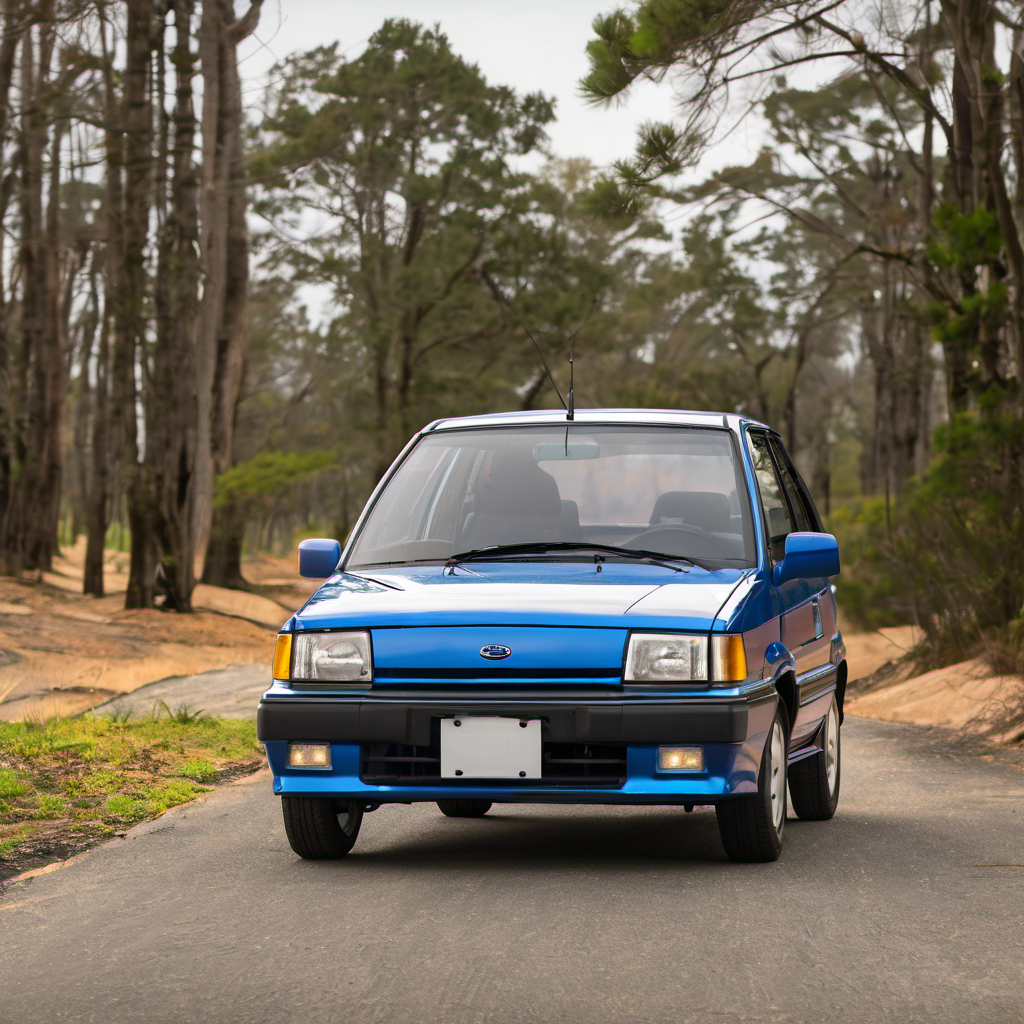
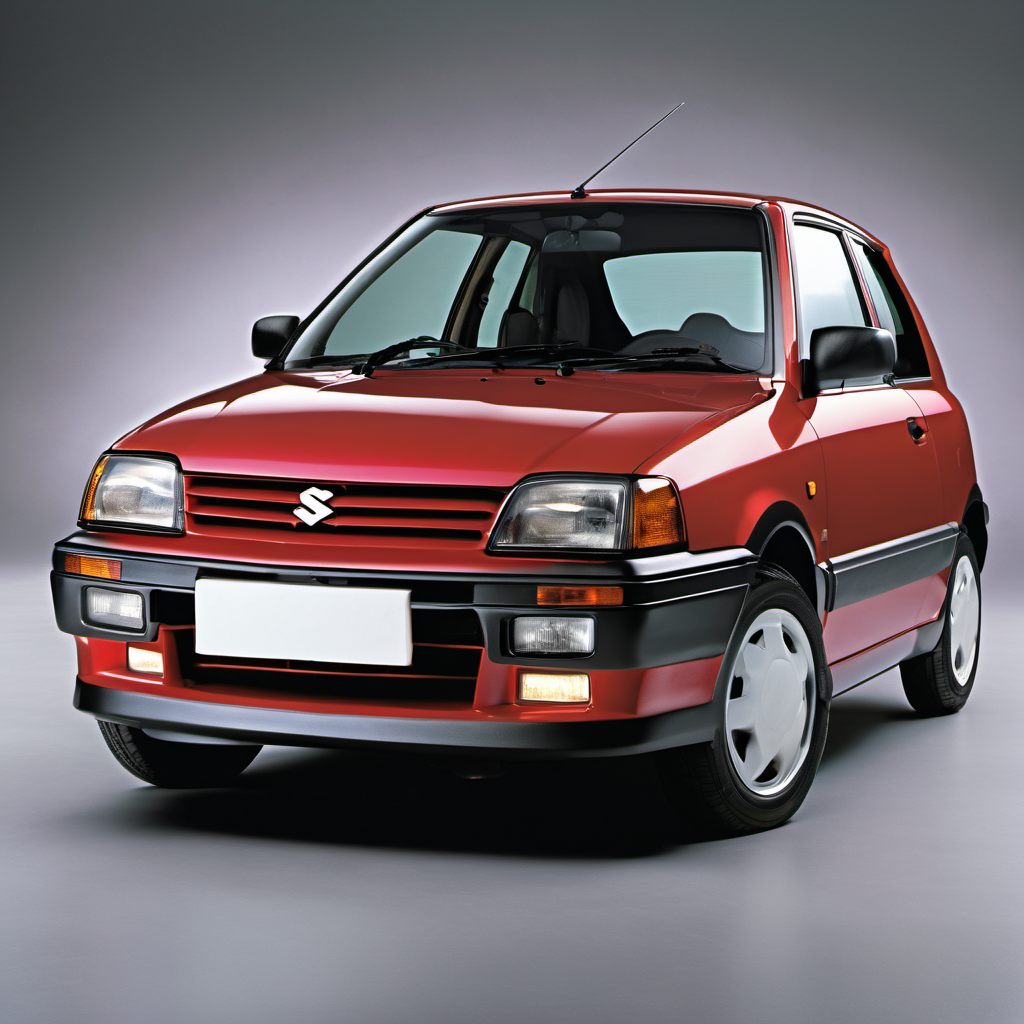
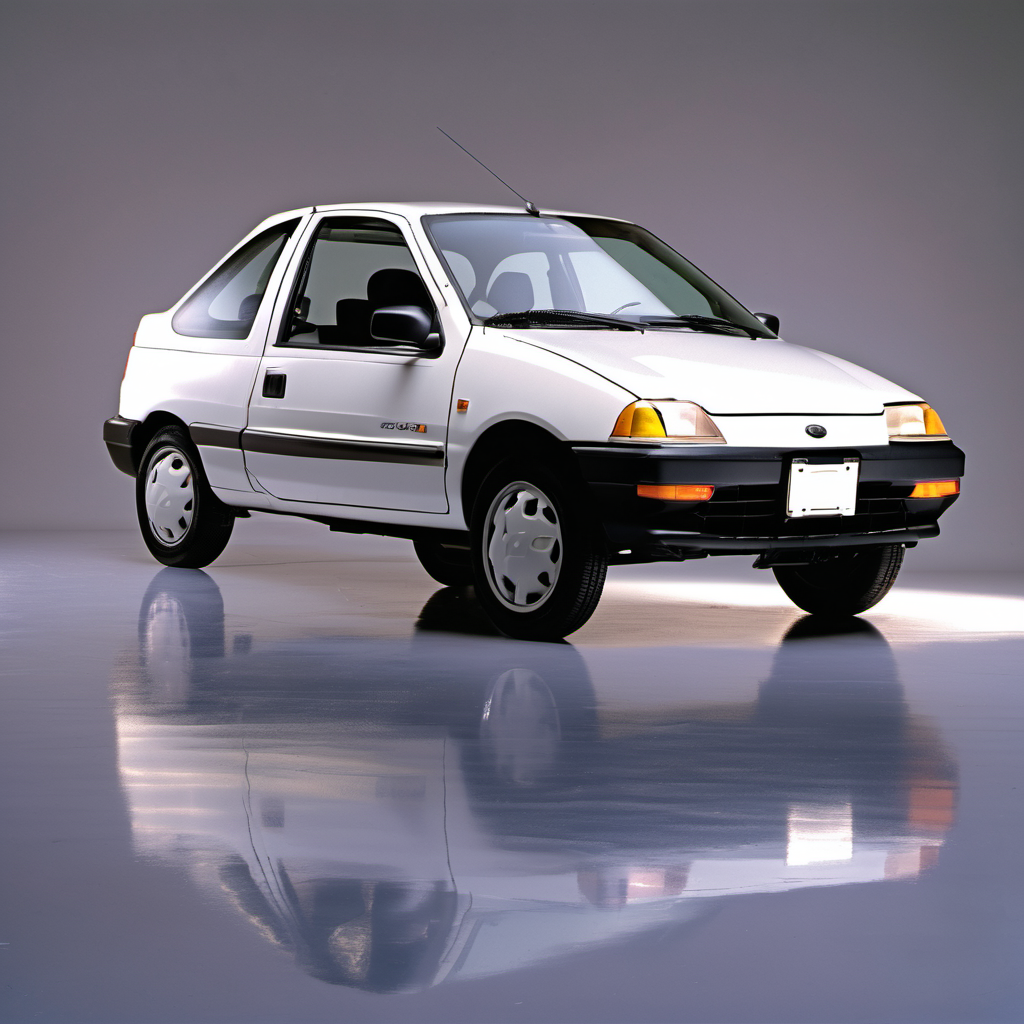
1994 Subaru Justy Hatchback

1994 Subaru

JustyHatchback

Hatchback

The 1994 Subaru Justy is a subcompact three-door hatchback that wraps up the final year of Justy production for the North American market. Powered by a 1.2-liter three-cylinder engine, it was one of the smallest and most fuel-efficient cars sold in the U.S. at the time. It earned a modest but loyal following among budget-conscious commuters who valued its simple mechanicals and low running costs. By 1994 the Justy was already an aging design — Subaru introduced it in the U.S. for 1987 and changed very little over its run. That simplicity is both its strength and its weakness: there's not much to break, but parts availability has shrunk dramatically over the past 30 years. Any surviving example is now a collector curiosity or a dedicated commuter project rather than a practical daily driver for most people. For a Lake Geneva-area owner, the FWD-only drivetrain is the biggest caveat. On snowy and salted Wisconsin roads the Justy's light curb weight actually works against traction, and three decades of road salt exposure means rust is almost always part of the story on any surviving car.

Reliability
2/5
Verified data
Specs shown for Justy — the most common configuration. Other trims may vary in engine, drivetrain, or fuel economy. Sign in to see your vehicle's exact specs.
Engine
[object Object]
Drivetrain
FWD
Fuel
Gasoline
MPG
28 city / 33 hwy / 30 combined
Seats
Doors
Body
Subcompact Cars

Overview

AI-curated

The 1994 Subaru Justy is a subcompact three-door hatchback that wraps up the final year of Justy production for the North American market. Powered by a 1.2-liter three-cylinder engine, it was one of the smallest and most fuel-efficient cars sold in the U.S. at the time. It earned a modest but loyal following among budget-conscious commuters who valued its simple mechanicals and low running costs. By 1994 the Justy was already an aging design — Subaru introduced it in the U.S. for 1987 and changed very little over its run. That simplicity is both its strength and its weakness: there's not much to break, but parts availability has shrunk dramatically over the past 30 years. Any surviving example is now a collector curiosity or a dedicated commuter project rather than a practical daily driver for most people. For a Lake Geneva-area owner, the FWD-only drivetrain is the biggest caveat. On snowy and salted Wisconsin roads the Justy's light curb weight actually works against traction, and three decades of road salt exposure means rust is almost always part of the story on any surviving car.

Known for
  • Exceptional fuel economy for its era
  • Very simple, easy-to-work-on mechanicals
  • Tiny footprint — easy urban parking
  • Long production run with minimal changes
Best for
  • Hobbyists and collectors interested in late-era Subaru microcars
  • Low-mileage urban or summer-only drivers
  • DIY mechanics comfortable sourcing hard-to-find parts
Watch for
  • Severe rust on body, frame rails, and floor pans after 30 years of road salt
  • Extremely limited parts availability — many items are NLA (no longer available)
  • FWD-only traction struggles on snow and ice
  • Aging rubber: hoses, belts, seals, and bushings need full inspection on any surviving example

Common issues by mileage

6 known

Rust — body, floor pans, and subframe

high
Typically appears
All mileages on 30-year-old examples
Estimated repair
$500 – $4,000

Timing belt and water pump failure

high
Typically appears
Any mileage if not recently replaced
Estimated repair
$250 – $550

Carburetor/fuel system degradation (varnish, stuck float, clogged jets)

high
Typically appears
All mileages — age-related
Estimated repair
$150 – $500

Cooling system hose and radiator failures

high
Typically appears
All mileages — age-related
Estimated repair
$100 – $600

Clutch wear and manual transmission synchro issues

medium
Typically appears
80k+ mi
Estimated repair
$400 – $900

CV axle boots cracked or torn — grease loss and joint wear

high
Typically appears
All mileages — age-related
Estimated repair
$150 – $450

Maintenance schedule

  1. 1
    Every 60k mi or immediately if interval is unknown Timing belt and water pump replacement

    The 1.2L three-cylinder is an interference-adjacent design; a broken timing belt can cause valve damage. On a car this age, replace it regardless of mileage if there's no documented history.

  2. 2
    Immediately on purchase; every 4 years thereafter Full cooling system inspection and hose replacement

    30-year-old rubber hoses can look okay externally but collapse internally or split without warning. Overheating a 1.2L three-cylinder is especially damaging.

  3. 3
    At purchase and every 2 years if driven infrequently Carburetor cleaning and fuel system flush

    Ethanol-blended fuel leaves varnish deposits quickly in a car that sits. A gummed carb is the most common reason these engines run rough or won't start after storage.

  4. 4
    Every 3,000 mi or 6 months — whichever comes first Oil and filter change

    Short intervals protect the small three-cylinder against sludge, especially given the age of seals and gaskets. Use a quality conventional 5W-30.

  5. 5
    Every oil change CV axle boot and joint inspection

    Torn boots on a car this age are common. Catching a torn boot early (re-boot) is far cheaper than replacing the entire axle once the joint is contaminated.

  6. 6
    Every 2 years Brake fluid flush

    Brake fluid is hygroscopic and absorbs moisture over time. Old fluid lowers the boiling point and corrodes caliper and wheel cylinder bores — critical on a 30-year-old system.

  7. 7
    Annually — spring, after winter salt season Full underbody rust inspection

    Wisconsin road salt accelerates rust on floor pans, fuel lines, brake lines, and subframe mounting points. Catching surface rust early is far cheaper than structural repair.

  8. 8
    Annually Fuel and brake line inspection

    Steel fuel and brake lines on a 30-year-old Wisconsin car are a known failure point from the inside out due to moisture and from the outside in due to salt. A failed brake line is a safety emergency.

Always defer to the manufacturer's service manual for warranty-mandated intervals.

Cost of ownership

Annual maintenance
$400 – $1,200
Fuel
Very low — at current Wisconsin gas prices, expect $900–$1,200/year for a typical 12,000-mile driver.
Insurance
Typically low — the Justy's minimal market value keeps comprehensive/collision premiums low. Liability-only coverage is common on cars in this value range.

Day-to-day running costs are minimal if the car is in solid shape. The hidden danger is deferred maintenance and parts sourcing: when something breaks, you may wait weeks for an NLA part or pay a premium for a used one. Budget a contingency fund on top of routine maintenance for any 30-year-old car.
Seasonal care

Lake Geneva, WI
Winter
  • Switch to a 0W-30 or 5W-30 full synthetic before first freeze — the 1.2L three-cylinder needs easy cold cranking and the improved cold-flow oil helps prevent dry starts at sub-zero temps.
  • Test the battery with a load test before November. The Justy's small alternator doesn't handle a weak battery well in extreme cold, and a dead battery in a Lake Geneva winter is a real problem.
  • Flush and refill the cooling system with fresh 50/50 antifreeze rated to at least -34°F. Old coolant loses its freeze protection and inhibitor package.
  • Fill the washer reservoir with -20°F or colder rated washer fluid — Wisconsin winter road spray will blind the windshield constantly, and freezing fluid can crack the washer pump.
  • Inspect and replace wiper blades with winter blades. The Justy's small wiper system struggles with heavy snow accumulation.
  • Coat brake lines, fuel lines, and any exposed metal under the car with a rust inhibitor before salt season. Road salt exposure is the number-one killer of surviving Justys.
Summer
  • Check tire pressure monthly — hot pavement causes pressure to rise, and the Justy's small tires are sensitive to overinflation affecting handling and tread wear.
  • Inspect the rubber cooling hoses before summer heat arrives. Heat cycles accelerate cracking on already-aged hoses and a roadside overheat is avoidable.
  • Verify A/C function early in the season if equipped — the Justy's optional A/C system uses an older refrigerant and may require retrofit or recharge. Don't wait until July.
  • After winter, do a thorough underbody wash and rust inspection. Treat any new surface rust before summer humidity locks it in.

Comparable vehicles

If you're shopping for one

Red flags
  • Any softness or flexing in the floor when stepping in — structural floor pan rust is a potential safety issue and a very expensive repair.
  • White or bluish smoke from the exhaust on startup — points to head gasket issues or valve seal wear on a small engine that's expensive relative to the car's value.
  • Rust-colored coolant or oil in the coolant reservoir — head gasket failure is a deal-breaker on a 1.2L three-cylinder given repair cost vs. car value.
  • Missing or fabricated VIN tags or mismatched body panels — parts-car rebuilds of rare vehicles are not uncommon.
  • Any evidence of sitting for more than 2 years — fuel system, brakes, and tires will all need servicing before safe road use.
What to inspect
  • Lift every carpet section and inspect the floor pans directly — salt rust often hides under mats and padding.
  • Put the car on a lift and inspect all four subframe mounting points, rocker panels, and the entire underside for structural rust before anything else.
  • Check all rubber: CV boots, coolant hoses, vacuum lines, and fuel lines. On a 30-year-old car, assume all rubber needs replacement unless proven otherwise.
  • Start the engine cold and listen for the first 60 seconds — three-cylinder engines that have been sitting often reveal oil pressure issues, ticking valves, or rough running on cold start.
  • Verify when the timing belt was last replaced. If there's no documentation, treat it as overdue and budget for immediate replacement.
  • Test all electrical: lights, wipers, blower motor. Electrical gremlins from corroded connectors are common and can be time-consuming to chase on this era of car.
AI profile generated 4 days ago · claude-sonnet-4-6 · v2.