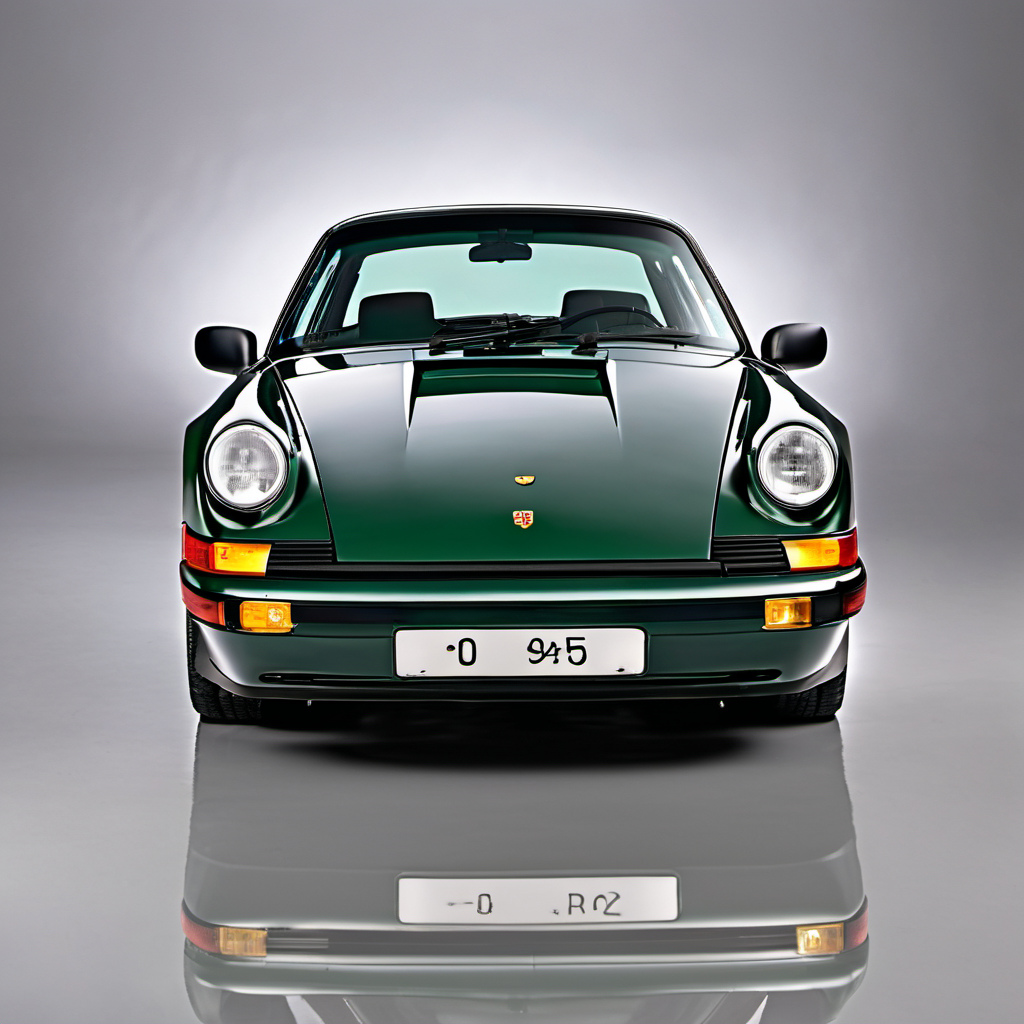
1994 Porsche 911 Coupe

1994 Porsche

911Coupe

Coupe

The 1994 Porsche 911 (internally coded 964, transitioning to the 993 body in the same model year) is the last of the air-cooled, rear-engine sports cars that defined Porsche for three decades. The 3.6L flat-six sits behind the rear axle, giving it handling characteristics unlike anything else on the road — rewarding in the hands of an experienced driver, punishing if you're not paying attention. By 1994 Porsche had refined the 911 formula with coil-spring suspension replacing the old torsion bar setup, standard dual airbags, and revised ABS, making it one of the most complete air-cooled 911s ever built. These cars have become serious collectibles. Well-maintained examples hold value aggressively and some have appreciated. That cuts both ways — it attracts sellers who have deferred maintenance knowing collectors will still pay, so buyer diligence is non-negotiable. Parts availability is generally good through Porsche and the robust aftermarket, but labor costs are high because virtually everything requires specialist knowledge. For daily use in Wisconsin, this is a challenging car. RWD, rear-weight bias, a near-zero trunk, and firm suspension make Wisconsin winters genuinely hazardous. Most owners treat these as three-season or weekend cars and store them October through April.

Reliability
4/5
Verified data
Specs shown for 911 Carrera 4/2 — the most common configuration. Other trims may vary in engine, drivetrain, or fuel economy. Sign in to see your vehicle's exact specs.
Engine
[object Object]
Drivetrain
RWD
Fuel
Gasoline
MPG
15 city / 22 hwy / 17 combined
Seats
Doors
Body
Two Seaters

Overview

AI-curated

The 1994 Porsche 911 (internally coded 964, transitioning to the 993 body in the same model year) is the last of the air-cooled, rear-engine sports cars that defined Porsche for three decades. The 3.6L flat-six sits behind the rear axle, giving it handling characteristics unlike anything else on the road — rewarding in the hands of an experienced driver, punishing if you're not paying attention. By 1994 Porsche had refined the 911 formula with coil-spring suspension replacing the old torsion bar setup, standard dual airbags, and revised ABS, making it one of the most complete air-cooled 911s ever built. These cars have become serious collectibles. Well-maintained examples hold value aggressively and some have appreciated. That cuts both ways — it attracts sellers who have deferred maintenance knowing collectors will still pay, so buyer diligence is non-negotiable. Parts availability is generally good through Porsche and the robust aftermarket, but labor costs are high because virtually everything requires specialist knowledge. For daily use in Wisconsin, this is a challenging car. RWD, rear-weight bias, a near-zero trunk, and firm suspension make Wisconsin winters genuinely hazardous. Most owners treat these as three-season or weekend cars and store them October through April.

Known for
  • Air-cooled 3.6L flat-six with a distinctive mechanical sound and feel
  • Rear-engine, rear-wheel-drive layout demanding respectful throttle management
  • Exceptional build quality and durability when properly maintained
  • Strong collector value and appreciation potential for clean examples
  • One of the last 964-platform 911s before the water-cooled 993/996 era
Best for
  • Experienced drivers who understand rear-engine handling dynamics
  • Enthusiasts who can afford specialist Porsche maintenance
  • Three-season or weekend use — not a Wisconsin winter daily driver
  • Collectors seeking appreciating air-cooled 911s
Watch for
  • Engine oil leaks from the rocker cover gaskets, pushrod tube seals, and rear main seal — extremely common on 30-year-old examples
  • Deferred maintenance disguised by cosmetic detailing on high-value used cars
  • Bore scoring on the cylinder walls, especially if the car sat unused for long periods
  • Rust in the lower door skins, front trunk floor, battery box area, and heater boxes
  • Accident history — these cars are frequently driven hard and crash damage is not always disclosed

Common issues by mileage

6 known

Oil Leaks — Pushrod Tube Seals, Rocker Cover Gaskets, Rear Main Seal

high
Typically appears
Any mileage on a 30-year-old car
Estimated repair
$400 – $1,800

Bore Scoring / Cylinder Wall Damage

medium
Typically appears
Any — especially cars that sat unused or ran low on oil
Estimated repair
$6,000 – $18,000

Failed or Deteriorated Engine Mounts and Transmission Mounts

medium
Typically appears
80k–150k mi
Estimated repair
$600 – $1,500

Throttle Body Linkage Wear / Idle Hunting

medium
Typically appears
60k–120k mi
Estimated repair
$300 – $900

ABS Module Failure (Bosch ABS unit common on this generation)

medium
Typically appears
Any mileage / age-related
Estimated repair
$800 – $2,500

Heater Box Rust and Heat Exchanger Failure

high
Typically appears
Any mileage on aging examples
Estimated repair
$1,200 – $4,000

Maintenance schedule

  1. 1
    Every 5,000 miles or 12 months, whichever comes first Engine oil change with correct viscosity (Porsche-approved 10W-40 or 15W-50 full synthetic)

    Air-cooled engines run hotter than water-cooled ones and depend entirely on oil for thermal management. Stretched intervals accelerate bore scoring and seal degradation.

  2. 2
    Every 2 years or when any leak is first spotted Inspect all oil seals and gaskets (pushrod tube seals, rocker covers, cam plug, rear main)

    Leaks are normal on aging air-cooled engines but must be caught early — oil on hot exhaust components is a fire hazard, and low oil levels are the primary cause of catastrophic engine damage.

  3. 3
    Every 15,000–20,000 miles Spark plug replacement

    The rear-mounted flat-six makes plug changes labor-intensive; don't push intervals or you risk misfires that can wash cylinders with unburned fuel.

  4. 4
    Every 30,000 miles Coolant/oil cooler and thermostat inspection

    The 964 uses an oil cooler with a thermostat that can fail, causing the oil to run too hot or too cold — both accelerate engine wear.

  5. 5
    Every 2 years regardless of mileage Brake fluid flush

    Porsche specifically requires this interval. Moisture-contaminated brake fluid lowers boiling point, a real concern given the car's performance capability.

  6. 6
    Every season change; replace tires older than 6 years regardless of tread Tire inspection and pressure check — including age cracking

    High-performance tires dry-rot and lose sidewall integrity with age. On a RWD car with a rear-weight bias, a sudden blowout or traction loss at speed is dangerous.

  7. 7
    Every winter storage period Battery tender connection during winter storage

    The 964's DME (engine management) and alarm system draw power constantly. A dead or sulfated battery after a Wisconsin winter is nearly guaranteed without a tender.

  8. 8
    Annually, ideally at spring de-storage Undercarriage and heater box rust inspection

    Heater boxes route exhaust gases near the floorpan. Rust-compromised boxes can allow CO intrusion into the cabin — this is a safety issue, not just a cosmetic one.

Always defer to the manufacturer's service manual for warranty-mandated intervals.

Cost of ownership

Annual maintenance
$1,500 – $5,000
Fuel
Premium 91+ octane required. At 17 MPG combined and current upper Midwest prices (~$3.80–$4.20/gal premium), expect $2,200–$3,000/year at 10,000 miles annually.
Insurance
Expect $1,200–$3,000/year depending on coverage type, driver age, and whether the car is on a collector/agreed-value policy. Agreed-value collector policies are often cheaper and more appropriate for this vehicle.

Budget $3,000–$8,000/year in total running costs for a well-maintained example at modest mileage. A car that has missed maintenance or has deferred repairs (oil leaks, ABS, heater boxes) can easily generate a $5,000–$20,000 repair bill in the first year of ownership. Pre-purchase inspection by a Porsche specialist is not optional — it is the single most important thing a buyer can do.

Seasonal care

Lake Geneva, WI
Winter
  • Do not drive this car on salted Wisconsin roads. Salt destroys the heater boxes, rocker panels, and floorpan of these cars — damage that is expensive and sometimes irreversible.
  • Store on a battery tender (not a trickle charger) for the full winter. The DME and alarm draw enough current to kill a battery in 4–6 weeks.
  • Before storage, change the engine oil so acids from combustion don't sit in the engine all winter.
  • Inflate tires to recommended pressure and place the car on jack stands or foam pads if storing more than 3 months to prevent flat-spotting.
  • Use a breathable car cover in a garage — never a sealed plastic cover, which traps moisture and accelerates rust.
  • If the car must be driven in an emergency winter situation, allow a longer warm-up period and be aware the rear-engine, RWD layout is acutely sensitive to oversteer on snow and ice — even experienced drivers have been caught out.
Summer
  • Monitor oil temperature closely — air-cooled engines in stop-and-go summer traffic can heat-soak quickly. If the oil temp gauge climbs into the red, find shade and let it idle.
  • Check tire pressure weekly in hot weather — heat expands air and over-inflation reduces the contact patch on a car where handling balance is critical.
  • Inspect the A/C system (condenser, refrigerant charge) before the season — the 964's A/C is functional but not modern in capacity and a failed system in a dark-colored coupe in August is brutal.
  • Inspect rubber coolant/oil hoses and belts for summer heat cracking — these degrade faster in cars that see temperature extremes.
  • Wash the underbody thoroughly after any gravel road use to remove embedded debris from the flat undertray.

Comparable vehicles

1994 Ferrari
348

Similar era exotic, mid-engine layout, comparable price range as a used purchase. Also a specialist-only maintenance car with high running costs, but offers a very different (mid-engine) driving experience.

No catalog match
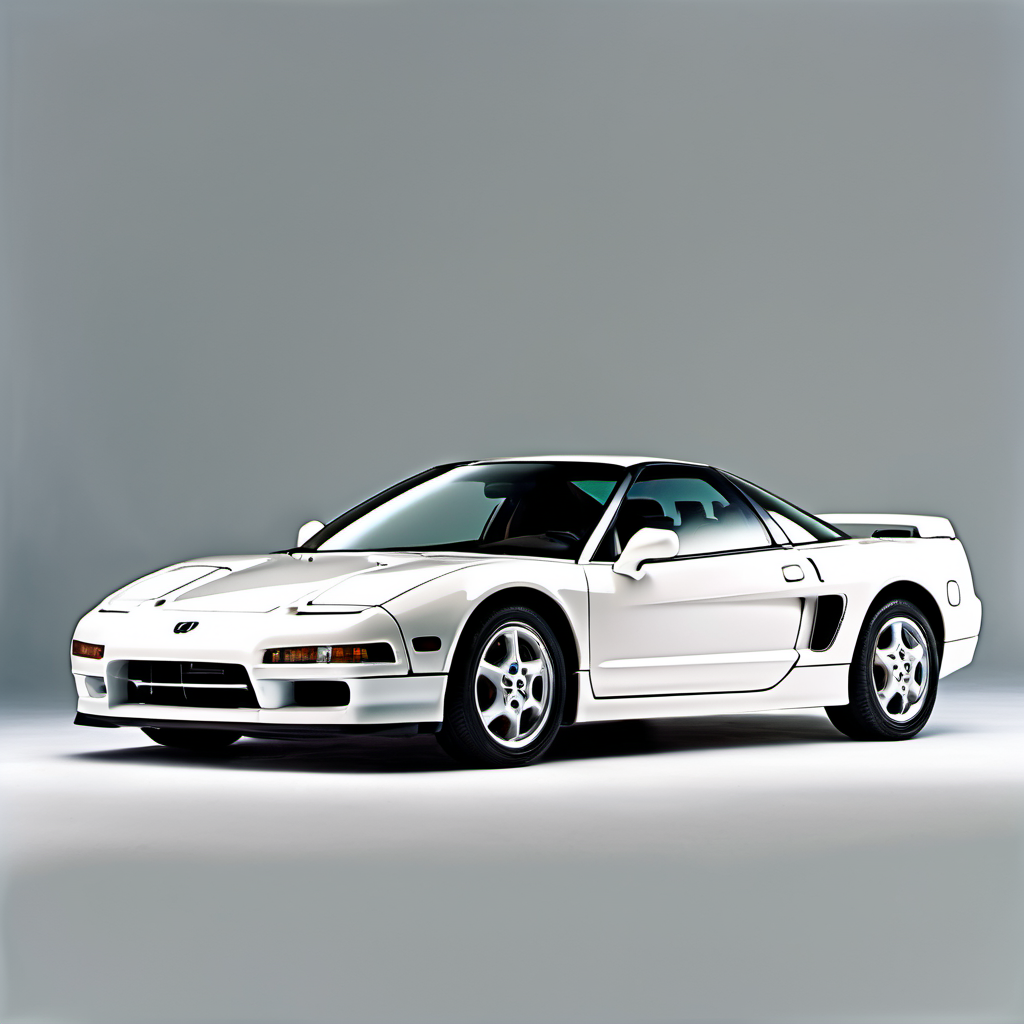
1994 Acura NSX
1994 Acura
NSX

The NSX is a more accessible, more reliable alternative in the same performance coupe segment. Mid-engine, daily-drivable, and far less temperamental in cold weather — though also appreciating in value.

1994 BMW
M3

The E36 M3 offers genuine sports car performance in a more practical, easier-to-maintain package with a less demanding handling balance. Better suited to year-round Wisconsin use.

No catalog match
1995 Porsche
993

The 993 is the direct next-generation 911 — still air-cooled, but with a significantly improved multi-link rear suspension, better refinement, and stronger resale. If budget allows, the 993 is the more complete car.

No catalog match

If you're shopping for one

Red flags
  • No service records or records showing intervals longer than 7,500 miles
  • Fresh undercoating applied to the engine bay or undercarriage — often used to hide oil leaks or rust
  • Any sign of oil consumption greater than 1 qt per 1,000 miles (normal is up to 1 qt per 2,000 miles on this engine)
  • A car that has been sitting unused for more than 12 months — seals dry out, fuel degrades, and bore scoring risk rises sharply
  • Mismatched paint panels or overspray visible in door jambs indicating prior collision repair
  • Overly low asking price — a clean 1994 911 Coupe in running condition should command $40,000–$80,000+ depending on condition; a suspiciously cheap example almost always has a story
What to inspect
  • Engine oil leaks — look at the underside of the engine for fresh or baked-on oil around pushrod tubes, rocker covers, and the rear main seal area
  • Bore scoring — a compression test and leak-down test by a Porsche specialist is mandatory before purchase; bore scoring is a $10k+ repair
  • Heater boxes — inspect for rust, cracks, and signs of exhaust leakage; CO intrusion is a safety hazard
  • ABS function — verify the ABS light comes on at startup and extinguishes; a fault here means the system is not functioning
  • Rust in the battery box (front trunk, left side), lower door skins, and rocker panels — probe with a magnet to detect filler
  • Full service history — insist on records; a 30-year-old Porsche without documented oil changes is a financial risk regardless of appearance
  • Clutch engagement and transmission shifts — worn clutches are $1,500–$3,000 to replace on this platform
AI profile generated 4 days ago · claude-sonnet-4-6 · v2.