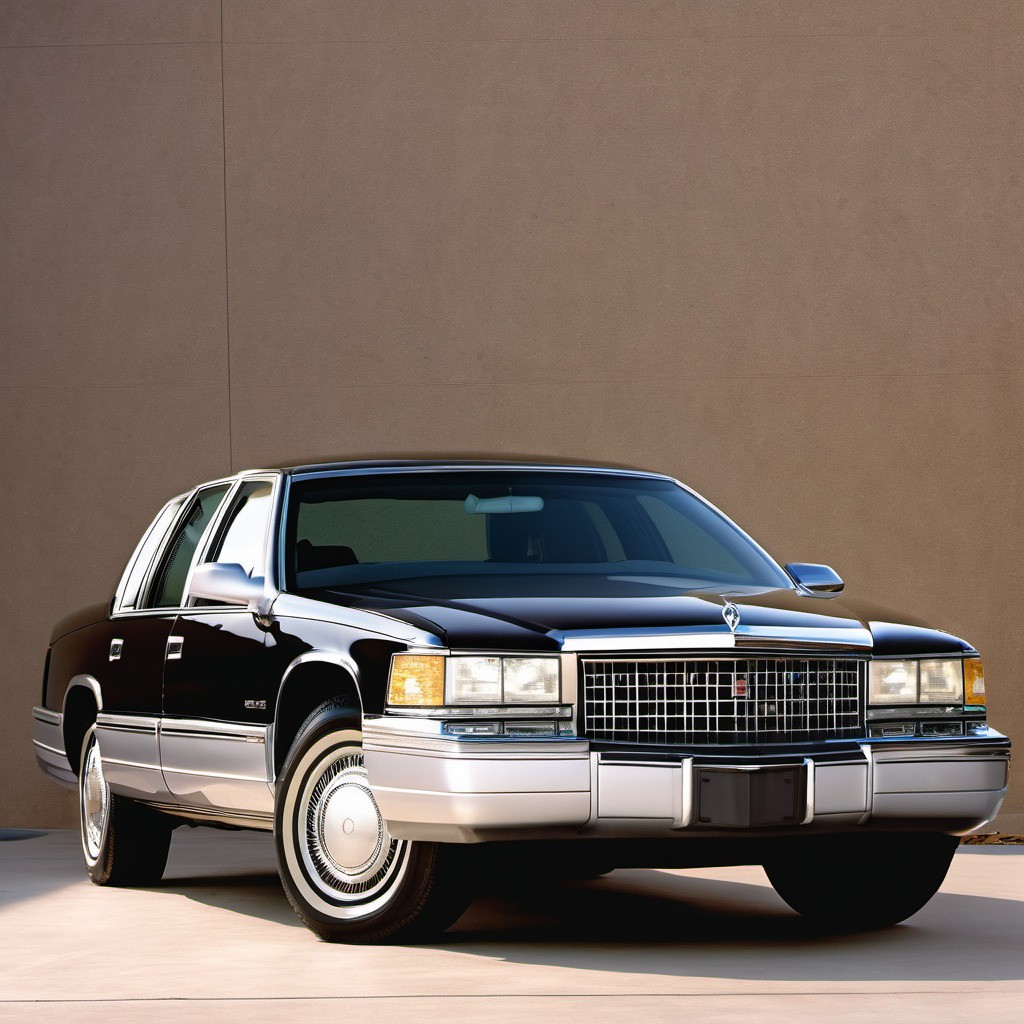
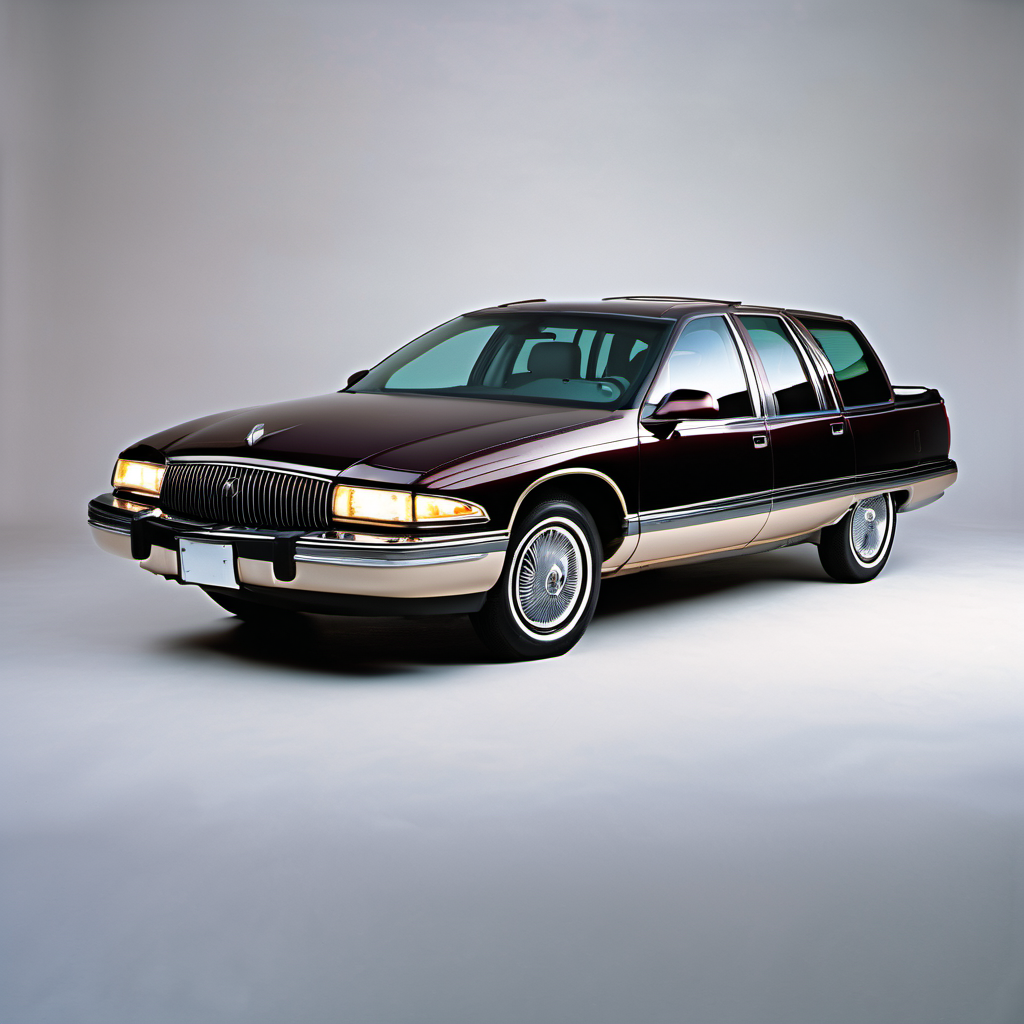
1994 Lincoln Town Car Sedan

1994 Lincoln

Town CarSedan

Sedan

The 1994 Lincoln Town Car is a full-size, body-on-frame luxury sedan built on Ford's Panther platform — the same bones shared with the Crown Victoria and Mercury Grand Marquis. That generation (1990–1997) introduced a cleaner, more aerodynamic body compared to its predecessor and carried Lincoln's tried-and-true 4.6L modular V8 paired to a 4-speed automatic. It was a significant step forward in refinement for the nameplate. These cars were engineered for effortless highway cruising and a pillowy ride, not performance. The air suspension, rear-wheel drive, and long wheelbase deliver a floating sensation that made the Town Car a staple of livery fleets, funeral homes, and buyers who prioritized comfort above all else. By 1994 the platform was well sorted, and Ford had ironed out many first-year kinks. At 30+ years old, virtually every example on the road today is a high-mileage survivor. The mechanicals are famously durable, but the air suspension, aging rubber, and electronics need close attention. A well-maintained example is still a very usable, comfortable car — neglected ones become money pits fast.

Reliability
3/5
Verified data
Specs shown for Town Car — the most common configuration. Other trims may vary in engine, drivetrain, or fuel economy. Sign in to see your vehicle's exact specs.
Engine
[object Object]
Drivetrain
RWD
Fuel
Gasoline
MPG
16 city / 23 hwy / 18 combined
Seats
Doors
Body
Large Cars

Overview

AI-curated

The 1994 Lincoln Town Car is a full-size, body-on-frame luxury sedan built on Ford's Panther platform — the same bones shared with the Crown Victoria and Mercury Grand Marquis. That generation (1990–1997) introduced a cleaner, more aerodynamic body compared to its predecessor and carried Lincoln's tried-and-true 4.6L modular V8 paired to a 4-speed automatic. It was a significant step forward in refinement for the nameplate. These cars were engineered for effortless highway cruising and a pillowy ride, not performance. The air suspension, rear-wheel drive, and long wheelbase deliver a floating sensation that made the Town Car a staple of livery fleets, funeral homes, and buyers who prioritized comfort above all else. By 1994 the platform was well sorted, and Ford had ironed out many first-year kinks. At 30+ years old, virtually every example on the road today is a high-mileage survivor. The mechanicals are famously durable, but the air suspension, aging rubber, and electronics need close attention. A well-maintained example is still a very usable, comfortable car — neglected ones become money pits fast.

Known for
  • Exceptionally smooth, soft ride via air suspension
  • Bulletproof 4.6L modular V8 engine longevity
  • Enormous interior with true six-passenger comfort
  • Popular livery and town car fleet service history
  • Body-on-frame durability and repairability
Best for
  • Highway cruisers and long-distance comfort seekers
  • Buyers who want V8 luxury on a tight budget
  • Low-speed city driving or chauffeur-style use
  • Collectors or enthusiasts of classic American full-size cars
Watch for
  • Failed or leaking rear air suspension bags — very common at this age
  • Rotted brake lines and fuel lines from decades of Midwest salt exposure
  • Worn or leaking intake manifold gaskets on the 4.6L
  • Neglected transmission fluid leading to 4R70W failure
  • Deferred maintenance on 30-year-old cooling and rubber components

Common issues by mileage

6 known

Rear air suspension bag failure

high
Typically appears
80k–150k mi (or any age past 15 years)
Estimated repair
$400 – $900

Air suspension compressor failure

high
Typically appears
100k–180k mi
Estimated repair
$250 – $550

Intake manifold gasket leak / upper intake coolant crossover leak

medium
Typically appears
80k–150k mi
Estimated repair
$350 – $700

Rotted steel brake lines and fuel lines (salt corrosion)

high
Typically appears
Any age in salt-belt states
Estimated repair
$400 – $1,200

4R70W transmission wear / delayed engagement

medium
Typically appears
120k–200k mi
Estimated repair
$1,200 – $2,800

Oxygen sensor heater circuit failure

medium
Typically appears
80k–160k mi
Estimated repair
$150 – $400

Maintenance schedule

  1. 1
    Every 30,000 miles — do not skip on a used example regardless of prior history Transmission fluid and filter change

    The 4R70W is durable but kills itself quietly on dark, burnt fluid. A $150 fluid-and-filter service at 30k intervals is the single best insurance policy for this drivetrain.

  2. 2
    Annually or any time the rear sits noticeably lower than normal Inspect and test air suspension bags and compressor

    Bags crack and compressors burn out on cars this age. A failed compressor that runs continuously will drain the battery overnight. Catch it early — neglect turns a $400 bag job into a $900 bag-plus-compressor job.

  3. 3
    At purchase and every 2 years thereafter Full inspection of steel brake and fuel lines

    Lake Geneva winters and road salt are brutal on the unprotected steel lines under this car. A rusted-through brake line is a safety emergency. Budget to replace them proactively if surface rust is present.

  4. 4
    Every 30,000 miles or 3 years Coolant flush and inspect intake manifold gaskets

    The 4.6L plastic intake runners and gaskets are a known weak point. Old coolant accelerates gasket degradation. Fresh coolant and a visual inspection at every flush catches small leaks before they become engine damage.

  5. 5
    Every 30,000 miles on a 30-year-old vehicle Spark plug replacement

    Ford's original 100k plug intervals assume a young engine with healthy plug seating. On an aging 4.6L, plugs can seize in the aluminum heads if left too long — removal gets expensive fast. Change them on schedule.

  6. 6
    At purchase, then every 4 years Inspect and replace all underhood rubber hoses and belts

    At 30 years old, every hose and belt is on borrowed time regardless of mileage. A burst heater hose in a Wisconsin January is not just inconvenient — it can cause overheating damage within minutes.

  7. 7
    Every fall before winter Battery load test

    This car's electrical accessories — air suspension compressor, heated seats, power everything — put heavy demands on the battery. Cold cranking a 4.6L V8 at -10°F with a weak battery will strand you. Test every October.

  8. 8
    Every 3 years Inspect and clean chassis grounds and electrical connectors

    Corroded ground straps and connectors are the root cause of many intermittent electrical gremlins on 30-year-old Lincolns. A clean, tight ground network prevents phantom faults and sensor misbehavior.

Always defer to the manufacturer's service manual for warranty-mandated intervals.

Cost of ownership

Annual maintenance
$800 – $2,000
Fuel
At 18 MPG combined and roughly 12,000 miles/year, expect $1,400–$1,800/year in fuel at current Midwest pump prices. Premium fuel is not required — regular 87 octane is factory spec.
Insurance
Liability and comprehensive on a 30-year-old vehicle is typically low — expect $600–$1,100/year depending on your driving record and coverage level. Agreed-value collector coverage may be worth exploring if the car is well-preserved.

Day-to-day fuel and insurance costs are modest for a car this age. The wild card is deferred maintenance: a car that looks clean but has never had its air suspension, brake lines, or transmission serviced can surprise an owner with $2,000–$4,000 in catch-up work in the first year. Budget for it upfront rather than being caught off guard.

Seasonal care

Lake Geneva, WI
Winter
  • Test battery with a load tester every October — the air suspension compressor and V8 cold starts will expose a marginal battery instantly in sub-zero temps.
  • Switch to a full-synthetic 5W-30 if not already running it — cold starts below 0°F are much easier on the 4.6L with low-viscosity syn.
  • Inspect air suspension bags for cracking before winter; a bag that holds air in summer may split when rubber gets stiff in the cold.
  • Flush washer fluid reservoir completely and refill with -20°F or lower rated fluid — Wisconsin winters will freeze standard fluid solid in the lines.
  • Treat all door, trunk, and hood weatherstripping with a silicone-based protectant to prevent freezing shut.
  • Wash the undercarriage every 2–3 weeks during salting season — the steel brake and fuel lines on this car have no corrosion protection left and salt accelerates failure rapidly.
Summer
  • Check tire pressure monthly — this car's large tires lose 1–2 PSI for every 10°F swing in temperature; hot pavement can cause overinflation issues if you set pressures on a cold morning.
  • Inspect the A/C system for refrigerant leaks and compressor clutch operation — the system is original-age and R-134a conversions may be incomplete on some examples.
  • Check coolant level and condition at each oil change — heat soak on a 4.6L with a compromised cooling system can escalate to a blown head gasket quickly.
  • Park in shade when possible — the rubber air suspension bags and underhood hose connections degrade faster under prolonged UV and heat exposure.

Comparable vehicles

If you're shopping for one

Red flags
  • Any livery, limo, or fleet history without full service records — these cars were often run hard and maintained minimally.
  • Fresh undercoating sprayed over the frame and lines — a classic way to hide rust from a buyer.
  • Rear end that sits noticeably lower on one or both sides, or compressor that runs constantly.
  • Check engine light that was recently cleared but returns quickly — could indicate long-ignored O2 sensor or emissions faults.
  • Mismatched paint panels or evidence of filler on rear quarters — these cars were frequently in low-speed rear-end collisions as livery vehicles.
What to inspect
  • Rear suspension height with car running — it should sit level and not sag or take more than 60 seconds to pump up after sitting overnight.
  • All four corners of the undercarriage for rust on brake lines, fuel lines, and frame — pay special attention to the rear axle area and forward of the rear wheels.
  • Transmission: park on level ground, warm it up fully, then cycle through all gears. Any shudder, delay, or slip going into Drive or Reverse is a red flag.
  • Coolant reservoir: milky or oily residue means head gasket or intake gasket contamination — walk away or negotiate hard.
  • Power window and door lock function on all four doors — regulators and actuators are aging and replacements are labor-heavy.
  • Trunk and spare tire well for standing water or rust — the Town Car's trunk seal is a common failure point and hidden rust there can spread to the floor.
AI profile generated 4 days ago · claude-sonnet-4-6 · v2.