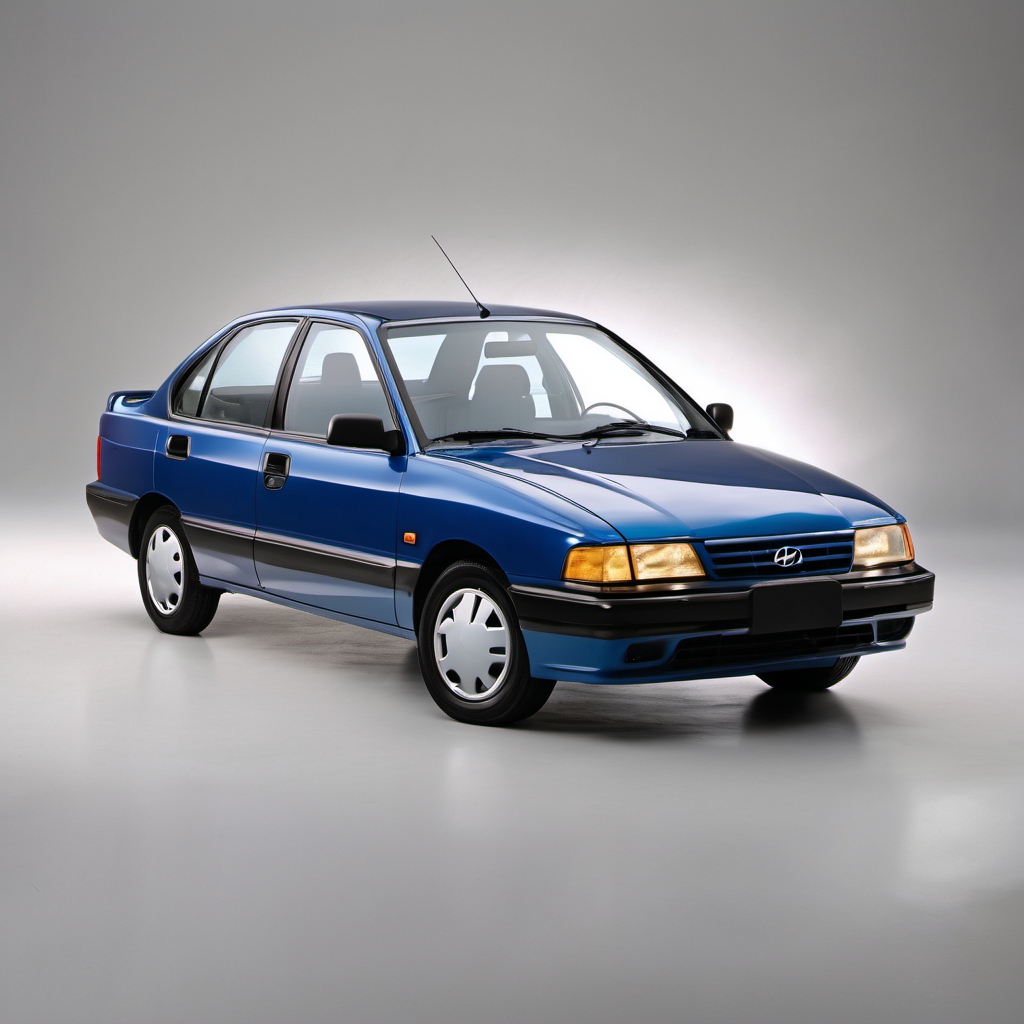
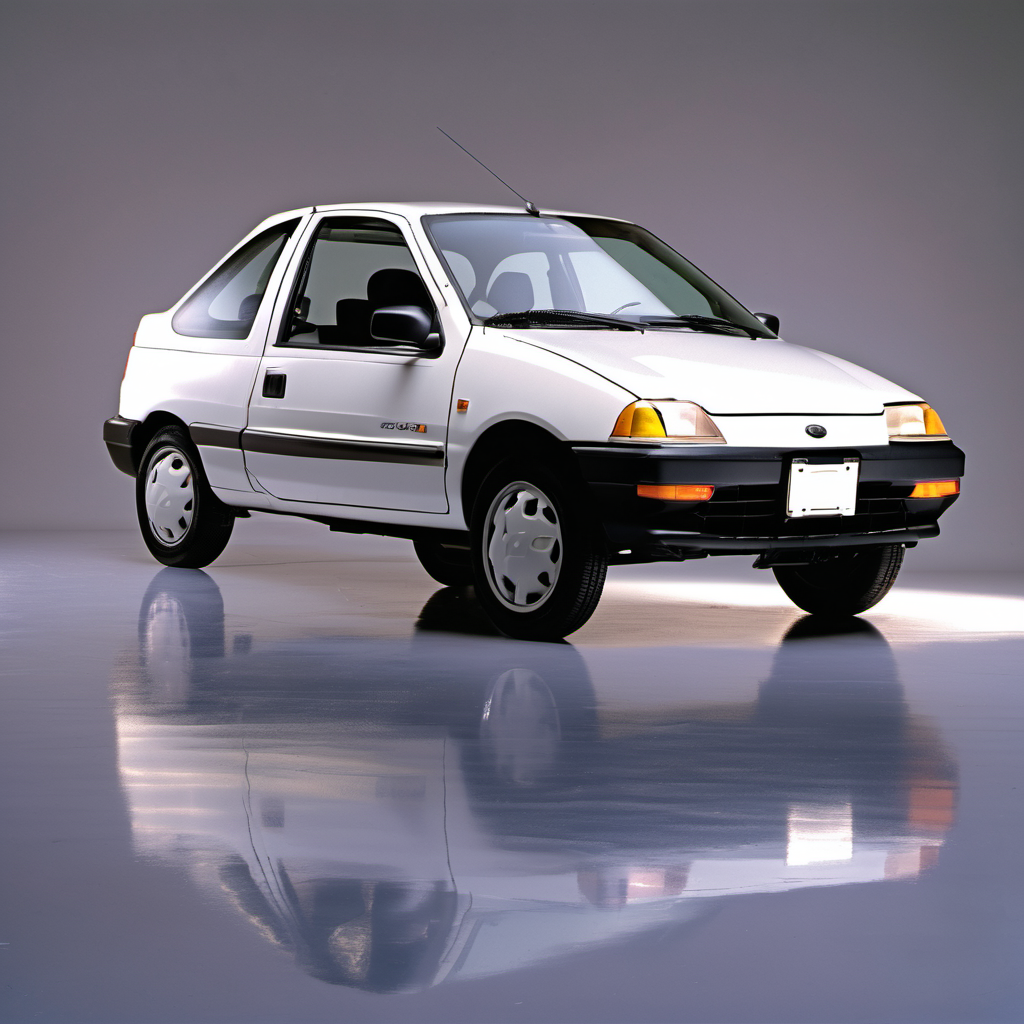
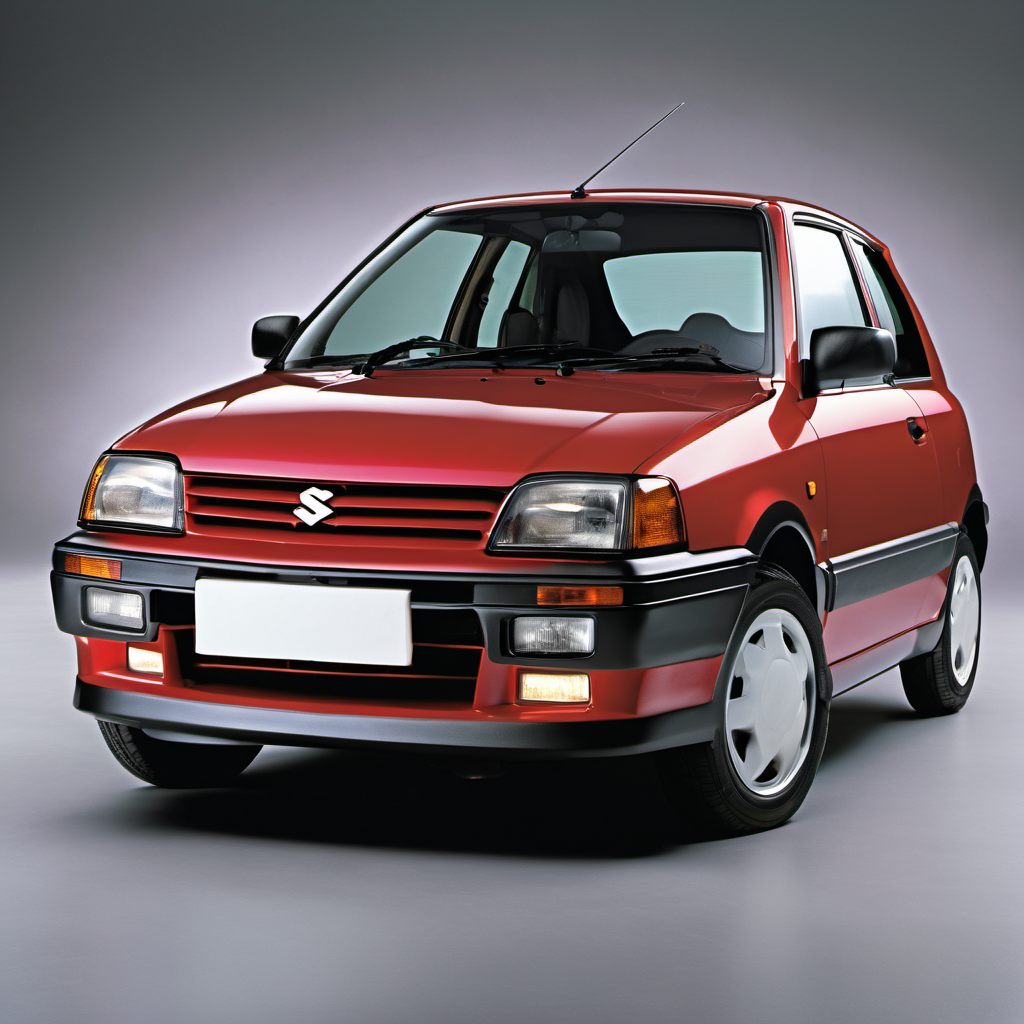
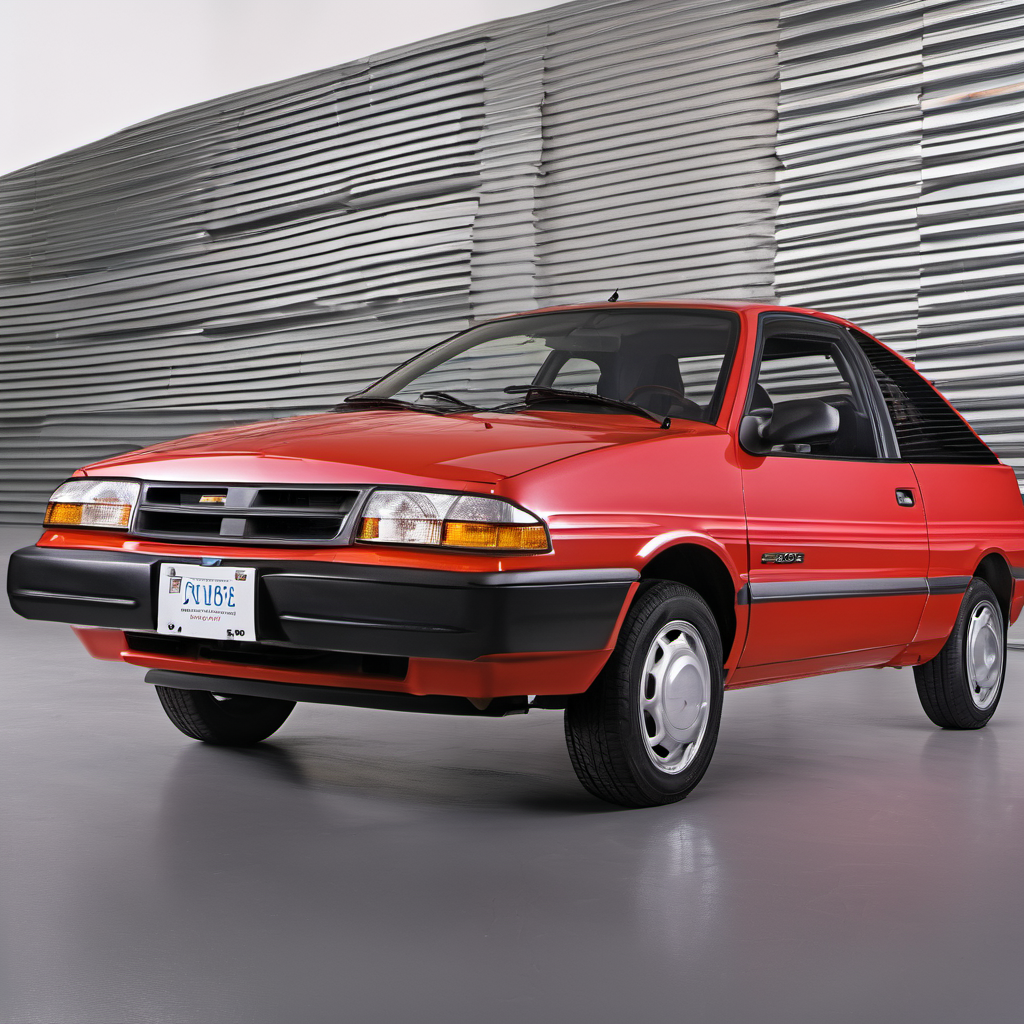
1994 Hyundai Excel Hatchback

1994 Hyundai

ExcelHatchback

Hatchback

The 1994 Hyundai Excel was one of the last model years of Hyundai's entry-level subcompact before the Accent replaced it in 1995. Sold as a budget-first car, it was aimed squarely at first-time buyers and commuters who needed cheap transportation above all else. The Excel was never a premium product — it was spartan, light, and inexpensive, and it delivered exactly that. Under the hood sits a 1.5L four-cylinder paired with either a 5-speed manual or 4-speed automatic. Performance is modest by any standard, but fuel economy is genuinely good for a mid-1990s vehicle. The hatchback body adds practical cargo flexibility that the sedan lacked. By 1994, Hyundai had addressed some of the reliability issues that plagued early Excel models, but the fundamentals hadn't changed: thin body panels, basic interior materials, and a tight maintenance budget were baked into the design. A well-maintained survivor is a curiosity at this point; neglected examples are everywhere and not worth the trouble.

Reliability
2/5
Verified data
Specs shown for Excel — the most common configuration. Other trims may vary in engine, drivetrain, or fuel economy. Sign in to see your vehicle's exact specs.
Engine
[object Object]
Drivetrain
FWD
Fuel
Gasoline
MPG
23 city / 32 hwy / 27 combined
Seats
Doors
Body
Subcompact Cars

Overview

AI-curated

The 1994 Hyundai Excel was one of the last model years of Hyundai's entry-level subcompact before the Accent replaced it in 1995. Sold as a budget-first car, it was aimed squarely at first-time buyers and commuters who needed cheap transportation above all else. The Excel was never a premium product — it was spartan, light, and inexpensive, and it delivered exactly that. Under the hood sits a 1.5L four-cylinder paired with either a 5-speed manual or 4-speed automatic. Performance is modest by any standard, but fuel economy is genuinely good for a mid-1990s vehicle. The hatchback body adds practical cargo flexibility that the sedan lacked. By 1994, Hyundai had addressed some of the reliability issues that plagued early Excel models, but the fundamentals hadn't changed: thin body panels, basic interior materials, and a tight maintenance budget were baked into the design. A well-maintained survivor is a curiosity at this point; neglected examples are everywhere and not worth the trouble.

Known for
  • Very low purchase and operating cost
  • Decent fuel economy for its era
  • Simple, accessible mechanicals that are easy to work on
  • Lightweight and nimble around town
  • Hatchback practicality in a small footprint
Best for
  • Tight-budget commuters needing basic point-A-to-B transportation
  • New drivers learning on an inexpensive, low-stakes car
  • Short urban/suburban commutes
  • Owners who can do their own basic maintenance
Watch for
  • Rust — especially in Wisconsin salt environments; sills, floor pans, and wheel arches rot aggressively
  • 30-year-old rubber: hoses, belts, and seals are almost certainly original or near end-of-life
  • Aging electrical connectors and wiring insulation cracking
  • Timing belt neglect — engine is interference design, a snapped belt destroys the engine
  • Parts availability shrinking as the model ages out of most supplier catalogs

Common issues by mileage

6 known

Rust and floor pan rot

high
Typically appears
Any — age-related
Estimated repair
$500 – $3,000

Timing belt failure (interference engine — causes valve/piston damage)

high
Typically appears
60–100k mi or any if overdue
Estimated repair
$200 – $1,200

Cracked or deteriorated coolant hoses and radiator leaks

high
Typically appears
Any — age-related on 30-year-old rubber
Estimated repair
$100 – $600

Carburetor/fuel injection drivability issues (hard start, rough idle, hesitation)

medium
Typically appears
80k+ mi
Estimated repair
$150 – $500

Clutch wear (manual transmission)

medium
Typically appears
80–120k mi
Estimated repair
$400 – $800

Aging electrical connectors, failing alternator or charging issues

medium
Typically appears
Any — age-related
Estimated repair
$150 – $500

Maintenance schedule

  1. 1
    Every 60,000 miles or immediately if unknown — do not skip Timing belt replacement

    This is an interference engine. A broken timing belt will bend valves and likely destroy the engine. On a 30-year-old car, assume it needs doing unless you have documented proof it was recently replaced.

  2. 2
    Every 2 years or immediately on any used purchase Coolant flush and hose inspection

    Rubber hoses, clamps, and the radiator are all at or past end-of-life on a 1994 model. A cooling system failure in a Wisconsin winter or summer is a breakdown waiting to happen.

  3. 3
    Annually, every fall before salt season Full underbody rust inspection

    Wisconsin road salt is brutal. Inspect brake lines, fuel lines, floor pans, and subframe mounting points every year. Rust-through on brake lines is a safety emergency.

  4. 4
    Every 3,000–5,000 miles Engine oil and filter change

    An older, high-mileage engine with worn seals benefits from more frequent oil changes. Dirty oil accelerates wear in an engine this age.

  5. 5
    Every 30,000 miles Spark plugs and ignition wires

    Original or aging wires cause misfires and poor fuel economy. Cheap to replace and makes a noticeable difference in how this engine runs.

  6. 6
    Every 2 years Brake fluid flush

    Brake fluid absorbs moisture over time, lowering boiling point. On an older vehicle with unknown history, flush it. Inspect rubber brake hoses for cracking at the same time.

  7. 7
    Every fall before Wisconsin winter Battery load test

    A marginal battery that starts fine in September will fail at -10°F in January. Load test every fall — don't wait for a no-start.

  8. 8
    Every 4 years or at any sign of cracking/glazing Drive belts inspection and replacement

    At 30 years old, any original or untracked belts should be replaced outright. A snapped accessory belt kills the alternator and power steering in one shot.

Always defer to the manufacturer's service manual for warranty-mandated intervals.

Cost of ownership

Annual maintenance
$400 – $1,200
Fuel
Inexpensive to fuel — 27 mpg combined on regular 87-octane. Expect roughly $900–$1,200/year at average Wisconsin driving of 12,000 miles.
Insurance
Among the cheapest vehicles to insure given low replacement value. Liability-only is common and makes financial sense on a car worth under $2,000.

On paper, the Excel is very cheap to own. Parts are inexpensive when you can find them, fuel costs are low, and insurance is minimal. The hidden risk is that a 30-year-old car with unknown history can quickly generate repair bills that exceed the car's value. Budget for surprises — especially rust repairs, timing belt, and cooling system work. If the car needs more than $800–$1,000 in any single repair, the economics get very hard to justify.

Seasonal care

Lake Geneva, WI
Winter
  • Load-test the battery every October — cold cranking amps drop sharply at sub-zero temps and a 30-year-old charging system doesn't leave margin
  • Switch to a low-viscosity oil (5W-30 or 5W-20) if still running a heavier grade, to ensure cold starts below 0°F
  • Inspect and replace wiper blades with winter-rated blades before first snow; this car has minimal visibility to begin with
  • Use a -40°F rated washer fluid — standard fluid will freeze in the reservoir or on the windshield at Wisconsin winter temps
  • Inspect all rubber brake lines and fuel lines for salt corrosion damage before winter; these are safety-critical on an aging vehicle
  • Keep the gas tank at least half full to reduce condensation in the fuel system and add weight over the FWD wheels
Summer
  • Check coolant concentration and hose condition before summer heat — a 30-year-old cooling system is at high risk of failure under load
  • Inspect the A/C system if equipped; refrigerant seals this old commonly leak and R-12 refrigerant requires a certified technician
  • Check tire pressure monthly — heat increases pressure and an already-light car with under-inflated tires handles poorly
  • Inspect the radiator for external debris blockage and internal scale buildup that reduces cooling efficiency

Comparable vehicles

If you're shopping for one

Red flags
  • Any soft or perforated floor pan or sill — structural rust makes a car unsafe and repair cost will exceed vehicle value
  • No timing belt service history on a 60k+ mile car — walk away or price in immediate replacement
  • Overheating history or milky oil residue under the oil cap (head gasket failure)
  • Smoke from the exhaust on startup (worn rings or valve seals on an already high-mileage engine)
  • Evidence of prior flood damage: musty smell, water staining on seat bottoms or behind dashboard
  • Any asking price over $2,500 — at 30 years old with this reliability history, the numbers don't support it
What to inspect
  • Crawl under the car and probe the floor pans, sills, and subframe with a screwdriver — rust perforation is the #1 killer of these cars in Wisconsin
  • Pull up the carpet inside and look for moisture, rust staining, or actual holes in the floor
  • Check the timing belt condition and ask for documentation of last replacement — no records means budget for immediate replacement
  • Inspect all rubber coolant hoses by squeezing them; they should be firm and pliable, not hard/cracked or mushy
  • Look at the brake lines along the entire undercarriage for rust bubbling, pitting, or weeping fluid
  • Start the engine cold and listen for ticking (valve train wear) or rattling (timing components)
  • Test all electrical basics: lights, wipers, heater blower — wiring on 30-year-old Hyundais gets brittle and chasing electrical gremlins is time-consuming
AI profile generated 4 days ago · claude-sonnet-4-6 · v2.