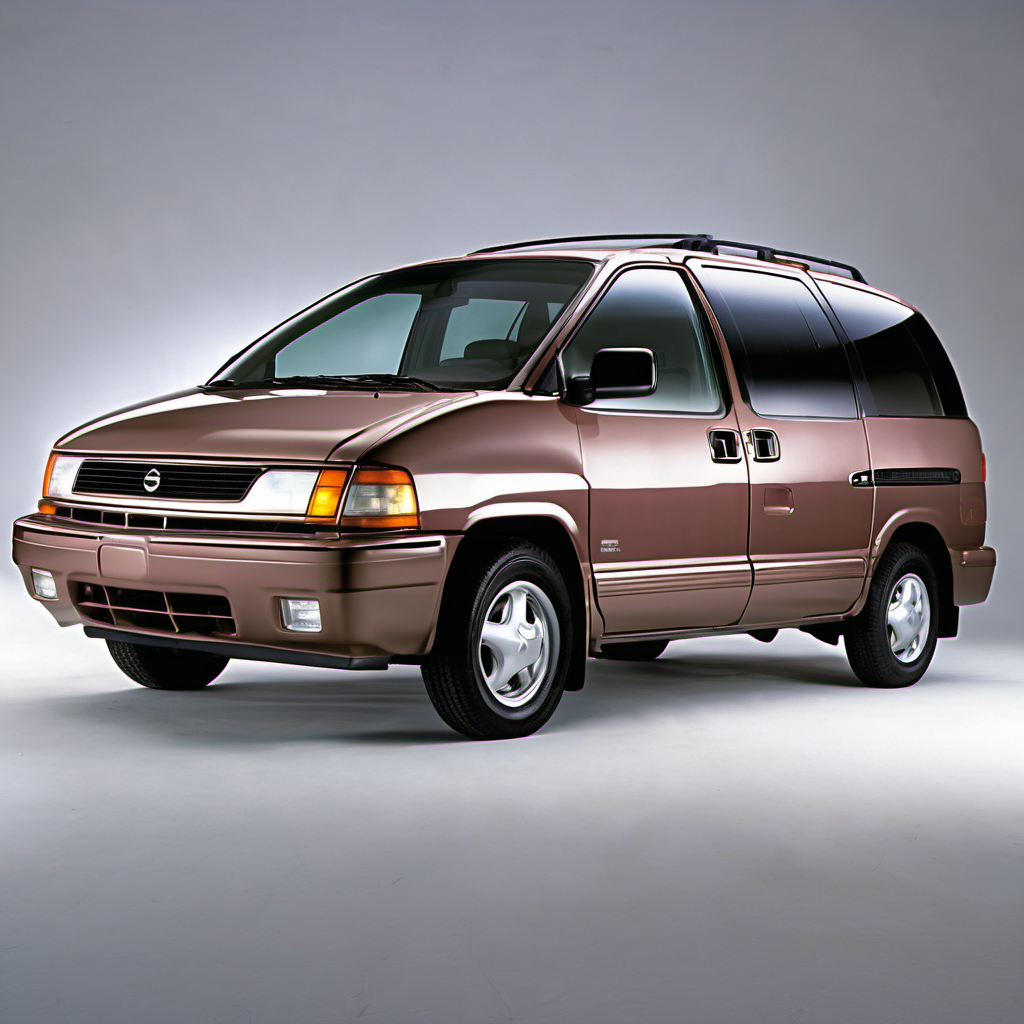
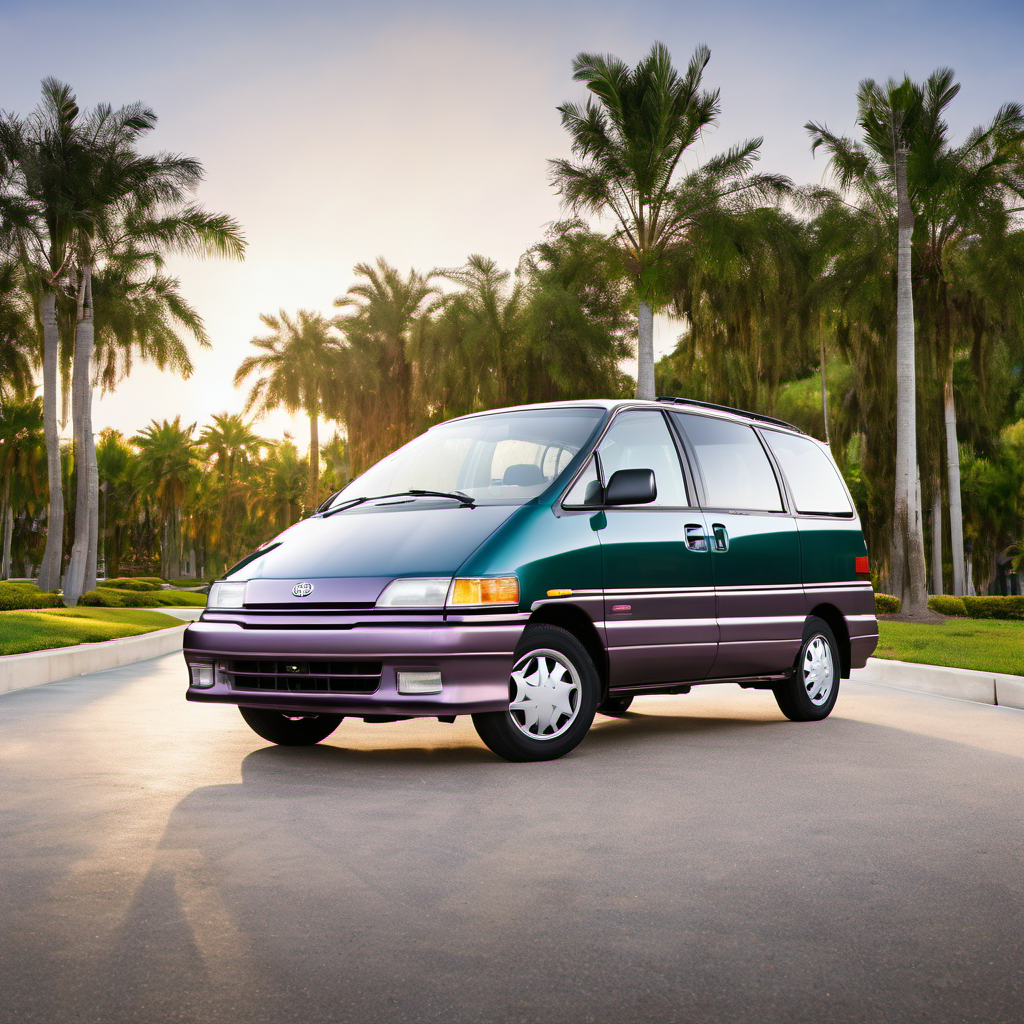
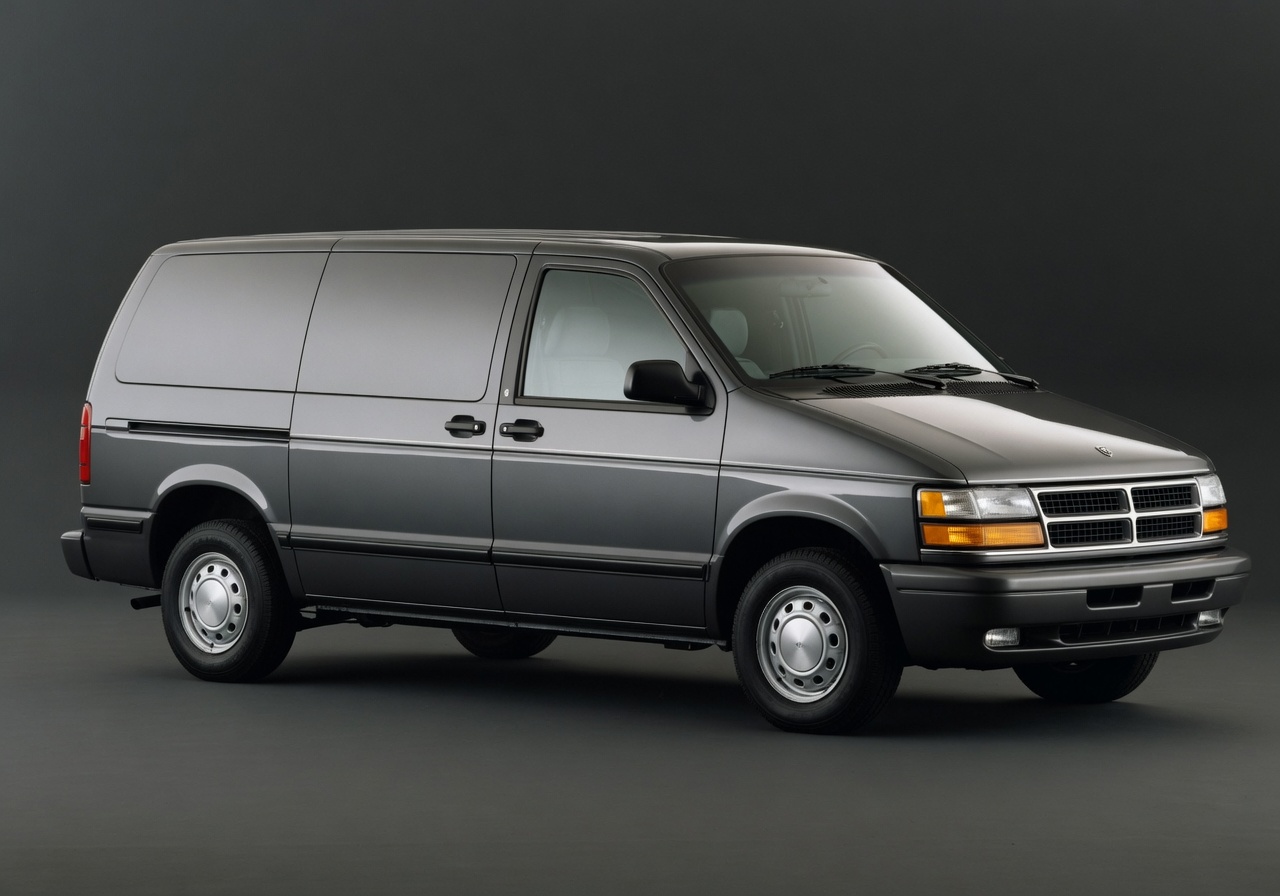
1993 Nissan Quest Van/Minivan

1993 Nissan

QuestVan/Minivan

Van/Minivan

The 1993 Nissan Quest was a first-generation minivan developed jointly by Nissan and Ford — it shares its platform and powertrain with the 1993 Ford Villager. Built in Avon Lake, Ohio, it was Nissan's first entry into the American minivan market and targeted families looking for a more car-like alternative to the Chrysler minivans that dominated the segment. It seated seven, rode on a front-wheel-drive car platform, and offered a smooth V6 in a practical, boxy package. For its era, the Quest was considered refined and reliable, with a solid 3.0L V6 borrowed from the Nissan Maxima. It wasn't as spacious as the Dodge Caravan, and performance was modest, but it attracted buyers who valued the Nissan badge and a comfortable, quiet ride. The cooperative design with Ford meant parts cross-compatibility with the Mercury Villager, which is useful for sourcing some components today. At 30+ years old, any surviving 1993 Quest is a high-mileage, aged vehicle. Rust, worn rubber, dried seals, and deferred maintenance are the reality. These aren't collector vehicles — they're survivors. Budget accordingly and inspect thoroughly before buying.

Reliability
3/5
Verified data
Specs shown for Quest — the most common configuration. Other trims may vary in engine, drivetrain, or fuel economy. Sign in to see your vehicle's exact specs.
Engine
[object Object]
Drivetrain
FWD
Fuel
Gasoline
MPG
16 city / 21 hwy / 18 combined
Seats
Doors
Body
Special Purpose Vehicles

Overview

AI-curated

The 1993 Nissan Quest was a first-generation minivan developed jointly by Nissan and Ford — it shares its platform and powertrain with the 1993 Ford Villager. Built in Avon Lake, Ohio, it was Nissan's first entry into the American minivan market and targeted families looking for a more car-like alternative to the Chrysler minivans that dominated the segment. It seated seven, rode on a front-wheel-drive car platform, and offered a smooth V6 in a practical, boxy package. For its era, the Quest was considered refined and reliable, with a solid 3.0L V6 borrowed from the Nissan Maxima. It wasn't as spacious as the Dodge Caravan, and performance was modest, but it attracted buyers who valued the Nissan badge and a comfortable, quiet ride. The cooperative design with Ford meant parts cross-compatibility with the Mercury Villager, which is useful for sourcing some components today. At 30+ years old, any surviving 1993 Quest is a high-mileage, aged vehicle. Rust, worn rubber, dried seals, and deferred maintenance are the reality. These aren't collector vehicles — they're survivors. Budget accordingly and inspect thoroughly before buying.

Known for
  • Shared platform and V6 with the Mercury Villager (Ford partnership)
  • Smooth, refined 3.0L V6 derived from the Nissan Maxima
  • Car-like FWD handling compared to truck-based vans of the era
  • Practical 7-passenger seating in a compact minivan footprint
  • Decent reliability for its class when properly maintained
Best for
  • Budget family hauler buyers who need a 7-passenger vehicle
  • DIY mechanics comfortable with early-90s Nissan/Ford shared platforms
  • Low-speed, low-mileage secondary or around-town use
  • Owners with access to affordable parts through Mercury Villager cross-compatibility
Watch for
  • Extensive rust on body, frame rails, and undercarriage — especially in Wisconsin
  • Timing belt service history unknown on most survivors
  • Coolant system neglect leading to head gasket issues on the 3.0L
  • Aged rubber: seals, hoses, bushings, and CV axle boots all suspect at this age
  • Electrical gremlins from 30+ years of aging wiring and connectors

Common issues by mileage

6 known

Timing Belt Failure

high
Typically appears
60–105k mi (and every 60k thereafter)
Estimated repair
$400 – $700

Coolant System Degradation / Head Gasket Seepage

high
Typically appears
80–150k mi
Estimated repair
$900 – $2,200

CV Axle and Boot Failure

high
Typically appears
80k+ mi
Estimated repair
$150 – $400

Rust — Rocker Panels, Floor, and Undercarriage

high
Typically appears
All mileages on upper Midwest vehicles
Estimated repair
$500 – $3,000

Transmission Slipping / Delayed Engagement

medium
Typically appears
120k+ mi
Estimated repair
$800 – $2,500

Maintenance schedule

  1. 1
    Every 60,000 miles or immediately if history is unknown Timing Belt and Water Pump Replacement

    The 3.0L V6 is an interference engine — a broken timing belt destroys the engine. On a 30-year-old vehicle with unknown history, replace it now and don't wait.

  2. 2
    Every 2 years or 30,000 miles Coolant Flush and Inspection

    Degraded coolant accelerates corrosion in the aluminum head and iron block combination, leading to head gasket failure. Use the correct green coolant diluted 50/50.

  3. 3
    Every 30,000 miles Transmission Fluid Change

    The 4-speed automatic is durable but sensitive to burned fluid at high mileage. Regular fluid changes are the cheapest insurance against a costly rebuild.

  4. 4
    Every 15,000 miles or at each oil change CV Axle Boot Inspection

    Torn CV boots are common at this age. Once the grease escapes and dirt enters, the joint fails quickly — catch splits early to avoid a full axle replacement.

  5. 5
    Every 2 years Brake Fluid Flush

    Brake fluid is hygroscopic and absorbs moisture over time, lowering boiling point and accelerating caliper and wheel cylinder corrosion — critical in a salty Wisconsin climate.

  6. 6
    Every spring after winter season Full Undercarriage Rust Inspection

    Road salt in Lake Geneva-area winters attacks brake lines, fuel lines, and structural rails. Catch rust before it compromises safety or becomes uneconomical to repair.

  7. 7
    Every 30,000 miles Spark Plugs and Distributor Cap/Rotor

    The early-90s 3.0L uses a distributor ignition — cap, rotor, and plug wires age and crack. Hard starting in cold Wisconsin winters is often traced back here.

  8. 8
    Every 2 years or 30,000 miles Serpentine and Accessory Belt Inspection

    Rubber belts harden and crack with age; at 30+ years old, replace on a schedule rather than waiting for a roadside failure.

Always defer to the manufacturer's service manual for warranty-mandated intervals.

Cost of ownership

Annual maintenance
$600 – $1,800
Fuel
At 18 MPG combined, expect roughly $1,800–$2,400/year at typical Wisconsin gas prices assuming 12,000 miles annually.
Insurance
Liability-only coverage on a vehicle this age is typically $400–$700/year in southern Wisconsin. Full coverage rarely makes economic sense given the low market value.

The 1993 Quest is cheap to buy but not free to own. Routine maintenance is affordable since it shares parts with the Mercury Villager and Nissan Maxima, keeping parts costs down. The real risk is deferred maintenance catching up — a timing belt job, head gasket repair, or rust remediation can each cost more than the vehicle's market value. Budget generously for the unexpected and only commit to one if a pre-purchase inspection comes back clean.
Seasonal care

Lake Geneva, WI
Winter
  • Switch to a full synthetic 5W-30 before temperatures drop below 10°F — the 3.0L cranks hard in sub-zero starts and thicker conventional oil makes it worse.
  • Test and replace the battery if it's more than 3 years old; cold-cranking amps drop sharply below 0°F and this van's starting system is already working harder with age.
  • Fill the washer reservoir with -20°F or better rated fluid; the standard reservoir and lines can freeze and crack.
  • Inspect and treat the undercarriage with a rust inhibitor before first snowfall — road salt is relentless on 30-year-old brake and fuel lines.
  • Verify the coolant mixture is at least 50/50 antifreeze to protect to -34°F; aged coolant loses its freeze protection even if it looks clean.
  • Keep the fuel tank above half when possible — condensation in a near-empty tank can introduce water to the fuel system in sustained cold snaps.
Summer
  • Inspect the A/C system for refrigerant leaks; the original R-12 system has almost certainly been converted to R-134a at some point — verify the conversion was done correctly.
  • Check tire pressure monthly — tires lose about 1 PSI for every 10°F of temperature change and summer heat causes over-inflation that accelerates center-tread wear.
  • Inspect coolant hoses for softness, swelling, or cracking — heat soak accelerates deterioration on rubber that's already 30+ years old.
  • Clean the A/C condenser of bugs and debris from the front of the vehicle; a clogged condenser reduces cooling efficiency significantly.
  • Check the cooling fan operation — a faulty fan relay or motor on a vehicle this age can cause overheating in stop-and-go summer traffic.

Comparable vehicles

If you're shopping for one

Red flags
  • Any visible rust perforation on rockers, floor pans, or frame rails — walk away, the repair cost will exceed the vehicle's value
  • Unknown or undocumented timing belt history — budget for immediate replacement before driving
  • Milky or sludgy oil on the dipstick — likely head gasket failure allowing coolant into oil
  • Transmission that hesitates, slips, or clunks on a test drive — rebuilds are expensive relative to market value
  • A/C that blows warm — refrigerant system repairs on a 30-year-old system can cascade into significant expense
  • Cracked or oil-fouled distributor cap, visibly deteriorated spark plug wires — indicates deferred ignition maintenance
What to inspect
  • Full undercarriage inspection on a lift — brake lines, fuel lines, floor pans, and subframe for rust perforation
  • Timing belt replacement date/mileage on service records or visible sticker under the hood
  • Coolant color and level — brown or rusty coolant signals neglect; check for bubbling at idle which indicates combustion gas intrusion
  • CV axle boots for splits or grease sling marks on the inside of the wheels
  • All door seals, sliding door tracks, and weatherstripping — leaks lead to floor rust on Minnesota/Wisconsin-region vehicles
  • Operation of all sliding door and liftgate mechanisms — worn rollers and tracks are common and replacement parts are increasingly scarce
AI profile generated 4 days ago · claude-sonnet-4-6 · v2.