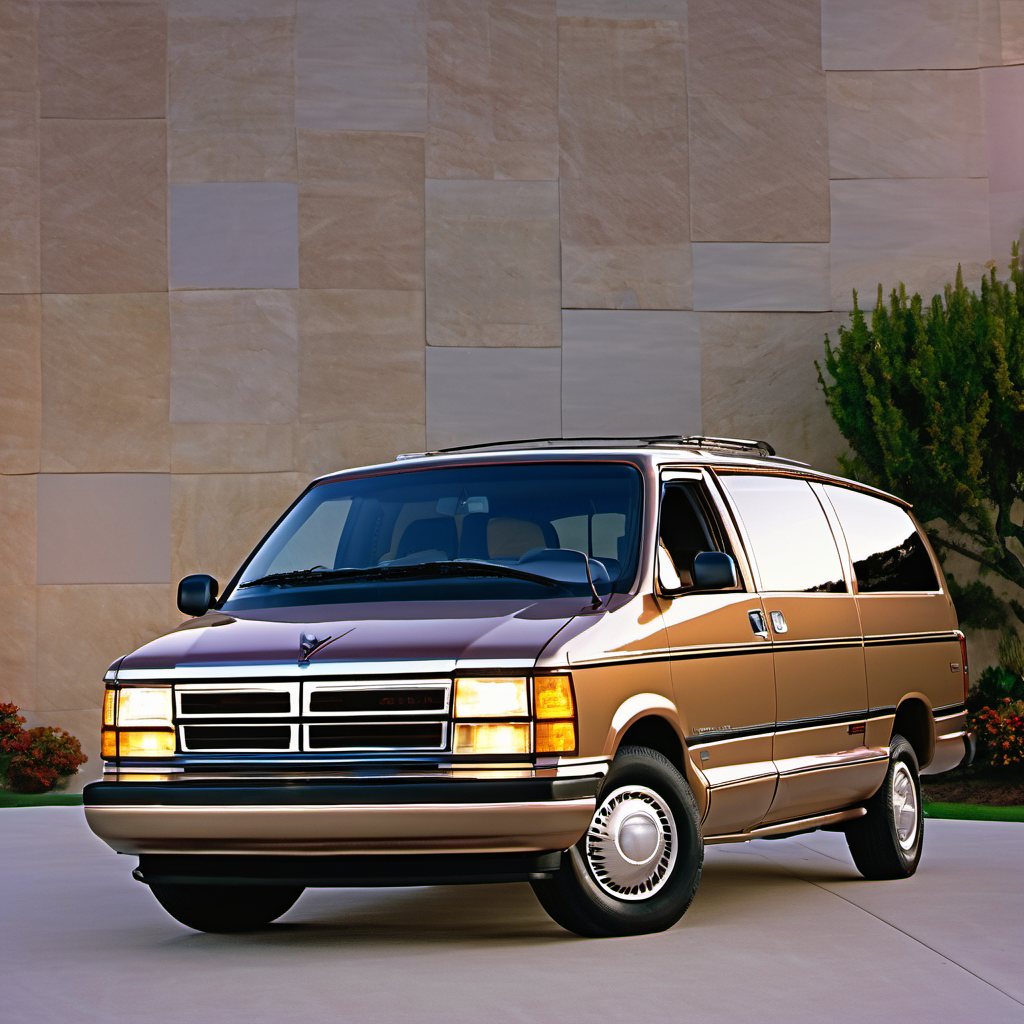
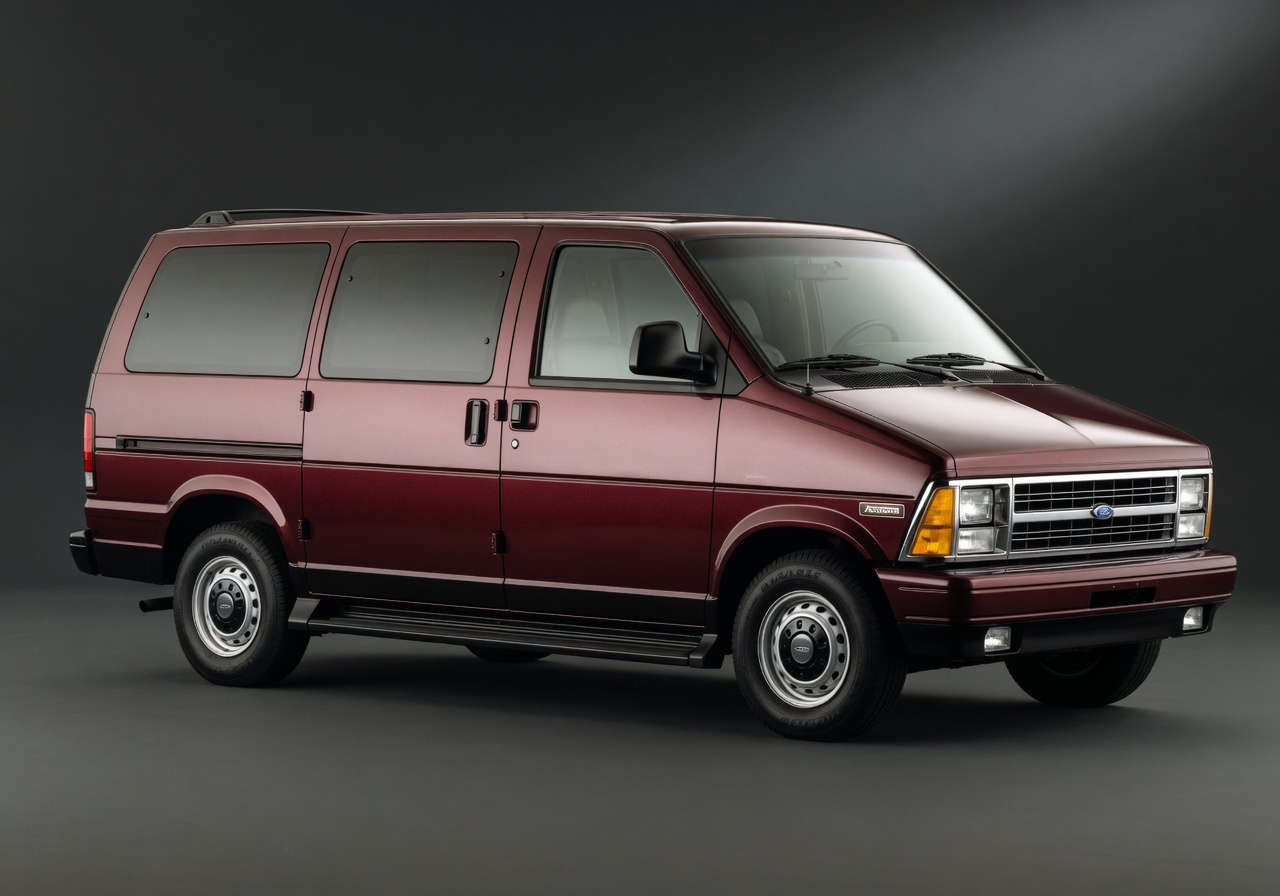
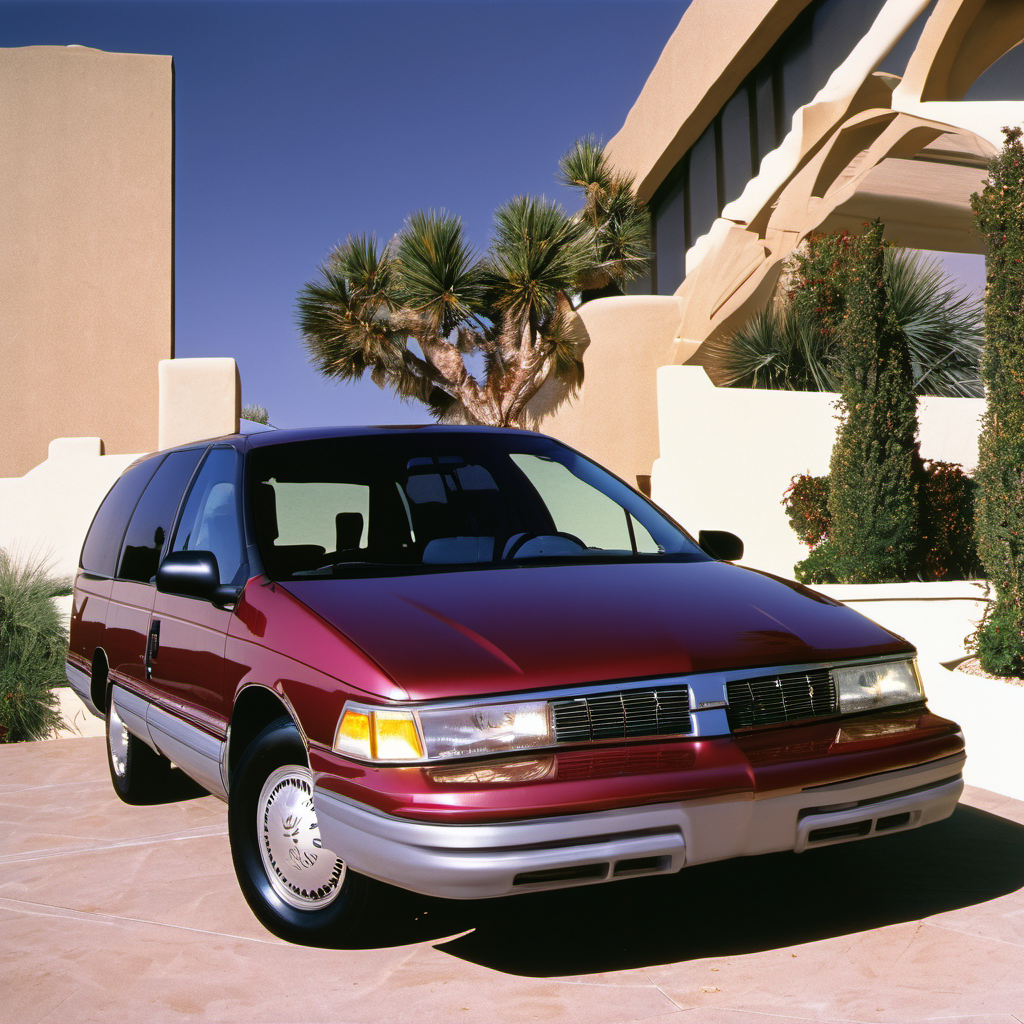
1993 Chrysler Town & Country Van/Minivan

1993 Chrysler

Town & CountryVan/Minivan

3.3L V6 · Van/Minivan

The 1993 Chrysler Town & Country is the premium trim of Chrysler's second-generation AS-body minivan platform, which Chrysler essentially invented and dominated through the 1980s and early '90s. Riding on a 119.1-inch wheelbase, it offered genuine family-hauling utility in a package smaller than a full-size van, with wood-grain exterior accents and leather seating that set it apart from the base Caravan and Voyager siblings. Under the hood, the standard engine was Chrysler's 3.3L V6, with the 3.8L V6 optional — both mated to a 3-speed automatic (later a 4-speed in mid-year updates). By 1993 standards these were reliable, proven powertrains, though the transmissions required attentive fluid maintenance. The van was front-wheel drive, which helped in Wisconsin winters compared to RWD full-size competitors. At 30+ years old, any surviving 1993 Town & Country is a high-mileage or carefully stored vehicle. Rust is the single biggest enemy — Wisconsin road salt will have attacked floor pans, subframes, and sliding door tracks aggressively. Mechanical parts availability has thinned, and most factory electronics are now fragile with age. This is best treated as a project or nostalgia vehicle rather than a daily driver.

Reliability
2/5
Verified data
Engine
3.3L V6
Drivetrain
FWD
Fuel
Gasoline
MPG
17 city / 23 hwy / 19 combined
Seats
7
Doors
4
Body
Minivan
MSRP
$22,800

Overview

AI-curated

The 1993 Chrysler Town & Country is the premium trim of Chrysler's second-generation AS-body minivan platform, which Chrysler essentially invented and dominated through the 1980s and early '90s. Riding on a 119.1-inch wheelbase, it offered genuine family-hauling utility in a package smaller than a full-size van, with wood-grain exterior accents and leather seating that set it apart from the base Caravan and Voyager siblings. Under the hood, the standard engine was Chrysler's 3.3L V6, with the 3.8L V6 optional — both mated to a 3-speed automatic (later a 4-speed in mid-year updates). By 1993 standards these were reliable, proven powertrains, though the transmissions required attentive fluid maintenance. The van was front-wheel drive, which helped in Wisconsin winters compared to RWD full-size competitors. At 30+ years old, any surviving 1993 Town & Country is a high-mileage or carefully stored vehicle. Rust is the single biggest enemy — Wisconsin road salt will have attacked floor pans, subframes, and sliding door tracks aggressively. Mechanical parts availability has thinned, and most factory electronics are now fragile with age. This is best treated as a project or nostalgia vehicle rather than a daily driver.

Known for
  • Pioneering the modern minivan segment alongside the Dodge Caravan
  • Premium wood-trim exterior and leather interior as the flagship trim
  • Front-wheel drive traction advantage over full-size vans of the era
  • Versatile fold-flat rear seating for cargo flexibility
Best for
  • Minivan enthusiasts and collectors preserving a piece of American automotive history
  • Light-duty family hauling where low mileage and good condition can be verified
  • Budget buyers comfortable with older vehicle maintenance demands
  • Hobbyists looking for an affordable restoration project
Watch for
  • Severe underbody and floor pan rust from decades of Midwest road salt exposure
  • Transmission failure — the 3-speed A413 and early 4-speed units are age-prone
  • Deteriorated rubber: door seals, sliding door tracks, fuel and brake lines
  • Electrical gremlins from 30-year-old wiring harnesses and connectors
  • Coolant system neglect leading to warped heads on the 3.3L/3.8L V6

Common issues by mileage

6 known

Transmission failure (A604 4-speed automatic)

high
Typically appears
60–120k mi
Estimated repair
$1,800 – $3,500

Intake manifold gasket leak / coolant loss on 3.3L V6

high
Typically appears
80–150k mi
Estimated repair
$400 – $900

Sliding door track wear and latch failure

high
Typically appears
Any mileage on 30-year-old example
Estimated repair
$150 – $600

Fuel and brake line rust-through (underbody)

high
Typically appears
Any — age-driven on Midwest vehicles
Estimated repair
$500 – $2,000

Front strut and tie rod end wear

medium
Typically appears
80–150k mi
Estimated repair
$300 – $800

Power door lock and window actuator failure

medium
Typically appears
Any — age-driven electrical
Estimated repair
$100 – $400

Maintenance schedule

  1. 1
    Every 30k mi or immediately on acquisition Transmission fluid change (if A604 4-speed equipped)

    The A604 is sensitive to fluid condition. Burnt or neglected fluid accelerates clutch pack wear rapidly. Use only ATF+4 spec fluid — wrong fluid will hasten failure.

  2. 2
    Every 2 years / 30k mi Coolant flush and inspection of intake manifold gaskets

    The 3.3L/3.8L V6 is prone to intake gasket seepage. Maintain a 50/50 OAT-compatible coolant mix and inspect for orange staining around the lower intake.

  3. 3
    Annually — every spring after winter Full underbody rust inspection

    Wisconsin road salt attacks floor pans, brake lines, fuel lines, and subframe mounting points. Catching rust perforation early prevents brake failure and structural compromise.

  4. 4
    Inspect at acquisition; replace if any surface corrosion or softness found Brake line replacement (rubber-to-metal junctions)

    30-year-old steel brake lines in a salt-belt state are a safety hazard. Don't wait for a soft pedal — proactive replacement is far cheaper than a panic stop failure.

  5. 5
    Every 60k mi or at acquisition if history is unknown Serpentine belt and tensioner replacement

    Belt failure on this engine takes out the water pump drive and power steering simultaneously. Tensioner spring fatigue is common at this age regardless of belt appearance.

  6. 6
    Every 30k mi Spark plugs and wires

    The 3.3L V6 uses conventional copper plugs. Original or long-neglected wires will cause misfires, rough cold starts, and reduced fuel economy — especially important for Wisconsin winters.

  7. 7
    Every 12 months Sliding door track lubrication and latch inspection

    The second-gen T&C sliding door track is a known wear point. Lack of lubrication leads to binding, premature roller wear, and eventual latch failure that can allow the door to open while moving.

  8. 8
    Every fall before winter season Battery load test

    Cold-cranking demand in Wisconsin sub-zero temps will expose any marginal battery. A battery that passes a voltage test in summer can still fail to start the engine at -10°F.

Always defer to the manufacturer's service manual for warranty-mandated intervals.

Cost of ownership

Annual maintenance
$800 – $2,500
Fuel
Expect roughly $2,200–$2,800/year based on 12,000 miles at current Wisconsin gas prices with 19 MPG combined. Premium not required — regular 87 octane.
Insurance
Liability-only coverage for a vehicle this age typically runs $400–$700/year in the Lake Geneva area depending on your driving record. Comp/collision rarely makes financial sense on a 30-year-old minivan.

Routine maintenance costs are moderate, but a 1993 T&C carries significant unplanned repair risk. One transmission rebuild or major rust repair can easily exceed the vehicle's market value. Budget generously for surprises — $2,500+ in a single year is realistic if deferred maintenance surfaces. Parts availability is declining; some body and trim pieces require salvage yard sourcing.

Seasonal care

Lake Geneva, WI
Winter
  • Load-test the battery every October — the 3.3L V6 needs full cold-cranking amps at Wisconsin temperatures. Replace any battery over 4 years old proactively.
  • Switch to a winter-grade windshield washer fluid rated to at least -20°F. The standard reservoir and lines are exposed to cold air under the hood.
  • Inspect and treat underbody and wheel wells with rust inhibitor before first salting of the season. A 30-year-old unibody has little rust margin left.
  • Check that the sliding door tracks and latch mechanisms are clean and lightly lubricated — moisture and grit freeze them solid in sub-zero temps.
  • Verify the heater core is flowing properly before winter. Coolant neglect leads to heater core failure, and the job is labor-intensive on this platform.
  • Use a fuel system cleaner or fuel drier additive if the vehicle sits for extended periods — moisture accumulation in aged fuel systems causes rough cold starts.
Summer
  • Inspect the A/C system — the refrigerant is R-12 (original) or may have been retrofitted to R-134a. Confirm which system is present before any recharge; R-12 handling requires certification.
  • Check tire pressure monthly — heat causes significant pressure fluctuation, and 30-year-old wheel rims may have minor corrosion beads that allow slow leaks.
  • Inspect the radiator and cooling hoses carefully before hot-weather driving. The 3.3L V6 runs warm in traffic with a compromised cooling system, and head gasket repairs are costly.
  • Check under the sliding door and rear cargo area floor mats for water intrusion — aged door seals allow leaks that cause hidden floor pan rust and mold.

Comparable vehicles

If you're shopping for one

Red flags
  • Any soft or springy feel when pressing on the floor pan — means rust has compromised the floor structure
  • Transmission fluid that is brown, burnt-smelling, or shows metal flakes on the dipstick
  • White crusty deposits or orange staining around the intake manifold or thermostat housing — active coolant leak
  • Sliding door that requires force to latch or doesn't stay fully open — roller and latch replacement is expensive and parts are hard to find
  • Evidence of water intrusion in the interior (stained headliner, musty smell, rust-stained carpet seams)
  • No service records whatsoever — on a 30-year-old vehicle, undocumented history means deferred maintenance is almost guaranteed
What to inspect
  • Crawl under the entire vehicle and probe the floor pans, subframe rails, and brake/fuel lines with a screwdriver — rust perforation is the #1 deal-killer on Wisconsin examples
  • Start the engine cold and watch for white coolant smoke from the exhaust — indicates head or intake gasket issues on the 3.3L V6
  • Drive through several gear shifts and note any slipping, shuddering, or delayed engagement — transmission repairs often exceed the van's value
  • Operate the sliding door through its full range several times and verify the latch engages securely at both open and closed positions
  • Check all four wheel wells for rust bubbling through the paint and inspect the spare tire well in the cargo floor for standing water or rust
  • Test the A/C and confirm whether the system has been converted from R-12 to R-134a — an unconverted R-12 system will need retrofit before it can be recharged legally
  • Pull back carpet and floor mats at all seating positions and in the cargo area to look for rust staining or soft spots
AI profile generated 4 days ago · claude-sonnet-4-6 · v2.