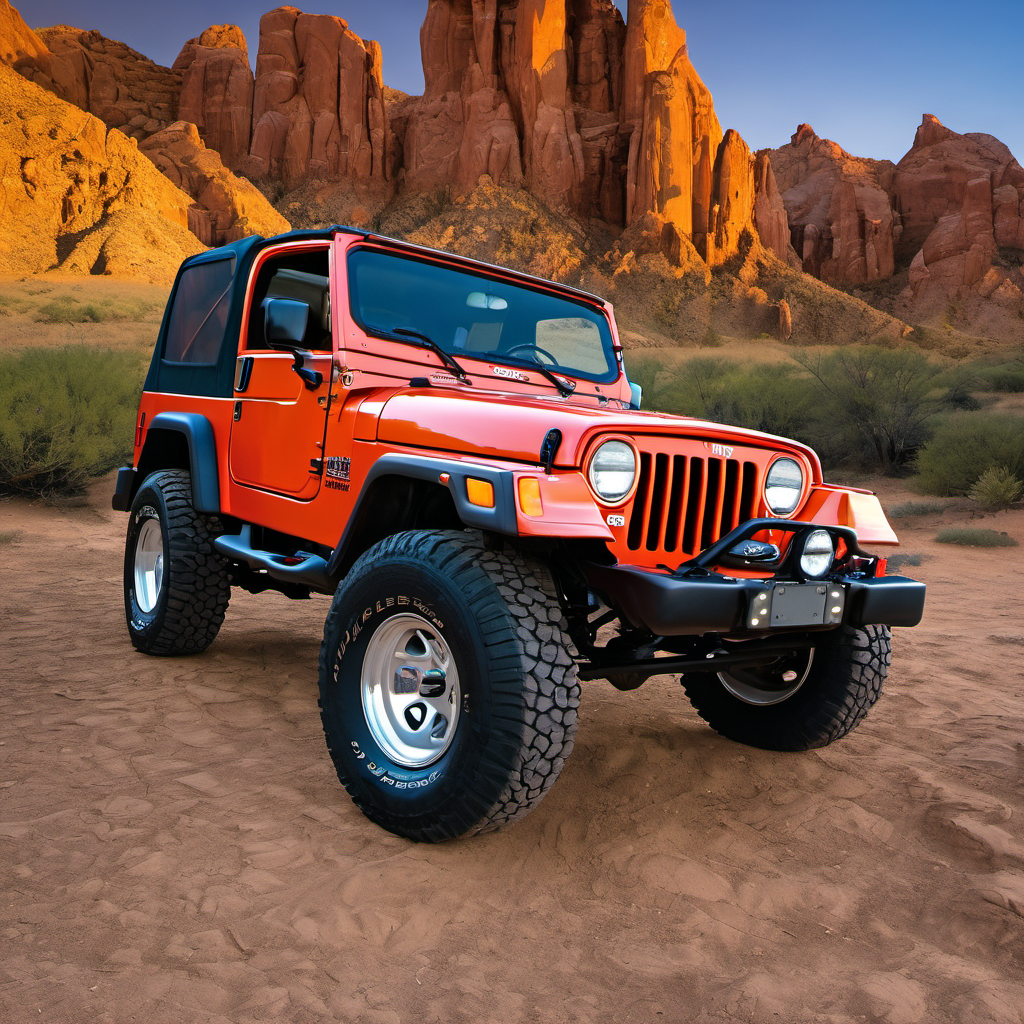
1992 Jeep Wrangler SUV

1992 Jeep

WranglerSUV

SUV

The 1992 Jeep Wrangler (YJ generation, 1987–1995) is a purpose-built, body-on-frame off-road vehicle that earned its reputation through simplicity and go-anywhere capability. This generation introduced a wider track and rectangular headlights compared to the CJ it replaced, which actually drew some criticism from purists — but the YJ's more civilized road manners and improved safety made it a sales hit. Under the hood, this example carries the 2.5L four-cylinder (the "Iron Duke" replacement, AMC's four-banger), which is adequate for trail duty but noticeably underpowered on the highway or loaded up. By 1992, the YJ was a mature platform with known strengths and weaknesses well understood by the Jeep community. The drivetrain, axles (Dana 30 front, Dana 35 rear on most trims), and manual or automatic transmission options give owners a solid foundation that the aftermarket has thoroughly supported for decades. These trucks are simple enough that a mechanically inclined owner can handle much of the maintenance in a home garage. At 30+ years old, every surviving 1992 Wrangler is a used vehicle with significant age. Rust, worn soft-top hardware, leaking seals, and deferred maintenance are universal concerns. The good news: parts availability remains excellent, the Jeep community is large, and a well-maintained YJ is still a capable, fun vehicle that holds its value surprisingly well.

Reliability
3/5
Verified data
Specs shown for Wrangler 4WD — the most common configuration. Other trims may vary in engine, drivetrain, or fuel economy. Sign in to see your vehicle's exact specs.
Engine
[object Object]
Drivetrain
AWD
Fuel
Gasoline
MPG
16 city / 19 hwy / 17 combined
Seats
Doors
Body
Special Purpose Vehicles

Overview

AI-curated

The 1992 Jeep Wrangler (YJ generation, 1987–1995) is a purpose-built, body-on-frame off-road vehicle that earned its reputation through simplicity and go-anywhere capability. This generation introduced a wider track and rectangular headlights compared to the CJ it replaced, which actually drew some criticism from purists — but the YJ's more civilized road manners and improved safety made it a sales hit. Under the hood, this example carries the 2.5L four-cylinder (the "Iron Duke" replacement, AMC's four-banger), which is adequate for trail duty but noticeably underpowered on the highway or loaded up. By 1992, the YJ was a mature platform with known strengths and weaknesses well understood by the Jeep community. The drivetrain, axles (Dana 30 front, Dana 35 rear on most trims), and manual or automatic transmission options give owners a solid foundation that the aftermarket has thoroughly supported for decades. These trucks are simple enough that a mechanically inclined owner can handle much of the maintenance in a home garage. At 30+ years old, every surviving 1992 Wrangler is a used vehicle with significant age. Rust, worn soft-top hardware, leaking seals, and deferred maintenance are universal concerns. The good news: parts availability remains excellent, the Jeep community is large, and a well-maintained YJ is still a capable, fun vehicle that holds its value surprisingly well.

Known for
  • Rugged body-on-frame off-road capability
  • Simple, DIY-friendly mechanicals
  • Strong aftermarket parts and community support
  • Rectangular headlights (distinctive YJ styling)
  • Durable AMC-derived 2.5L four-cylinder
Best for
  • Light to moderate off-road trail use
  • Weekend recreation and open-air driving
  • DIY mechanics who enjoy wrenching
  • Collectors and enthusiasts seeking a classic 4x4
  • Second or fun vehicle (not ideal as a sole daily driver)
Watch for
  • Dana 35 rear axle is the weak link — prone to breakage under stress
  • Body and frame rust, especially floor pans, rocker panels, and frame rails
  • Leaking soft top and door seals letting in water and road salt
  • 2.5L four-cylinder feels strained with large tires or at highway speeds
  • Electrical gremlins common on 30+ year old wiring and connectors

Common issues by mileage

6 known

Dana 35 Rear Axle Failure

high
Typically appears
Any mileage under off-road stress
Estimated repair
$400 – $1,800

Floor Pan and Frame Rail Rust

high
Typically appears
All high-age vehicles
Estimated repair
$500 – $3,500

Soft Top and Door Seal Leaks (Water Intrusion)

high
Typically appears
All ages
Estimated repair
$100 – $900

Throttle Position Sensor (TPS) Failure

medium
Typically appears
80k–150k mi
Estimated repair
$80 – $250

Cooling System Degradation (Thermostat, Hoses, Water Pump)

high
Typically appears
100k+ mi or 15+ years
Estimated repair
$150 – $600

Electrical Connector Corrosion and Wiring Degradation

medium
Typically appears
All ages on 30-year-old vehicles
Estimated repair
$100 – $800

Maintenance schedule

  1. 1
    Every 3,000–5,000 miles Engine oil and filter change

    The 2.5L pushrod four runs conventional oil well; given the vehicle's age, stick to conventional or a high-mileage blend. Frequent changes keep older seals conditioned and catch coolant or fuel contamination early.

  2. 2
    Every 30,000 miles or 2 years Coolant flush and hose inspection

    Old coolant turns acidic and attacks the aluminum water pump and radiator. At this age, hoses should be squeezed and inspected — cracked or soft hoses are common and cheap insurance before a blowout.

  3. 3
    Every 30,000 miles Transfer case and differential fluid service

    The Dana 30/35 differentials and Command-Trac transfer case use gear oil that breaks down over time. Fresh fluid extends axle life significantly, especially if the Jeep sees off-road use or water crossings.

  4. 4
    Every 2 years or as needed Brake fluid flush

    Brake fluid is hygroscopic and absorbs moisture. On a 30-year-old vehicle, aged fluid lowers the boiling point and accelerates corrosion in calipers and wheel cylinders.

  5. 5
    Annually (before winter) Undercarriage rust inspection and treatment

    Wisconsin road salt is brutal on the YJ's frame, floor pans, and rocker panels. Annual inspection catches developing rust before it becomes a structural problem. Apply rust inhibitor to bare metal areas.

  6. 6
    Every 2 years Inspect and re-grease all grease fittings (U-joints, steering components)

    The YJ has old-school grease zerks on the driveshaft U-joints and steering components. Neglected U-joints are a common and avoidable failure — a quick grease job takes 15 minutes and saves a breakdown.

  7. 7
    Annually Battery load test and terminal cleaning

    Cold Wisconsin winters demand a healthy battery. A 30-year-old vehicle may also have corroded battery cables — inspect the full cable run, not just the terminals.

  8. 8
    Every 60,000 miles or as needed Inspect and replace spark plugs, wires, distributor cap and rotor

    The 1992 2.5L uses a distributor-based ignition. Worn ignition components cause hard starting and rough running — both more noticeable in cold weather. These parts are inexpensive and easy to access.

Always defer to the manufacturer's service manual for warranty-mandated intervals.

Cost of ownership

Annual maintenance
$600 – $1,800
Fuel
At 17 MPG combined, expect roughly $1,700–$2,200/year at 12,000 miles annually (assuming $2.80–$3.20/gal regular unleaded). Costs rise if the Jeep wears larger tires or is lifted.
Insurance
Typically $600–$1,000/year for a 30-year-old vehicle at standard coverage levels in Wisconsin; agreed-value classic car insurance may be worth exploring if the Jeep is well-kept.

A properly maintained 1992 Wrangler can be a reasonably affordable keeper — parts are cheap and widely available, and the simple drivetrain keeps labor hours down. The wildcard is deferred rust and structural repair, which can escalate quickly on a vehicle this age. Budget conservatively for the first year of ownership to address unknown maintenance items.
Seasonal care

Lake Geneva, WI
Winter
  • Wash the undercarriage every 1–2 weeks during salting season — the open body-on-frame design traps brine directly on the frame and axle components
  • Apply dielectric grease to all electrical connectors before winter; aged wiring on a 30-year-old Jeep is especially vulnerable to moisture intrusion causing no-starts
  • Load-test the battery in October — cold cranking demand is high on the carbureted/TBI 2.5L and a marginal battery will fail at the worst time
  • Switch to a winter-weight washer fluid rated to at least -20°F; the soft top and doors do not seal well, meaning the cab gets cold fast and you'll use more fluid
  • Inspect soft top for tears or failing zippers before cold sets in — a compromised top lets in moisture that soaks the carpet and accelerates floor pan rust
  • Confirm 4WD engagement works properly in fall before you need it — test both 4-High and 4-Low, and lubricate the transfer case shift lever pivot if stiff
Summer
  • Monitor coolant temperature closely during trail use or slow city driving — the 2.5L runs warm when working hard and the cooling system on a 30-year-old vehicle may be marginal
  • Check tire pressure monthly; summer heat causes pressure to rise and the YJ's smaller tires are more sensitive to over-inflation affecting off-road traction and wear
  • Inspect and clean the air filter more frequently if driving on dusty trails — the stock airbox sits low and pulls in trail dust readily
  • With the top off or doors removed, protect the interior from UV damage and sudden rain; water on carpet accelerates floor pan rust from the inside out

Comparable vehicles

If you're shopping for one

Red flags
  • Any visible rust holes in the floor pan or frame — walk away unless you have a dedicated restoration budget
  • Evidence of off-road water crossings (silt in the differential, water stains in the engine bay) without documented fluid services afterward
  • Steering wander or excessive play — YJ steering is already vague from the factory; excessive play indicates worn components that add up fast
  • Engine knock or tick at idle on the 2.5L — these engines are durable but loud ticking can indicate a spun bearing or low oil pressure
  • Non-original or cobbled wiring — amateur electrical work on a 30-year-old platform creates gremlins that are extremely time-consuming to trace
  • Soft top stapled or taped shut — typically means the bows or channels are broken and the seller doesn't want you to open it
What to inspect
  • Frame rails — crawl underneath and probe with a screwdriver; soft or flaking metal is a structural red flag, not a cosmetic one
  • Floor pans — lift the carpet and inspect for rust-through; water intrusion from leaking tops and doors is nearly universal on high-age YJs
  • Rocker panels and body tub mounting points — these are structural on the YJ and expensive to repair if badly rusted
  • Dana 35 rear axle — look for signs of prior breakage repair, aftermarket reinforcement, or replacement with a stronger Dana 44
  • Soft top condition — check all zippers, the rear window, and the bows; a quality replacement top runs $300–$700
  • All four U-joints — grab the driveshaft and check for play; worn U-joints vibrate badly and can fail on the road
  • Cooling system — check the coolant color and smell for combustion gases (head gasket), and look for staining around hoses and the water pump
AI profile generated 4 days ago · claude-sonnet-4-6 · v2.