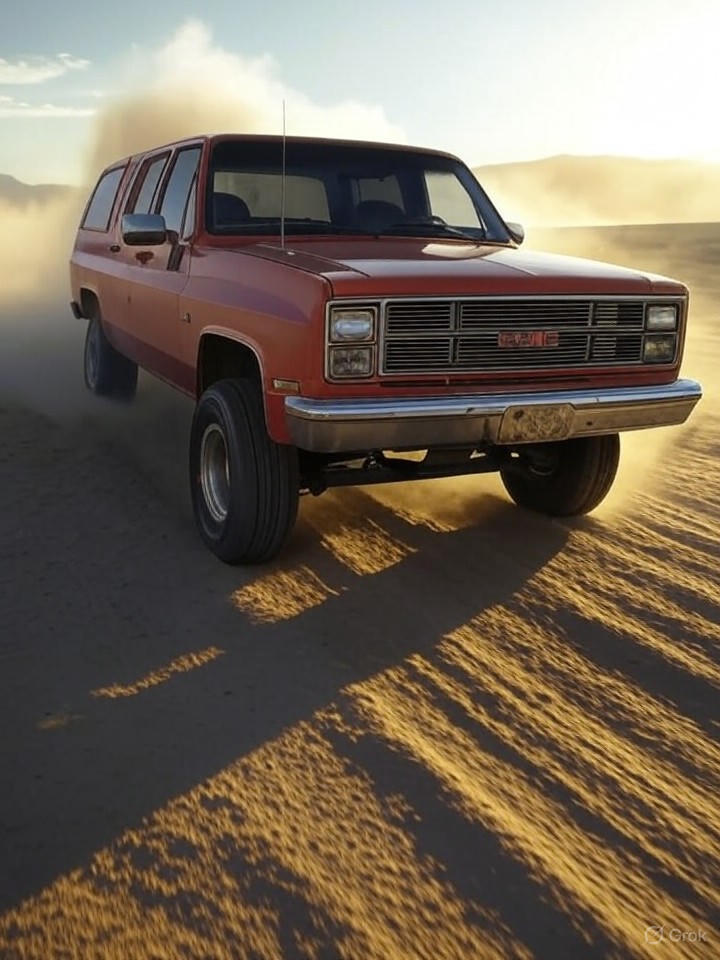
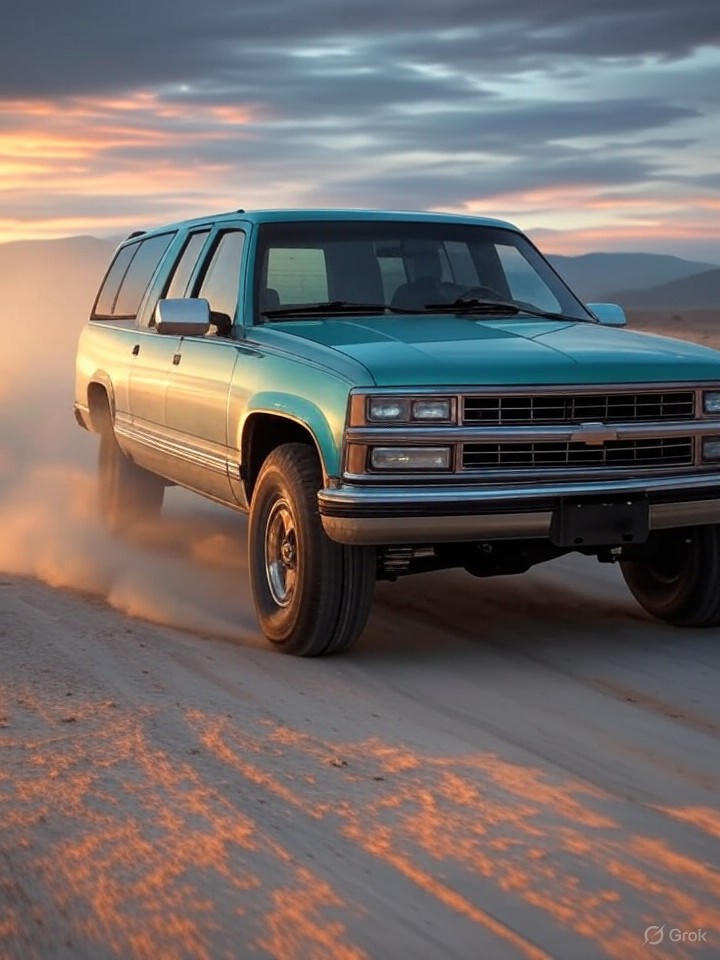
1992 GMC Suburban 2500 SUV

1992 GMC

Suburban 2500SUV

5.7L TBI V8 · SUV

The 1992 GMC Suburban 2500 is the heavy-duty variant of GM's full-size SUV, riding on the C/K truck platform that was largely unchanged from the mid-1970s through 1991 before a significant refresh. The 2500 designation means it rides on a 3/4-ton chassis, giving it serious towing and payload capability that the lighter 1500 can't match. With a 5.7L TBI V8 as the standard engine and an optional 7.4L V8, this truck was built for hauling large families, boats, or trailers in all weather. At over 30 years old, these Suburbans have split into two camps: well-preserved examples with consistent maintenance history that can still run reliably, and neglected rigs that have accumulated rust, deferred maintenance, and worn drivetrain components. The simple throttle-body injection and pushrod V8 make it one of the more wrench-friendly vehicles of its era — most repairs can be done with basic tools and widely available parts. In the Lake Geneva area, the 2500's weight and available 4WD are assets in Wisconsin winters, but that same salt-belt exposure means frame and floor rust are the most serious threat to longevity. Mechanically, these trucks are tough. Structurally, they need to be inspected carefully.

Reliability
3/5
Verified data
Engine
5.7L TBI V8
Drivetrain
4WD
Fuel
Gasoline
MPG
11 city / 15 hwy / 12 combined
Seats
9
Doors
4
Body
SUV
MSRP
$23,500

Overview

AI-curated

The 1992 GMC Suburban 2500 is the heavy-duty variant of GM's full-size SUV, riding on the C/K truck platform that was largely unchanged from the mid-1970s through 1991 before a significant refresh. The 2500 designation means it rides on a 3/4-ton chassis, giving it serious towing and payload capability that the lighter 1500 can't match. With a 5.7L TBI V8 as the standard engine and an optional 7.4L V8, this truck was built for hauling large families, boats, or trailers in all weather. At over 30 years old, these Suburbans have split into two camps: well-preserved examples with consistent maintenance history that can still run reliably, and neglected rigs that have accumulated rust, deferred maintenance, and worn drivetrain components. The simple throttle-body injection and pushrod V8 make it one of the more wrench-friendly vehicles of its era — most repairs can be done with basic tools and widely available parts. In the Lake Geneva area, the 2500's weight and available 4WD are assets in Wisconsin winters, but that same salt-belt exposure means frame and floor rust are the most serious threat to longevity. Mechanically, these trucks are tough. Structurally, they need to be inspected carefully.

Known for
  • Exceptional towing and payload for a full-size SUV
  • Simple, durable 5.7L TBI V8 engine — easy to service
  • Three-row seating with room for up to 9 passengers
  • Rugged C/K truck platform with proven drivetrain components
  • Long service life when properly maintained
Best for
  • Families needing maximum passenger and cargo capacity
  • Towing boats, horse trailers, or heavy campers
  • Rural and off-road use with 4WD models
  • Buyers who want to do their own wrenching
  • Operators who need a workhorse over a luxury hauler
Watch for
  • Frame and floor rust — critical in Wisconsin salt-belt conditions
  • Deferred maintenance on 30+ year old examples
  • 4WD transfer case and front axle wear
  • Worn steering components (box, tie rods, idler arm) leading to vague handling
  • Coolant leaks from intake manifold gaskets and heater core

Common issues by mileage

6 known

Intake Manifold Gasket Leak (Coolant / Oil)

high
Typically appears
80–150k mi
Estimated repair
$350 – $700

Steering Component Wear (Idler Arm, Tie Rods, Pitman Arm)

high
Typically appears
75–150k mi
Estimated repair
$250 – $600

Frame and Rocker Panel Rust

high
Typically appears
Any mileage — age and salt exposure driven
Estimated repair
$500 – $4,000

Front Wheel Bearing / Hub Failure (4WD models)

medium
Typically appears
80–140k mi
Estimated repair
$200 – $500

Heater Core Failure / Coolant Leak

medium
Typically appears
100k+ mi or age-related
Estimated repair
$400 – $900

Transfer Case Shift Motor / Encoder Failure

medium
Typically appears
100k+ mi
Estimated repair
$200 – $600

Maintenance schedule

  1. 1
    Every 3,000–5,000 miles or 6 months Engine oil and filter change

    The 5.7L TBI engine is hard on oil under towing or cold-start conditions. Conventional oil is fine; keep the intervals short on a 30-year-old engine.

  2. 2
    Every 2 years or 30,000 miles Coolant system flush and hose inspection

    Old coolant becomes acidic and accelerates intake gasket and heater core failure — both expensive repairs on this truck. Inspect all hoses for cracking at the same time.

  3. 3
    Every 30,000 miles Transmission fluid and filter service

    The 4L80-E is durable but heat-sensitive. Fresh fluid and a clean filter keep the valve body functioning properly, especially when towing.

  4. 4
    Every 30,000 miles Front differential and transfer case fluid change

    These units are often neglected. Old, water-contaminated gear oil accelerates bearing and gear wear. Check for milky fluid indicating seal failure.

  5. 5
    Every 15,000 miles or annually Steering linkage inspection and lubrication

    This generation uses a recirculating ball steering box and multiple grease-able linkage joints. Neglected joints wear quickly and create the 'wander' this platform is known for.

  6. 6
    Annually Brake inspection — pads, rotors, wheel cylinders, brake lines

    Salt exposure corrodes steel brake lines from the outside in. Inspect all hard lines for rust pitting, especially under the chassis. Rear drum wheel cylinders also seize on aged vehicles.

  7. 7
    Every 50,000 miles or 4 years Serpentine belt and accessory drive inspection

    A broken belt strands you and can allow the engine to overheat rapidly. On a 30-year-old truck, replace on a schedule rather than waiting for visible cracking.

  8. 8
    Every 30,000 miles Fuel filter replacement

    The inline fuel filter on the TBI system is inexpensive and easy to change. A clogged filter strains the fuel pump — and the pump itself is costly to replace on a full tank.

Always defer to the manufacturer's service manual for warranty-mandated intervals.

Cost of ownership

Annual maintenance
$800 – $2,000
Fuel
At 12 MPG combined and 12,000 miles/year, expect roughly $2,400–$3,200/year in fuel at current Wisconsin pump prices. Towing drops economy further.
Insurance
Typically low — older truck with modest market value. Expect $600–$1,200/year for full coverage depending on driving record and usage.

Routine maintenance on a well-sorted example is affordable — parts are cheap and widely available. The real cost risk is deferred work that piled up over 30 years: rust remediation, brake line replacement, cooling system overhaul, and steering refresh can easily add up to $2,000–$5,000+ if bought in neglected condition. Buy a clean example and keep up with it; the mechanical running costs are reasonable.
Seasonal care

Lake Geneva, WI
Winter
  • Test the battery before first hard freeze — cold-cranking a heavy V8 at -10°F demands a strong battery. Replace anything below 75% capacity.
  • Flush and refill washer fluid with a -20°F or better rated formula before temperatures drop; the reservoir and lines freeze solid on this truck.
  • Inspect and exercise the 4WD system in October before you need it — shift through all modes and confirm engagement. Sitting in 2WD all summer allows vacuum lines and shift components to stick.
  • Rinse the undercarriage thoroughly after every significant salting event, especially the frame rails, floor pans, and brake lines — this is the single most effective rust-prevention step you can take.
  • Check the block heater (if equipped) and use it below 0°F — the 5.7L starts hard in extreme cold without one and the thick oil takes time to circulate.
  • Inspect wiper blades and consider winter-rated blades; the large windshield requires good wiper contact to stay clear during Wisconsin ice storms.
Summer
  • Inspect the A/C system for refrigerant leaks and compressor clutch operation — R-134a retrofit or original R-12 systems on this vintage need attention before the heat arrives.
  • Check coolant level and concentration before towing season; the 5.7L runs hot under load in summer, and a weak cooling system will show it quickly.
  • Check tire pressure with a gauge after temperatures stabilize in spring — pressure rises with heat and drops coming out of winter. The 2500's load range tires are often over- or under-inflated.
  • Inspect the serpentine belt for cracking and glazing; heat accelerates rubber degradation and a summer breakdown is miserable.
  • Clean the throttle body and check for vacuum leaks — heat soak can cause rough idle and hesitation on hot restarts with the TBI system.

Comparable vehicles

If you're shopping for one

Red flags
  • Any soft spots in the frame rails — structural rust is a deal-breaker on a 3/4-ton truck
  • Rust-through on floor pans — indicates long-term moisture intrusion and suggests the rest of the undercarriage is similarly affected
  • Missing or replaced brake lines with non-OEM materials (e.g., rubber hose spliced into hard line runs)
  • Evidence of overheating — white deposits around the coolant cap, warped hood paint above the engine, or a milky dipstick
  • No maintenance records on a high-mileage example — assume all fluids, belts, and gaskets are due
  • Non-engaging or noisy 4WD — repair costs can be substantial and parts availability varies
What to inspect
  • Frame rails — probe with a screwdriver for soft or flaking rust, especially behind the rear axle and under the cab corners
  • Floor pans inside — lift the carpet and look for rust-through or patch welds
  • Brake lines — follow all hard lines under the chassis for rust pitting or wet spots
  • Heater core — check for sweet smell in the cab, foggy windshield from the inside, or coolant residue under the dash
  • Steering play — more than 2 inches of wheel movement before the tires respond indicates worn linkage or steering box
  • 4WD engagement — confirm all modes engage and disengage cleanly; listen for grinding or hesitation
  • Coolant condition — pull the radiator cap cold and look for oily residue (head gasket) or rust particles (neglected cooling system)
  • TBI injector spray pattern — at cold start, both injectors should spray a consistent cone; a dribbling injector causes rough running and fouled plugs
AI profile generated 4 days ago · claude-sonnet-4-6 · v2.