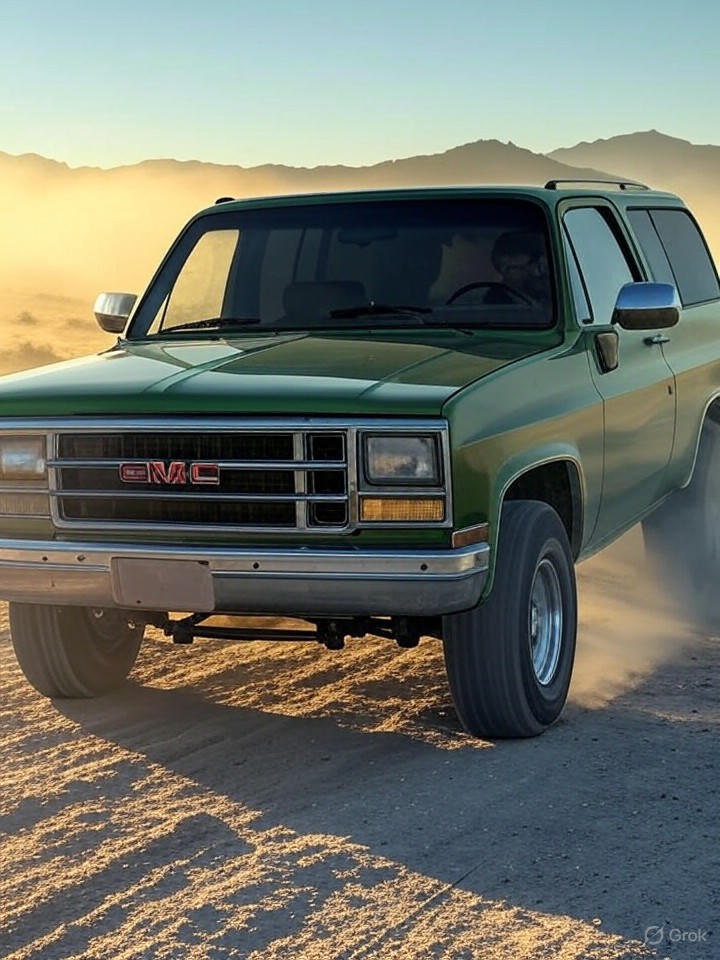
1992 GMC Suburban 1500 SUV

1992 GMC

Suburban 1500SUV

5.7L V8 TBI · SUV

The 1992 GMC Suburban 1500 is a full-size body-on-frame SUV from the long-running GMT400 platform generation (1988–1999). At over 30 years old, it represents the tail end of carbureted/TBI-era GM trucks — simple, proven mechanicals that skilled DIYers and independent shops can still work on without sophisticated scan tools. The 5.7L TBI V8 is a workhorse engine that routinely reaches 200k+ miles with basic maintenance. This generation Suburban seats up to 9 passengers and can tow 7,000+ lbs, making it one of the most capable family haulers of its era. The 4WD version (K1500) handles Wisconsin winters with authority. Parts availability remains excellent thanks to the sheer number of GMT400 trucks on the road and the robust aftermarket ecosystem. That said, at 30+ years old, every example should be treated as a high-mileage used vehicle needing a full inspection. Rust is the #1 enemy of this truck in the upper Midwest — it will kill the frame and body long before the engine gives up.

Reliability
4/5
Verified data
Engine
5.7L V8 TBI
Drivetrain
4WD
Fuel
Gasoline
MPG
11 city / 15 hwy / 13 combined
Seats
9
Doors
4
Body
SUV
MSRP
$21,500

Overview

AI-curated

The 1992 GMC Suburban 1500 is a full-size body-on-frame SUV from the long-running GMT400 platform generation (1988–1999). At over 30 years old, it represents the tail end of carbureted/TBI-era GM trucks — simple, proven mechanicals that skilled DIYers and independent shops can still work on without sophisticated scan tools. The 5.7L TBI V8 is a workhorse engine that routinely reaches 200k+ miles with basic maintenance. This generation Suburban seats up to 9 passengers and can tow 7,000+ lbs, making it one of the most capable family haulers of its era. The 4WD version (K1500) handles Wisconsin winters with authority. Parts availability remains excellent thanks to the sheer number of GMT400 trucks on the road and the robust aftermarket ecosystem. That said, at 30+ years old, every example should be treated as a high-mileage used vehicle needing a full inspection. Rust is the #1 enemy of this truck in the upper Midwest — it will kill the frame and body long before the engine gives up.

Known for
  • Exceptionally durable 5.7L TBI V8 — simple fuel injection, easy to diagnose
  • Massive towing and payload capacity for a passenger SUV
  • 9-passenger seating with flexible cargo configurations
  • Parts are cheap, plentiful, and widely understood by independent shops
Best for
  • Families needing maximum seating and towing in one vehicle
  • Rural and off-road use where ground clearance and 4WD matter
  • Owners comfortable with older truck maintenance
  • Buyers on a tight budget who want a capable truck with simple mechanicals
Watch for
  • Frame and rocker panel rust — especially critical in Wisconsin salt country
  • Fuel pump failure is common and strands drivers without warning
  • 4WD transfer case linkage and front axle actuator issues on K1500 models
  • Brake master cylinder and wheel cylinder leaks are age-related on all survivors

Common issues by mileage

6 known

In-tank fuel pump failure

high
Typically appears
80k–150k+ mi
Estimated repair
$300 – $550

Frame and underbody rust (rockers, cab corners, crossmembers)

high
Typically appears
Any mileage on Midwest/salt-belt vehicles
Estimated repair
$500 – $4,000

Front wheel bearing wear (manual locking hub side)

medium
Typically appears
80k–150k mi
Estimated repair
$200 – $450

Brake hydraulic system leaks (master cylinder, wheel cylinders, brake lines)

high
Typically appears
Any age — rubber degradation
Estimated repair
$150 – $1,200

Intake manifold gasket seep / coolant loss

medium
Typically appears
100k–175k mi
Estimated repair
$300 – $600

4WD transfer case vacuum actuator or encoder motor failure

medium
Typically appears
75k–150k mi
Estimated repair
$150 – $500

Maintenance schedule

  1. 1
    Every 3,000–5,000 miles Engine oil and filter change

    The 5.7L TBI engine predates modern oil life monitors. Conservative intervals protect the flat-tappet camshaft and extend engine life significantly on a 30-year-old block.

  2. 2
    Every 15,000–20,000 miles Inspect and replace fuel filter

    A clogged inline filter starves the in-tank pump, accelerating its wear. On a vehicle this age, replace the filter at every other oil change.

  3. 3
    Every 2 years or 30,000 miles Coolant flush and hose inspection

    Old coolant turns acidic and attacks the intake gaskets and water pump. On a 30+ year old vehicle, inspect all hoses for cracking and softness every season.

  4. 4
    Every 2 years Brake fluid flush and full hydraulic inspection

    Steel brake lines corrode from the outside in Wisconsin salt, and rubber wheel cylinders harden and leak with age. Do a full visual of every line and cylinder annually.

  5. 5
    Every 5,000 miles or every oil change Grease all chassis fittings (U-joints, ball joints, tie rod ends)

    The GMT400 has greaseable front-end components — use them. Dry joints fail quickly and lead to expensive steering and driveline repairs.

  6. 6
    Every spring after winter season Inspect and treat underbody for rust

    Wisconsin road salt accelerates frame and floor corrosion. Spray undercoating or rust converter on exposed metal every spring to slow progression.

  7. 7
    Every 30,000 miles Check and service automatic transmission fluid (4L60E)

    The 4L60E is durable but heat and aged fluid cause clutch pack wear. Fresh fluid is cheap insurance against a $1,500+ rebuild.

  8. 8
    Every fall before winter Test battery and inspect terminals

    A 30+ year old charging system pushes a big V8 through Wisconsin winters. Test battery cold-cranking amps each fall and clean terminals to prevent no-start events.

Always defer to the manufacturer's service manual for warranty-mandated intervals.

Cost of ownership

Annual maintenance
$600 – $1,800
Fuel
At 13 MPG combined and 15,000 miles/year, expect roughly $2,600–$3,200/year in fuel at current Wisconsin pump prices. This truck is not economical to run — budget accordingly.
Insurance
Typically low for a 30-year-old vehicle — expect $600–$1,100/year for full coverage depending on driver history and usage, often less if insured as a secondary vehicle.

Acquisition cost is the biggest advantage — clean examples trade for $4,000–$12,000. Annual maintenance on a well-kept truck is modest, but one deferred repair (fuel pump, brake lines, transmission) can hit $800–$2,000 at once. Fuel is the ongoing pain point. Budget a rust remediation reserve of $500–$1,000/year if the vehicle lives outside in Wisconsin.
Seasonal care

Lake Geneva, WI
Winter
  • Test battery cold-cranking amps every October — a marginal battery that starts fine in September will fail at -10°F in January.
  • Switch to 5W-30 oil if using conventional; the 5.7L TBI starts hard in sub-zero temps with thicker oil.
  • Fill washer fluid reservoir with -20°F or colder rated fluid — Lake Geneva winters regularly hit temperatures that freeze standard fluid in the lines.
  • Inspect and lubricate 4WD engagement components before first snowfall — a seized actuator or binding transfer case linkage will leave you stuck when you need 4WD most.
  • Rinse the undercarriage every 1–2 weeks during salting season, focusing on brake lines, frame rails, and fuel lines.
  • Check tire tread depth and inflation — cold temperatures drop PSI by roughly 1 lb per 10°F, and underinflated tires on a 4,800-lb truck are a handling hazard on ice.
Summer
  • Inspect all coolant hoses and the radiator cap before summer heat — a 30-year-old cooling system works hardest when towing in July.
  • Check A/C system for refrigerant charge and inspect the condenser for bug/debris blockage; this generation uses R-134a (converted from R-12 on most survivors) and should hold charge if seals are good.
  • Monitor tire pressure weekly — summer heat raises PSI and overinflated tires on heavy trucks wear unevenly and reduce wet traction.
  • Inspect the evaporator drain tube to prevent A/C condensate from pooling on the floor and accelerating interior rust.

Comparable vehicles

If you're shopping for one

Red flags
  • Any frame rust that goes through the metal — structural safety risk and typically not cost-effective to repair on a $6,000 truck.
  • Brake pedal that travels more than halfway to the floor before building pressure — indicates hydraulic system failure.
  • Check engine light on with no explanation from seller — on a 1992 this is a simple OBD-I system; pull codes before buying.
  • Transmission slipping, flaring between shifts, or delayed engagement — budget $1,200–$2,200 for a rebuild immediately.
  • Evidence of coolant-oil mixing (white sludge on oil cap, milky dipstick reading).
  • Fresh undercoating sprayed over the entire underside — classic technique to hide rust from buyers.
What to inspect
  • Frame rails front-to-rear — poke every inch with a screwdriver. A frame that accepts the screwdriver is junk; walk away.
  • All brake lines underneath — original steel lines on a 1992 are 30+ years old and corrode through without warning in salt country.
  • Rocker panels, cab corners, and floor pans for rust perforation — lift the carpet inside.
  • Fuel system: start it cold and listen for pump noise; check for fuel odor around the tank and filler neck.
  • Transmission fluid color and smell — brown/burnt fluid signals a neglected or abused 4L60E.
  • 4WD engagement — test both 4-Hi and 4-Lo at low speed; binding or refusal to engage means actuator or t-case work is needed.
  • Coolant condition and presence of oil in the coolant (milky residue on the cap indicates head gasket or intake gasket seep).
  • All rubber: engine hoses, heater hoses, CV boots (if applicable), and evap/fuel hoses near the engine for cracking.
AI profile generated 4 days ago · claude-sonnet-4-6 · v2.