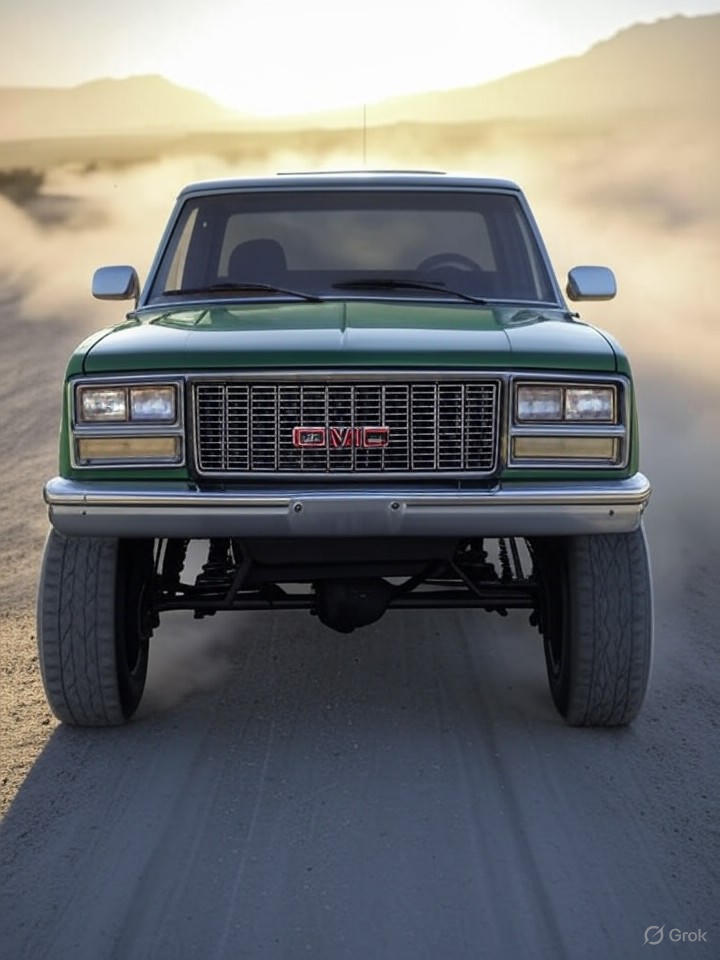
1992 GMC Rally Wagon 3500 Van/Minivan

1992 GMC

Rally Wagon 3500Van/Minivan

5.7L V8 TBI · Van/Minivan

The 1992 GMC Rally Wagon 3500 is a full-size, body-on-frame passenger van built on GM's G-Series platform — the same bones as the Chevy G30/G-Van. By 1992 this platform had been in production for decades, making it one of the most mechanically familiar and parts-friendly vehicles ever sold in the United States. The 3500 designation means heavy-duty half-ton-plus rated chassis, capable of carrying up to 15 passengers or serving as a conversion base. These vans earned a loyal following among churches, campgrounds, small businesses, and families who needed maximum seating. The mechanicals are simple carbureted (or TBI-injected) V8 iron, backed by a 4-speed automatic — straightforward enough that a competent home mechanic can handle most repairs. Parts availability is excellent and will remain so for the foreseeable future. At 30+ years old, any surviving Rally Wagon 3500 is very much a used-vehicle purchase that demands a thorough pre-buy inspection. Rust, deferred maintenance, and high-mileage drivetrain wear are the primary concerns — not obscure electronics.

Reliability
3/5
Verified data
Engine
5.7L V8 TBI
Drivetrain
RWD
Fuel
Gasoline
MPG
11 city / 15 hwy / 13 combined
Seats
15
Doors
4
Body
Van
MSRP
$20,500

Overview

AI-curated

The 1992 GMC Rally Wagon 3500 is a full-size, body-on-frame passenger van built on GM's G-Series platform — the same bones as the Chevy G30/G-Van. By 1992 this platform had been in production for decades, making it one of the most mechanically familiar and parts-friendly vehicles ever sold in the United States. The 3500 designation means heavy-duty half-ton-plus rated chassis, capable of carrying up to 15 passengers or serving as a conversion base. These vans earned a loyal following among churches, campgrounds, small businesses, and families who needed maximum seating. The mechanicals are simple carbureted (or TBI-injected) V8 iron, backed by a 4-speed automatic — straightforward enough that a competent home mechanic can handle most repairs. Parts availability is excellent and will remain so for the foreseeable future. At 30+ years old, any surviving Rally Wagon 3500 is very much a used-vehicle purchase that demands a thorough pre-buy inspection. Rust, deferred maintenance, and high-mileage drivetrain wear are the primary concerns — not obscure electronics.

Known for
  • Bulletproof 5.7L TBI V8 with massive parts availability
  • Rugged G-Series body-on-frame chassis that takes a beating
  • Cavernous passenger and cargo capacity
  • Simple, mechanic-friendly drivetrain with no exotic electronics
Best for
  • Church groups or shuttle operators needing 12–15 passenger capacity
  • DIY mechanics who want an easy-to-work-on classic van
  • Overlanding or camper van conversions
  • Buyers on tight budgets who need maximum utility
Watch for
  • Severe floor pan and rocker panel rust, especially in Midwest salt-belt examples
  • Worn or failed TBI fuel injectors causing hard starts and rough idle
  • Rear axle seal leaks contaminating brake shoes
  • Steering gear box slop — common on high-mileage G-Series vans
  • Aged rubber: all hoses, belts, and brake lines should be considered suspect at this age

Common issues by mileage

6 known

Floor pan and rocker panel rust

high
Typically appears
Any — age-driven, not mileage-driven
Estimated repair
$800 – $4,500

TBI fuel injector wear / fuel pressure regulator failure

high
Typically appears
80k+ mi
Estimated repair
$150 – $450

Rear axle seal leak (Dana 60 / 14-bolt rear)

high
Typically appears
80k+ mi
Estimated repair
$120 – $350

Steering gear box wear / excessive play

medium
Typically appears
100k+ mi
Estimated repair
$300 – $700

4L60 transmission slipping or harsh shifts

medium
Typically appears
100k–150k mi
Estimated repair
$800 – $2,200

Brake line corrosion / hydraulic failure

high
Typically appears
Any — age-driven on salt-belt vehicles
Estimated repair
$300 – $1,200

Maintenance schedule

  1. 1
    Every 3,000–4,000 miles given vehicle age and TBI engine design Engine oil and filter change

    Older TBI engines benefit from more frequent changes; sludge buildup accelerates wear on lifters and rocker arms.

  2. 2
    Every 2 years or 30,000 miles; inspect all hoses annually Coolant flush and hose inspection

    Rubber hoses on a 30-year-old vehicle harden and crack without warning. A burst hose in a Wisconsin winter is a tow call.

  3. 3
    Every 30,000 miles Transmission fluid and filter service

    The 4L60 is durable but sensitive to dirty fluid. Neglected fluid is the number-one cause of early failure.

  4. 4
    Annually — every spring after salt season Brake line and wheel cylinder inspection

    Steel brake lines on salt-belt vans corrode from the outside in. A pinhole leak can cause sudden brake failure.

  5. 5
    Every 40,000 miles or if gear oil smell is detected Rear axle fluid change and seal inspection

    Leaking rear seals push gear oil onto drum brake shoes, dramatically reducing braking effectiveness.

  6. 6
    Every 30,000 miles Distributor cap, rotor, spark plugs, and wires

    The TBI V8 depends on a healthy ignition system for reliable cold starts. Old wires cause misfires in sub-zero temps.

  7. 7
    Every 15,000–20,000 miles Fuel filter replacement

    A clogged fuel filter starves the TBI injectors and stresses the in-tank pump, which is expensive to replace.

  8. 8
    Every fall before first road salt Undercarriage rust inhibitor / fluid film application

    At 30+ years old, remaining underbody metal deserves protection from further salt attack. This is the single best dollar spent on a Midwest van.

Always defer to the manufacturer's service manual for warranty-mandated intervals.

Cost of ownership

Annual maintenance
$600 – $2,000
Fuel
Expect roughly $3,000–$4,500/year at typical Midwest prices assuming 12,000 miles annually at 13 MPG combined. This is one of the thirstiest vehicles in the segment.
Insurance
Typically low — agreed-value or stated-value classic/commercial policies are common. Expect $600–$1,200/year depending on use (personal vs. livery).

Day-to-day mechanical costs are low when things are working — parts are cheap and widely available. The wildcard is age-related failures: a full brake line replacement, a transmission rebuild, or significant rust repair can each run $1,000–$2,500 in a single event. Budget a contingency fund, not just routine maintenance money.

Seasonal care

Lake Geneva, WI
Winter
  • Test and replace the battery if it's more than 3 years old — cold cranking a 5.7L V8 at -10°F with a weak battery is a reliable way to end up stranded.
  • Flush and refill the cooling system with fresh 50/50 antifreeze rated to at least -34°F; check the freeze protection every fall.
  • Replace wiper blades with winter-rated blades and keep washer fluid topped with a -20°F or colder rated solution — road salt spray is constant.
  • Inspect all rubber brake hoses and steel lines before winter; salt attack is worst during the cold months and a line can let go without warning.
  • Apply fluid film or comparable rust inhibitor to the undercarriage, frame rails, and wheel wells before the first salt event of the season.
  • Carry a cold-start kit in the van: jumper cables or a jump pack, an ice scraper, and a small shovel — the 3500's size means it can high-center in unplowed parking lots.
Summer
  • Inspect the A/C system (R-12 refrigerant era — verify it has been converted to R-134a or budget for conversion before summer); a full van with no A/C in July is miserable.
  • Check tire pressure monthly — heat causes pressure to climb and overloaded G-Series vans are sensitive to underinflation-related blowouts.
  • Inspect the serpentine or V-belts for cracking; heat accelerates rubber degradation and a snapped belt leaves you without charging and coolant circulation.
  • Check coolant level and watch the temperature gauge closely — these vans can heat-soak in slow traffic, especially with a full passenger load.

Comparable vehicles

1992 Chevrolet
G30 Sportvan

Mechanical twin — same G-Series platform, same TBI V8, same 4L60 transmission. Parts are completely interchangeable. Only badge and minor trim differ.

No catalog match
1992 Ford
E-350 Club Wagon

Direct competitor in the full-size 15-passenger van segment. Similar payload, comparable fuel economy, different but equally parts-plentiful drivetrain.

No catalog match
1992 Dodge
Ram B350 Wagon

Third major player in the era's full-size passenger van market. Same use case and price tier, though Dodge's parts network is slightly thinner than GM's for this generation.

No catalog match
1995 GMC
Savana 3500

The Savana replaced the Rally Wagon in 1996 and shares much of the same DNA, but with modern OBD-II diagnostics and improved safety. A viable upgrade if you want more van with fewer age concerns.

No catalog match

If you're shopping for one

Red flags
  • Any sign of floor pan perforation or frame rust-through — structural repair on a 30-year-old van rarely pencils out.
  • Evidence of brake line repairs with compression fittings or rubber patches — reject immediately on safety grounds.
  • Transmission that slips, bangs into gear, or hesitates — rebuild costs often exceed the van's market value.
  • A/C still on R-12 refrigerant with no conversion — R-12 is expensive and increasingly hard to source; budget the conversion cost into your offer.
  • Unknown or clearly fabricated service history — on a vehicle this age, no records means assume everything deferred.
  • Smoke from the exhaust under load — blue smoke means oil consumption, white smoke may indicate head gasket issues on a high-mileage example.
What to inspect
  • Floor pans front to rear — poke with a screwdriver in the corners and under the driver's seat; soft or flaking metal is a deal-breaker.
  • Frame rails and crossmembers for scale rust or repairs — get under the van with a flashlight.
  • All brake lines, especially the rear section that runs along the frame; look for swelling, corrosion bubbling, or prior tape/patch repairs.
  • Rear axle and differential housing for gear oil seepage onto the brake drums.
  • Transmission fluid condition — should be pink/red and not smell burnt; dark brown or black fluid signals neglect.
  • Cooling system hoses — squeeze every hose; any that feel hard, spongy, or show exterior cracking need immediate replacement.
  • Steering wheel play — more than 2 inches of free play at the wheel rim indicates a worn steering gear box.
  • Fuel delivery — a rough idle or hard hot-start points to weak TBI injectors or a failing fuel pressure regulator.
AI profile generated 4 days ago · claude-sonnet-4-6 · v2.