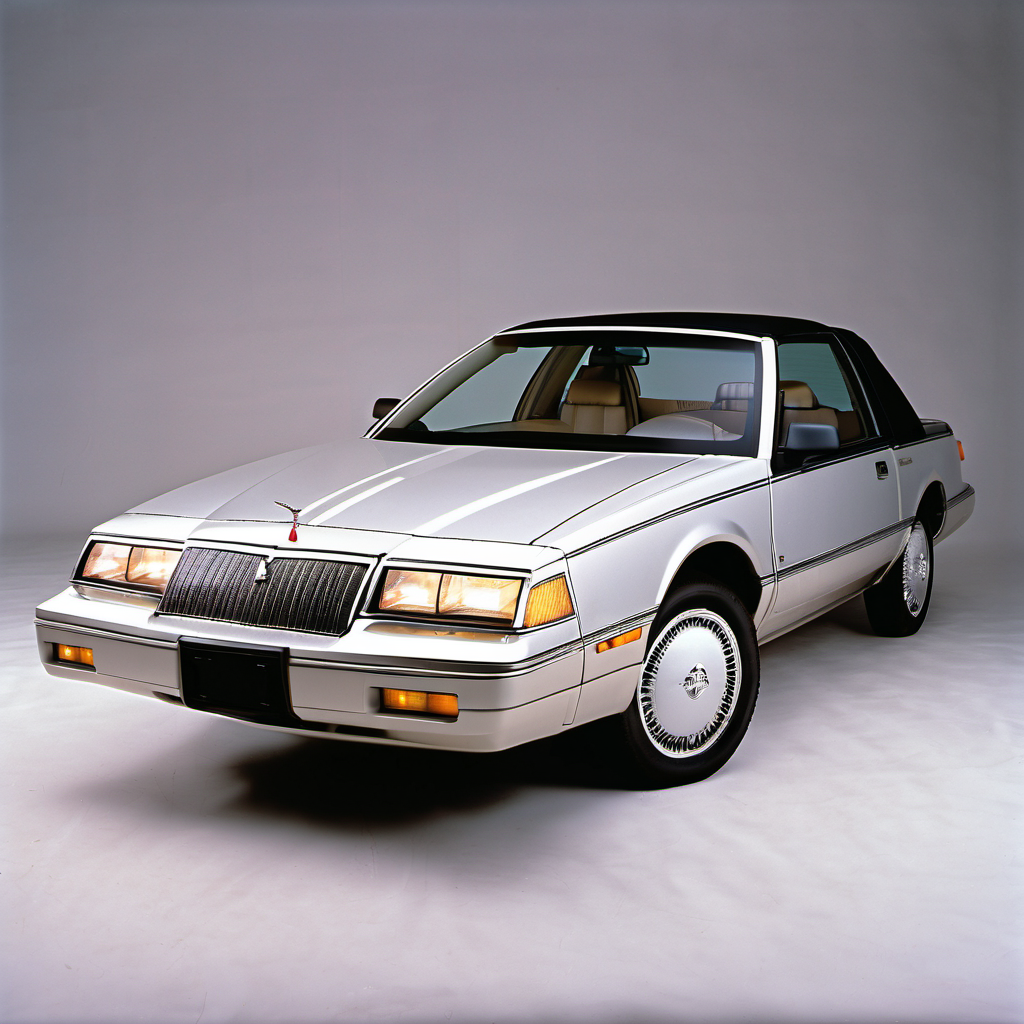
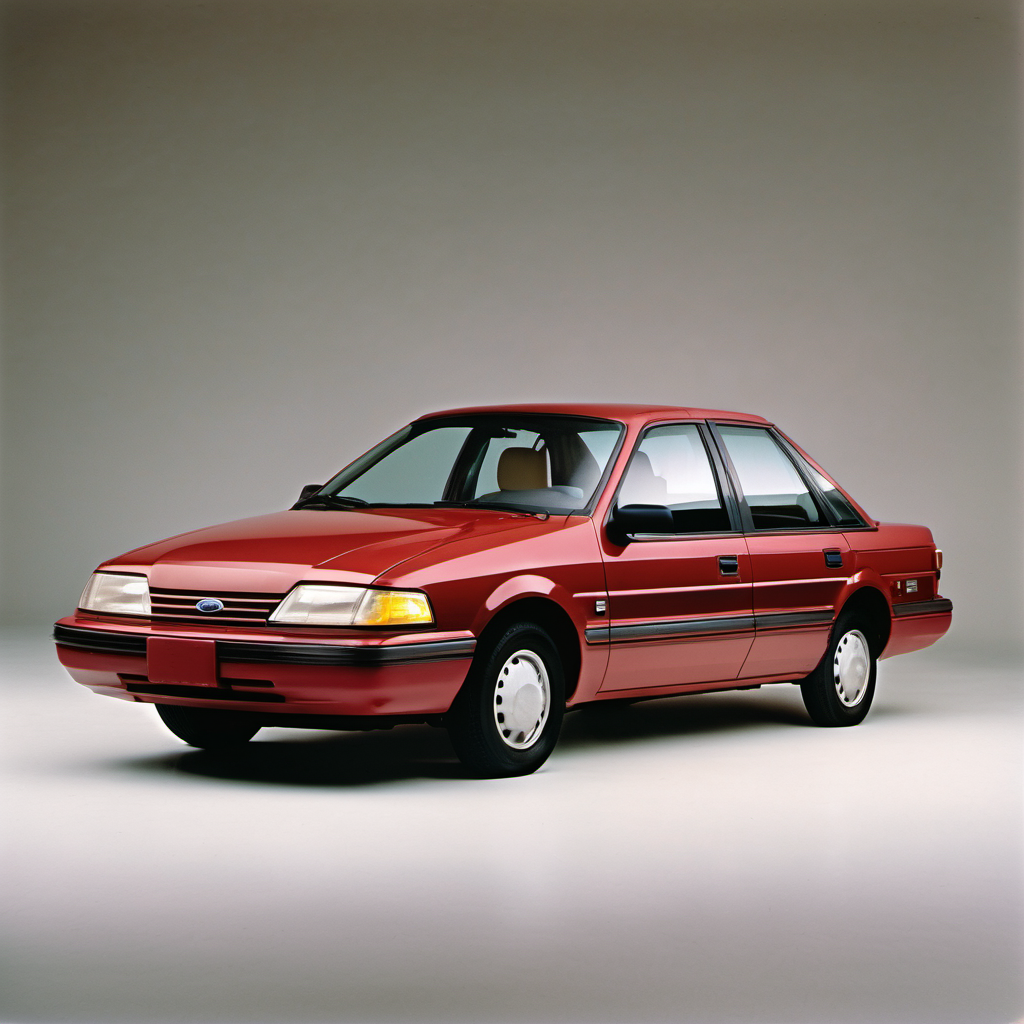
1992 Chrysler LeBaron Sedan

1992 Chrysler

LeBaronSedan

Sedan

The 1992 Chrysler LeBaron Sedan is a front-wheel-drive compact car built on Chrysler's K-car platform, representing the last generation of a nameplate that ran from 1977 through 1995. By 1992 the LeBaron had settled into a comfortable but unremarkable role as an affordable American family sedan, offering a choice of naturally aspirated or turbocharged four-cylinder power. This particular car carries the turbocharged 2.5L four, which adds some spirited performance but also additional complexity for a 30-plus-year-old vehicle. The LeBaron was never a performance or luxury benchmark, but it sold well because it was practical, relatively roomy for its size, and easy to repair. Parts availability has declined significantly as the model recedes further into classic territory — expect to hunt for some components. Rust is the single biggest threat to any survivor at this age, especially in Wisconsin salt-belt conditions. Owning a '92 LeBaron today is a hobby as much as a transportation choice. Running examples can still be found at low cost, but budget realistically for aging rubber, cooling system components, and the quirks of a turbocharged Chrysler engine that hasn't always been properly maintained.

Reliability
2/5
Verified data
Specs shown for LeBaron Convertible — the most common configuration. Other trims may vary in engine, drivetrain, or fuel economy. Sign in to see your vehicle's exact specs.
Engine
[object Object]
Drivetrain
FWD
Fuel
Premium gasoline
MPG
16 city / 22 hwy / 18 combined
Seats
Doors
Body
Subcompact Cars

Overview

AI-curated

The 1992 Chrysler LeBaron Sedan is a front-wheel-drive compact car built on Chrysler's K-car platform, representing the last generation of a nameplate that ran from 1977 through 1995. By 1992 the LeBaron had settled into a comfortable but unremarkable role as an affordable American family sedan, offering a choice of naturally aspirated or turbocharged four-cylinder power. This particular car carries the turbocharged 2.5L four, which adds some spirited performance but also additional complexity for a 30-plus-year-old vehicle. The LeBaron was never a performance or luxury benchmark, but it sold well because it was practical, relatively roomy for its size, and easy to repair. Parts availability has declined significantly as the model recedes further into classic territory — expect to hunt for some components. Rust is the single biggest threat to any survivor at this age, especially in Wisconsin salt-belt conditions. Owning a '92 LeBaron today is a hobby as much as a transportation choice. Running examples can still be found at low cost, but budget realistically for aging rubber, cooling system components, and the quirks of a turbocharged Chrysler engine that hasn't always been properly maintained.

Known for
  • K-car platform longevity — simple, proven architecture
  • Turbocharged 2.5L four with genuine punch for its era
  • Low original purchase price and historically affordable repairs
  • Decent interior room relative to exterior footprint
  • Available as sedan, convertible, or coupe in the same generation
Best for
  • Classic/collector on a modest budget
  • DIY mechanics comfortable with early-OBD or carbureted-era Chrysler systems
  • Drivers who want a unique daily driver with affordable insurance
  • Parts-sourcing hobbyists who enjoy the hunt
Watch for
  • Severe underbody and rocker panel rust common in Midwest/salt-belt cars
  • Turbo system neglect — oil feed lines, wastegate, intercooler couplers
  • Aging coolant hoses and radiator plastic end tanks
  • Electrical gremlins from 30-year-old wiring and connectors
  • Parts scarcity increasing year over year

Common issues by mileage

6 known

Coolant hose and radiator end-tank failure

high
Typically appears
Any mileage at 30+ years
Estimated repair
$150 – $550

Turbo oil feed line coking / turbo bearing wear

high
Typically appears
60,000+ mi or any with infrequent oil changes
Estimated repair
$300 – $1,200

Oxygen sensor failure / degraded sensor heater circuit

high
Typically appears
Any mileage at this age
Estimated repair
$80 – $250

Underbody and rocker panel rust-through (salt belt)

high
Typically appears
Any mileage on Wisconsin/Midwest cars
Estimated repair
$400 – $3,000

Aging wiring harness / connector corrosion causing intermittent faults

medium
Typically appears
Any mileage at 30+ years
Estimated repair
$100 – $600

Power steering rack seals leaking

medium
Typically appears
80,000+ mi
Estimated repair
$200 – $600

Maintenance schedule

  1. 1
    Every 3,500 miles or 6 months Engine oil and filter change — full synthetic 5W-30

    The turbocharger bearings depend entirely on clean oil. Conventional 'every 5k' intervals are too long for a turbo this age. Full synthetic flows better on cold Wisconsin starts and resists coking in the hot turbo center section.

  2. 2
    Every 2 years; inspect hoses annually Full coolant flush and hose inspection

    Plastic radiator end tanks and 30-year-old hoses can fail without warning. Fresh coolant maintains proper pH to prevent internal corrosion in the aluminum components.

  3. 3
    Every 30,000 miles Spark plugs and ignition wires

    Turbocharged engines are harder on plugs than naturally aspirated ones. Worn plugs cause misfires that can damage the catalytic converter and reduce turbo efficiency.

  4. 4
    Every 60,000 miles or 5 years, whichever comes first Timing belt inspection and replacement

    The 2.5L is an interference engine — a snapped timing belt causes catastrophic valve and piston damage. At this age, replace it regardless of mileage if history is unknown.

  5. 5
    Every 30,000 miles Fuel filter replacement

    Old fuel tanks accumulate sediment. A clogged filter starves the turbo engine under boost and can mask itself as a fuel pump problem.

  6. 6
    Every fall and spring; wash monthly during winter Underbody wash and undercoating inspection

    Lake Geneva roads are heavily salted. Salt packs into seams on K-platform cars and causes rapid structural rust. Regular washing and a fresh undercoating layer are the single best preservation investment.

  7. 7
    Every 2 years Brake fluid flush

    Brake fluid absorbs moisture over time, lowering its boiling point. On a 30-year-old car the fluid has almost certainly never been changed and should be treated as a safety item.

  8. 8
    Every fall before winter Battery load test and terminal cleaning

    Cold cranking a turbo four at sub-zero temps demands a strong battery. A battery that tests marginal in October will fail in January. Clean terminals prevent voltage drop that can trigger false electrical codes.

Always defer to the manufacturer's service manual for warranty-mandated intervals.

Cost of ownership

Annual maintenance
$600 – $2,000
Fuel
Expect 18 MPG combined in real-world mixed driving. At current Midwest gas prices, budget roughly $1,800–$2,400/year for 15,000 miles. The turbo engine calls for premium fuel as recommended — using regular long-term risks detonation.
Insurance
Liability-only coverage on a vehicle this age is typically $400–$800/year in the Lake Geneva area. Agreed-value classic car insurance may be worth exploring if the car is well-maintained, and can sometimes be cheaper than standard policies.

A '92 LeBaron Turbo can be genuinely affordable to own if the major one-time repairs (timing belt, cooling system, undercoating) are done upfront. Annual routine maintenance runs $600–$900 on a healthy car, but budget $1,500–$2,000/year until you know the full service history. Surprise costs — turbo, wiring, rust — can easily top $1,000 in a single visit. Parts are increasingly sourced from online salvage networks rather than local stores.
Seasonal care

Lake Geneva, WI
Winter
  • Load-test the battery every October — the turbocharged 2.5L cranks slowly in sub-zero temps and a marginal battery won't make it through a Wisconsin January
  • Switch to full synthetic 5W-30 if not already running it; conventional oil thickens dramatically below 0°F and starves the turbo on startup
  • Fill the washer fluid reservoir with a -25°F or colder rated fluid; lines and the pump on this era of Chrysler are prone to cracking when fluid freezes
  • Inspect and replace wiper blades before first snowfall — original-style blades clog with ice and streak; consider winter-specific blades
  • Spray all door seals with silicone lubricant to prevent freezing shut — the LeBaron's seals are old and brittle and may already be allowing drafts
  • Rinse the underbody and wheel wells at a touchless car wash at least every two to three weeks during salting season to protect the already-vulnerable K-platform floor pans
Summer
  • Check coolant level and hose condition before hot weather — the aging plastic end tanks on the radiator can crack under summer heat cycling and cause rapid overheating
  • Inspect the turbo intercooler couplers for cracks; heat soak from summer driving accelerates rubber degradation and a split coupler will cause boost loss and rough running
  • Check tire pressure monthly — tires lose or gain approximately 1 PSI for every 10°F change, so pressures set in winter will be over-inflated on a hot July day
  • Have the A/C system inspected if it hasn't cooled well — R-12 refrigerant (original spec for this car) is expensive and scarce; confirm whether the system has been converted to R-134a
  • Inspect the serpentine belt for cracking and glazing; summer heat accelerates belt aging and a snapped belt stops the alternator, power steering, and cooling fan simultaneously

Comparable vehicles

If you're shopping for one

Red flags
  • Visible rust bubbles on rockers, door bottoms, or trunk lid — the hidden structural rust will be far worse
  • Any sign of overheating history (stained coolant reservoir, warped plastic, discolored hoses near the thermostat housing)
  • Oil that looks black and gritty at a 3,000-mile interval — suggests the turbo has been run hard on neglected oil
  • Smoke from the exhaust on startup or under boost — can indicate worn turbo seals pushing oil into the intake
  • A check engine light that was cleared right before sale — ask for live scan data or pull codes yourself before purchase
  • Evidence of amateur wiring repairs — spliced harnesses and non-stock connectors can hide hours of future diagnostic work
What to inspect
  • Crawl under the car and probe the rocker panels, floor pans, and frame rails with a screwdriver — rust perforation is a deal-breaker on any K-platform car this age
  • Pull the oil filler cap and look for milky residue (coolant in oil) or thick sludge — both indicate serious neglect that likely includes turbo damage
  • Ask for timing belt replacement records; if unknown, treat replacement as an immediate required expense before driving the car
  • Start from cold and listen for turbo whine or shaft play — a healthy turbo should spool smoothly and quietly; rattling or excessive noise means a rebuild or replacement is imminent
  • Check all coolant hoses by squeezing — they should feel firm and pliable, not rock-hard, mushy, or cracked at the ends
  • Test the A/C and confirm whether it's been converted from R-12 to R-134a; if it's still R-12 and not cooling, budget $400–$800 minimum for a proper conversion
  • Inspect the wiring harness under the hood for brittle insulation, tape patches, or signs of rodent damage — common on any stored or low-use 30-year-old vehicle
AI profile generated 4 days ago · claude-sonnet-4-6 · v2.