1984 Dodge Omni GLH

1984 Dodge

OmniGLH

2.2 L I4 · GLH

The 1984 Dodge Omni GLH — 'Goes Like Hell,' a name Carroll Shelby helped make famous — is a stripped-down, front-wheel-drive subcompact hatchback that Dodge transformed from economy car into a genuine hot hatch. Based on the humble Omni platform shared with the Plymouth Horizon, the GLH packed a turbocharged 2.2L four-cylinder and a sport-tuned suspension that made it a legitimate performance bargain in its day. It was a forerunner to the more famous Shelby GLHS and helped establish Dodge's performance credibility in the malaise-era-to-performance-revival transition. At 40 years old, every surviving GLH is now a collector's item and a high-maintenance proposition. Parts availability ranges from difficult to impossible for some items — the factory turbo system, vacuum-operated components, and early Chrysler EFI/carb setups are aging hard. Expect to hunt through specialty suppliers and salvage yards. This is not a daily driver for most people. It rewards dedicated enthusiasts who enjoy wrenching, have access to a knowledgeable Chrysler K-car/L-body specialist, and understand they're maintaining a piece of 1980s American performance history. Budget accordingly.

Reliability
2/5
Verified data
Specs shown for Omni — the most common configuration. Other trims may vary in engine, drivetrain, or fuel economy. Sign in to see your vehicle's exact specs.
Engine
[object Object]
Drivetrain
Fuel
Gasoline
MPG
26 city / 35 hwy / 30 combined
Seats
Doors
Body
Compact Cars

Overview

AI-curated

The 1984 Dodge Omni GLH — 'Goes Like Hell,' a name Carroll Shelby helped make famous — is a stripped-down, front-wheel-drive subcompact hatchback that Dodge transformed from economy car into a genuine hot hatch. Based on the humble Omni platform shared with the Plymouth Horizon, the GLH packed a turbocharged 2.2L four-cylinder and a sport-tuned suspension that made it a legitimate performance bargain in its day. It was a forerunner to the more famous Shelby GLHS and helped establish Dodge's performance credibility in the malaise-era-to-performance-revival transition. At 40 years old, every surviving GLH is now a collector's item and a high-maintenance proposition. Parts availability ranges from difficult to impossible for some items — the factory turbo system, vacuum-operated components, and early Chrysler EFI/carb setups are aging hard. Expect to hunt through specialty suppliers and salvage yards. This is not a daily driver for most people. It rewards dedicated enthusiasts who enjoy wrenching, have access to a knowledgeable Chrysler K-car/L-body specialist, and understand they're maintaining a piece of 1980s American performance history. Budget accordingly.

Known for
  • Carroll Shelby collaboration and 'Goes Like Hell' performance identity
  • Turbocharged 2.2L four-cylinder punching well above its displacement
  • Lightweight front-wheel-drive handling that surprised sports car owners
  • Foundation for the rarer and more powerful Shelby GLHS
  • One of the first affordable American hot hatches
Best for
  • Dedicated collectors and Mopar enthusiasts
  • Drivers who enjoy hands-on maintenance and sourcing vintage parts
  • Show car and weekend-driver use rather than daily commuting
  • Enthusiasts who appreciate 1980s American performance history
Watch for
  • Extreme parts scarcity — many factory components are NLA (no longer available)
  • 40 years of rust, especially in salt-belt states like Wisconsin
  • Brittle or deteriorated vacuum lines throughout the turbo and emissions systems
  • Aging wiring harnesses prone to cracking insulation and shorts
  • Turbocharger oil feed and return lines that may have never been serviced

Common issues by mileage

6 known

Turbocharger failure / oil coking

high
Typically appears
Any mileage on a 40-year-old car
Estimated repair
$400 – $1,500

Vacuum line deterioration throughout turbo and emissions systems

high
Typically appears
All mileages
Estimated repair
$150 – $600

Wiring harness cracking, shorts, and connector corrosion

high
Typically appears
All mileages
Estimated repair
$200 – $1,200

Rust in floor pans, rocker panels, and rear wheel wells (salt-belt critical)

high
Typically appears
All mileages — age-related
Estimated repair
$500 – $4,000

Cooling system failure — hoses, radiator, and water pump at end of service life

medium
Typically appears
All mileages
Estimated repair
$250 – $900

Carburetor / throttle body fuel delivery issues (gumming, sticking)

medium
Typically appears
All mileages — especially after storage
Estimated repair
$150 – $700

Maintenance schedule

  1. 1
    Immediately on acquisition, then inspect every 2 years Replace all vacuum lines end-to-end

    Original rubber lines are 40 years old. Cracked or collapsed lines cause boost leaks, rough idle, and emissions failures. On a turbocharged car this is a safety and performance issue, not just routine maintenance.

  2. 2
    Immediately on acquisition; re-inspect every 2 years Turbocharger oil feed and return line inspection and replacement

    Coked or blocked oil lines will destroy the turbo bearing within minutes of running. If service history is unknown, replace these lines before the first extended drive.

  3. 3
    Immediately on acquisition, then every 2–3 years Full cooling system service (hoses, thermostat, coolant, radiator flush)

    Original rubber hoses are failure-prone. An overheating event on a turbo engine can cause head gasket failure or worse.

  4. 4
    Every 2 years or upon acquisition Brake fluid flush and caliper/wheel cylinder inspection

    Brake fluid absorbs moisture over time. Seals in 40-year-old calipers and wheel cylinders are prone to weeping or seizing, especially after a Wisconsin winter.

  5. 5
    Immediately if car has sat for over 6 months Fuel system inspection — tank, lines, pump, and carburetor/TBI

    Old fuel varnishes and clogs passages. Rubber fuel lines at this age can crack internally and send debris downstream or leak externally — a fire risk.

  6. 6
    Annually Wiring harness audit — inspect insulation, grounds, and connectors

    40-year-old plastic insulation becomes brittle and can crack. Bad grounds cause phantom electrical issues. Corroded connectors at the ECU, sensors, and fuse box are common.

  7. 7
    Every 3,000 miles or every season if driven infrequently Oil and filter change using correct viscosity for the turbo engine

    Turbos run extremely hot. Fresh, clean oil is the single most important thing you can do to keep the turbocharger alive. Do not use extended-interval oil on a car this old.

  8. 8
    Every fall before winter storage Undercarriage rust inspection and treatment

    Wisconsin road salt accelerates rust dramatically. Floor pans, frame rails, rocker panels, and fuel/brake lines should be inspected and treated annually on any salt-belt survivor.

Always defer to the manufacturer's service manual for warranty-mandated intervals.

Cost of ownership

Annual maintenance
$800 – $3,500
Fuel
Premium fuel recommended for the turbocharged engine. At roughly 27 MPG combined, expect $1,200–$1,800/year for moderate driving — though most owners drive these sparingly.
Insurance
Collector/classic car insurance is typically the right choice here — often $300–$700/year for agreed-value coverage with mileage limits. Standard daily-driver policies will overcharge and under-protect a vehicle this age.

Owning a 1984 GLH is more like maintaining a vintage motorcycle than driving a modern economy car. Annual costs depend almost entirely on what was done before you owned it. A freshly restored example might cost $800–$1,500/year in normal upkeep. A neglected car being brought back could easily absorb $3,000–$8,000 in the first two years on parts and labor alone. Parts sourcing is a genuine challenge — budget time as well as money.

Seasonal care

Lake Geneva, WI
Winter
  • Store the car if at all possible — Wisconsin road salt is devastating to an already-aging unibody. This car was not built with modern rustproofing.
  • If driving in winter, rinse the undercarriage thoroughly after every salt exposure. Pay special attention to brake lines and fuel lines, which may already be compromised.
  • Use a battery tender (trickle charger) during storage — the original-spec battery and charging system do not like deep discharge cycles in sub-zero temps.
  • Switch to a lighter-viscosity oil (e.g., 5W-30) for cold-weather starts to ensure the turbocharger gets oil flow immediately on startup.
  • Inspect and replace wiper blades before the first freeze. Fill the washer reservoir with rated-to-minus-20°F fluid — standard fluid will freeze in the lines overnight.
  • Warm the engine at idle for 60–90 seconds before driving in sub-zero temps to allow oil to circulate to the turbo before applying boost.
Summer
  • Check coolant level and condition before summer driving — turbo engines run hot and a marginal cooling system that survived spring can fail quickly in July heat.
  • Inspect all rubber components (hoses, belts, vacuum lines) for cracking and softening — heat accelerates deterioration in 40-year-old rubber.
  • Check tire pressure every 2 weeks in summer; air expands in heat and original-spec tires on a sport-tuned suspension affect handling significantly when over-inflated.
  • After highway runs, let the engine idle 2–3 minutes before shutting off to allow the turbo to cool down — heat soak into the turbo bearing when shut off hot shortens turbo life.
  • Inspect the A/C system if equipped — R-12 refrigerant is no longer available; the system may have been converted to R-134a or may simply not work. Don't pressurize an unknown system without inspection.

Comparable vehicles

1984 Volkswagen
GTI

The GTI was the original hot hatch benchmark the GLH was trying to beat — similar displacement, FWD, practical hatchback body, and driver-focused tuning. Direct contemporary rival.

No catalog match
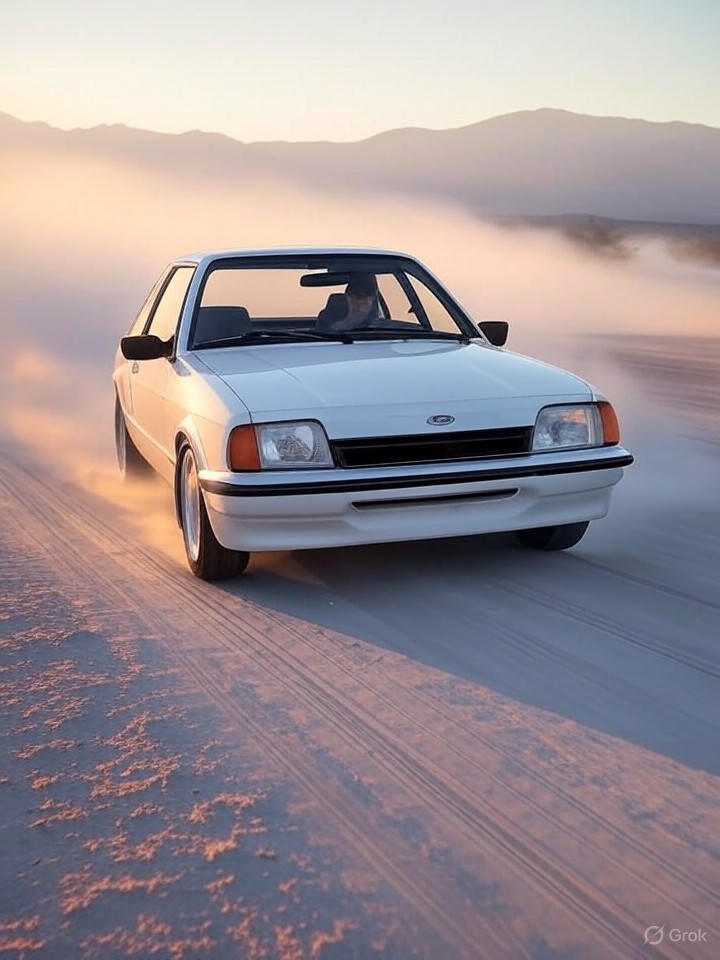
1984 Ford Escort GT
1984 Ford
Escort GT

Ford's answer to the budget sport hatch in the same era — FWD, four-cylinder, similar price point and mission, though less performance-focused than the GLH.
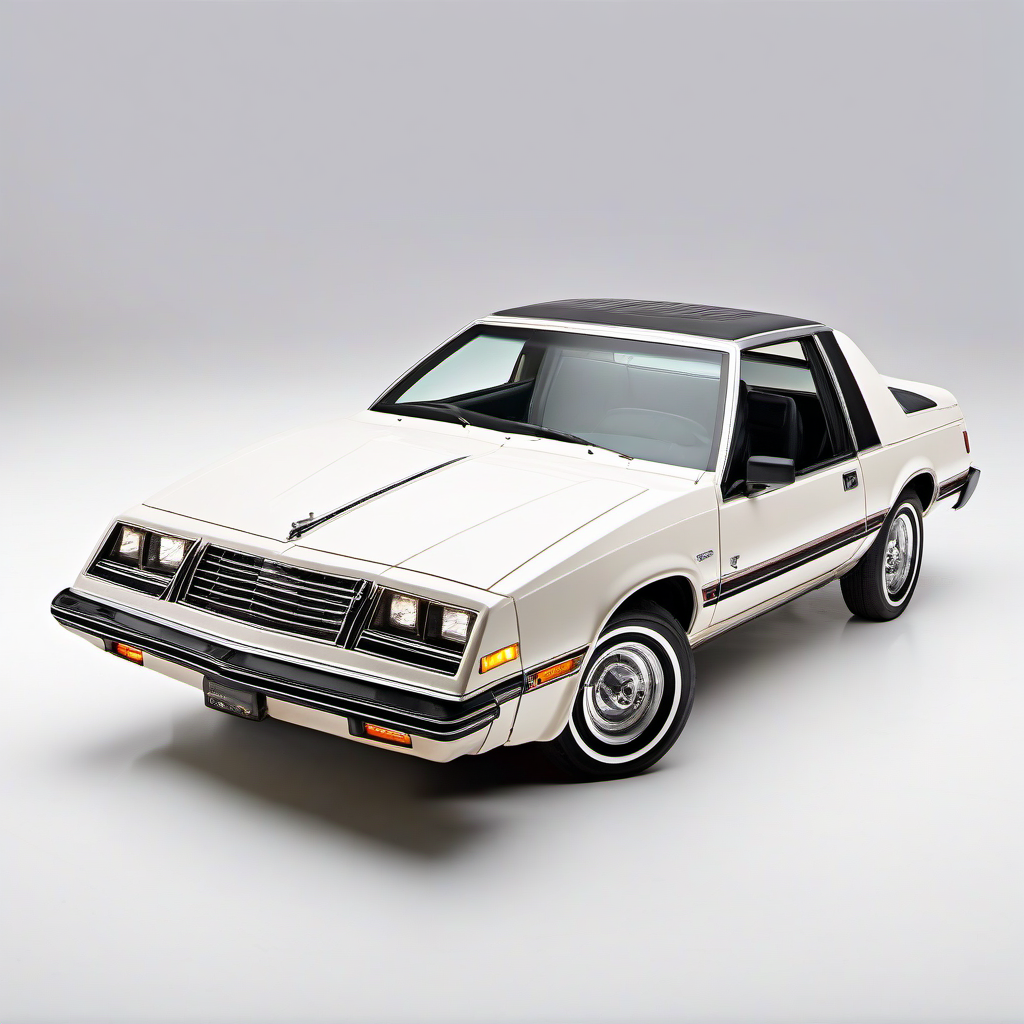
1984 Plymouth Turismo 2.2
1984 Plymouth
Turismo 2.2

Shares the same Chrysler L-body platform and turbocharged 2.2L engine as the GLH. Mechanically near-identical, making it a useful parts source and direct comparison point.

1985 Honda
CRX Si

Another lightweight FWD sport hatch from the same period with a similar enthusiast following today. More reliable long-term but less distinctly American in character.

No catalog match

If you're shopping for one

Red flags
  • Any signs of water intrusion in the interior — compromised rust means the floor may not be structurally sound
  • Smoke on startup or at idle from the turbo area — indicates failed turbo seals or bearing damage
  • A seller who cannot describe what was done to the car or cannot produce any documentation — 40-year-old cars with no paper trail are usually problem cars
  • Fresh undercoating sprayed recently — often used to hide severe rust from inspection
  • Non-original engine, transmission, or turbo system without documentation — impacts both collectibility and reliability
  • Deferred rubber: if vacuum lines, belts, and hoses are visibly original, budget $1,500+ for immediate remediation before the car is safe to drive hard
What to inspect
  • Floor pans, rocker panels, rear wheel arches, and spare tire well for rust-through — probe with a screwdriver, not just a visual check
  • Turbo shaft play — grab the impeller and check for radial and axial play; any slop means the turbo is near end of life
  • All vacuum lines — squeeze them; if they crack or feel rock-hard, the entire system needs replacement before driving
  • Wiring harness at the ECU, firewall pass-throughs, and under the hood — look for melted, taped, or spliced wires indicating prior electrical problems
  • Fuel lines under the car — original rubber lines at 40 years are a fire hazard and should be replaced regardless
  • Service records and parts provenance — a GLH with documented restoration is worth significantly more and far less risk than an unknown survivor
AI profile generated 4 days ago · claude-sonnet-4-6 · v2.