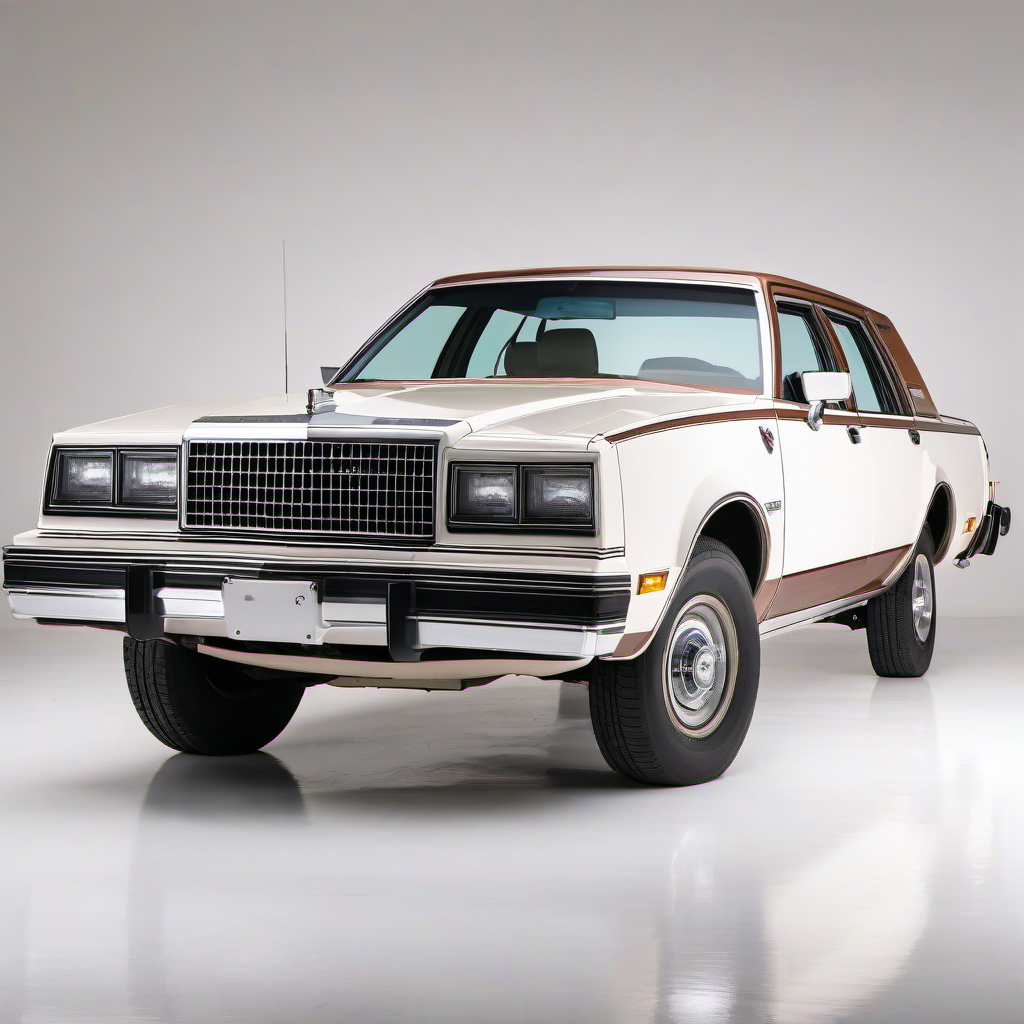
1984 Dodge Diplomat Base

1984 Dodge

DiplomatBase

3.7 L I6 · Base

The 1984 Dodge Diplomat is a full-size, rear-wheel-drive sedan built on Chrysler's M-body platform — the same bones shared with the Plymouth Gran Fury and the iconic Dodge Monaco. By 1984 the Diplomat was primarily sold as a fleet vehicle for police departments and taxi companies, though a civilian trim remained available. It's a straightforward, heavy-duty American sedan with a carbureted V8, a simple 3-speed or 4-speed automatic, and body-on-frame construction that makes most repairs approachable by any competent independent shop. The Diplomat's engineering is deliberately old-school: no fuel injection, no computer-managed ignition on base trims, and virtually no electronic complexity. Parts availability is strong through the Mopar and aftermarket channels because this platform was used by law enforcement for years. That said, at 40+ years old, every surviving example carries decades of potential deferred maintenance and corrosion — especially troubling in a salt-belt state like Wisconsin. This is a collector/classic vehicle at this point. Daily drivers exist, but expect to invest in rubber, brake hydraulics, and rust remediation before trusting it on winter roads. Done right, the LA-series 318 V8 is one of the most durable small-block engines Chrysler ever built and can easily run past 200,000 miles with basic care.

Reliability
3/5
Verified data
Specs shown for Diplomat — the most common configuration. Other trims may vary in engine, drivetrain, or fuel economy. Sign in to see your vehicle's exact specs.
Engine
[object Object]
Drivetrain
Fuel
Gasoline
MPG
14 city / 18 hwy / 15 combined
Seats
Doors
Body
Midsize Cars

Overview

AI-curated

The 1984 Dodge Diplomat is a full-size, rear-wheel-drive sedan built on Chrysler's M-body platform — the same bones shared with the Plymouth Gran Fury and the iconic Dodge Monaco. By 1984 the Diplomat was primarily sold as a fleet vehicle for police departments and taxi companies, though a civilian trim remained available. It's a straightforward, heavy-duty American sedan with a carbureted V8, a simple 3-speed or 4-speed automatic, and body-on-frame construction that makes most repairs approachable by any competent independent shop. The Diplomat's engineering is deliberately old-school: no fuel injection, no computer-managed ignition on base trims, and virtually no electronic complexity. Parts availability is strong through the Mopar and aftermarket channels because this platform was used by law enforcement for years. That said, at 40+ years old, every surviving example carries decades of potential deferred maintenance and corrosion — especially troubling in a salt-belt state like Wisconsin. This is a collector/classic vehicle at this point. Daily drivers exist, but expect to invest in rubber, brake hydraulics, and rust remediation before trusting it on winter roads. Done right, the LA-series 318 V8 is one of the most durable small-block engines Chrysler ever built and can easily run past 200,000 miles with basic care.

Known for
  • Extremely durable 318 (5.2L) LA-series V8 — simple, rebuildable, long-lived
  • Police and fleet use well into the 1980s — heavy-duty suspension and cooling
  • Simple carbureted, points-free ignition — easy roadside diagnosis and repair
  • Massive trunk and roomy rear seat — genuine full-size comfort
  • Body-on-frame construction — straightforward rust repair and panel replacement
Best for
  • Classic car enthusiasts and Mopar collectors
  • Owners who want to wrench their own car without a scan tool
  • Low-mileage weekend or fair-weather use
  • Budget classic cruiser if rust is already addressed
Watch for
  • Severe frame and floor rust — this is the number one killer of M-body cars in the Midwest
  • Worn carburetor and fuel system components after decades of sitting or ethanol-blended fuel
  • Dried and cracked brake lines, hoses, and wheel cylinder seals
  • Original wiring insulation brittleness — a fire risk on any 40-year-old vehicle
  • Availability of NOS or quality reproduction body panels is shrinking

Common issues by mileage

6 known

Frame and floor pan rust

high
Typically appears
Any — age-driven
Estimated repair
$500 – $4,000

Carburetor wear, flooding, or lean stumble (Thermoquad or Carter BBD)

high
Typically appears
Any — age and ethanol-fuel driven
Estimated repair
$150 – $600

Brake system failure — hardlines, hoses, wheel cylinders, master cylinder

high
Typically appears
Any — age-driven
Estimated repair
$300 – $1,200

Cooling system deterioration — radiator, hoses, water pump, thermostat

medium
Typically appears
Any — age-driven
Estimated repair
$200 – $800

Cracked or brittle wiring harness insulation — potential short/fire hazard

medium
Typically appears
Any — age-driven
Estimated repair
$300 – $1,500

Rear leaf spring bushings and front ball joint wear

medium
Typically appears
80k+ mi
Estimated repair
$200 – $700

Maintenance schedule

  1. 1
    Every 3–5 years or at purchase Carburetor rebuild or thorough cleaning

    Modern ethanol-blended fuel degrades carburetor gaskets and deposits varnish in jets. A rebuilt or freshly cleaned carb is the single best drivability investment on this engine.

  2. 2
    At purchase and every 2 years Full brake system inspection — lines, hoses, cylinders, master

    40-year-old steel brake lines and rubber hoses are a safety emergency waiting to happen. Inspect for corrosion pitting, mushiness, and seepage before driving any distance.

  3. 3
    Every 3,000 mi or 6 months (use conventional 10W-30 or 10W-40) Engine oil and filter change

    The LA 318 predates modern detergent oil specs. Conventional oil with ZDDP additive protects the flat-tappet camshaft. Avoid full synthetic unless engine is freshly rebuilt.

  4. 4
    Every 2 years Coolant flush and inspection of all hoses and clamps

    Original or long-in-service coolant loses pH protection and attacks aluminum and cast-iron sealing surfaces. Brittle hoses are a common stranding event.

  5. 5
    Every 30,000 mi TorqueFlite transmission fluid and filter service

    The 727 TorqueFlite is nearly bulletproof when serviced. Old fluid oxidizes and degrades clutch performance. Use Dexron/Mercon or Chrysler ATF+4 as appropriate.

  6. 6
    Every spring after Wisconsin winter Underbody rust inspection and treatment

    Road salt accelerates frame rail and floor pan rust. Wire-brush, treat bare metal with rust converter, and apply undercoating annually to maximize structural life.

  7. 7
    Every 15,000–20,000 mi Ignition tune-up — plugs, cap, rotor, plug wires

    Electronic Lean Burn ignition on mid-80s Diplomats is reliable but plug wires and cap/rotor age out. Fresh ignition components improve cold-start performance critical in Wisconsin winters.

  8. 8
    At purchase and every 3 years Wiring harness inspection

    PVC insulation on 1980s wiring harnesses becomes brittle and cracks with age and heat cycling. Inspect for exposed conductors especially near the firewall and exhaust routing.

Always defer to the manufacturer's service manual for warranty-mandated intervals.

Cost of ownership

Annual maintenance
$400 – $1,500
Fuel
Expect roughly $2,000–$2,800/year at 10,000 miles based on 15 MPG combined and Midwest regular unleaded prices. Use 87 octane regular — the engine is tuned for it.
Insurance
Classic/agreed-value collector car insurance is widely available and often cheaper than standard auto insurance for limited-use vehicles. Expect $300–$700/year for stated-value collector coverage.

Day-to-day mechanical costs are low when the car is healthy — parts for the 318 and TorqueFlite are inexpensive and widely available. The real ownership cost wildcard is deferred maintenance on a 40-year-old vehicle: brake system overhaul, rust remediation, and wiring work can add $1,000–$5,000 up front when buying a neglected example. Once sorted, annual upkeep is modest.
Seasonal care

Lake Geneva, WI
Winter
  • Do NOT use this vehicle as a daily winter driver without first confirming all brake lines and floor pans are solid — road salt will accelerate existing rust aggressively.
  • Switch to a 5W-30 conventional oil with ZDDP additive if storing or driving in sub-zero temps; the 318 cold-starts slowly with thick oil.
  • Test the battery and replace if over 3 years old — cold cranking a high-compression carbureted V8 at 0°F demands a strong battery.
  • Use a fuel stabilizer (Sta-Bil or equivalent) if storing for more than 30 days; ethanol-blended fuel goes stale and varnishes the carburetor.
  • Fill the washer reservoir with -20°F or colder rated fluid; the original reservoir and lines are exposed and will freeze with summer fluid.
  • Thoroughly rinse the undercarriage after any salt-road exposure — focus on frame rails, spring perches, and brake line routing.
Summer
  • Monitor coolant temp closely — the mechanical temperature gauge is your only warning; the cooling system on a 40-year-old vehicle can fail quickly under heat load.
  • Check tire pressure monthly; old bias-ply or aging radials lose pressure faster in heat and sidewall integrity is a concern on any aged tire.
  • Inspect the carburetor heat shield and choke mechanism — heat soak causes vapor lock and hard restarts on carbureted engines in summer.
  • Check the A/C system — if equipped, R-12 refrigerant is no longer legally available new; confirm the system has been retrofitted to R-134a or budget accordingly.
  • Park in shade when possible — the plastic and rubber components throughout the interior and engine bay are already age-compromised and UV accelerates deterioration.

Comparable vehicles

1984 Chevrolet Caprice
1984 Chevrolet
Caprice

Direct competitor — same era full-size RWD fleet/civilian sedan, similar V8 powerplant, comparably simple mechanics and strong parts support

1984 Ford
LTD Crown Victoria

Same market segment, similar police/fleet heritage, Panther platform also well-supported by the classic car community

No catalog match
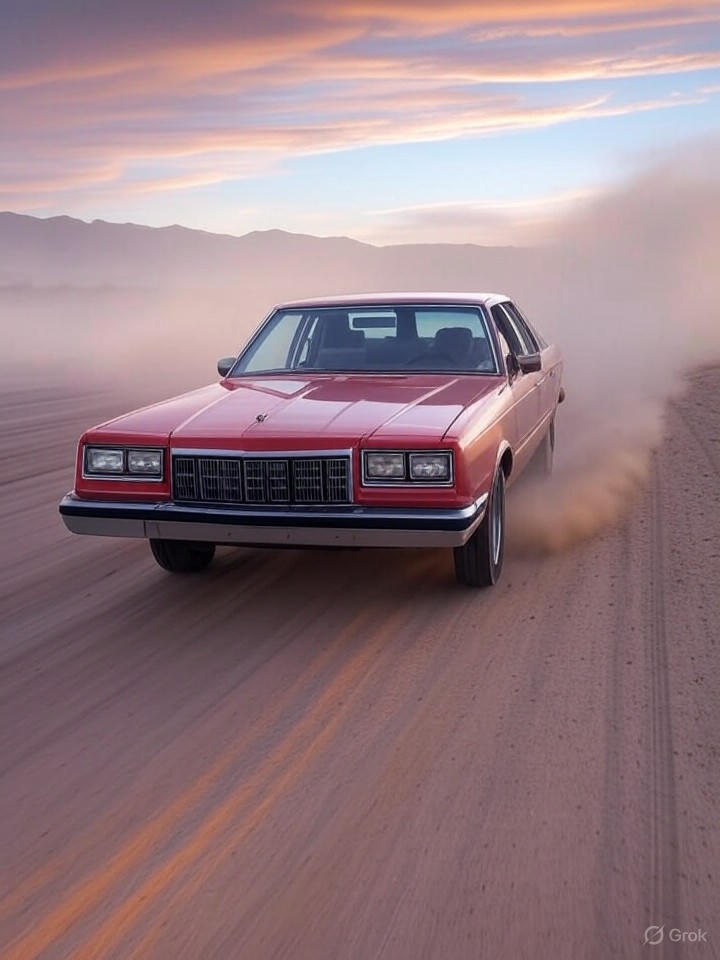
1984 Plymouth Gran Fury
1984 Plymouth
Gran Fury

Literally the same M-body platform and drivetrain as the Diplomat — badges differ, parts are nearly interchangeable

1984 Mercury
Marquis

Full-size RWD American sedan from the same era, similar simplicity, and a comparable collector and fleet legacy

No catalog match

If you're shopping for one

Red flags
  • Any visible holes in the floor pan or frame — walk away
  • Soft, spongy brake pedal or brake fade during a test drive — the system needs a complete overhaul before the car is safe
  • Evidence of garage or barn fire near the firewall — wiring fires are common on these and repairs are often incomplete
  • R-12 A/C system that has never been converted — budget $500–$900 for the retrofit or use the car without A/C
  • Mismatched paint panels without a credible accident history — may indicate prior crash damage with unknown structural repair quality
  • Overheating during a short test drive — the cooling system is compromised and the engine may already have damage
What to inspect
  • Frame rails front to rear — probe with a screwdriver; soft spots mean the car is unsafe regardless of how clean it looks
  • Floor pans under the carpet and in the trunk — rust-through is common and structural
  • All four brake corners: look for seepage at wheel cylinders, check hose condition, press the brake pedal hard for 30 seconds and watch for fade
  • Underhood wiring harness — look for cracked insulation, taped splices, or evidence of rodent damage
  • Carburetor operation — cold start choke, warm idle, snap throttle response; a stumbling carb needs a rebuild
  • Coolant condition and hose firmness — milky coolant means head gasket issues; mushy hoses mean replacement is overdue
  • TorqueFlite shift quality — it should shift firmly and cleanly; slippage or harsh banging indicates internal wear
  • Trunk and spare tire well for standing water or rust-through
AI profile generated 4 days ago · claude-sonnet-4-6 · v2.