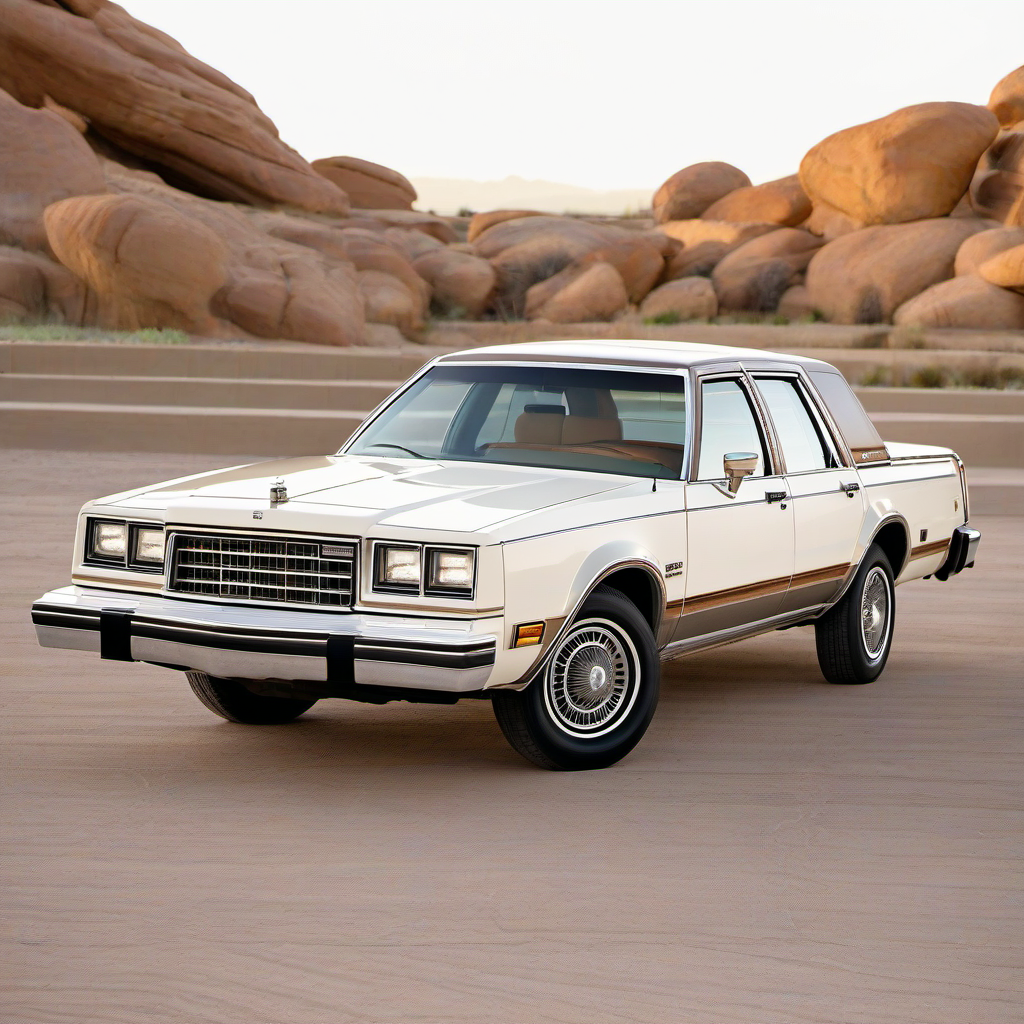
1983 Dodge Diplomat Base

1983 Dodge

DiplomatBase

3.7 L I6 · Base

The 1983 Dodge Diplomat is a full-size rear-wheel-drive sedan built on Chrysler's M-body platform, a rugged and long-lived architecture shared with the Plymouth Gran Fury and Chrysler Fifth Avenue. By 1983 it was a well-sorted, simple machine — carbureted, body-on-frame construction, with a live rear axle and old-school front torsion bars. It became famous as a staple of police fleets and taxi services precisely because it was easy to fix and hard to kill. The base engine in 1983 was Chrysler's 225 cubic inch (3.7L) Slant Six, one of the most legendarily durable engines ever bolted into an American car. It is mechanically simple, naturally resistant to overheating, and responds well to basic maintenance. A 318 V8 was optional. Both engines breathed through a carburetor — there is no OBD-I computer here, let alone OBD-II, so modern scan-tool DTC codes do not apply to this vehicle. This is a niche vehicle today — most survivors are either well-preserved examples sought by collectors or high-mileage fleet relics. Either way, mechanical parts remain available through the Mopar aftermarket, and the simplicity of the platform means an experienced shade-tree mechanic can handle most repairs with hand tools.

Reliability
4/5
Verified data
Engine
3.7L I6 (Slant Six)
Drivetrain
RWD
Fuel
Gasoline
MPG
16 city / 24 hwy / 19 combined
Seats
6
Doors
4
Body
Sedan
MSRP
$8,295

Overview

AI-curated

The 1983 Dodge Diplomat is a full-size rear-wheel-drive sedan built on Chrysler's M-body platform, a rugged and long-lived architecture shared with the Plymouth Gran Fury and Chrysler Fifth Avenue. By 1983 it was a well-sorted, simple machine — carbureted, body-on-frame construction, with a live rear axle and old-school front torsion bars. It became famous as a staple of police fleets and taxi services precisely because it was easy to fix and hard to kill. The base engine in 1983 was Chrysler's 225 cubic inch (3.7L) Slant Six, one of the most legendarily durable engines ever bolted into an American car. It is mechanically simple, naturally resistant to overheating, and responds well to basic maintenance. A 318 V8 was optional. Both engines breathed through a carburetor — there is no OBD-I computer here, let alone OBD-II, so modern scan-tool DTC codes do not apply to this vehicle. This is a niche vehicle today — most survivors are either well-preserved examples sought by collectors or high-mileage fleet relics. Either way, mechanical parts remain available through the Mopar aftermarket, and the simplicity of the platform means an experienced shade-tree mechanic can handle most repairs with hand tools.

Known for
  • Nearly indestructible 225 Slant Six engine
  • Simple, carbureted drivetrain — easy to diagnose and repair
  • Police and taxi fleet durability legacy
  • Rear-wheel drive with Chrysler torsion-bar front suspension
Best for
  • Mopar enthusiasts and classic car hobbyists
  • Owners comfortable with carburetor tuning and points-era maintenance
  • Budget classic daily driver in dry climates
  • Low-speed, around-town use where parts availability is planned ahead
Watch for
  • 40+ years of rust, especially floors, frame rails, and lower quarters
  • Carburetor issues — flooding, hard starts, and poor fuel economy are common on neglected examples
  • Deteriorated rubber: hoses, belts, seals, and brake lines are age-critical
  • No OBD-II port — modern scan tools cannot read this vehicle
  • Parts availability shrinking; some body trim and interior pieces are now NLA (no longer available)

Common issues by mileage

6 known

Carburetor flooding, hard starts, and rough idle

high
Typically appears
Any mileage on a neglected example
Estimated repair
$150 – $500

Rust through floors, rocker panels, and lower quarters

high
Typically appears
All mileage — age-driven on Midwest cars
Estimated repair
$500 – $4,000

Deteriorated fuel and coolant hoses / cracked belts

high
Typically appears
All mileage — rubber is 40+ years old
Estimated repair
$100 – $400

Brake system corrosion — soft pedal, leaking wheel cylinders or master cylinder

high
Typically appears
All mileage on stored or infrequently driven vehicles
Estimated repair
$200 – $800

Front torsion bar and upper control arm bushing wear

medium
Typically appears
80k+ mi
Estimated repair
$250 – $700

Leaking rear main seal and valve cover gasket (Slant Six)

medium
Typically appears
60k+ mi
Estimated repair
$150 – $450

Maintenance schedule

  1. 1
    Every 2 years or if symptoms arise (hard start, flooding, surging) Carburetor cleaning and adjustment

    The Carter BBD two-barrel carburetor is prone to varnish buildup from ethanol-blended modern fuel, especially if the car sits. Cleaning jets and adjusting float level prevents the majority of drivability complaints on this engine.

  2. 2
    Immediately on any newly purchased example; every 5 years thereafter Replace all coolant hoses, heater hoses, and radiator cap

    Rubber hoses from the 1980s are well past their service life. A burst hose in a Wisconsin winter is a serious problem. This is cheap insurance.

  3. 3
    Every 3,000 miles or once a year minimum Engine oil and filter change

    The Slant Six is tolerant but benefits from fresh oil. If the car sits for extended periods, oil degrades regardless of miles. Use a conventional 10W-30 or period-correct viscosity.

  4. 4
    Every 2 years or at first sign of cracking Inspect and replace drive belts (fan, alternator, A/C)

    Original-era belts are dangerously brittle. A broken fan belt will overheat the engine within minutes.

  5. 5
    Annually Full brake system inspection — lines, wheel cylinders, master cylinder

    Drum brakes on all four corners mean wheel cylinders are common failure points. Steel brake lines on a Midwestern car corrode from the outside in. This is a safety-critical check.

  6. 6
    Every 2 years / 12,000–15,000 miles Tune-up: points or electronic ignition service, spark plugs, distributor cap and rotor

    1983 Diplomats used electronic ignition (Chrysler's Electronic Spark Control), but cap, rotor, and plugs still wear. Fresh plugs and a clean cap prevent misfires and hard cold starts.

  7. 7
    Annually — every fall before salt season Undercarriage rust inspection and treatment

    Lake Geneva roads are heavily salted. Treat any bare metal on the frame, floor pans, and lower body with rust inhibitor before winter. Catch it early or it becomes structural.

  8. 8
    Every 30,000 miles or every 5 years Differential and transmission fluid change

    The TorqueFlite 904 is extremely durable but fluid darkens with age. Fresh fluid extends clutch pack life significantly. The rear differential is easy to service and often overlooked.

Always defer to the manufacturer's service manual for warranty-mandated intervals.

Cost of ownership

Annual maintenance
$400 – $1,200
Fuel
At ~19 MPG combined and Wisconsin pump prices, expect roughly $1,400–$1,800/year at 10,000 miles. The Slant Six is a relatively economical engine for a car this size.
Insurance
Classic/collector car insurance (agreed value) is typically $200–$500/year for limited-use coverage. Standard daily-driver insurance will cost more — shop around.

Running costs are low when the car is healthy — parts are inexpensive, labor is straightforward, and the Slant Six sips fuel reasonably well. The wildcard is deferred maintenance: a neglected example may need $1,500–$4,000 up front to address 40 years of rubber, brake, and carburetor issues before it becomes a reliable driver. Once sorted, annual costs are modest.
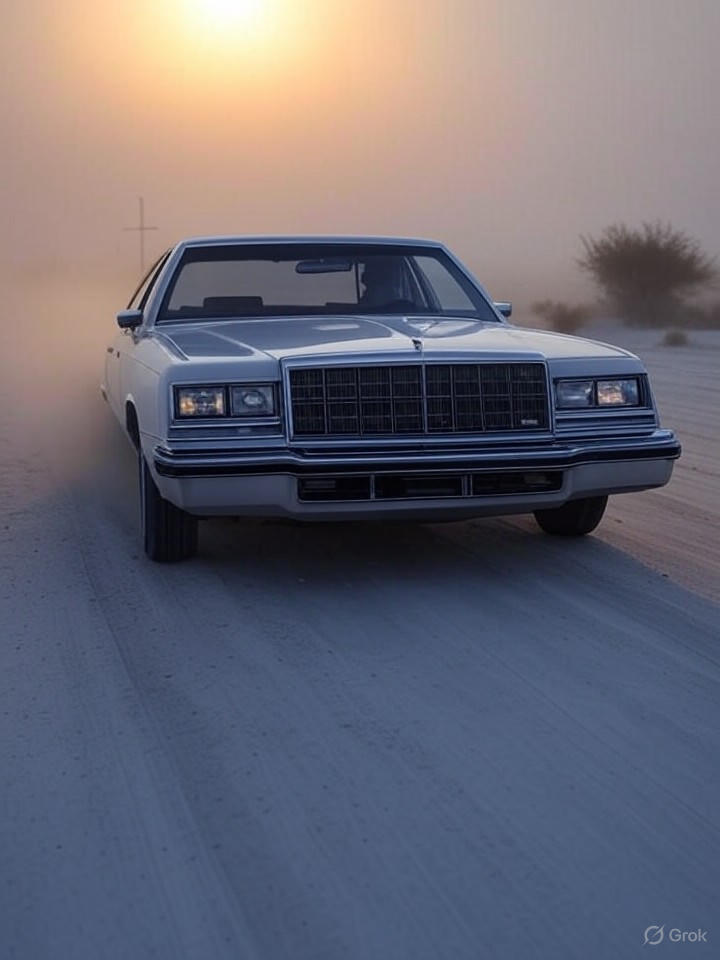
Seasonal care

Lake Geneva, WI
Winter
  • Battery: Cold-start demands are high on a carbureted engine. Test and replace any battery below 550 CCA before November — sub-zero starts will kill a marginal battery quickly.
  • Coolant: Verify antifreeze protection to at least -34°F with a tester. The cooling system on a 40-year-old car may have diluted or degraded coolant.
  • Wiper blades and fluid: Use rated -20°F or lower washer fluid. Switch to winter-rated wiper blades before the first freeze; standard blades ice up and streak badly.
  • Carburetor cold-start enrichment: The choke must operate correctly for reliable cold starts. A stuck or incorrectly adjusted automatic choke causes hard starts and rich running in cold weather — inspect and clean it each fall.
  • Undercarriage wash: After every significant salting event, rinse the underside at a coin-op car wash. Salt eats the frame and floor pans on these cars — this is the single best rust-prevention habit.
  • Tire pressure: Check monthly — pressure drops roughly 1 PSI for every 10°F drop in temperature. Underinflated tires reduce traction on ice and snow.
Summer
  • Cooling system pressure test: Heat soak and a marginal hose or weak radiator cap will cause overheating. Pressure-test the system each spring — a 40-year-old radiator may be partially blocked.
  • Tire pressure: Heat increases pressure; check monthly and bleed down to spec if needed. Overinflated tires reduce the contact patch on hot pavement.
  • A/C system: If equipped, R-12 refrigerant is no longer manufactured and requires either a certified shop with old stock or an R-134a retrofit kit. Don't attempt to top off an R-12 system yourself.
  • Vapor lock awareness: Hot weather can cause vapor lock in the fuel line on carbureted engines — symptoms are stalling after a hot soak and refusal to restart. Ensure fuel lines are not routed near exhaust heat sources and that the fuel pump heat shield is in place.

Comparable vehicles

1983 Plymouth Gran Fury
1983 Plymouth
Gran Fury

Mechanically identical M-body platform, same engine choices, same parts bin — essentially a rebadged Diplomat. Parts are fully interchangeable.

1983 Chrysler
Fifth Avenue

Top-trim M-body sibling with the same platform and drivetrain, just more luxury content. Same mechanical ownership experience.

No catalog match
1983 Ford
LTD

Competing full-size RWD American sedan of the same era. Similar simplicity and durability profile; Panther-platform Ford counterpart.

No catalog match
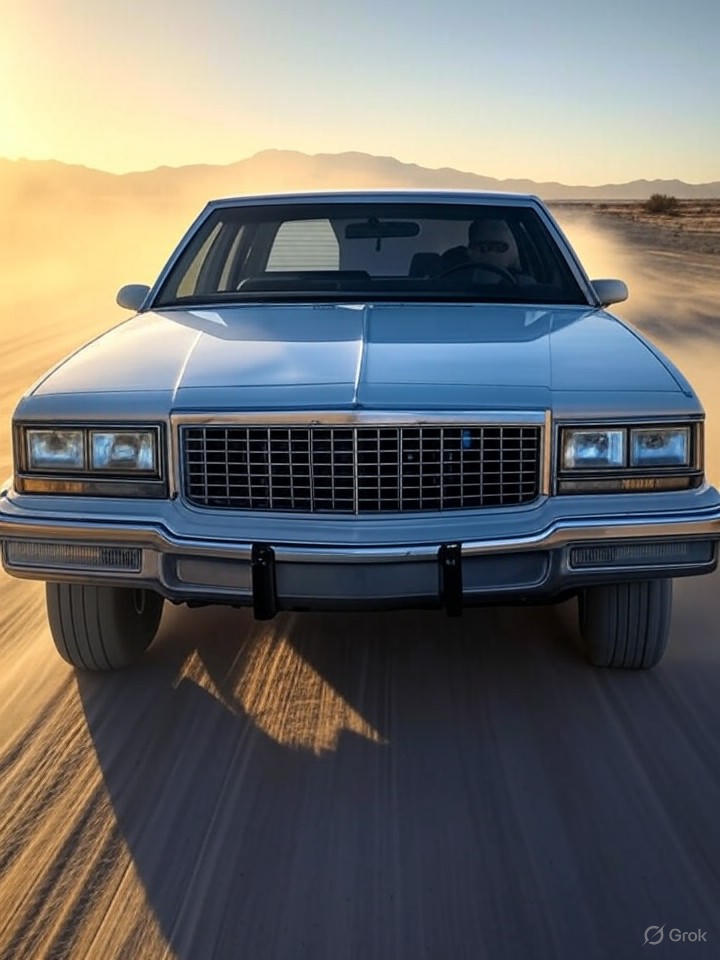
1983 Chevrolet Caprice
1983 Chevrolet
Caprice

GM's B-body full-size RWD sedan — direct market rival, similar fleet/civilian use, comparable parts availability and ownership cost today.

AI profile generated 4 days ago · claude-sonnet-4-6 · v2.