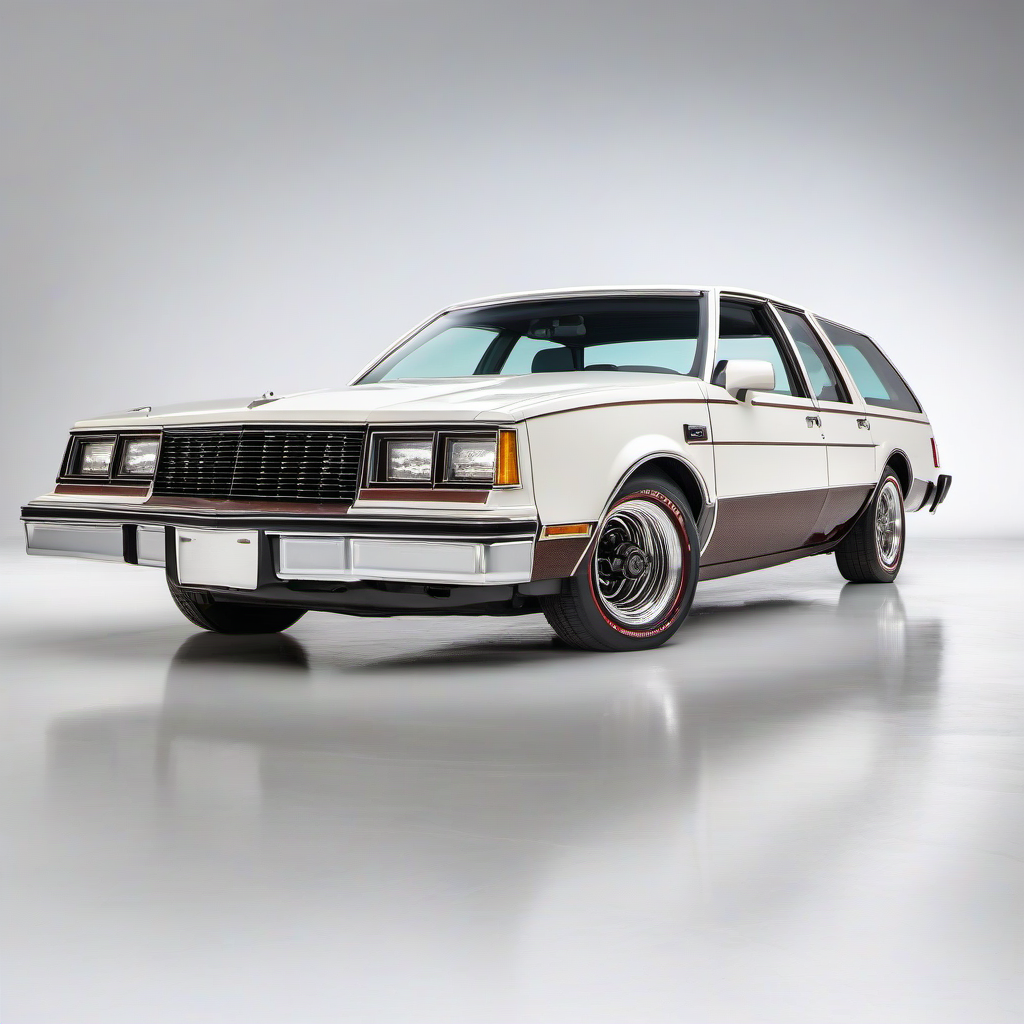
1983 Buick Skylark Custom

1983 Buick

SkylarkCustom

2.5 L I4 · Custom

The 1983 Buick Skylark Custom is a front-wheel-drive compact from GM's X-body platform, sharing its bones with the Chevrolet Citation, Pontiac Phoenix, and Oldsmobile Omega. It was positioned as an entry-level, affordable Buick — decent interior trim for the money, but the X-body cars earned a troubled reputation for brake and handling issues that followed them through the early 1980s. The standard engine in '83 was GM's 2.5L 'Iron Duke' inline-four, a cast-iron pushrod motor known for durability when properly maintained but not for performance. A 2.8L V6 was optional. The 3-speed automatic was the most common transmission pairing. By 1983 GM had addressed some of the early X-body's worst brake problems, but the platform was still living down its 1980–1981 reputation. At 40+ years old, any surviving Skylark is now a vintage vehicle. Parts availability has thinned significantly. These cars are not daily-driver candidates unless the owner is committed to sourcing used or NOS parts and doing their own wrenching. They do have a modest collector following among those who appreciate early-80s GM compacts.

Reliability
2/5
Verified data
Engine
2.5L I4 (Iron Duke)
Drivetrain
FWD
Fuel
Gasoline
MPG
24 city / 35 hwy / 28 combined
Seats
5
Doors
4
Body
Sedan
MSRP
$7,995

Overview

AI-curated

The 1983 Buick Skylark Custom is a front-wheel-drive compact from GM's X-body platform, sharing its bones with the Chevrolet Citation, Pontiac Phoenix, and Oldsmobile Omega. It was positioned as an entry-level, affordable Buick — decent interior trim for the money, but the X-body cars earned a troubled reputation for brake and handling issues that followed them through the early 1980s. The standard engine in '83 was GM's 2.5L 'Iron Duke' inline-four, a cast-iron pushrod motor known for durability when properly maintained but not for performance. A 2.8L V6 was optional. The 3-speed automatic was the most common transmission pairing. By 1983 GM had addressed some of the early X-body's worst brake problems, but the platform was still living down its 1980–1981 reputation. At 40+ years old, any surviving Skylark is now a vintage vehicle. Parts availability has thinned significantly. These cars are not daily-driver candidates unless the owner is committed to sourcing used or NOS parts and doing their own wrenching. They do have a modest collector following among those who appreciate early-80s GM compacts.

Known for
  • GM X-body platform shared with Citation, Phoenix, and Omega
  • Durable 2.5L Iron Duke four-cylinder engine
  • Front-wheel drive at a time when FWD was still novel for American compacts
  • Budget-friendly Buick entry point with modest luxury touches
Best for
  • Vintage/classic car enthusiasts and collectors
  • Owners who enjoy hands-on mechanical work on older domestic cars
  • Low-mileage, garage-kept hobby vehicle use
Watch for
  • X-body brake system reputation — early recalls may not have been completed on surviving cars
  • Severe rust, especially in Wisconsin salt-belt examples
  • Drying and cracked rubber throughout: hoses, seals, bushings, fuel lines
  • Carburetor condition — the Rochester 2-barrel requires attention after sitting
  • Electrical gremlins from 40-year-old wiring and connectors

Common issues by mileage

6 known

Rear brake lockup / brake system failure

high
Typically appears
Any mileage
Estimated repair
$300 – $900

Carburetor wear, flooding, or hard starting (Rochester 2-barrel)

high
Typically appears
Any mileage on a stored/aged vehicle
Estimated repair
$150 – $500

Fuel system degradation — rubber fuel lines, fuel pump, and tank sender

high
Typically appears
Any — age-related on a 40+ year old car
Estimated repair
$200 – $700

Front suspension bushing and strut deterioration

high
Typically appears
Any mileage
Estimated repair
$400 – $1,200

Cooling system hose, radiator, and water pump failure

medium
Typically appears
Any — age-related
Estimated repair
$200 – $700

Body rust — floor pans, rocker panels, wheel wells

high
Typically appears
Any Wisconsin/salt-belt example
Estimated repair
$500 – $4,000

Maintenance schedule

  1. 1
    Before first drive / upon acquisition Full brake system inspection including wheel cylinders, lines, and master cylinder

    X-body brake concerns were serious enough for federal recalls. On a 40-year-old car, rubber brake components will have deteriorated regardless of mileage.

  2. 2
    Before first drive / upon acquisition Replace all rubber fuel lines and inspect the carburetor

    Old rubber fuel lines crack and can leak onto a hot engine. The Rochester carb needs a rebuild or careful inspection after extended storage.

  3. 3
    Every 2 years or when inspecting Flush and replace all coolant; inspect all hoses and the radiator

    Original or old coolant turns acidic and attacks aluminum components. Hoses are brittle at this age.

  4. 4
    Every season Inspect and grease front suspension and steering components

    The X-body MacPherson strut front end wears bushings and ball joints. Wisconsin road conditions accelerate wear.

  5. 5
    Every 12 months Test and load-test the battery; inspect all battery cables and connections

    Cold Wisconsin winters demand a strong battery. Older cable clamps corrode and cause no-start and charging issues.

  6. 6
    Every 2–3 years Inspect and clean or replace the distributor cap, rotor, spark plugs, and plug wires

    The Iron Duke's ignition components are inexpensive and easy to access. Fresh ignition parts improve cold starting significantly.

  7. 7
    Every fall Flush and renew brake fluid; inspect all brake hardware

    Brake fluid absorbs moisture over time, lowering boiling point and promoting internal corrosion in cylinders and calipers.

  8. 8
    Every fall / before storage Treat all exterior seams, rocker panels, and underbody with rust inhibitor

    Wisconsin road salt is extremely aggressive. The Skylark's body panels and floor pans are already at high rust risk at this age.

Always defer to the manufacturer's service manual for warranty-mandated intervals.

Cost of ownership

Annual maintenance
$600 – $2,500
Fuel
Reasonable by modern standards — the Iron Duke gets ~28 mpg combined on regular unleaded. Fuel cost is not a major concern.
Insurance
Typically low as a collector or pleasure-use vehicle; contact your insurer about stated-value classic car coverage, which is usually cheaper than standard liability for a car driven rarely.

Day-to-day fuel and insurance costs are low if the car is used as a hobby vehicle. The unpredictable variable is parts and repair labor — many components require hunting through specialty suppliers, salvage yards, or NOS stock, which raises costs and repair time. Budget generously for the first year of ownership to address 40 years of deferred wear items.

Seasonal care

Lake Geneva, WI
Winter
  • Load-test the battery every fall — the Iron Duke can be stubborn to crank in sub-zero temperatures and a marginal battery won't make it.
  • Switch to a lighter-viscosity engine oil (e.g., 5W-30) for cold-weather starting if the engine tolerates it.
  • Use a fuel-line antifreeze additive sparingly if the car will be driven in winter; water in old fuel systems causes freeze-up.
  • Fill the washer reservoir with a -20°F or colder rated fluid — standard summer fluid will freeze solid in the reservoir and lines.
  • Inspect wiper blades and replace with winter blades; the rubber on this car's original-style blade frames gets stiff and streaks badly.
  • Seriously consider NOT daily-driving this vehicle in Wisconsin winters — road salt will accelerate body and underbody rust rapidly on a car this age.
Summer
  • Monitor the temperature gauge closely — the Iron Duke's cooling system is simple but a stuck thermostat or clogged radiator can cause overheating quickly in traffic.
  • Check tire pressure monthly; temperature swings between Wisconsin spring nights and hot summer days shift pressure by 4–6 PSI.
  • Inspect the A/C system if equipped — R-12 refrigerant is no longer available as new stock and the system will need retrofit to R-134a if it hasn't been done already.
  • Check the battery for swelling or heat damage after periods of high heat — older batteries degrade faster in summer heat.

Comparable vehicles

1983 Chevrolet
Citation

Mechanically identical X-body platform sibling — parts interchangeability is high, making Citation a useful parts donor.

No catalog match
1983 Pontiac
Phoenix

Another X-body platform sibling with the same drivetrain and most of the same mechanical components.

No catalog match
1983 Oldsmobile
Omega

Fourth X-body variant — same platform, similar positioning as an entry-level compact for its brand.

No catalog match
1983 Ford
Fairmont

Contemporary domestic compact of similar size, price, and mission — a common cross-shop alternative for buyers of this era.

No catalog match

If you're shopping for one

Red flags
  • Any evidence of brake fluid leaks at the wheels, master cylinder, or along the firewall
  • Soft, spongy, or low brake pedal — walk away until fully repaired
  • Rust perforation in floor pans — structural rust this severe makes the car unsafe and uneconomical to repair
  • Evidence of sitting for years: dried-out tires with cracking sidewalls, gummy carburetor, black coolant
  • Missing or incomplete recall documentation — the X-body brake recall work should have been done decades ago; confirm it was
  • A seller who describes it as 'just needs a little work' without specifics — on a 40-year-old car that's a red flag without a full inspection
What to inspect
  • Brake system — full inspection of lines, master cylinder, wheel cylinders, and calipers before any road test
  • Floor pans and rocker panels for rust-through — probe with a screwdriver, not just a visual look
  • Fuel system — smell for raw fuel, inspect rubber hoses for cracking or weeping
  • Carburetor — look for fuel staining, check for smooth throttle response and no flooding
  • Front struts and control arm bushings — look for collapsed or cracked rubber and excessive play
  • VIN plate and door jamb sticker consistency — ensure the car hasn't been pieced together from multiple vehicles
  • All rubber weather seals, coolant hoses, and vacuum lines for age cracking
AI profile generated 4 days ago · claude-sonnet-4-6 · v2.