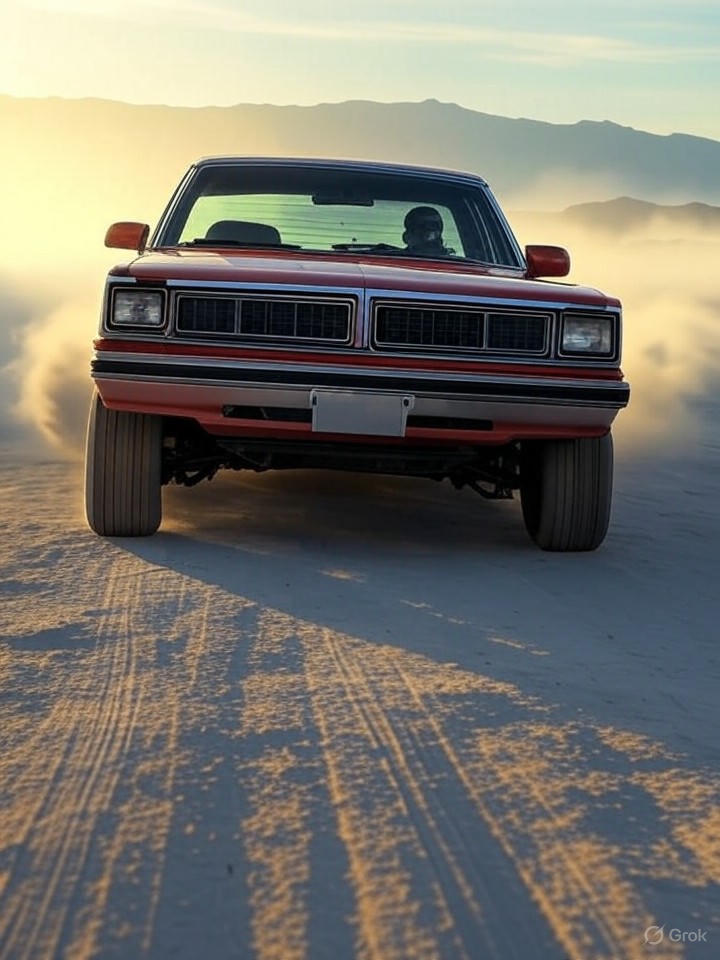
1982 Dodge Aries Base

1982 Dodge

AriesBase

2.2 L I4 · Base

The 1982 Dodge Aries is a front-wheel-drive compact sedan that was part of Chrysler's landmark K-Car platform — the vehicle widely credited with saving Chrysler from bankruptcy in the early 1980s. Powered by Chrysler's new 2.2L four-cylinder engine and mated to either a 4-speed manual or 3-speed automatic, it was engineered for maximum fuel economy and affordability at a time when gas prices were punishing American drivers. The Aries was a no-frills workhorse. It was roomy for its class, reasonably reliable by early-'80s standards, and sold in enormous numbers. The K-Car platform went on to underpin dozens of Chrysler products through the late 1980s, making parts relatively easy to find even today. That said, a 40-plus-year-old Aries is now a vintage vehicle, and survivorship is low — most examples still on the road are either well-maintained collector pieces or project cars. If you're buying or maintaining an '82 Aries today, expect to address old rubber (hoses, belts, seals), rust in Wisconsin's salt belt, and the inevitable wear of carbureted fuel delivery and early electronic ignition. Parts sourcing from salvage yards and Mopar specialists is still feasible, but patience is required.

Reliability
3/5
Verified data
Engine
2.2L I4
Drivetrain
FWD
Fuel
Gasoline
MPG
23 city / 39 hwy / 29 combined
Seats
5
Doors
4
Body
Sedan
MSRP
$6,394

Overview

AI-curated

The 1982 Dodge Aries is a front-wheel-drive compact sedan that was part of Chrysler's landmark K-Car platform — the vehicle widely credited with saving Chrysler from bankruptcy in the early 1980s. Powered by Chrysler's new 2.2L four-cylinder engine and mated to either a 4-speed manual or 3-speed automatic, it was engineered for maximum fuel economy and affordability at a time when gas prices were punishing American drivers. The Aries was a no-frills workhorse. It was roomy for its class, reasonably reliable by early-'80s standards, and sold in enormous numbers. The K-Car platform went on to underpin dozens of Chrysler products through the late 1980s, making parts relatively easy to find even today. That said, a 40-plus-year-old Aries is now a vintage vehicle, and survivorship is low — most examples still on the road are either well-maintained collector pieces or project cars. If you're buying or maintaining an '82 Aries today, expect to address old rubber (hoses, belts, seals), rust in Wisconsin's salt belt, and the inevitable wear of carbureted fuel delivery and early electronic ignition. Parts sourcing from salvage yards and Mopar specialists is still feasible, but patience is required.

Known for
  • Saving Chrysler — the original K-Car platform
  • Practical front-wheel-drive in an affordable package
  • Chrysler's 2.2L I4 engine, a durable and long-lived design
  • Simple, shade-tree-mechanic-friendly mechanicals
  • Surprisingly roomy interior for a compact
Best for
  • Vintage/classic car enthusiasts and collectors
  • Budget-minded hobbyists comfortable with older carbureted engines
  • Drivers who want a piece of American automotive history
  • Owners who do their own wrenching
Watch for
  • Pervasive rust, especially in salt-belt states like Wisconsin
  • Deteriorated rubber: hoses, belts, fuel lines, and weatherstripping are all 40+ years old
  • Carburetor issues — the Holley/Carter feedback carbs on these are finicky and wear-prone
  • Early electronic lean-burn ignition system failures
  • Limited crash protection by modern standards — no airbags, minimal crumple zones

Common issues by mileage

6 known

Carburetor wear and lean-burn driveability issues

high
Typically appears
Any mileage on a 40-yr-old example
Estimated repair
$150 – $600

Electronic Lean-Burn / Electronic Spark Control module failure

high
Typically appears
Any mileage
Estimated repair
$80 – $250

Rust — floor pans, rocker panels, strut towers, and frame rails

high
Typically appears
Any mileage in salt-belt regions
Estimated repair
$500 – $4,000

Cooling system hose and radiator failure (age-related)

high
Typically appears
Any mileage on original components
Estimated repair
$100 – $450

Automatic transaxle slipping or delayed engagement

medium
Typically appears
80k+ mi
Estimated repair
$400 – $1,200

Front strut and suspension bushing wear

medium
Typically appears
60k+ mi
Estimated repair
$200 – $700

Maintenance schedule

  1. 1
    Immediately if not recently done; every 4–5 years thereafter Replace all rubber coolant hoses and heater hoses

    Original or old rubber becomes brittle and cracks without warning. A coolant hose failure will overheat and potentially destroy the engine in minutes.

  2. 2
    Every 2–3 years or at first sign of cracking/glazing Inspect and replace drive belts (alternator, power steering, A/C if equipped)

    40-year-old belts or even 10-year-old replacements are a stranding risk, especially in Wisconsin winters.

  3. 3
    Every 2 years or when driveability issues appear Service the carburetor — clean jets, check float level, inspect accelerator pump

    The feedback carburetor on the 2.2L is sensitive to old fuel varnish and wear. Cold-start problems and rough idle are the first symptoms.

  4. 4
    Every 2 years Replace fuel filter and inspect rubber fuel lines

    Old rubber fuel lines can crack and leak, creating a fire hazard. Steel lines rust from the outside in Wisconsin.

  5. 5
    Every 3,000–4,000 miles or once per year minimum Change engine oil and filter

    Short trip driving and age mean oil degrades quickly even without high mileage. The 2.2L is tolerant but sludge builds fast with infrequent changes.

  6. 6
    Every 2 years Flush and refill coolant with correct antifreeze mix

    Old coolant loses its corrosion inhibitors, accelerating internal rust and water pump wear. Maintain a 50/50 mix rated to at least -34°F for Wisconsin winters.

  7. 7
    Every fall before first road salt application Inspect and treat undercarriage for rust

    Wisconsin road salt is extremely destructive to this era of unibody construction. Annual undercoat inspection and touch-up can extend the car's structural life significantly.

  8. 8
    Every fall Test and load-test the battery

    Cold cranking amps drop sharply below 0°F. A marginal battery that starts the car in October may leave you stranded in January.

Always defer to the manufacturer's service manual for warranty-mandated intervals.

Cost of ownership

Annual maintenance
$400 – $1,200
Fuel
At ~29 MPG combined, fuel costs are modest. Expect roughly $900–$1,100/year at current prices for typical driving — one of this car's genuine strengths.
Insurance
Classic/antique auto insurance is available and typically very affordable for a low-value, limited-use vehicle — often $200–$500/year depending on coverage and usage.

The Aries is cheap to insure and fuel, but parts sourcing for a 40-year-old vehicle takes time and sometimes creativity. A well-maintained example has low routine costs, but deferred maintenance on an old car can cascade quickly — especially rust repair, which is expensive and labor-intensive. Budget for surprises.
Seasonal care

Lake Geneva, WI
Winter
  • Load-test the battery every fall — cold cranking amps are critical for the 2.2L carbureted engine in sub-zero Lake Geneva temps.
  • Verify antifreeze protection to at least -34°F; old coolant loses freeze protection over time.
  • Inspect all rubber coolant hoses before winter — a cold-snap failure leaves you stranded.
  • Switch to a lighter-viscosity oil (e.g., 5W-30) if the car sees winter use; the 2.2L can be hard to crank in extreme cold with heavier oil.
  • Flush and fill washer fluid reservoir with a -20°F or colder rated fluid — standard fluid will freeze solid in the lines.
  • Thoroughly rinse the undercarriage after any road-salt exposure; this era of Chrysler unibody construction rusts aggressively.
Summer
  • Check coolant level and hose condition before hot weather; the 2.2L runs warm and aging hoses fail under heat and pressure.
  • Inspect the carburetor for heat-soak vapor lock symptoms (hard hot restart) — a common summer complaint on carbureted K-Cars.
  • Check tire pressure monthly; heat causes pressure to rise and can mask an underinflated tire.
  • If equipped with A/C, have the system inspected — R-12 refrigerant is no longer produced and servicing requires a certified technician with reclaim equipment or a legal retrofit to R-134a.
  • Inspect the battery terminals for corrosion; heat accelerates battery degradation just as cold does.

Comparable vehicles

1982 Plymouth Reliant
1982 Plymouth
Reliant

The Reliant is the Plymouth-badged twin of the Aries, built on the identical K-Car platform with the same engine and drivetrain. Parts are fully interchangeable.

1982 Chevrolet
Citation

GM's front-wheel-drive X-Body compact was the Aries' direct rival. Similar size and price, though the Citation had more recall history and is generally considered less reliable.

No catalog match
1982 Ford
Fairmont

Ford's compact offering of the era. RWD vs. the Aries' FWD, with a similar economy focus and price point. Fairmont parts availability is also decent from the vintage community.

No catalog match
1982 Toyota
Corolla

The Japanese compact benchmark of the period. More reliable long-term, though parts for Wisconsin-surviving examples can be harder to find locally than K-Car components.

No catalog match

If you're shopping for one

Red flags
  • Any visible rust perforation on the floor, rockers, or unibody frame rails — walk away unless you have a serious restoration budget
  • Milky or sludgy oil — could indicate head gasket failure, common when cooling systems are neglected
  • Non-original engine or carburetor with sloppy installation — previous band-aid repairs often mask deeper problems
  • No maintenance records whatsoever on a 40-year-old vehicle — the risk of hidden deferred maintenance is very high
  • Strong fuel smell in the engine bay — old fuel lines and carb float valve leaks are a fire hazard
What to inspect
  • Floor pans — poke with a screwdriver; rust-through is common and expensive to repair properly
  • Strut towers and lower control arm mounting points — structural rust here can make the car unsafe to drive
  • All rubber: coolant hoses, fuel lines, brake lines, and weatherstripping
  • Carburetor function: cold start, idle quality, acceleration — a rough idle often signals bigger carb problems
  • Lean-burn ignition module — test drive under load and look for stumbles or sudden cutouts
  • Automatic transaxle engagement — note any slipping, delayed shifts, or shudder
AI profile generated 4 days ago · claude-sonnet-4-6 · v2.