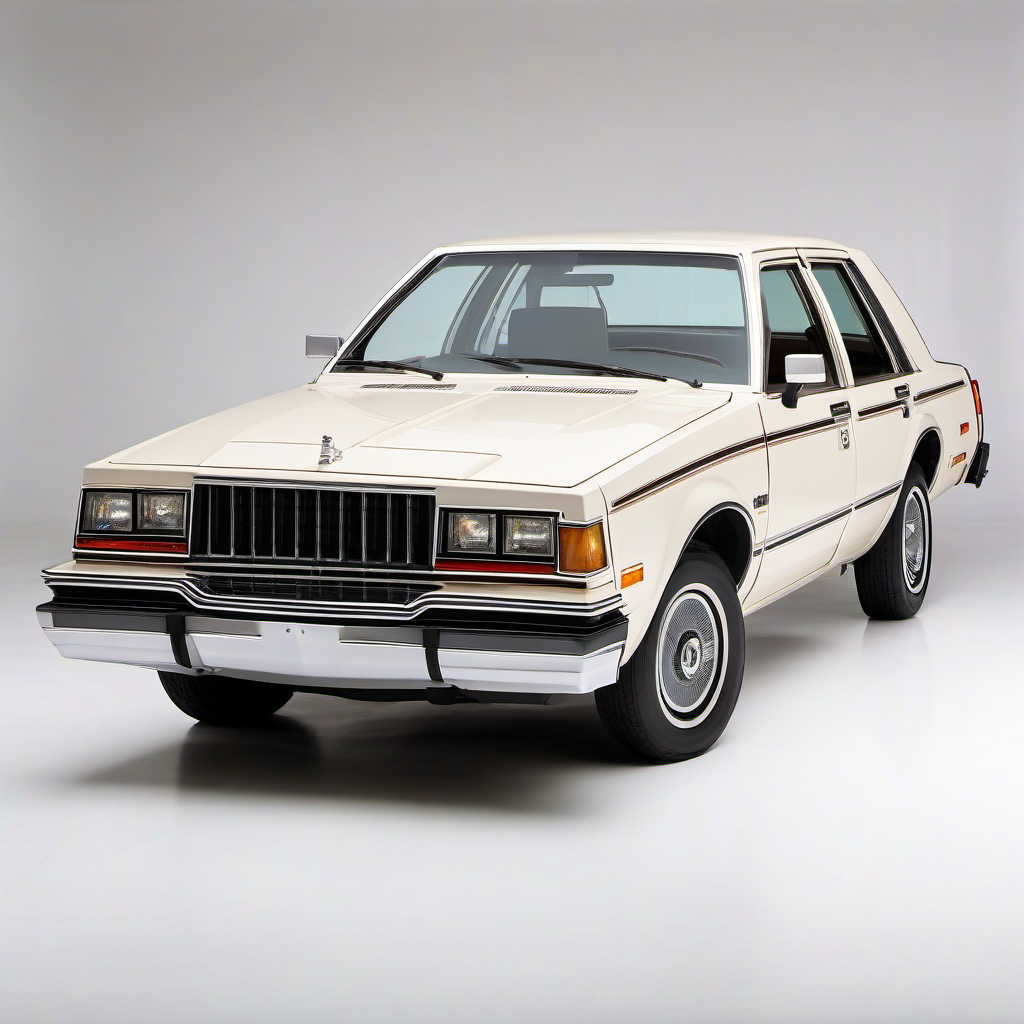
1981 Dodge Aries LE

1981 Dodge

AriesLE

2.5 L I4 · LE

The 1981 Dodge Aries was one of Chrysler's landmark 'K-Cars' — the front-wheel-drive platform that arguably saved the company from bankruptcy. Built on the K-body platform shared with the Plymouth Reliant, the Aries brought affordable, fuel-efficient, front-wheel-drive transportation to American buyers at a time when fuel economy was king. The LE trim added a modest step up in interior comfort with better cloth seating and a few additional conveniences. Powered by Chrysler's 2.2L (and in some configurations the 2.5L Mitsubishi-sourced engine later in the run) inline-four mated to either a 4-speed manual or 3-speed TorqueFlite automatic, the Aries was never sporty — it was appliance-grade transportation. Build quality was inconsistent by modern standards, and early 1980s Chrysler electronics and body sealing were genuine weak points. At 40+ years old, any surviving Aries is now a collector curiosity or a dedicated hobbyist project. Rust, dry-rotted rubber, and long-unavailable parts are the primary concerns. Parts availability has thinned considerably, though the K-Car platform was produced in such volume that a community of enthusiasts and some specialty suppliers still support it.

Reliability
2/5
Verified data
Engine
2.2L I4
Drivetrain
FWD
Fuel
Gasoline
MPG
22 city / 31 hwy / 25 combined
Seats
5
Doors
4
Body
Sedan
MSRP
$6,795

Overview

AI-curated

The 1981 Dodge Aries was one of Chrysler's landmark 'K-Cars' — the front-wheel-drive platform that arguably saved the company from bankruptcy. Built on the K-body platform shared with the Plymouth Reliant, the Aries brought affordable, fuel-efficient, front-wheel-drive transportation to American buyers at a time when fuel economy was king. The LE trim added a modest step up in interior comfort with better cloth seating and a few additional conveniences. Powered by Chrysler's 2.2L (and in some configurations the 2.5L Mitsubishi-sourced engine later in the run) inline-four mated to either a 4-speed manual or 3-speed TorqueFlite automatic, the Aries was never sporty — it was appliance-grade transportation. Build quality was inconsistent by modern standards, and early 1980s Chrysler electronics and body sealing were genuine weak points. At 40+ years old, any surviving Aries is now a collector curiosity or a dedicated hobbyist project. Rust, dry-rotted rubber, and long-unavailable parts are the primary concerns. Parts availability has thinned considerably, though the K-Car platform was produced in such volume that a community of enthusiasts and some specialty suppliers still support it.

Known for
  • Saving Chrysler — the K-Car platform was the backbone of the company's 1980s turnaround
  • Fuel-efficient front-wheel drive in a full-size footprint for the era
  • Simple, shade-tree-mechanic-friendly mechanicals for the time
  • Inconsistent build quality and early rust issues
  • Remarkably large interior relative to the engine and footprint
Best for
  • Vintage car enthusiasts and K-Car collectors
  • Hobbyists comfortable sourcing period-correct or NOS parts
  • Low-speed, low-mileage classic cruising
  • Someone who wants an affordable piece of American automotive history
Watch for
  • Pervasive rust — rocker panels, floor pans, and frame rails are notorious
  • Carburetor and early electronic ignition problems that are 40+ years old
  • Dry-rotted rubber: hoses, belts, bushings, seals, and weatherstripping
  • Shrinking parts availability — some body and trim pieces are effectively unobtainium
  • Wiring insulation brittleness creating short-circuit and fire risk

Common issues by mileage

6 known

Rust — rocker panels, floor pans, and frame rails

high
Typically appears
Any mileage / any age
Estimated repair
$800 – $4,000

Carburetor failure or severe gumming (Holley 6520 / Carter BBD)

high
Typically appears
Any mileage
Estimated repair
$150 – $600

Electronic Lean Burn / Electronic Spark Control ignition failure

high
Typically appears
Any mileage
Estimated repair
$100 – $400

Cooling system hose, radiator, and water pump failure

high
Typically appears
Any mileage
Estimated repair
$150 – $700

Automatic transmission (TorqueFlite A404) shifting issues or seal failure

medium
Typically appears
80k+ mi
Estimated repair
$300 – $1,500

Brittle wiring insulation and corroded connectors creating electrical gremlins

high
Typically appears
Any mileage
Estimated repair
$100 – $1,200

Maintenance schedule

  1. 1
    Immediately upon acquisition, then every 2–3 years Inspect and replace all rubber hoses and belts

    40-year-old rubber is at or well past end of life regardless of appearance. A hose failure in a Wisconsin winter can strand you and overheat the engine quickly.

  2. 2
    Every 2–3 years or when driveability issues appear Carburetor cleaning and rebuild

    The Holley 6520 and Carter carburetors on these engines gum up badly from ethanol-blended fuel and long storage. A clean, properly tuned carb is the single biggest driveability improvement.

  3. 3
    Annually Ignition system inspection — cap, rotor, plugs, wires, and Electronic Lean Burn module

    The Electronic Lean Burn system is the weak link. These modules are decades old and fail without warning, leaving you stranded. Keep a spare module if you drive this car.

  4. 4
    Every 2 years Full cooling system flush and antifreeze check

    The 2.2L runs warm and the cooling system is simple but aged. Ensure 50/50 antifreeze protection to at least -34°F for Lake Geneva winters.

  5. 5
    Annually Brake system inspection — wheel cylinders, master cylinder, and lines

    Steel brake lines on 40-year-old cars corrode from inside and out. Wisconsin road salt accelerates this. A brake line failure is a safety emergency.

  6. 6
    Annually before winter Undercarriage rust inspection and treatment

    Treat any bare metal with rust inhibitor before salt season. Once floor pans or frame rails perforate, repair costs escalate fast.

  7. 7
    Every 3,000 miles or annually (whichever comes first) Engine oil and filter change

    Low annual mileage on a classic still means oil degrades from moisture and acids over time. Annual changes minimum, even if the car barely moves.

  8. 8
    Every 2 years Fuel system — tank, lines, and fuel filter inspection

    Old steel fuel tanks and lines corrode internally. Ethanol in modern pump gas attacks older rubber fuel lines. Inspect and replace as needed to prevent fuel leaks and fire risk.

Always defer to the manufacturer's service manual for warranty-mandated intervals.

Cost of ownership

Annual maintenance
$400 – $2,000
Fuel
Inexpensive to fuel at 22–25 MPG combined, but this is a low-mileage classic for most owners — annual fuel spend is minimal
Insurance
Classic/agreed-value collector car insurance is typically $200–$500/year and strongly recommended over standard auto policy

Day-to-day operating costs are low if the car is already in good mechanical shape — the engine is simple and parts that are available are cheap. The unpredictable cost is restoration and repair: rust remediation, carburetor work, and chasing 40-year-old electrical gremlins can run into the thousands quickly. Budget more for restoration than for routine maintenance. The car's market value is low, so sink costs thoughtfully.
Seasonal care

Lake Geneva, WI
Winter
  • This car was NOT engineered for modern Wisconsin winters — minimize road-salt exposure as much as possible. Store it if you can.
  • If driven in winter, rinse the undercarriage thoroughly after every salt exposure. The original body steel has no meaningful corrosion protection remaining.
  • Verify antifreeze concentration protects to at least -34°F. The original cooling system had no reserve capacity for neglect.
  • The original battery is obviously long gone — ensure the replacement is a quality, cold-cranking-amp-appropriate unit. Cold starts on the 2.2L carbureted engine demand strong cranking.
  • Use a fuel stabilizer if storing for winter; ethanol-blend fuel left in the carburetor bowl and tank will varnish rapidly.
  • Check that the heater core and blower motor are functional before cold weather — heater cores on these cars are prone to pinhole leaks after decades of use.
Summer
  • Watch coolant temperature closely — the 2.2L can heat-soak in slow traffic, and the radiator is 40+ years old. Carry spare coolant.
  • Check tire pressure monthly; aged tires may have cracking sidewalls regardless of tread depth — replace any tire showing sidewall craze cracks before summer driving.
  • Inspect the A/C system only if the car retains its original R-12 system — do not top off R-12 without a proper recovery setup. Conversion to R-134a is an option but requires component evaluation.
  • Park in shade when possible; the dashboard and interior plastics on these cars are extremely brittle and UV-degraded — direct sun causes cracking and can create sharp hazards.

Comparable vehicles

1981 Plymouth Reliant
1981 Plymouth
Reliant

Mechanically identical K-Car platform twin — shares virtually every drivetrain, suspension, and body component. Parts interchangeability is a real advantage for owners of either car.

1981 Chrysler
LeBaron

Upmarket K-Car sibling on the same platform. More interior luxury features, same mechanicals. Parts cross-reference heavily with the Aries.

No catalog match
1981 Ford Escort
1981 Ford
Escort

Ford's competing economy FWD entry of the same era. Similar mission and market, though a completely different mechanical platform. A comparable period collectible.

1982 Chevrolet
Citation

GM's front-wheel-drive X-body was the Aries's direct domestic competitor — similar era, similar price, similar segment. The Citation had its own well-documented reliability issues, making the Aries look better by comparison.

No catalog match

If you're shopping for one

Red flags
  • Any signs of floor pan perforation or patch plates in the interior — structural rust this severe makes the car unsafe and uneconomical to restore.
  • Evidence of fire, even minor — brittle 40-year-old wiring makes electrical fires a real risk and a past fire suggests the harness may be compromised.
  • No cold-start demonstration by the seller — a car that won't start cold almost always has carburetor or ignition issues the seller knows about.
  • Mismatched or spray-can repaint over lower body panels — almost always hiding rust rather than fixing it.
  • Strong fuel smell inside or under the car — indicates a fuel line, carb, or tank leak, which is both a driveability and fire hazard.
  • Absent or non-functional brake warning light with no explanation — brake system on a car this age needs to be above suspicion.
What to inspect
  • Floor pans — press firmly with your foot in every corner of the interior. Soft spots mean rust perforation.
  • Rocker panels and lower door skins — probe with a screwdriver or magnet. Filler and fiberglass patches are common cover-ups.
  • Frame rails visible from underneath — surface rust is expected, but any structural compromise is a deal-breaker on a 40-year-old unibody.
  • Start the engine cold and watch for smooth idle; carburetor stumbles, rough warm-up, or stalling on cold start signal a carb rebuild is needed.
  • Check all rubber: every visible hose, belt, and bushing for cracking or brittleness.
  • Test all electrical — lights, wipers, blower, turn signals. Trace any non-working circuit carefully before buying; wiring harness replacement is labor-intensive.
  • Look for oil leaks at the valve cover, front crank seal, and transmission pan — 40-year-old gaskets are universally suspect.
  • Verify the TorqueFlite automatic shifts cleanly through all gears and doesn't slip — a transmission rebuild on a car of this value may not be economical.
AI profile generated 4 days ago · claude-sonnet-4-6 · v2.