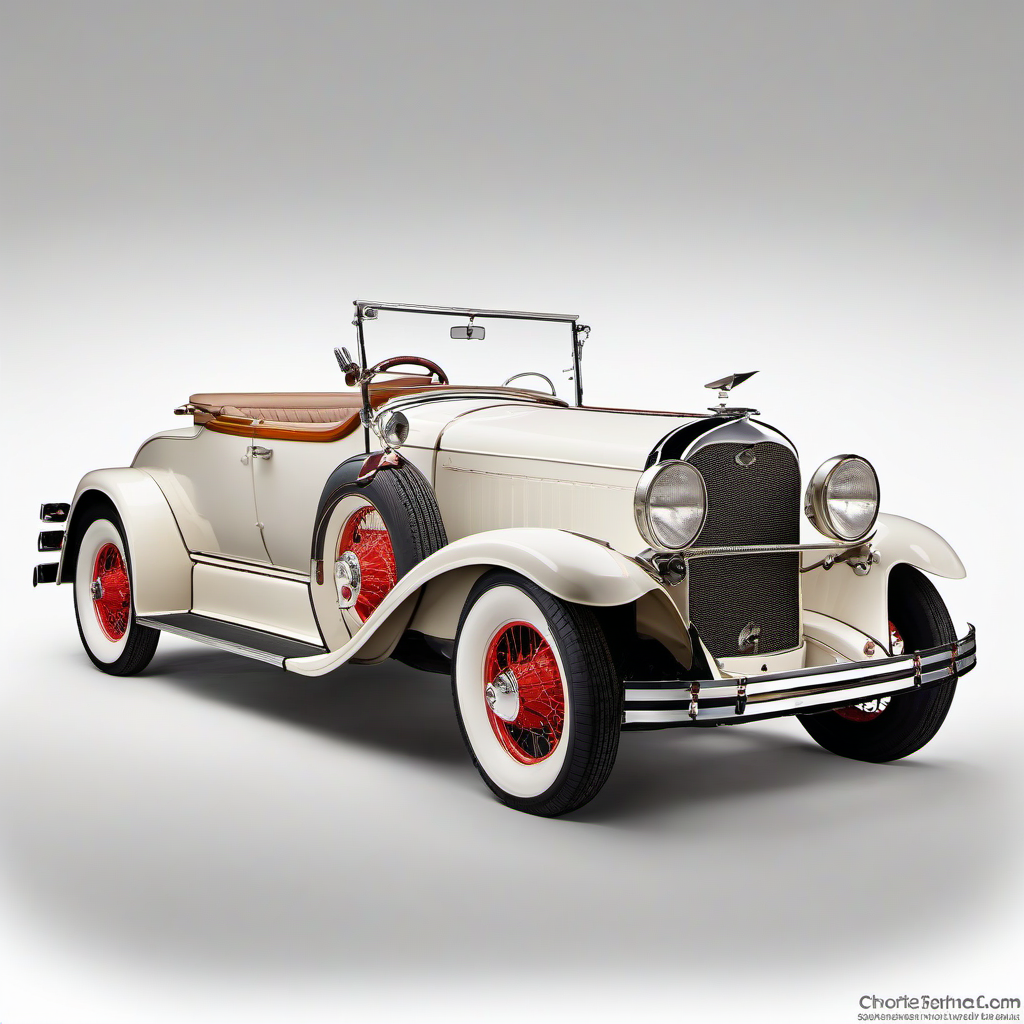
1929 Chrysler Series 65 Roadster

1929 Chrysler

Series 65Roadster

220 CI I6 · Roadster

The 1929 Chrysler Series 65 is a mid-range offering from Chrysler's landmark late-1920s lineup, sitting between the entry-level Series 52 and the flagship Imperial. Powered by a 220 cubic-inch inline six-cylinder engine, it represented solid engineering for its era — reliable, smooth for the day, and well-appointed. The Roadster body style is among the most desirable configurations, featuring an open cockpit, a folding canvas top, and a rumble seat in many examples. As a nearly 100-year-old vehicle, the Series 65 Roadster is firmly in collector and antique territory. It has no OBD diagnostics, no airbags, no ABS, and no modern safety systems whatsoever. Ownership today means participating in a living piece of American automotive history, but it demands a specialized skill set, a network of vintage parts suppliers, and realistic expectations about driveability and weather exposure. If you own or are considering this car in the Lake Geneva area, understand that it is not a daily driver. It is a show, parade, and fair-weather touring vehicle. Wisconsin winters are simply incompatible with open-top motoring in a 95-year-old car, and proper off-season storage is essential to preserving its value and mechanical health.

Reliability
3/5
Verified data
Engine
220 CI I6
Drivetrain
RWD
Fuel
Gasoline
MPG
14 city / 18 hwy / 15 combined
Seats
2
Doors
2
Body
Roadster
MSRP
$1,595

Overview

AI-curated

The 1929 Chrysler Series 65 is a mid-range offering from Chrysler's landmark late-1920s lineup, sitting between the entry-level Series 52 and the flagship Imperial. Powered by a 220 cubic-inch inline six-cylinder engine, it represented solid engineering for its era — reliable, smooth for the day, and well-appointed. The Roadster body style is among the most desirable configurations, featuring an open cockpit, a folding canvas top, and a rumble seat in many examples. As a nearly 100-year-old vehicle, the Series 65 Roadster is firmly in collector and antique territory. It has no OBD diagnostics, no airbags, no ABS, and no modern safety systems whatsoever. Ownership today means participating in a living piece of American automotive history, but it demands a specialized skill set, a network of vintage parts suppliers, and realistic expectations about driveability and weather exposure. If you own or are considering this car in the Lake Geneva area, understand that it is not a daily driver. It is a show, parade, and fair-weather touring vehicle. Wisconsin winters are simply incompatible with open-top motoring in a 95-year-old car, and proper off-season storage is essential to preserving its value and mechanical health.

Known for
  • Smooth inline-six power for the late 1920s
  • Elegant open roadster coachwork with rumble seat
  • Strong Chrysler build quality relative to contemporaries
  • Hydraulic four-wheel brakes — an advanced feature for 1929
  • Sought-after collector and show car status
Best for
  • Dedicated antique car collectors
  • Concours and car show participants
  • Fair-weather touring and parade use
  • Enthusiasts with vintage mechanical skills or access to a trusted old-car shop
Watch for
  • Zero modern safety systems — no seatbelts, ABS, or crumple zones
  • Open roadster body offers no weather protection beyond the folding top
  • Parts availability is extremely limited; many components must be fabricated or sourced from specialty suppliers
  • Ethanol-blended pump fuel (E10/E15) can damage original fuel system components
  • Electrical system is 6-volt positive ground — incompatible with modern 12V accessories

Common issues by mileage

6 known

Fuel system degradation from ethanol-blended fuel

high
Typically appears
Any mileage / any age
Estimated repair
$300 – $1,200

6-volt electrical system failures (generator, voltage regulator, wiring insulation)

high
Typically appears
Any mileage / any age
Estimated repair
$200 – $1,500

Mechanical brake system wear or failure (original four-wheel hydraulic drum brakes)

high
Typically appears
Any mileage / any age
Estimated repair
$400 – $2,000

Canvas top and wood frame rot or deterioration

high
Typically appears
Any mileage / any age
Estimated repair
$800 – $4,000

Carburetor flooding, gumming, or needle seat failure from ethanol and long storage

high
Typically appears
Any mileage / any age
Estimated repair
$150 – $600

Body and frame rust, especially floor boards and lower rocker structure

medium
Typically appears
Any mileage / any age
Estimated repair
$1,000 – $15,000

Maintenance schedule

  1. 1
    Before every season / spring commissioning Drain and replace old fuel; clean or rebuild carburetor if stored over winter

    Ethanol in modern pump fuel phase-separates and leaves varnish deposits in carburetors and fuel lines during storage, causing hard starts and lean-running conditions.

  2. 2
    Annually or every season Use non-ethanol (ethanol-free) gasoline exclusively

    Original rubber fuel lines, cork gaskets, and pot-metal carburetor components are not compatible with ethanol blends. Non-ethanol fuel is available at many marinas and select stations around Lake Geneva.

  3. 3
    Annually Inspect and adjust the three-speed manual transmission and clutch linkage

    Sliding-gear transmissions require correct clutch free play and proper lubrication; neglect causes grinding and engagement problems.

  4. 4
    Annually or every 1,000 operating miles Inspect and adjust hydraulic drum brakes on all four wheels; flush brake fluid

    Original hydraulic brake cylinders are prone to seizing and leaking. Brake fluid absorbs moisture over time, lowering boiling point — critical on a car with no backup braking system.

  5. 5
    Annually Check and test the 6-volt battery; clean all ground connections

    6-volt systems are more sensitive to voltage drop from corroded connections than modern 12-volt systems. A weak ground can cause mysterious electrical failures throughout the car.

  6. 6
    Every season Lubricate all chassis grease fittings (zerk fittings) and king pins

    1929-era chassis have many grease points that dry out quickly. Dry king pins cause loose, wandering steering — a safety issue at any speed.

  7. 7
    Before winter storage Stabilize fuel with non-ethanol gas + fuel stabilizer, fog cylinders with oil, disconnect battery, cover car fully, and store off-road surfaces

    Proper storage is the single biggest factor in preserving a 95-year-old vehicle. Wisconsin winters will destroy an unprotected open roadster in a single season.

  8. 8
    Every 500 operating miles or annually Change engine oil using a non-detergent straight-weight oil (SAE 30 or 40)

    Modern detergent oils can loosen decades of accumulated deposits in old engines, causing sudden oil leaks and seal failures. Use the oil type the engine was designed for.

Always defer to the manufacturer's service manual for warranty-mandated intervals.

Cost of ownership

Annual maintenance
$500 – $4,000
Fuel
Non-ethanol premium gasoline is required; budget approximately $300–$600/year for typical show-season use (low mileage). Non-ethanol fuel typically runs $0.30–$0.60/gallon more than standard pump gas.
Insurance
Agreed-value antique/collector car insurance is strongly recommended and is typically inexpensive — often $200–$500/year — because annual mileage is extremely low. Standard auto insurance is inappropriate for this vehicle.

Annual costs are low when the car is healthy and properly stored, but unpredictable when something goes wrong. Parts for a 1929 Chrysler are not on any shelf — they come from specialty suppliers, marque clubs (Walter P. Chrysler Club), or must be custom-fabricated. A single major mechanical or body repair can run $5,000–$20,000+. Budget conservatively and maintain a relationship with a shop experienced in pre-war vehicles.

Seasonal care

Lake Geneva, WI
Winter
  • This is an open roadster — do not drive it in Wisconsin winter under any circumstances. Salt, sand, and moisture will cause irreversible corrosion to the body, frame, and mechanical components.
  • Store in a heated or climate-controlled garage if possible. Unheated storage is acceptable but avoid spaces with large temperature swings that cause condensation.
  • Before storage, fill the tank with non-ethanol fuel mixed with fuel stabilizer to prevent varnish buildup in the carburetor and fuel lines.
  • Fog the cylinders by removing spark plugs, spraying a light engine oil into each cylinder, and reinstalling plugs — this prevents cylinder wall rust over a long storage period.
  • Disconnect the 6-volt battery and store it on a trickle maintainer (confirm maintainer is compatible with 6-volt systems — many modern maintainers require a 6V setting).
  • Place the car on jack stands or soft tire cradles to prevent flat-spotting vintage bias-ply or reproduction tires during months of static storage.
Summer
  • Heat soak is a real concern with vintage carbureted engines in hot weather — a hot restart after a brief stop ('vapor lock') can cause the engine to stall or refuse to start. Allow the engine to cool for 15–20 minutes after a hot soak.
  • Check tire pressure frequently — vintage tires and tubes (if equipped with inner tubes) are more susceptible to pressure changes with temperature swings than modern radials.
  • Inspect the canvas top hardware and fabric before summer show season; UV exposure and moisture cycles cause canvas to crack and frame hardware to corrode.
  • Check coolant level and condition before every outing. The non-pressurized cooling system has very little thermal reserve — overheating can occur quickly in traffic or on hot days.
  • Keep a basic tool kit and spare points, condenser, and fuel line fittings in the car for roadside issues during touring events.
  • Verify brake fluid level and pedal firmness before any drive. Drum brake hydraulics can develop slow leaks during storage that only become apparent under load.

Comparable vehicles

1929 Buick
Series 116

Similar mid-range American six-cylinder open touring car from the same era; comparable collector market value and parts-sourcing challenges.

No catalog match
1929 Studebaker
Commander

Contemporary inline-six powered roadster/touring car in the same price bracket; similar ownership experience and show-circuit presence.

No catalog match
1929 Packard
Six

Late-1920s open body style with comparable period engineering; slightly more prestigious marque but overlapping collector audience and maintenance demands.

No catalog match
1929 Dodge
Senior Six

Chrysler corporate sibling from the same year; shares design philosophy, parts commonality in some areas, and targets the same collector segment.

No catalog match

If you're shopping for one

Red flags
  • Fresh paint over unrepaired rust — probe around lower body panels, door bottoms, and the rumble seat area with a magnet.
  • Any sign of water intrusion in the passenger compartment (stained upholstery, rust on the floor, mildew smell) — open cars stored improperly suffer severe internal damage.
  • Non-original engine, transmission, or rear axle without full documentation — this substantially reduces collector and auction value.
  • Seller cannot provide any restoration receipts, club registration, or prior ownership history.
  • Electrical system that has been converted to 12-volt without professional documentation — improper conversions can damage original components and are a fire risk.
  • Cracked or repaired block — pre-war engines subjected to Wisconsin winters without proper antifreeze are frequently frost-cracked.
What to inspect
  • Verify the frame rails for cracks, repairs, and rust — especially at the body mount points and front cross-member where road impacts accumulate over 95 years.
  • Inspect the firewall and floor boards for rust-through; these are expensive to repair correctly and are commonly hidden under carpet or undercoating.
  • Test the hydraulic brake system by pumping the pedal firmly — a spongy or sinking pedal indicates leaking wheel cylinders or master cylinder.
  • Check the engine for correct oil pressure at idle using a mechanical gauge; low pressure indicates worn main or rod bearings.
  • Examine the canvas top and wood bows carefully for rot, tears, and broken hardware — full top replacement is a significant expense.
  • Confirm the originality or quality of the restoration: matching body number, original engine, and period-correct accessories dramatically affect collector value.
  • Have a pre-purchase inspection performed by a mechanic or appraiser with documented pre-war vehicle experience — a general shop will not catch marque-specific issues.
AI profile generated 4 days ago · claude-sonnet-4-6 · v2.