Ethanol fuel degradation of carburetor and fuel lines
high- Typically appears
- Any mileage / any age on original or older-rebuild fuel system
- Estimated repair
- $400 – $1,800
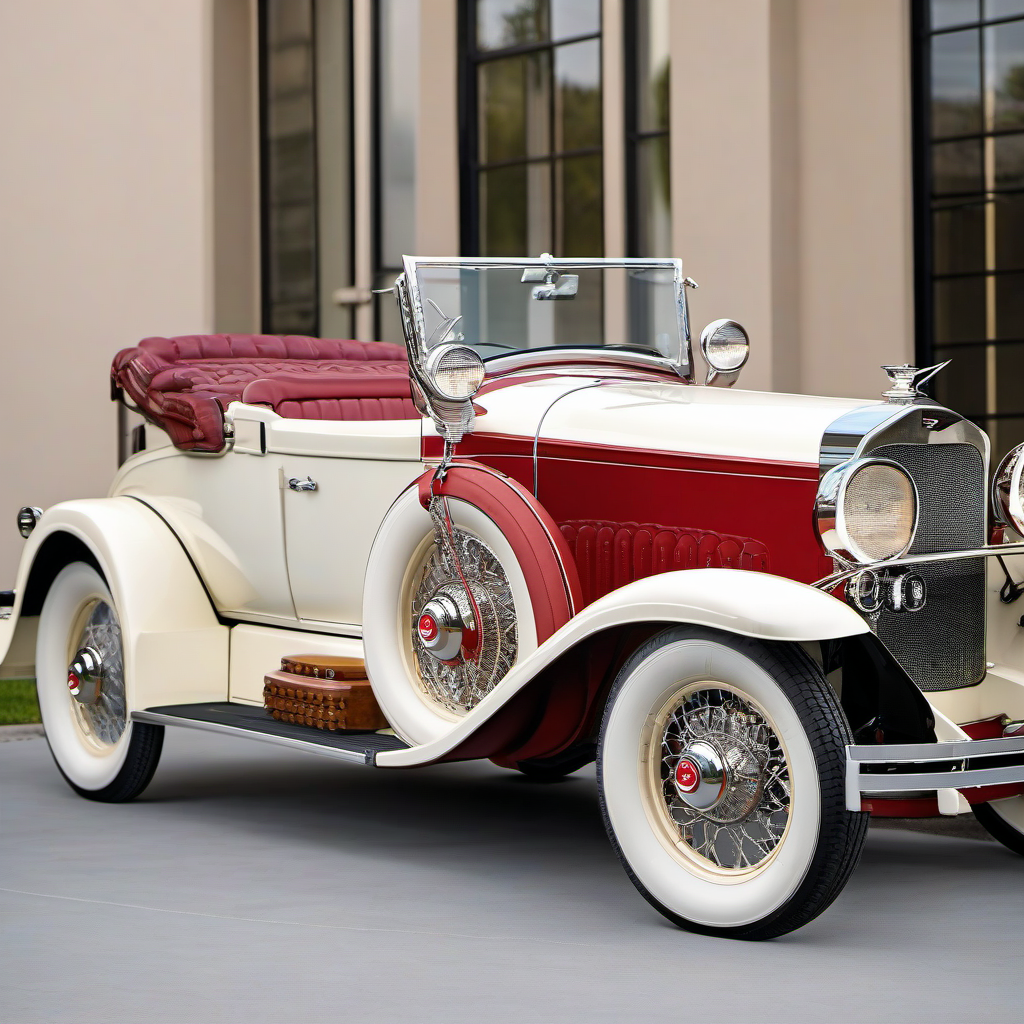
1929 Cadillac
341 CI V8 · Roadster
The 1929 Cadillac Series 341 Roadster is a pre-Depression-era American luxury automobile powered by Cadillac's legendary 341 cubic-inch flathead V8 — the engine that established Cadillac as the "Standard of the World" through the late 1920s. Built on a long 140-inch wheelbase, these open-body roadsters were coachbuilt expressions of wealth and engineering ambition, featuring a 3-speed sliding-gear transmission, mechanical four-wheel brakes, and striking torpedo-style coachwork. Nearly every surviving example has been restored at least once in its 95-plus year life. This is a collector and show vehicle first, a driver second. Parts availability depends heavily on specialty suppliers, marque clubs (Cadillac-LaSalle Club), and the used-parts network — not your local parts store. Mechanical simplicity works in the owner's favor: no electronics, no fuel injection, no sensors. What breaks is usually cast iron, rubber, or fabric, and a skilled old-iron mechanic can address most of it. Owning a 1929 Series 341 Roadster in Lake Geneva, Wisconsin means storing it properly through long winters. Salt air, freeze-thaw cycles, and moisture are the enemies of the open bodywork, canvas top, and uncoated cast-iron components. Expect to invest as much in storage and cosmetics as in mechanical upkeep.
The 1929 Cadillac Series 341 Roadster is a pre-Depression-era American luxury automobile powered by Cadillac's legendary 341 cubic-inch flathead V8 — the engine that established Cadillac as the "Standard of the World" through the late 1920s. Built on a long 140-inch wheelbase, these open-body roadsters were coachbuilt expressions of wealth and engineering ambition, featuring a 3-speed sliding-gear transmission, mechanical four-wheel brakes, and striking torpedo-style coachwork. Nearly every surviving example has been restored at least once in its 95-plus year life. This is a collector and show vehicle first, a driver second. Parts availability depends heavily on specialty suppliers, marque clubs (Cadillac-LaSalle Club), and the used-parts network — not your local parts store. Mechanical simplicity works in the owner's favor: no electronics, no fuel injection, no sensors. What breaks is usually cast iron, rubber, or fabric, and a skilled old-iron mechanic can address most of it. Owning a 1929 Series 341 Roadster in Lake Geneva, Wisconsin means storing it properly through long winters. Salt air, freeze-thaw cycles, and moisture are the enemies of the open bodywork, canvas top, and uncoated cast-iron components. Expect to invest as much in storage and cosmetics as in mechanical upkeep.
E10/E15 pump gas corrodes original zinc carb parts, attacks rubber fuel lines, and absorbs water during storage. Ethanol-free fuel (often available at marinas near Lake Geneva) is strongly preferred.
The 1929 Series 341 uses mechanical (rod-and-cable) four-wheel brakes. They require precise, knowledgeable adjustment to perform safely — not a job for someone unfamiliar with pre-hydraulic systems.
Modern detergent oils can dislodge decades of accumulated deposits in old engines, causing sudden seal leaks. Use non-detergent SAE 30 or a period-correct viscosity unless the engine has been freshly rebuilt with modern seals.
Cast-iron block and head accumulate scale. Period-correct coolant (low-silicate or plain water with rust inhibitor) is appropriate. Check for cracked hoses and weeping water pump.
The 1929 chassis has numerous grease points on kingpins, tie rods, and spring shackles. Neglecting these leads to rapid wear on irreplaceable parts.
UV exposure and moisture cause canvas to crack, shrink, and mildew. Clean and treat before summer use; store with top properly supported to prevent stress creases.
6V systems have very little margin for voltage drop. Corroded terminals or a weak battery will prevent starting and can burn out the generator or coil.
Long Wisconsin winters mean 5–6 months of storage. Varnish in carb float bowls, dry cylinder walls, and stale fuel are the top causes of spring no-starts and internal damage.
Always defer to the manufacturer's service manual for warranty-mandated intervals.
Annual maintenance costs are highly variable and restoration-phase-dependent. A freshly restored, well-sorted car in annual show use might see $800–$1,500/year in routine upkeep. A car needing cosmetic or mechanical restoration work can easily run $5,000–$20,000+ in a single season. Budget separately for proper enclosed winter storage — unheated but dry is the minimum; climate-controlled is ideal in Wisconsin. Parts sourcing through the Cadillac-LaSalle Club and specialty antique suppliers is essential.
Direct luxury competitor to Cadillac in 1929 — similar price tier, straight-eight engine, comparable open-body coachwork. Strong club support and parts network through the Packard Club.
No catalog matchFord Motor Company's flagship luxury marque for 1929, powered by a large V8. Same collector tier, similar restoration economics, and a dedicated owners club.
No catalog matchCadillac's companion marque for 1929 — same GM platform, similar V8, lower original price point. Shares much of the Cadillac-LaSalle Club support network and some parts commonality.
No catalog matchThe direct evolution of the 341 — slightly larger displacement, refined mechanicals, same basic architecture. A 353 competes in the same collector market and can share some parts with the 341.
No catalog match