Valve seat recession / burnt valves
high- Typically appears
- Any mileage if run on unleaded fuel without additive
- Estimated repair
- $800 – $2,500
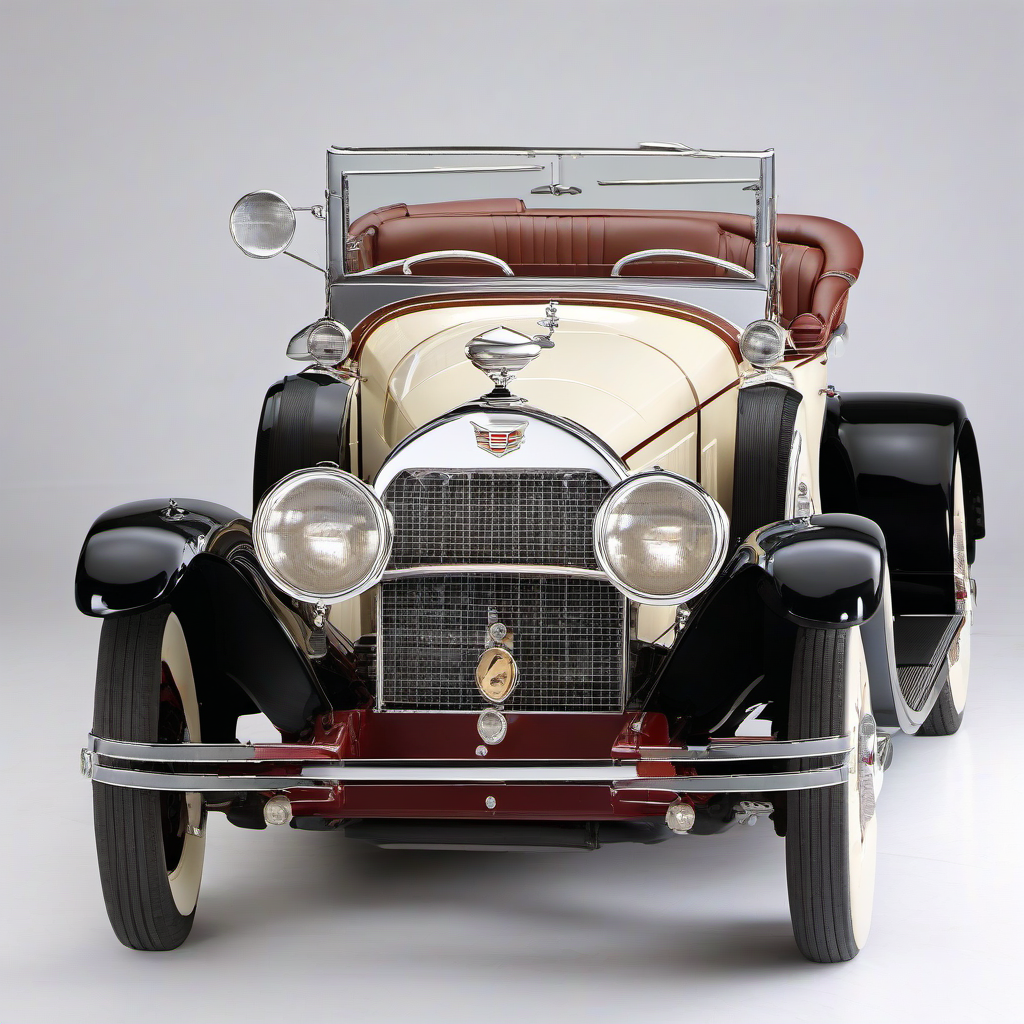
1928 Cadillac
341 CI V8 · Roadster
The 1928 Cadillac Series 341 Roadster is a pre-war American luxury automobile powered by Cadillac's celebrated 341 cubic-inch (5.6L) L-head V8 — the engine that cemented Cadillac's reputation as an engineering leader in the 1920s. Built on a long, stately ladder frame with open coachwork, it represents the pinnacle of American craftsmanship and style during the late Jazz Age. At nearly 100 years old, this is a full-on antique vehicle, not a daily driver, and it demands the knowledge and patience of a dedicated collector or restorer. These cars were hand-fitted in small numbers and originally bodied by Cadillac or independent coachbuilders. Surviving examples range from museum-quality restorations to honest drivers in varying states of preservation. Expect to find a mix of original and replacement parts — sourcing correct NOS (new-old-stock) or quality reproduction components is the primary ownership challenge. This is not a vehicle for standard shop maintenance intervals. It requires a specialist familiar with pre-war mechanicals: non-hardened valve seats, splash-and-pressure oiling hybrids, mechanical fuel pumps, 6-volt positive-ground electrical systems, and drum brakes on all four corners with mechanical actuation. Plan every season carefully, especially Wisconsin winters.
The 1928 Cadillac Series 341 Roadster is a pre-war American luxury automobile powered by Cadillac's celebrated 341 cubic-inch (5.6L) L-head V8 — the engine that cemented Cadillac's reputation as an engineering leader in the 1920s. Built on a long, stately ladder frame with open coachwork, it represents the pinnacle of American craftsmanship and style during the late Jazz Age. At nearly 100 years old, this is a full-on antique vehicle, not a daily driver, and it demands the knowledge and patience of a dedicated collector or restorer. These cars were hand-fitted in small numbers and originally bodied by Cadillac or independent coachbuilders. Surviving examples range from museum-quality restorations to honest drivers in varying states of preservation. Expect to find a mix of original and replacement parts — sourcing correct NOS (new-old-stock) or quality reproduction components is the primary ownership challenge. This is not a vehicle for standard shop maintenance intervals. It requires a specialist familiar with pre-war mechanicals: non-hardened valve seats, splash-and-pressure oiling hybrids, mechanical fuel pumps, 6-volt positive-ground electrical systems, and drum brakes on all four corners with mechanical actuation. Plan every season carefully, especially Wisconsin winters.
The 341 V8 has non-hardened cast-iron valve seats. Unleaded fuel without a lead substitute will cause valve seat recession and burnt valves over time — a costly repair on a pre-war engine.
Pre-war engines consume and seep oil at rates modern owners find alarming. Consistent level checks prevent oil starvation in a splash-and-pressure hybrid oiling system that has no tolerance for running low.
Modern detergent oils can dislodge decades of accumulated varnish and sludge, potentially clogging oil passages. Use non-detergent oil or a specialty classic-car oil with high ZDDP content to protect the flat-tappet camshaft.
Mechanical four-wheel brakes require manual adjustment to maintain even, effective stopping. Uneven adjustment causes brake pull, which at pre-war speeds is a serious safety hazard.
Even 'replaced' rubber components on a car this age harden and crack. A burst hose or blown gasket mid-tour in Wisconsin summer heat can cause rapid overheating and engine damage.
6-volt systems have less reserve than 12-volt. A weak battery or out-of-spec voltage regulator can cause generator overcharge, burning out the entire electrical system.
Old-design carburetors and fuel bowls are especially vulnerable to ethanol-blend fuel varnishing. Drained and dried systems are far easier to recommission than gummed-up ones.
1928 chassis have many grease zerks that require manual attention. Dry kingpins and shackle bolts wear rapidly and cause dangerous steering slop.
Always defer to the manufacturer's service manual for warranty-mandated intervals.
Annual costs are low if the car is already properly restored and you're in a maintenance phase. The risk is one major unplanned repair — a full engine rebuild, coachwork repair, or sourcing rare parts — which can run $5,000–$20,000+ depending on scope. Budget accordingly and maintain a restoration fund. This is a passion purchase, not a cost-efficient vehicle.
Packard's 1928 entry-level six-cylinder line competed directly with Cadillac for upper-crust American buyers. Strong club support, similar parts challenges, and comparable collector market positioning.
No catalog matchFord's prestige marque fielded a V8 of its own in this era. The Lincoln Model L sits in the same tier of American pre-war luxury collectibles, with comparable rarity and restoration complexity.
No catalog matchThe Chrysler Series 72 offered a powerful inline-six in a similarly styled open body. Slightly more accessible parts supply in some categories, with a strong collector following.
No catalog matchLaSalle was Cadillac's companion marque, launched in 1927 with a smaller V8. Shares significant mechanical DNA with the 341 Cadillac and is supported by the same Cadillac-LaSalle Club, making it a natural sibling comparison for collectors.
No catalog match