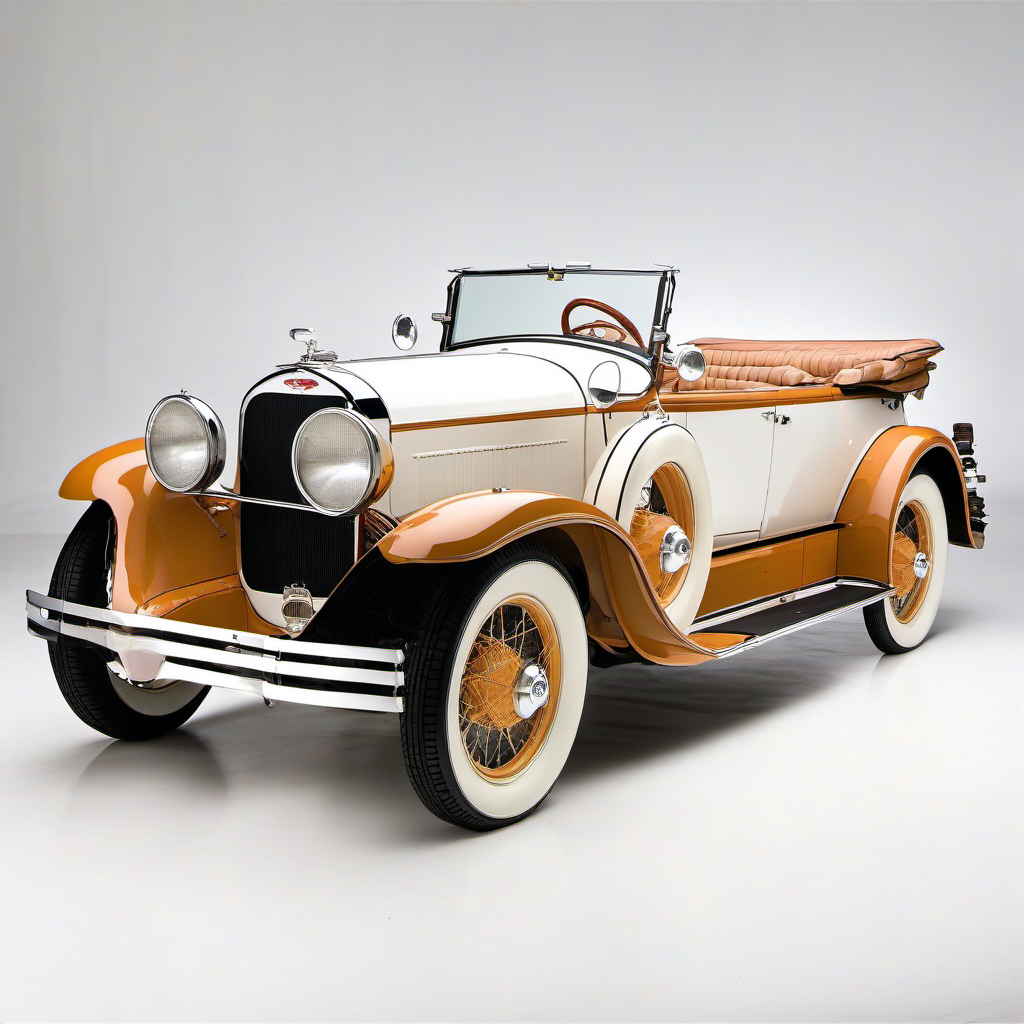
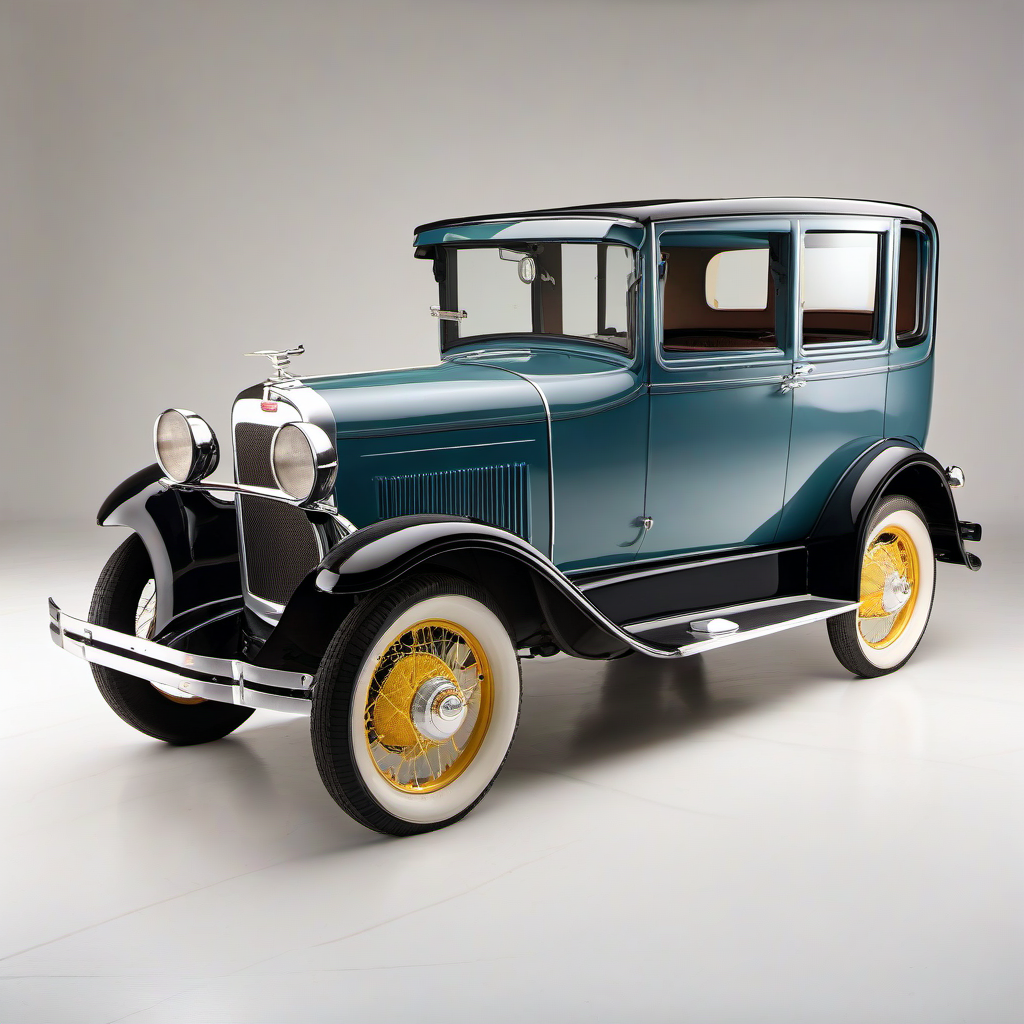
1927 Chrysler Series 52 Roadster

1927 Chrysler

Series 52Roadster

175 CI I4 · Roadster

The 1927 Chrysler Series 52 Roadster is a pre-Depression-era open two-seat automobile, part of Walter P. Chrysler's early lineup that helped establish the brand's reputation for engineering quality. Powered by a 175 cubic-inch inline four-cylinder engine, it was a step below the more prestigious six-cylinder Chrysler models of the day but offered solid performance and reliability for its era. As a nearly 100-year-old vehicle, the Series 52 is firmly a collector and show car today. Expect it to require specialized knowledge, hard-to-find parts, and a network of vintage Chrysler restorers rather than a conventional repair shop. Ethanol-blended modern pump gas, modern motor oils, and absent rubber components are the primary mechanical challenges for today's owners. This car almost certainly lives in a garage and is driven occasionally for shows, parades, or warm-weather touring. It is not a daily driver and should not be treated as one. Any maintenance or repair work should involve a technician experienced with pre-war vehicles.

Reliability
3/5
Verified data
Engine
175 CI I4
Drivetrain
RWD
Fuel
Gasoline
MPG
Seats
2
Doors
2
Body
Roadster
MSRP
$845

Overview

AI-curated

The 1927 Chrysler Series 52 Roadster is a pre-Depression-era open two-seat automobile, part of Walter P. Chrysler's early lineup that helped establish the brand's reputation for engineering quality. Powered by a 175 cubic-inch inline four-cylinder engine, it was a step below the more prestigious six-cylinder Chrysler models of the day but offered solid performance and reliability for its era. As a nearly 100-year-old vehicle, the Series 52 is firmly a collector and show car today. Expect it to require specialized knowledge, hard-to-find parts, and a network of vintage Chrysler restorers rather than a conventional repair shop. Ethanol-blended modern pump gas, modern motor oils, and absent rubber components are the primary mechanical challenges for today's owners. This car almost certainly lives in a garage and is driven occasionally for shows, parades, or warm-weather touring. It is not a daily driver and should not be treated as one. Any maintenance or repair work should involve a technician experienced with pre-war vehicles.

Known for
  • Early example of Chrysler's commitment to engineering over pure simplicity
  • Open roadster body style with vintage two-seat sporting character
  • Relatively smooth and reliable 175 CI I4 for its era
  • Mechanical simplicity — no electronics, no emissions equipment
  • Strong collector and hobby community through the Walter P. Chrysler Club
Best for
  • Serious vintage car collectors and restorers
  • Show car and parade use
  • Warm-weather weekend touring
  • Owners with access to a dry, climate-controlled storage space
Watch for
  • Ethanol in modern pump gas degrades old rubber fuel lines and carburetor components
  • No modern safety features — no seatbelts, crumple zones, or airbags
  • Replacement parts are scarce and often require NOS sourcing or custom fabrication
  • Vintage electrical systems (6-volt positive ground) are incompatible with modern accessories
  • Drum brakes on all four corners require significantly more stopping distance than any modern vehicle

Common issues by mileage

6 known

Carburetor failure / ethanol fuel damage

high
Typically appears
Any age/mileage
Estimated repair
$150 – $600

Deteriorated fuel lines (ethanol and age)

high
Typically appears
Any age/mileage
Estimated repair
$100 – $400

Brake system failure — worn or glazed drum brake linings

high
Typically appears
Any age/mileage
Estimated repair
$200 – $800

6-volt battery and electrical system weakness

medium
Typically appears
Any age/mileage
Estimated repair
$80 – $350

Dried or cracked water pump and radiator hoses — coolant leaks

high
Typically appears
Any age/mileage
Estimated repair
$100 – $500

Worn or failed wooden wheel spokes / wheel integrity

medium
Typically appears
Any age/mileage
Estimated repair
$300 – $1,500

Maintenance schedule

  1. 1
    Every fill-up Use ethanol-free (E0) fuel exclusively

    Ethanol attacks original rubber fuel lines, cork carburetor floats, and gaskets. E0 fuel dramatically extends the life of original fuel system components and is widely available in Wisconsin.

  2. 2
    Every season or every 1,000 miles of use Change engine oil with a non-detergent or flat-tappet-compatible motor oil (no modern API SN+)

    Modern high-detergent oils can dislodge decades of built-up deposits in old engines, causing oil passage blockages. The flat-tappet cam also requires higher ZDDP content than modern oils provide.

  3. 3
    Every 2–3 years or if left sitting more than 6 months Inspect and rebuild carburetor

    Old carburetors gum up rapidly with modern fuel blends. A rebuild kit is far cheaper than sourcing a replacement unit.

  4. 4
    Every 3–4 years Flush and inspect cooling system; replace hoses

    Original-spec rubber hoses degrade with age. A blown hose or cracked water pump can quickly overheat and damage this irreplaceable engine.

  5. 5
    Every 2 years or before any extended driving season Inspect and reline drum brakes

    Four-wheel drum brakes are the sole stopping system with no power assist. Glazed or contaminated linings in a 2,800 lb open car at road speeds are a serious safety issue.

  6. 6
    Every spring before use Lubricate all grease fittings (chassis, steering, king pins)

    Pre-war chassis have many more grease points than modern vehicles. Dry king pins and steering joints wear rapidly and cause handling vagueness.

  7. 7
    Every spring; disconnect and trickle-charge during winter storage Charge and load-test the 6-volt battery

    6-volt batteries have less reserve capacity than modern 12-volt units. A dead battery after winter storage is almost guaranteed without a tender.

  8. 8
    Annually Inspect soft top (if original or cloth), body sills, and wood framing for rot

    Open roadster bodies often incorporate wood structural elements. Moisture intrusion — especially relevant in Wisconsin — can silently destroy structural integrity.

Always defer to the manufacturer's service manual for warranty-mandated intervals.

Cost of ownership

Annual maintenance
$300 – $2,000
Fuel
Minimal — this vehicle is driven very few miles per year. Ethanol-free premium is recommended and typically costs $0.20–0.50/gal more than standard unleaded. Annual fuel cost for a show/touring car is likely under $100.
Insurance
Agreed-value collector car insurance is strongly recommended over standard auto insurance. Annual premiums for agreed-value coverage on a vehicle like this typically run $150–$400/year depending on stated value and mileage limits.

Annual costs are low in normal years — mostly preventive maintenance, storage, and insurance. The unpredictable expense is parts: a single hard-to-find component (carburetor, water pump, wheel) can run $300–$1,500+ if not already in your parts inventory. Budget for a restoration reserve if the car has not been comprehensively gone through recently.

Seasonal care

Lake Geneva, WI
Winter
  • Store indoors in a climate-controlled or at minimum dry, enclosed garage — this is non-negotiable for a 97-year-old open car. Outdoor winter storage will destroy it.
  • Drain or stabilize the fuel system before storage. Ethanol-blended fuel left in the carburetor and lines over winter will varnish the carburetor and degrade rubber components.
  • Disconnect the 6-volt battery and connect a compatible low-amperage trickle charger or battery tender to maintain charge through the cold months.
  • Place the car on jack stands to take weight off the tires and prevent flat-spotting during long storage.
  • Cover the vehicle with a breathable cloth car cover — never plastic, which traps condensation and accelerates rust and wood rot.
  • Place desiccant packets inside the cockpit and rodent deterrents in the engine bay and interior to prevent nest damage to wiring and upholstery.
Summer
  • Check coolant level and hose condition before every outing — the simple cooling system has limited margin if a hose fails at a show far from home.
  • Inspect tire condition carefully; aged rubber can look fine but be critically degraded internally. Heat accelerates rubber breakdown on vintage tires.
  • Check brake function (pedal feel, pulling) before any drive. Drum brakes can fade significantly in hot weather or on hills.
  • Carry a basic tool kit and spare parts (points, condenser, spark plugs, fan belt, extra coolant) — roadside assistance for a 1927 vehicle is essentially nonexistent.
  • Avoid driving through road construction zones or freshly chip-sealed roads — the open engine bay and cockpit have no protection from thrown debris.
  • Check all fluid levels (oil, coolant, brake fluid if hydraulic brakes are fitted) before each outing; there are no dashboard warning systems on this vehicle.

Comparable vehicles

If you're shopping for one

Red flags
  • Signs of outdoor long-term storage: surface rust on unpainted metal, water staining inside the cockpit, or deteriorated upholstery.
  • Amateur wiring — electrical tape, mismatched wire gauges, or 12-volt components grafted onto a 6-volt system are signs of botched prior work.
  • A seller who cannot produce any documentation of the car's history or restoration work.
  • Engine that does not start without extensive coaxing, or that produces heavy blue or white smoke.
  • Brakes that pull, feel spongy, or produce grinding noise — brake work on this car requires specialist knowledge.
  • Mismatched panels, filler-heavy bodywork, or paint that doesn't match original color documentation — may indicate hidden accident damage or a heavily modified car sold as original.
What to inspect
  • Confirm the engine starts, idles, and does not knock or smoke heavily — a rebuild on a 175 CI I4 of this age requires specialist machine work and is expensive.
  • Inspect all brake drums and linings; have a knowledgeable person pump the brakes before any test drive.
  • Check all visible rubber: fuel lines, coolant hoses, and any remaining gaskets for cracking or active leaks.
  • Inspect the body sills, floorboards, and any wood framing under the body for rot — probe with a pick, not just visual inspection.
  • Verify the electrical system (lights, horn) functions on its original 6-volt positive-ground system; rewired cars may have hidden problems.
  • Review any restoration documentation carefully — know what has been done, when, and by whom. An undocumented 'restoration' may hide problems or reduce collector value.
  • Check wheel integrity — wire wheels or wood-spoke wheels should show no cracked spokes, lateral wobble, or loose nipples.
AI profile generated 4 days ago · claude-sonnet-4-6 · v2.