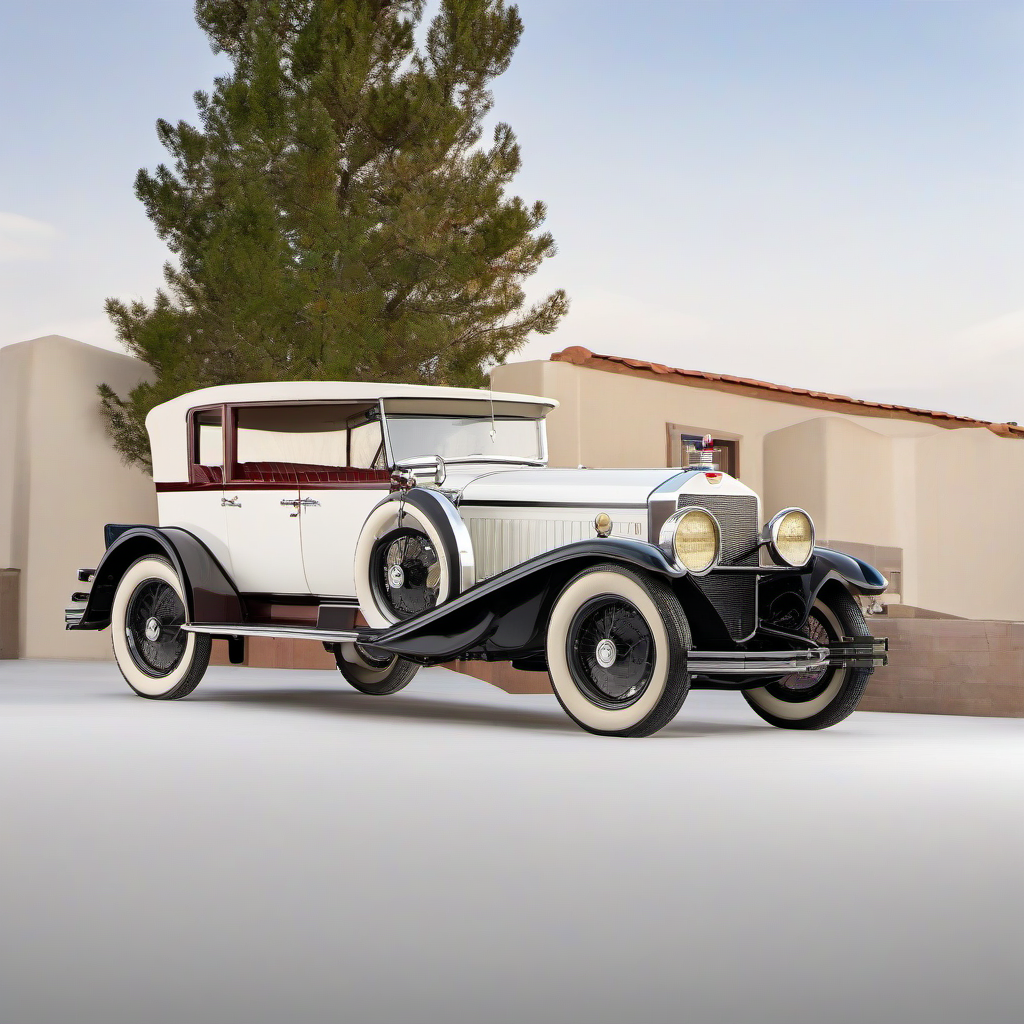
1927 Cadillac Series 314 Sedan

1927 Cadillac

Series 314Sedan

341 CI V8 · Sedan

The 1927 Cadillac Series 314 is a full-size luxury sedan from the classic era of American motoring. It carries Cadillac's 314 cubic-inch (5.1L) L-head V8 — the engine that established Cadillac's reputation for smooth, refined power at a time when most competitors were still relying on four- and six-cylinder engines. Built on a long, stout ladder frame with coach-built bodywork, this car was a symbol of prestige and engineering ambition in its day. Nearly 100 years old, a surviving Series 314 is a collectible antique, not a daily driver. Ownership is about preservation, show, and the occasional parade or tour. Parts are scarce and largely sourced through antique auto suppliers, specialty machinists, and hobbyist networks like the Classic Car Club of America (CCCA). A good example in running condition commands serious collector interest. Expect a fully mechanical car with no electronic systems whatsoever — no OBD port, no ABS, no power anything. The 6-volt positive-ground electrical system, mechanical drum brakes, and gravity-fed fuel system are the norm. This is a vehicle that rewards patient, knowledgeable ownership and a good relationship with a shop that understands pre-war vehicles.

Reliability
3/5
Verified data
Engine
314 CI L-head V8
Drivetrain
RWD
Fuel
Gasoline
MPG
Seats
5
Doors
4
Body
Sedan
MSRP
$3,295

Overview

AI-curated

The 1927 Cadillac Series 314 is a full-size luxury sedan from the classic era of American motoring. It carries Cadillac's 314 cubic-inch (5.1L) L-head V8 — the engine that established Cadillac's reputation for smooth, refined power at a time when most competitors were still relying on four- and six-cylinder engines. Built on a long, stout ladder frame with coach-built bodywork, this car was a symbol of prestige and engineering ambition in its day. Nearly 100 years old, a surviving Series 314 is a collectible antique, not a daily driver. Ownership is about preservation, show, and the occasional parade or tour. Parts are scarce and largely sourced through antique auto suppliers, specialty machinists, and hobbyist networks like the Classic Car Club of America (CCCA). A good example in running condition commands serious collector interest. Expect a fully mechanical car with no electronic systems whatsoever — no OBD port, no ABS, no power anything. The 6-volt positive-ground electrical system, mechanical drum brakes, and gravity-fed fuel system are the norm. This is a vehicle that rewards patient, knowledgeable ownership and a good relationship with a shop that understands pre-war vehicles.

Known for
  • Cadillac's milestone L-head V8, smooth and quiet for its era
  • Long, imposing coachwork with elegant period styling
  • 6-volt positive-ground electrical system
  • All-mechanical controls — no power brakes, power steering, or electronics
  • Prestige and craftsmanship that defined American luxury in the late 1920s
Best for
  • Serious antique car collectors and restorers
  • CCCA-sanctioned tours and concours events
  • Car show enthusiasts and automotive history buffs
  • Owners with access to pre-war specialty shops or machinist resources
Watch for
  • Extremely scarce NOS and reproduction parts — sourcing takes time and money
  • 6-volt electrical system is incompatible with modern accessories without conversion
  • Mechanical drum brakes on all four wheels provide very limited stopping power by modern standards
  • Wood-framed body sections on many examples are prone to rot and structural weakness
  • Ethanol-blended pump fuel (E10/E15) can damage original fuel system components

Common issues by mileage

6 known

Deteriorated rubber fuel lines and carburetor diaphragms

high
Typically appears
All ages / any mileage
Estimated repair
$150 – $600

6-volt battery failure or charging system weakness

high
Typically appears
All ages
Estimated repair
$100 – $350

Brake shoe lining wear or frozen wheel cylinders

high
Typically appears
All ages
Estimated repair
$300 – $900

Oil leaks from cork gaskets and rope seals

high
Typically appears
All ages
Estimated repair
$200 – $700

Wood body frame rot or structural softening

medium
Typically appears
All ages
Estimated repair
$1,000 – $8,000

Ignition points, condenser, and timing drift

medium
Typically appears
All ages
Estimated repair
$75 – $300

Maintenance schedule

  1. 1
    Every fill-up Use ethanol-free gasoline exclusively

    E10 and E15 blends degrade original rubber fuel lines, carburetor components, and the fuel tank. Ethanol-free fuel protects these irreplaceable or hard-to-source parts.

  2. 2
    Every 1,000–1,500 miles or annually Change engine oil with a non-detergent, zinc-additive (ZDDP) oil

    The flat-tappet cam and babbit bearings in this engine require high-zinc oil. Modern detergent oils can dislodge decades of sludge and cause bearing damage. Use a non-detergent SAE 30 or a ZDDP-supplemented vintage formula.

  3. 3
    Every spring before driving season Inspect and adjust ignition points and timing

    Contact points wear and drift, causing hard starts and poor running. A fresh set of points and a condenser is cheap insurance before each season.

  4. 4
    Each spring and fall Test and service 6-volt battery

    6-volt batteries have lower reserve capacity than modern 12-volt units. Cold Wisconsin winters will kill a marginal battery. Use a 6-volt-compatible trickle charger during storage.

  5. 5
    Annually or before any road use Inspect all brake components — shoes, wheel cylinders, and mechanical linkage

    Drum brakes on a 4,000+ lb vehicle with no power assist require everything to be in perfect condition. Frozen wheel cylinders and cracked shoes are a safety emergency.

  6. 6
    Every 2 years Flush and refill cooling system with correct inhibitor

    The cast-iron block and early water pump are vulnerable to rust and scale. Use a vintage-appropriate coolant without modern OAT inhibitors that can attack older seals.

  7. 7
    Every 500 miles or each spring Lubricate all chassis grease fittings (zerks)

    This era of vehicle has many grease points — king pins, tie rod ends, u-joints — that dry out quickly and wear rapidly without regular attention.

  8. 8
    Each fall before storage Store with fuel stabilizer and a vapor barrier if wintering indoors

    Long-term fuel varnish clogs the carburetor jets. Humidity during Lake Geneva winters promotes rust inside the fuel tank and on exposed brake hardware.

Always defer to the manufacturer's service manual for warranty-mandated intervals.

Cost of ownership

Annual maintenance
$500 – $3,500
Fuel
Ethanol-free premium gasoline required; fuel economy is approximately 10–14 mpg under light use. Annual fuel cost is typically low given limited mileage, but per-gallon cost is higher due to ethanol-free sourcing.
Insurance
Typically insured as an agreed-value collector vehicle through a specialty insurer — often $300–$700/year for a well-documented example, depending on appraised value. Standard auto insurance is not appropriate.

Annual costs are highly variable and depend almost entirely on what needs restoration versus what was recently done. A well-restored, properly stored car in regular light use may only need routine consumables — oil, points, coolant, fuel — in the $500–$1,000 range per year. Any significant mechanical or body work (rebabbiting bearings, wood frame repair, brake system rebuild) can push costs into the thousands quickly, especially given specialist labor rates and parts sourcing time. Budget generously and expect surprises.

Seasonal care

Lake Geneva, WI
Winter
  • Store indoors in a climate-stable environment — freeze-thaw cycles crack hoses, gaskets, and the water jacket if coolant is diluted or incorrect.
  • Drain or treat the fuel system with ethanol-free stabilizer before storage; varnish in the carburetor is a common spring headache.
  • Remove the 6-volt battery and store it on a compatible trickle charger — cold kills low-capacity vintage batteries quickly.
  • Apply a light coat of oil or rust inhibitor to exposed brake hardware, chassis metal, and any bare steel to fight Wisconsin road salt if the car is ever driven near treated roads.
  • Cover with a breathable car cover — not plastic — to prevent moisture and condensation buildup on the body and interior.
  • Inspect wood body framing before spring — winter humidity accelerates wood rot in any cracks or areas where paint has failed.
Summer
  • Monitor coolant temperature closely — the early cooling system has limited capacity and can overheat in slow traffic or on hot days; carry extra coolant.
  • Check tire condition and pressure before every outing — original-spec bias-ply or reproduction tires age-crack and are not rated for highway speeds or heat.
  • Inspect the fuel system for vapor lock symptoms on hot days; the gravity-fed carburetor system is susceptible to fuel boiling in the lines.
  • Keep the car out of prolonged direct sun to protect original or restored paint, leather, and any wood trim from UV damage and heat warping.

Comparable vehicles

1927 Packard
Six / Eight

Packard was Cadillac's direct prestige rival in the late 1920s — similar price, similar clientele, similar engineering era. Comparable collector interest and restoration challenges.

No catalog match
1927 Lincoln
Model L

Ford's Lincoln brand competed directly with Cadillac for top-tier American luxury in this era. The Model L uses a similar L-head V8 architecture and shares the same collector community.

No catalog match
1927 Pierce-Arrow
Series 80

Pierce-Arrow was among America's most prestigious marques in the 1920s and draws from the same collector pool as Cadillac. Similar restoration complexity and parts sourcing challenges.

No catalog match
1927 Chrysler
Series 70

A step below Cadillac in price but a close contemporary with a similar inline-6 powertrain and the same mechanical era. More affordable entry into 1920s antique motoring with a slightly larger parts base.

No catalog match

If you're shopping for one

Red flags
  • No documentation of restoration work or ownership history — 97-year-old vehicles need a paper trail.
  • Evidence of amateur electrical work, especially any 12-volt conversion done without proper documentation and component upgrades throughout.
  • Soft or punky wood visible anywhere on the body structure — full wood frame restoration is a major, expensive undertaking.
  • Engine that won't turn over by hand, or one with visible oil contamination in the coolant (head gasket or cracked block).
  • Repainted body that hides rust, filler, or collision repair — look at door gaps, rocker panels, and floor pans carefully.
  • Any seller who cannot demonstrate that the car actually runs and drives — on a collector car of this age, a non-runner's problems are rarely simple.
What to inspect
  • Verify the engine turns over freely by hand before attempting to start — a seized engine from long storage is common and expensive.
  • Probe all wood body framing you can access (door pillars, roof rails, floor sills) for softness or rot; hidden wood damage is the costliest surprise on these cars.
  • Check all brake function — pedal feel, mechanical linkage, and whether wheel cylinders are frozen or leaking.
  • Inspect the wiring harness for cracked, brittle, or rodent-damaged insulation — a fire risk on any antique vehicle.
  • Look for water jacket cracks in the block or head, especially if the car was ever stored without adequate antifreeze in a Wisconsin or northern climate.
  • Confirm the fuel tank interior is clean and rust-free — tank lining or replacement is expensive.
  • Ask for documentation of any restoration work, especially engine rebuilds, brake work, and wiring — provenance drives value on collector vehicles.
AI profile generated 4 days ago · claude-sonnet-4-6 · v2.