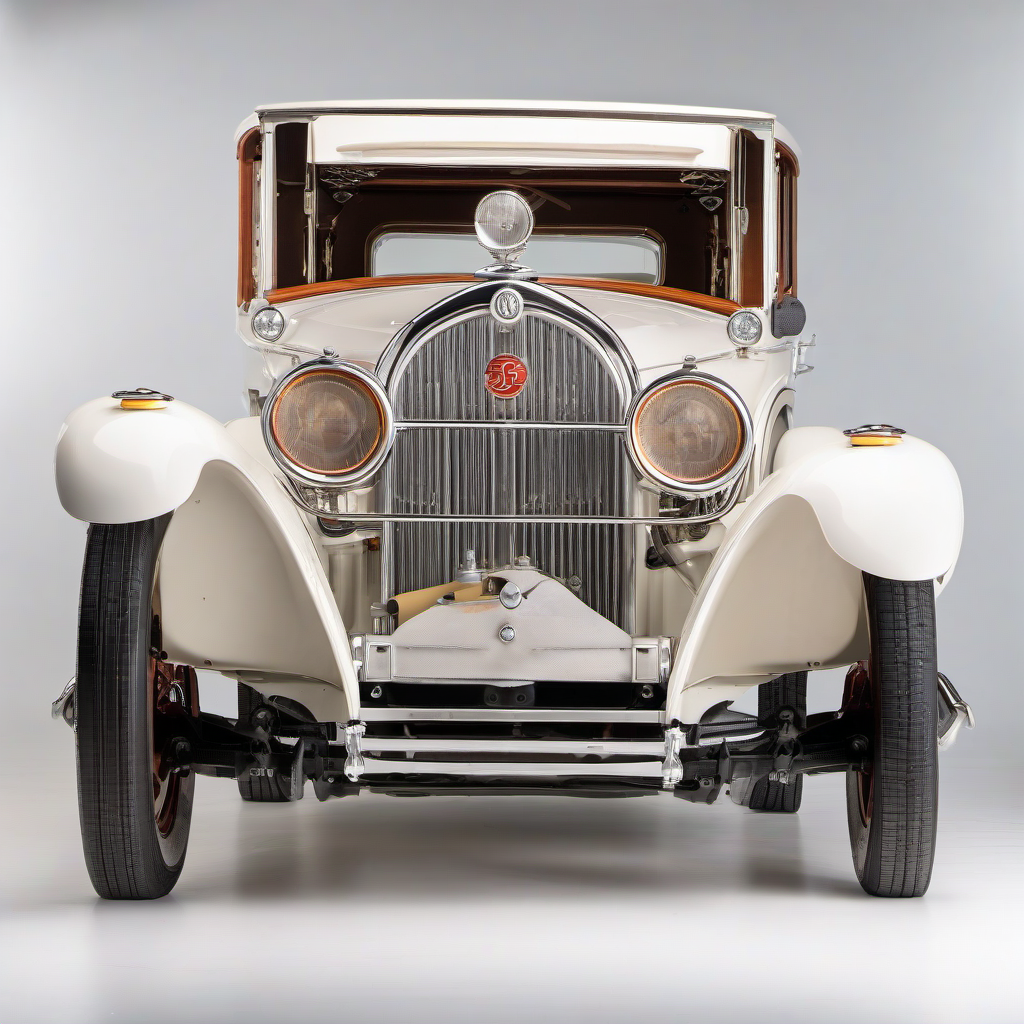
1926 Buick Standard Six Sedan

1926 Buick

Standard SixSedan

207 CI I6 · Sedan

The 1926 Buick Standard Six Sedan is a pre-Depression-era automobile from Buick's lineup during one of the brand's strongest commercial periods. It was built on a conventional ladder-frame chassis with leaf springs all around, mechanical four-wheel brakes (a relatively new feature for the era), and an overhead-valve inline six-cylinder engine — a powertrain architecture Buick had refined over several prior model years. At nearly 100 years old, this is a collector and antique vehicle first and a driver second. Examples that survive today vary enormously in condition: some are fully restored show cars, others are barn-find originals, and a few are drivers that have been mechanically refreshed while retaining patina. Whatever the condition, this car requires an owner who is comfortable with vintage mechanics, sourcing NOS or hand-fabricated parts, and working with shops that specialize in pre-war vehicles. For the Lake Geneva area, seasonal storage and corrosion management are the dominant ownership concerns. Wisconsin road salt is ruthless on century-old steel and original body panels that simply cannot be replaced from a parts bin. This car should be treated as a fair-weather driver or parade vehicle at best, and stored properly from late October through April.

Reliability
3/5
Verified data
Engine
207 CI OHV I6
Drivetrain
RWD
Fuel
Gasoline
MPG
14 city / 18 hwy / 15 combined
Seats
5
Doors
4
Body
Sedan
MSRP
$1,295

Overview

AI-curated

The 1926 Buick Standard Six Sedan is a pre-Depression-era automobile from Buick's lineup during one of the brand's strongest commercial periods. It was built on a conventional ladder-frame chassis with leaf springs all around, mechanical four-wheel brakes (a relatively new feature for the era), and an overhead-valve inline six-cylinder engine — a powertrain architecture Buick had refined over several prior model years. At nearly 100 years old, this is a collector and antique vehicle first and a driver second. Examples that survive today vary enormously in condition: some are fully restored show cars, others are barn-find originals, and a few are drivers that have been mechanically refreshed while retaining patina. Whatever the condition, this car requires an owner who is comfortable with vintage mechanics, sourcing NOS or hand-fabricated parts, and working with shops that specialize in pre-war vehicles. For the Lake Geneva area, seasonal storage and corrosion management are the dominant ownership concerns. Wisconsin road salt is ruthless on century-old steel and original body panels that simply cannot be replaced from a parts bin. This car should be treated as a fair-weather driver or parade vehicle at best, and stored properly from late October through April.

Known for
  • Smooth, torquey overhead-valve inline six in an era when many competitors still used side-valve fours
  • Four-wheel mechanical brakes introduced to the Standard Six lineup — a significant safety advancement for 1926
  • Solid, reputation-earned build quality that helped Buick outsell many rivals during the mid-1920s
  • Classic open-fender, running-board body style with period-correct closed sedan coachwork
Best for
  • Dedicated antique car collectors seeking a significant piece of American automotive history
  • Vintage car show participants and parades
  • Restoration enthusiasts comfortable with pre-war mechanical systems
  • Owners with access to a climate-controlled garage and long-term storage capability
Watch for
  • Near-century-old rubber components (hoses, seals, gaskets) that will be hardened, cracked, or simply absent
  • Mechanical brake system requires careful adjustment and inspection — there is no hydraulic backup
  • Electrical system is 6-volt positive ground; modern 12-volt accessories and batteries require conversion or adapters
  • Body panels, trim, and glass are unobtainium — damage is effectively permanent without specialty fabrication
  • Wisconsin road salt is catastrophic for this vehicle; it must never be driven on treated roads

Common issues by mileage

6 known

Hardened or failed fuel system components (carburetor, fuel lines, cork floats)

high
Typically appears
Any — age-related
Estimated repair
$200 – $800

Deteriorated rubber seals and gaskets causing oil and coolant leaks

high
Typically appears
Any — age-related
Estimated repair
$150 – $600

Mechanical brake system out of adjustment or with worn/frozen linkages

high
Typically appears
Any — safety-critical, inspect before every driving season
Estimated repair
$200 – $1,200

6-volt electrical system degradation — wiring insulation cracking, weak generator output, failing voltage regulator

high
Typically appears
Any — age-related
Estimated repair
$300 – $2,000

Cooling system failure — cracked hoses, deteriorated water pump, clogged radiator with century of scale

medium
Typically appears
Any — age-related
Estimated repair
$300 – $1,500

Body and chassis rust — particularly floor pans, rocker panels, and frame rails on unrestored examples

medium
Typically appears
Any — especially Wisconsin/salt-belt cars
Estimated repair
$500 – $10,000

Maintenance schedule

  1. 1
    Every storage season Drain and flush fuel system before storage and before returning to service

    Ethanol-blended modern gasoline degrades quickly, leaves varnish deposits in the carburetor, and attacks old rubber fuel lines. Use ethanol-free fuel when possible and add a fuel stabilizer for any storage over 30 days.

  2. 2
    Every spring before driving season Full mechanical brake inspection and adjustment

    This car has no hydraulic brakes — all stopping power depends on properly adjusted mechanical linkages and brake shoes. A single seized or misadjusted rod can cause severe brake pull or total brake failure.

  3. 3
    Every 1,000–1,500 driving miles or annually Engine oil change with correct non-detergent oil

    Modern detergent oils can dislodge decades of accumulated deposits in older engines and cause sudden seal failures. Use a non-detergent straight-weight oil appropriate to operating temperature.

  4. 4
    Every 2–3 years or 2,000 driving miles Inspect and re-pack wheel bearings

    Older Timken-style tapered roller bearings require periodic cleaning and repacking with grease. Neglected bearings can seize or fail catastrophically at speed.

  5. 5
    Every spring and fall Test and service 6-volt battery and charging system

    6-volt batteries have less cold-cranking reserve than modern 12-volt units and are especially vulnerable to Wisconsin winters. A weak battery or failing generator can leave you stranded immediately.

  6. 6
    Annually before driving season Inspect all coolant hoses, clamps, and radiator cap seal

    Rubber hoses on a vehicle this age can look intact externally while being paper-thin inside. An overheating event on a pre-war engine with non-pressure-cap cooling can cause rapid damage.

  7. 7
    Every 500 driving miles or annually Lubricate all chassis grease fittings (Zerk fittings)

    1920s chassis have many lubrication points that require regular attention. Dry kingpins, tie rod ends, and spring shackles wear rapidly and are extremely difficult to source as replacements.

  8. 8
    Annually before storage Inspect and treat body for rust, especially undercarriage and floor pans

    Wisconsin road salt can migrate into stored vehicles via wheel wells and undercarriage. Annual inspection with rust inhibitor treatment on bare metal is essential to preserving what cannot be replaced.

Always defer to the manufacturer's service manual for warranty-mandated intervals.

Cost of ownership

Annual maintenance
$400 – $3,000
Fuel
Ethanol-free regular gasoline strongly preferred; this engine was designed for leaded fuel — a lead substitute additive is recommended for valve seat protection if driving regularly. Fuel cost is minimal given very limited mileage typical for antique use.
Insurance
Antique/collector vehicle insurance (agreed value policy) is typically very affordable — often $150–$400/year for a properly stored collector car with mileage restrictions. Standard auto insurance is inappropriate and likely unavailable for a vehicle this age.

Annual cash outlay is low if the car is already in good running condition and stored properly — most years you may spend only on fluids, minor consumables, and storage. However, when something does need restoration or repair, costs escalate quickly because parts must be sourced from specialty vendors, NOS stock, or fabricated from scratch. Budget a contingency fund of $1,000–$5,000 for any given year if the car is actively being restored or recommissioned.

Seasonal care

Lake Geneva, WI
Winter
  • Do NOT drive this vehicle on Wisconsin roads from November through April — road salt will destroy irreplaceable body panels, frame, and mechanical components within a few seasons.
  • Store in a climate-controlled or at minimum dry, unheated garage. Avoid dirt-floor storage where ground moisture wicks upward into the body.
  • Before storage, drain or stabilize fuel to prevent varnish buildup in the carburetor and fuel lines over winter.
  • Remove the 6-volt battery and store it on a trickle-appropriate tender indoors — cold temps will kill a marginal battery and leave you with a very difficult spring start.
  • Place the car on jack stands to take weight off tires and prevent flat-spotting during multi-month storage.
  • Stuff exhaust outlet and air intake with rags or steel wool to prevent rodent nesting — a mouse nest in a 1926 carburetor or wiring harness is a serious problem.
Summer
  • Monitor coolant temperature closely on warm days — the non-pressurized cooling system has less margin before boiling than a modern system. Avoid stop-and-go traffic or idling for extended periods.
  • Check tire condition and pressure before every outing; 1920s-era tire sizes have limited modern availability and the sidewalls on any period-correct or vintage rubber age-crack rapidly in UV and heat.
  • Keep driving distances modest — 20 to 50 miles per outing is reasonable for a vehicle this age without a full mechanical refresh.
  • Carry basic tools and spare parts (points, condenser, spare fan belt, extra oil) on any drive away from home — roadside assistance will not know what to do with this car.

Comparable vehicles

1926 Chevrolet
Superior Series V

Direct contemporary competitor in the same market tier. The 1926 Chevy used an inline four rather than a six, making it slightly less refined but also simpler to maintain. More examples survive, so parts and marque expertise are somewhat more accessible.

No catalog match
1926 Dodge
Senior Six

Dodge moved to a six-cylinder in the mid-1920s and competed directly with Buick's Standard Six on price and refinement. Very similar ownership profile and challenges.

No catalog match
1926 Studebaker
Standard Six

Studebaker offered a comparable closed sedan body with an inline six in the same price band. Studebaker had a strong engineering reputation in this era and surviving examples have a dedicated collector community.

No catalog match
1926 Packard
Six

A step up in prestige and price, but the Packard Six of this era is a natural comparison for buyers evaluating pre-war sixes. Better-documented restoration resources exist for Packard, but parts costs are higher.

No catalog match

If you're shopping for one

Red flags
  • Any evidence of prior flood damage or outdoor long-term storage without cover — rust will be hidden in every seam.
  • A seller who cannot demonstrate functional brakes before a test drive — walk away.
  • Missing or non-original carburetor, distributor, or other major components substituted with incompatible modern parts without documentation.
  • Overpainted body hiding filler, patches, or prior collision damage to panels that cannot be sourced as replacements.
  • No title or documentation — antique vehicles without clear provenance can have complicated legal and valuation issues.
What to inspect
  • Brake system: have a knowledgeable pre-war mechanic verify all four mechanical brake rods, clevises, and shoes are properly adjusted and move freely before any test drive.
  • Frame rails and body mounts: get underneath with a flashlight and probe for rust — original frame steel is not replaceable from a catalog.
  • Electrical: check that the generator charges, the cutout relay functions, and the wiring insulation is not crumbling. A full rewire is expensive but sometimes necessary.
  • Engine: look for excessive smoke on startup (worn rings or valve guides), listen for rod knock, and check that oil pressure registers on the mechanical gauge.
  • Cooling system: run the engine to full operating temperature and watch for overheating, steam, or coolant leaks from the many hose connections and the radiator core.
  • Body and glass: inspect door glass, windshield, and any wood framing (if present in body pillars) for condition — replacements require specialty sources or custom fabrication.
AI profile generated 4 days ago · claude-sonnet-4-6 · v2.