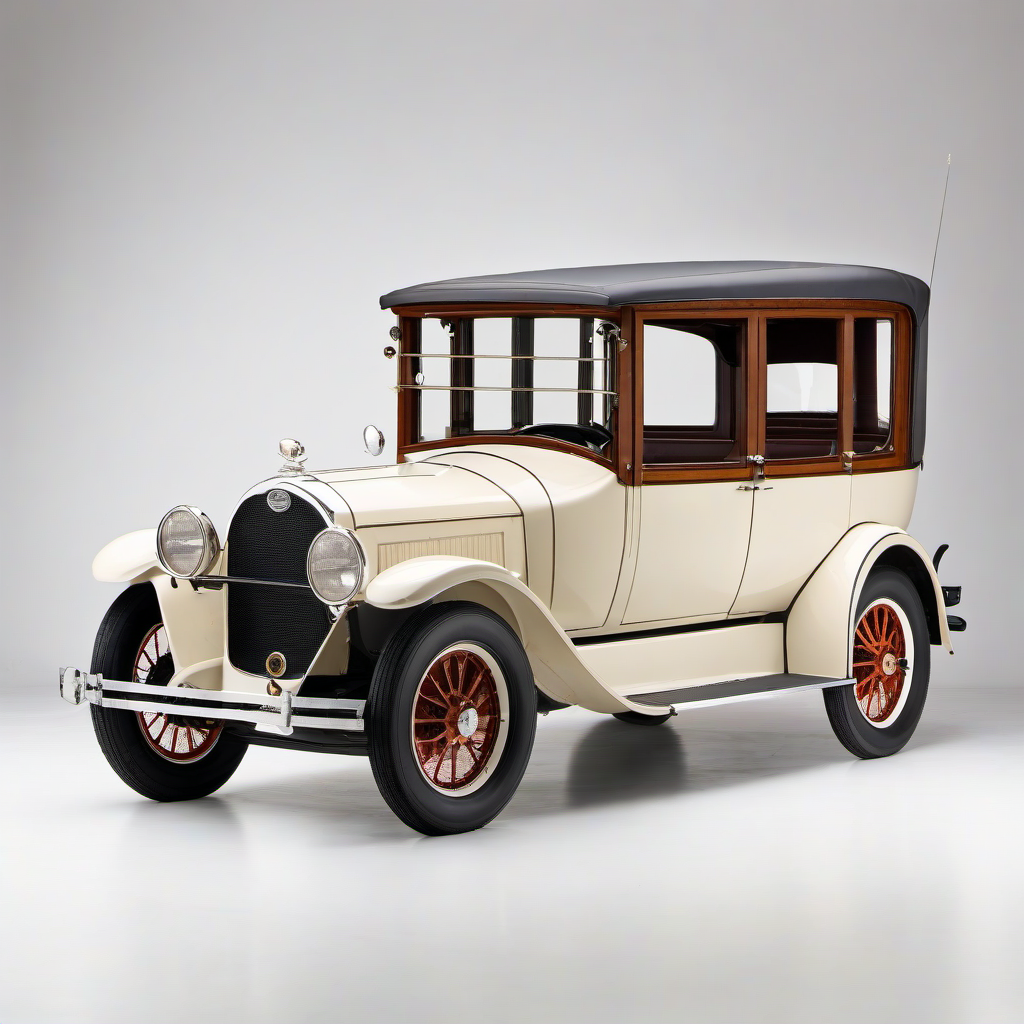
1925 Buick Standard Six Sedan

1925 Buick

Standard SixSedan

207 CI I6 · Sedan

The 1925 Buick Standard Six Sedan is a pre-war American automobile built on Buick's Model 20 series chassis, powered by a 207 cubic-inch overhead-valve inline-six engine — a technology well ahead of most competitors of the era who were still running flatheads. At a time when Henry Ford was still selling the Model T, Buick's OHV six gave owners noticeably smoother power and better high-speed performance. The Standard Six was Buick's entry-level 1925 offering, slotting below the Master Six line, and was sold in several body styles including this closed sedan configuration. This vehicle is now 100 years old. It is almost certainly a collector or show car rather than a daily driver. Parts are not available at any auto parts store — sourcing requires antique Buick specialists, marque clubs (Buick Club of America), or custom fabrication. Any mechanical work requires a technician experienced with pre-war vehicles: magneto ignition, vacuum-fed fuel systems, mechanical brakes on all four wheels, and non-pressurized cooling systems are all standard features here. This is a piece of American automotive history. Ownership is rewarding but demands patience, specialized knowledge, and a network of vintage parts suppliers. Budget generously for restoration and maintenance, and do not expect modern reliability or safety from a 100-year-old machine.

Reliability
3/5
Verified data
Engine
207 CI OHV I6
Drivetrain
RWD
Fuel
Gasoline
MPG
Approx. 18–22 mpg (no EPA rating; owner estimates only)
Seats
5
Doors
4
Body
Sedan
MSRP
$1,295

Overview

AI-curated

The 1925 Buick Standard Six Sedan is a pre-war American automobile built on Buick's Model 20 series chassis, powered by a 207 cubic-inch overhead-valve inline-six engine — a technology well ahead of most competitors of the era who were still running flatheads. At a time when Henry Ford was still selling the Model T, Buick's OHV six gave owners noticeably smoother power and better high-speed performance. The Standard Six was Buick's entry-level 1925 offering, slotting below the Master Six line, and was sold in several body styles including this closed sedan configuration. This vehicle is now 100 years old. It is almost certainly a collector or show car rather than a daily driver. Parts are not available at any auto parts store — sourcing requires antique Buick specialists, marque clubs (Buick Club of America), or custom fabrication. Any mechanical work requires a technician experienced with pre-war vehicles: magneto ignition, vacuum-fed fuel systems, mechanical brakes on all four wheels, and non-pressurized cooling systems are all standard features here. This is a piece of American automotive history. Ownership is rewarding but demands patience, specialized knowledge, and a network of vintage parts suppliers. Budget generously for restoration and maintenance, and do not expect modern reliability or safety from a 100-year-old machine.

Known for
  • Overhead-valve inline-six engine — advanced for 1925
  • Smooth, quiet ride compared to contemporary four-cylinder rivals
  • Solid build quality that helped establish Buick's reputation for durability
  • Four-wheel mechanical (non-hydraulic) drum brakes
  • Vacuum-gravity fuel feed system with no fuel pump
Best for
  • Collectors and antique car enthusiasts
  • Show car and parade use
  • Buick marque historians
  • Owners with access to a Buick Club of America chapter and specialty restorers
Watch for
  • Mechanical brakes require significantly more pedal effort than modern hydraulic systems — a genuine safety concern in traffic
  • Vacuum fuel feed can starve the engine on steep upgrades under load
  • Electrical system is 6-volt positive ground — incompatible with any modern accessory or charging device without conversion
  • Freeze damage to the non-pressurized cooling system is common on cars that were not properly drained before storage
  • Century-old rubber (hoses, gaskets, seals) is almost certainly due for full replacement regardless of visual appearance

Common issues by mileage

6 known

Deteriorated rubber hoses, gaskets, and seals

high
Typically appears
All — age-related regardless of mileage
Estimated repair
$300 – $1,200

Weak or failed mechanical brake adjustment and linkage

high
Typically appears
All — requires periodic adjustment and often full rebuild
Estimated repair
$400 – $2,000

6-volt battery and charging system failure

high
Typically appears
All — 6V batteries have limited availability and short service life
Estimated repair
$150 – $600

Vacuum fuel feed problems (clogged screen, cracked vacuum line, stuck needle valve)

medium
Typically appears
All — vacuum tank components degrade with age
Estimated repair
$100 – $500

Cooling system leaks and thermostat failure (non-pressurized system)

medium
Typically appears
All — radiator core, hoses, and freeze plugs are common failure points
Estimated repair
$200 – $1,500

Engine bearing wear and oil pressure loss (splash lubrication system)

medium
Typically appears
All — splash-fed bearings are sensitive to oil condition and level
Estimated repair
$800 – $4,000

Maintenance schedule

  1. 1
    Every use Check engine oil level and inspect for leaks under the car before and after driving

    Splash lubrication provides no safety margin if oil drops low; pre-war gaskets weep even on well-maintained engines

  2. 2
    Every use Check coolant level in radiator (remove cap only when cold)

    Non-pressurized system loses coolant through evaporation and minor seeps; overheating damages the engine quickly

  3. 3
    Every 500–1000 miles or annually Adjust mechanical brakes at all four wheels

    Mechanical brakes go out of adjustment with normal use; uneven adjustment causes pulling and dangerously extended stopping distances

  4. 4
    Annually Inspect and clean or replace ignition points, condenser, and spark plugs

    Pre-war ignition systems are sensitive to point gap and condenser condition; a weak condenser is the most common no-start cause

  5. 5
    Annually before storage Drain cooling system completely if storing in an unheated space

    Non-pressurized cooling systems without modern antifreeze freeze at 32°F; cracked blocks are expensive or irreparable

  6. 6
    Every 2–3 years or when rubber shows cracking Replace all coolant hoses, fuel lines, and carburetor gaskets

    Century-old rubber cannot be trusted; a burst hose or fuel leak is a fire and overheating risk

  7. 7
    Annually Grease all chassis zerks, king pins, and spring shackles per the lubrication chart

    Pre-war chassis have many grease points not present on modern cars; neglected king pins and shackles cause handling deterioration quickly

  8. 8
    Every season Check and top off gear oil in transmission and rear axle

    Early gear oils leak past worn seals; running low causes bearing and gear damage that requires custom machining to repair

Always defer to the manufacturer's service manual for warranty-mandated intervals.

Cost of ownership

Annual maintenance
$500 – $4,000
Fuel
Runs on regular unleaded; ethanol content above 10% (E15/E85) is not recommended — old rubber fuel components degrade faster and the carburetor was not designed for it. Fuel cost is low due to limited annual mileage typical of show cars.
Insurance
Typically insured as an antique/collector vehicle with agreed-value coverage; annual premiums are generally low ($200–$600/yr) given the limited-use nature, but agreed value must reflect full restoration cost.

Day-to-day running costs are low because these cars cover very few miles per year. The real ownership cost is in restoration and preservation: sourcing correct parts often means NOS (new-old-stock), club swap meets, or custom fabrication, all of which are expensive and slow. Budget $500–$4,000/year for an already-restored driver-quality car, and significantly more for restoration or body work. Find a mechanic who actually knows pre-war cars — a general shop unfamiliar with 6-volt positive-ground systems or mechanical brakes can create more problems than they solve.

Seasonal care

Lake Geneva, WI
Winter
  • NEVER store in an unheated Wisconsin garage without fully draining the cooling system — a single hard freeze will crack the block or radiator. Use period-correct non-pressurized antifreeze or drain completely.
  • 6-volt batteries lose capacity dramatically in cold; keep the battery on a compatible 6V maintainer (not a modern 12V charger) during storage
  • If driving in winter, avoid road salt entirely if possible — the body and chassis have no corrosion protection beyond original paint and grease; rust is irreversible on 100-year-old steel
  • Store with a full tank of non-ethanol gasoline and a fuel stabilizer to prevent varnish buildup in the carburetor and vacuum tank
  • Grease all chassis points before any winter storage to keep moisture out of joints
Summer
  • Monitor coolant temperature closely on hot days — non-pressurized cooling systems boil over at lower temperatures than modern systems, and Lake Geneva summers can push this car hard in traffic
  • Avoid prolonged idling in heat; the splash-lubrication engine builds less oil pressure at idle and cooling airflow is minimal when not moving
  • Check tire condition carefully before summer show season — antique tires (bias-ply or reproduction) degrade with UV and age, not just mileage; cracking sidewalls must be replaced
  • Inspect fuel vacuum lines and carburetor needle valve before summer driving; heat soak causes vapor issues in old fuel systems more readily than in modern cars

Comparable vehicles

1925 Cadillac
Series 314

Also a 1925 GM product with a smooth multi-cylinder engine, positioned above the Standard Six; comparable in collector market prestige and similar mechanical-era challenges

No catalog match
1925 Chrysler
Series B-70

Chrysler's debut model; also a 1925 closed-body American six-cylinder sedan with hydraulic brakes, making it a direct contemporary rival and interesting comparison for collectors

No catalog match
1925 Packard
Single Six

Mid-1920s American six-cylinder in the same collector tier; similar era maintenance demands and parts-sourcing challenges

No catalog match
1926 Studebaker
Standard Six

Near-identical era, similar price point when new, and comparable closed-body sedan form; parts support through Studebaker clubs mirrors the Buick Club of America network

No catalog match

If you're shopping for one

Red flags
  • Any evidence of amateur wiring — electrical fires on pre-war cars are catastrophic and parts are irreplaceable
  • Non-original engine or transmission; significantly affects collector value and may introduce parts-compatibility nightmares
  • Bondo or fiberglass filler on body panels — original steel is part of the value; hidden rust repair devalues the car and may be structurally unsafe
  • Missing or non-functional brakes on any wheel — walk away until the brake system is fully inspected and adjusted by someone who knows mechanical brakes
  • A seller who cannot provide documentation of cooling system service or storage history in Wisconsin winters — freeze damage may not be obvious until the engine is under load
What to inspect
  • Verify the block and cylinder head have no freeze cracks — run your hand along all surfaces and pressure-test the cooling system before purchase
  • Have a pre-war specialist inspect the mechanical brake linkage at all four corners for wear, corrosion, and adjustment; ask for a measured stopping distance if possible
  • Confirm the electrical system is intact 6-volt positive ground — check for any amateur 12-volt conversion wiring which can damage original components
  • Inspect all body wood framing (if original closed-body construction) for rot, especially at door jambs and floor sills
  • Check the vacuum fuel tank operation by running the engine and watching for steady fuel delivery — a failing vacuum tank will cause the engine to stutter and die on the road
  • Look underneath at frame rails, spring mounts, and outriggers for rust perforation — structural rust is very expensive to repair correctly on pre-war frames
AI profile generated 4 days ago · claude-sonnet-4-6 · v2.