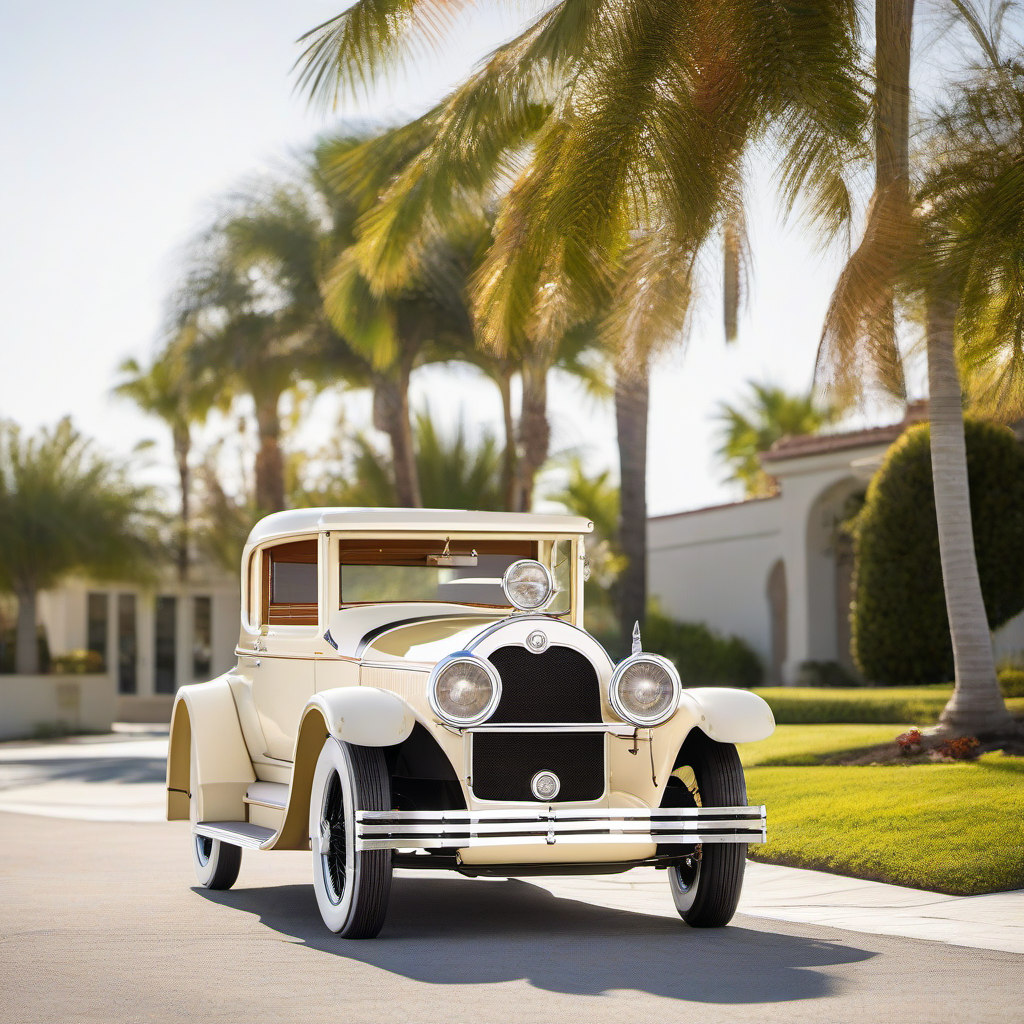
1925 Buick Master Six Coupe

1925 Buick

Master SixCoupe

242 CI I6 · Coupe

The 1925 Buick Master Six Coupe is a centenary antique — a hand-built, body-on-frame closed coupe from an era when Buick sat near the top of the General Motors prestige ladder. Powered by a 242-cubic-inch overhead-valve inline six (a layout Buick pioneered and championed long before it became industry standard), the Master Six was Buick's larger, more powerful series that year, slotted above the Standard Six. It was a genuine luxury touring car of its day, built for comfort on unpaved roads with long-travel semi-elliptic leaf springs and a robust ladder frame. At nearly 100 years old, any surviving example today is a collector and show vehicle — not daily transportation. Parts are unobtainium from mainstream suppliers; owners rely on marque clubs, specialty vendors, and skilled machinists to keep them running. The 242 CI OHV six is mechanically straightforward by modern standards: no electronics, no fuel injection, a simple updraft carburetor, and babbit-lined rod and main bearings that demand non-detergent oil. Owning one near Lake Geneva means embracing Wisconsin's freeze-thaw cycles as a direct threat to aged rubber, cast iron, and original paint. These cars are best stored indoors October through April and driven sparingly in dry summer weather. The investment is in preservation, not transportation.

Reliability
3/5
Verified data
Engine
242 CI OHV I6
Drivetrain
RWD
Fuel
Gasoline
MPG
12 city / 15 hwy / 13 combined
Seats
2
Doors
2
Body
Coupe
MSRP
$1,495

Overview

AI-curated

The 1925 Buick Master Six Coupe is a centenary antique — a hand-built, body-on-frame closed coupe from an era when Buick sat near the top of the General Motors prestige ladder. Powered by a 242-cubic-inch overhead-valve inline six (a layout Buick pioneered and championed long before it became industry standard), the Master Six was Buick's larger, more powerful series that year, slotted above the Standard Six. It was a genuine luxury touring car of its day, built for comfort on unpaved roads with long-travel semi-elliptic leaf springs and a robust ladder frame. At nearly 100 years old, any surviving example today is a collector and show vehicle — not daily transportation. Parts are unobtainium from mainstream suppliers; owners rely on marque clubs, specialty vendors, and skilled machinists to keep them running. The 242 CI OHV six is mechanically straightforward by modern standards: no electronics, no fuel injection, a simple updraft carburetor, and babbit-lined rod and main bearings that demand non-detergent oil. Owning one near Lake Geneva means embracing Wisconsin's freeze-thaw cycles as a direct threat to aged rubber, cast iron, and original paint. These cars are best stored indoors October through April and driven sparingly in dry summer weather. The investment is in preservation, not transportation.

Known for
  • Pioneer overhead-valve inline-six engine design
  • Superior ride quality and build refinement for the era
  • Strong marque community and Buick club support (Buick Club of America)
  • Durable cast-iron engine block that responds well to careful machining
  • Closed-body coupe style that was a premium option in 1925
Best for
  • Dedicated antique car collectors and restorers
  • Car show participants and concours enthusiasts
  • Buick marque historians and hobbyists
  • Owners with heated, secure indoor storage
Watch for
  • Babbitt bearing wear — requires a specialty machinist, not a modern engine shop
  • Fuel system degradation from ethanol-blended pump gas attacking original rubber and pot-metal components
  • Brake system: mechanical four-wheel brakes with very long stopping distances by modern standards
  • Wiring insulation (if original) is cloth-wrapped and a fire hazard
  • Complete absence of modern safety features — no seatbelts, no crumple zones, no airbags

Common issues by mileage

6 known

Babbitt bearing wear

high
Typically appears
Any — age-dependent
Estimated repair
$1,500 – $5,000

Carburetor deterioration and fuel delivery issues from ethanol-blend fuel

high
Typically appears
Any — ongoing if running E10/E15 pump gas
Estimated repair
$300 – $1,200

Mechanical brake fade and adjustment — four-wheel mechanical drum brakes

high
Typically appears
Any — requires regular adjustment and lining inspection
Estimated repair
$400 – $1,800

Original cloth wiring insulation cracking and shorting — fire risk

high
Typically appears
Any unrestored example
Estimated repair
$800 – $3,500

Coolant system leaks — aged hoses, gaskets, and radiator core

medium
Typically appears
Any — rubber hoses and gaskets degrade with age and heat cycling
Estimated repair
$200 – $1,500

Freeze damage to cast-iron block and head from improper winterization

medium
Typically appears
Any — catastrophic if antifreeze was not maintained
Estimated repair
$2,000 – $8,000

Maintenance schedule

  1. 1
    Every season or every 1,000–1,500 miles of use Use non-detergent straight-weight motor oil (SAE 30 or 40 depending on season)

    Modern detergent oils can dislodge decades of babbitt-protective deposits and accelerate bearing failure. Non-detergent oil is mandatory for babbitt-lined bearings.

  2. 2
    Before each driving season Inspect and adjust mechanical brakes

    Mechanical four-wheel brakes require regular cable/rod adjustment to maintain even, effective braking. These have dramatically longer stopping distances than modern hydraulic systems.

  3. 3
    Every 2 years Flush and replace coolant with a period-appropriate ethylene glycol antifreeze

    Wisconsin winters demand a verified freeze point of at least -34°F. Aged coolant loses inhibitors and can allow corrosion in the cast-iron block and radiator.

  4. 4
    Every fall before storage Drain fuel system completely before storage

    Ethanol-blend pump gas degrades in as little as 30 days, leaving varnish deposits in carburetor passages and attacking pot-metal and rubber fuel system components.

  5. 5
    Every driving season Inspect and clean spark plugs; set points and timing

    Ignition points wear and gap increases over time, causing misfires and hard starts. There is no electronic ignition — the distributor, points, and condenser are the entire ignition system.

  6. 6
    Every 500 miles of use or at least annually Lubricate all grease fittings on front suspension, steering linkage, and driveshaft

    1920s chassis have many zerks and lubrication points that will wear metal-to-metal rapidly without attention. This is not a 'set and forget' chassis.

  7. 7
    Annually, before any driving Inspect cloth wiring insulation for cracking and bare spots

    Original wiring is a fire hazard at 100 years old. A short to the wood-framed body can cause a fire with little warning. If not already rewired, it should be.

  8. 8
    Monthly during storage season Test and maintain 6-volt battery in a warm, charged state during storage

    6-volt systems are less tolerant of a weak battery than modern 12-volt systems. Cold temperatures drain charge quickly; a dead battery in winter storage can sulfate permanently.

Always defer to the manufacturer's service manual for warranty-mandated intervals.

Cost of ownership

Annual maintenance
$500 – $4,000
Fuel
Low annual fuel cost due to very limited use, but requires premium unleaded or ethanol-free fuel where available to protect carburetor and valves.
Insurance
Agreed-value antique/collector car insurance is strongly recommended and is typically far less expensive than standard auto insurance — often $200–$600/year for show-and-parade use.

Annual costs are dominated by storage (heated indoor storage in Lake Geneva is essential) and whatever restoration or preservation work is underway. A show-ready, fully restored example in active use might spend $500–$2,000/year on consumables, lubrication, and minor adjustments. Any major mechanical work — babbitt bearing reconditioning, brake relining, carburetor rebuild — runs $1,500–$5,000+ per job at a shop with antique vehicle competence. Budget accordingly and do not expect a modern independent shop to have the tooling or knowledge for babbitt work.

Seasonal care

Lake Geneva, WI
Winter
  • Store indoors in a heated or at minimum frost-free garage — road salt and sub-zero temps are existential threats to original metal, wood framing, and aged rubber on a 100-year-old vehicle.
  • Drain the fuel system completely or use ethanol-free fuel with a fuel stabilizer before storage. Do not leave ethanol-blend fuel sitting in the carburetor.
  • Verify antifreeze concentration protects to at least -34°F before any cold-weather exposure. Cast-iron blocks crack when coolant freezes — repairs are extremely costly.
  • Keep the 6-volt battery on a trickle maintainer rated for 6-volt systems. Cold temperatures kill old batteries quickly, and a dead battery will sulfate and require replacement.
  • Place moisture-absorbing desiccant in the cabin and trunk area to prevent interior mildew during long winter storage.
  • Cover with a breathable cloth car cover — never plastic, which traps moisture and accelerates rust and wood rot.
Summer
  • Check engine temperature frequently during summer driving — the cooling system has no overflow reservoir and a century-old thermostat. Watch the gauge and stop if it climbs.
  • Inspect tire condition before each outing. Antique bias-ply or reproduction tires degrade with UV exposure and age, not just mileage. Cracking sidewalls are a blowout risk.
  • Check all fluid levels (oil, coolant, gear oil) before each drive — there is no onboard monitoring system of any kind.
  • Carry a basic toolkit, spare points, a spare condenser, and an extra fan belt on any drive longer than a few miles. Roadside assistance has limits with a 1925 vehicle.
  • Protect painted surfaces from prolonged UV exposure. Park in shade at shows when possible; original or quality repaint lacquer is sensitive to extended direct sun.
  • Check tire pressure with a gauge before each outing — ambient temperature changes affect pressure, and there is no TPMS warning system.

Comparable vehicles

1925 Cadillac
Series 314

Cadillac's contemporary luxury offering in the GM family — similar era, similar closed-body coupe availability, more cylinder displacement and prestige but overlapping collector market.

No catalog match
1925 Packard
Single Six

Direct prestige competitor to the Buick Master Six in 1925. Similar six-cylinder configuration, similar price bracket, and a strong marque club and parts support network today.

No catalog match
1925 Studebaker
Standard Six

A comparable mid-to-upper-tier six-cylinder closed coupe from the same era with a similarly robust collector community and comparable mechanical simplicity.

No catalog match
1926 Chrysler
Series 70

Walter Chrysler's debut luxury challenger used a similar OHV inline-six philosophy and targeted the same buyer as the Buick Master Six, making these natural contemporaries in the collector market.

No catalog match

If you're shopping for one

Red flags
  • Engine knocking or rattling at idle — classic sign of worn babbitt bearings; a costly rebuild
  • Cloth original wiring still in place — this is a fire hazard and must be replaced before driving
  • Cracked or checked paint with underlying rust pitting — indicates long-term improper storage or outdoor exposure
  • Soft, spongy, or completely non-functional brakes — mechanical brake systems require expertise to restore correctly
  • Evidence of water intrusion in the cabin (staining, mildew odor, rusted floor) — signals that the car was not stored correctly and body wood may be compromised
  • Any seller claiming this is a 'driver-quality' daily car — it is not, and any representation to that effect should raise questions about the seller's honesty
What to inspect
  • Babbitt bearing condition — ask for documentation of any engine rebuilds and whether babbitt was relined by a qualified machinist
  • Wiring: confirm the car has been rewired with modern cloth-wrapped wire and proper fusing, or budget for a full rewire immediately
  • Frame and body wood — probe for rot in the body framing beneath the metal skin, especially at window corners, door jambs, and sill areas
  • Brake effectiveness — test mechanical brakes at low speed before purchase; they should stop the car without severe pulling or grinding
  • Fuel system — inspect carburetor, fuel lines, and tank for ethanol damage, varnish, and rubber deterioration
  • Cooling system — look for weeping at the radiator, block, and head gasket area; check coolant color and smell for rust contamination
  • Title and documentation — confirm a clear, antique-titled title and check for any encumbrances; provenance documentation adds significant value
AI profile generated 4 days ago · claude-sonnet-4-6 · v2.